Lower Witham Flood Resilience Project

We're working to increase flood resilience in the Lower Witham Fens.

This page is for all communities and other stakeholders with an interest in the future flood resilience of the Lower Witham. Here you will find information about the Lower Witham Flood Resilience Project led by the Environment Agency including our latest news, progress, and importantly how you can get involved.


What is the Lower Witham Flood Resilience Project?

The Lower Witham Flood Resilience Project aims to increase flood resilience in the Lower Witham Fens and reduce the harm cause by flooding where possible. This is to benefit residential properties, business, farmland, and infrastructure. It is the overarching name used for the following projects:
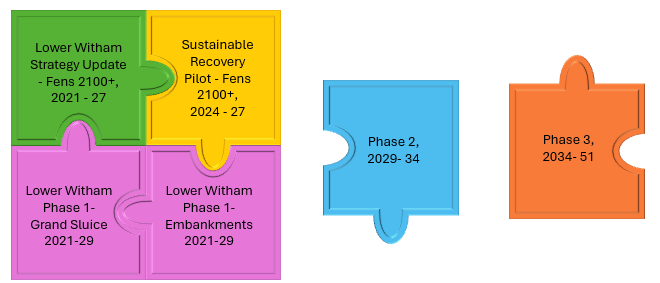

Lower Witham projectsLower Witham projects

You can find out more about the background to these different projects on the right of this page.


Get involved

We're really pleased to share updates with you on the Lower Witham Flood Resilience Project. We understand the importance of our stakeholders being informed and involved in the project and we value your feedback and local knowledge to help make the project a success.

Now that the page is live, there are plenty of ways you can get involved.

  • Register with Engagement HQ to take part in polls, surveys and other interactive tools that we'll be using on this page- look for the button on the right.
  • Subscribe to this page to add it to those that you follow- look for the button on the right.
  • Check the Newsfeed section at the bottom of the page for regular project updates. We'll be posting new information often so please visit again soon.
  • If you would prefer updates in a different format, feel free to contact the team at lowerwitham.floodresilience@environment-agency.gov.uk
  • Got a question about the project? Email the team at lowerwitham.floodresilience@environment-agency.gov.uk
  • Do you have a suggestion for the page? Click the Tell us what think tab and let us know.
  • Keep an eye on our Community events section for information on any upcoming meetings or events.


Our Embankments survey is now live — share your views and help shape the project.

We're working to increase flood resilience in the Lower Witham Fens.

This page is for all communities and other stakeholders with an interest in the future flood resilience of the Lower Witham. Here you will find information about the Lower Witham Flood Resilience Project led by the Environment Agency including our latest news, progress, and importantly how you can get involved.


What is the Lower Witham Flood Resilience Project?

The Lower Witham Flood Resilience Project aims to increase flood resilience in the Lower Witham Fens and reduce the harm cause by flooding where possible. This is to benefit residential properties, business, farmland, and infrastructure. It is the overarching name used for the following projects:


Lower Witham projectsLower Witham projects

You can find out more about the background to these different projects on the right of this page.


Get involved

We're really pleased to share updates with you on the Lower Witham Flood Resilience Project. We understand the importance of our stakeholders being informed and involved in the project and we value your feedback and local knowledge to help make the project a success.

Now that the page is live, there are plenty of ways you can get involved.

  • Register with Engagement HQ to take part in polls, surveys and other interactive tools that we'll be using on this page- look for the button on the right.
  • Subscribe to this page to add it to those that you follow- look for the button on the right.
  • Check the Newsfeed section at the bottom of the page for regular project updates. We'll be posting new information often so please visit again soon.
  • If you would prefer updates in a different format, feel free to contact the team at lowerwitham.floodresilience@environment-agency.gov.uk
  • Got a question about the project? Email the team at lowerwitham.floodresilience@environment-agency.gov.uk
  • Do you have a suggestion for the page? Click the Tell us what think tab and let us know.
  • Keep an eye on our Community events section for information on any upcoming meetings or events.


Our Embankments survey is now live — share your views and help shape the project.

  • Phase One: Embankments

    Since January, good progress has been made at several locations along the Lower Witham.

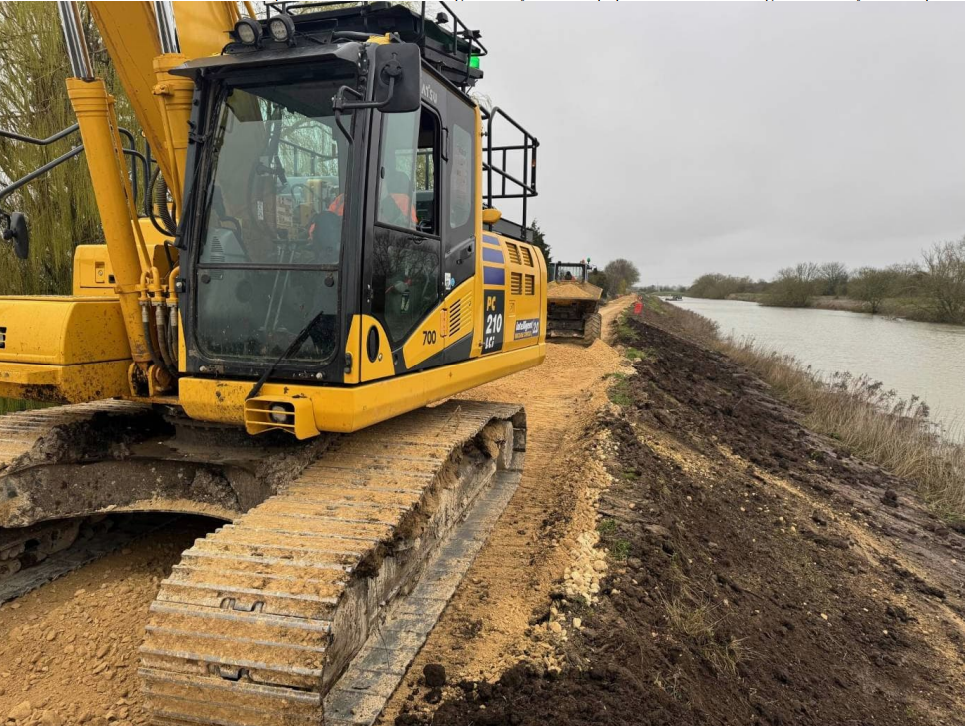
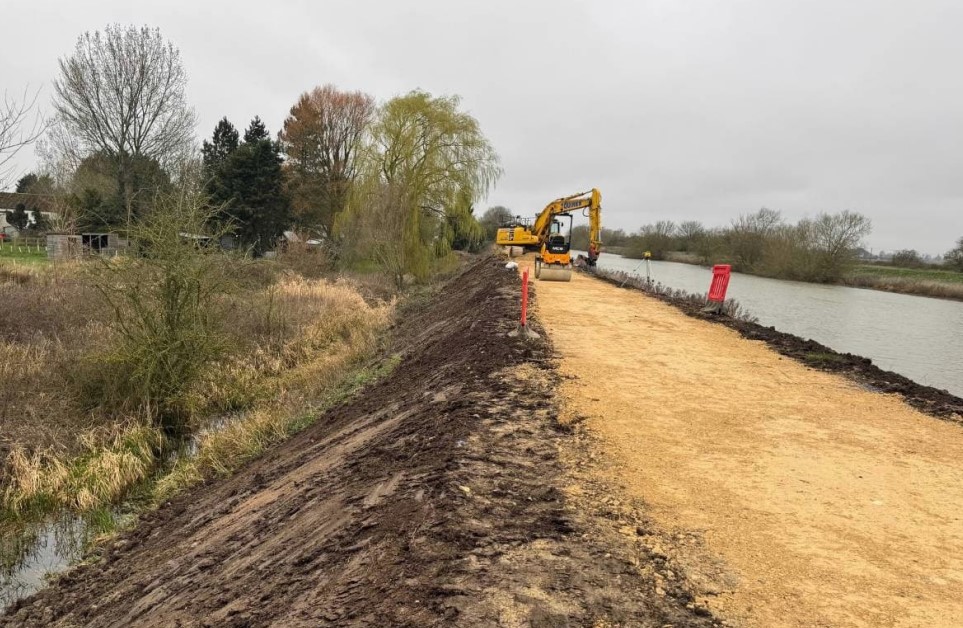
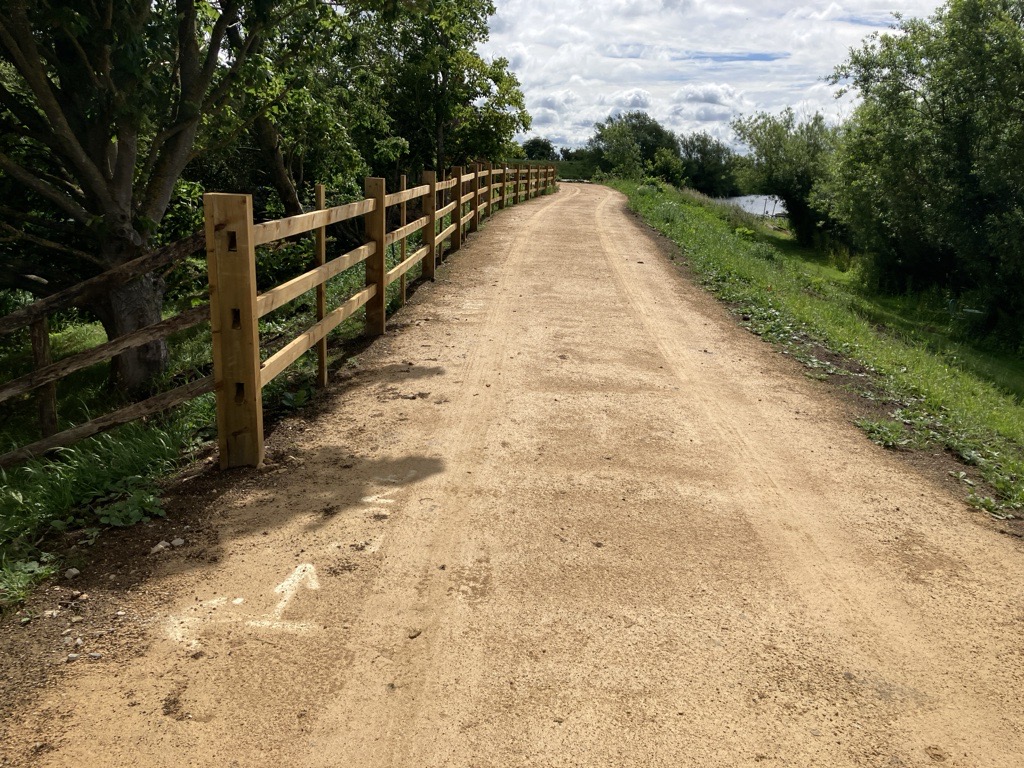
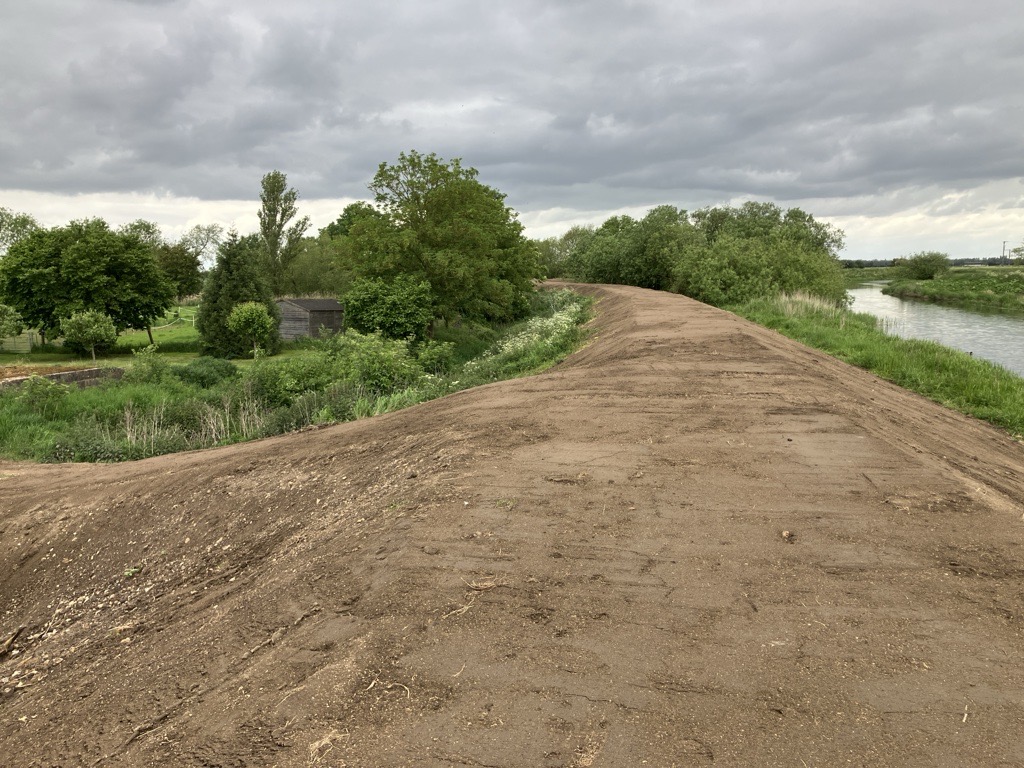
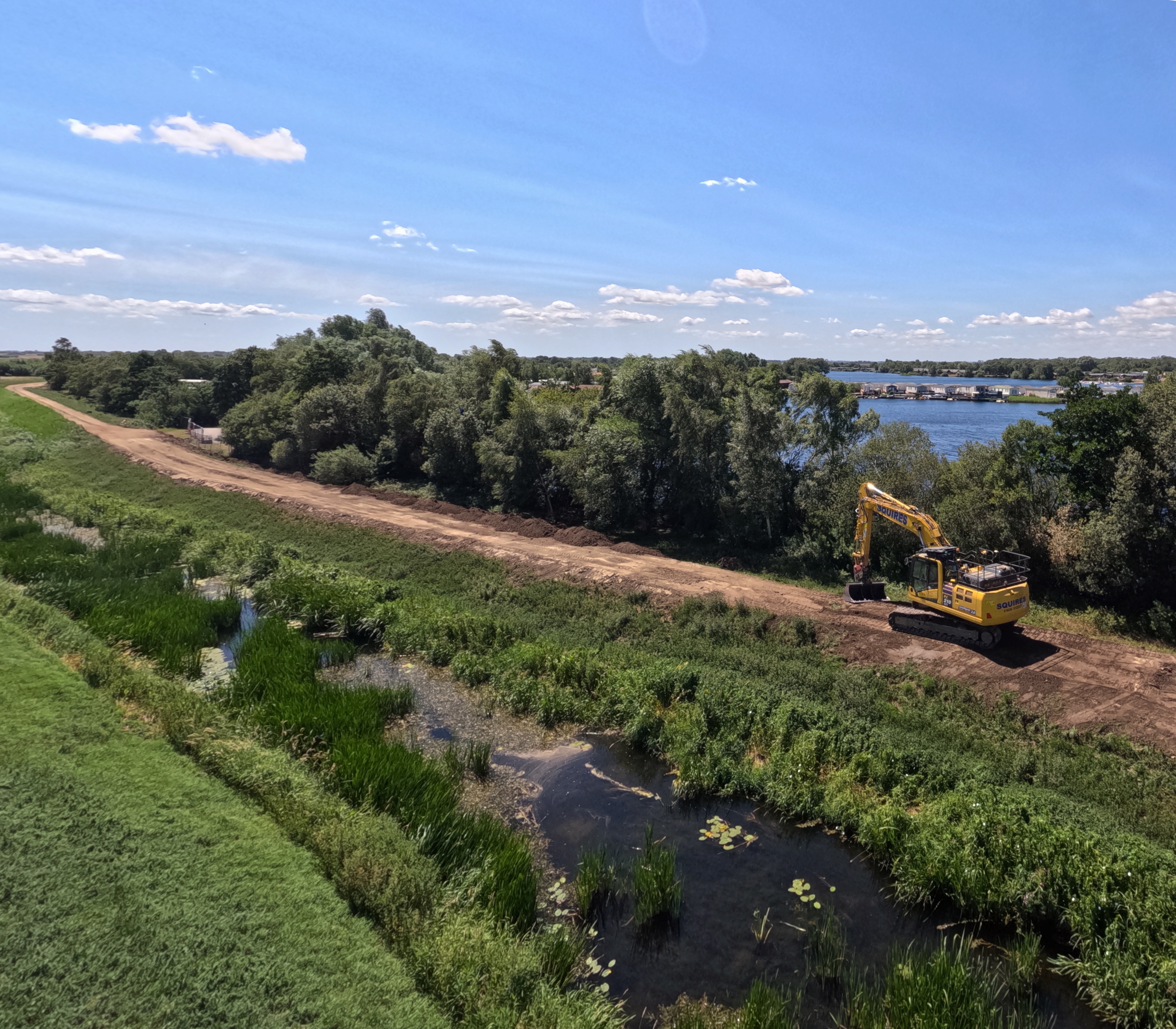
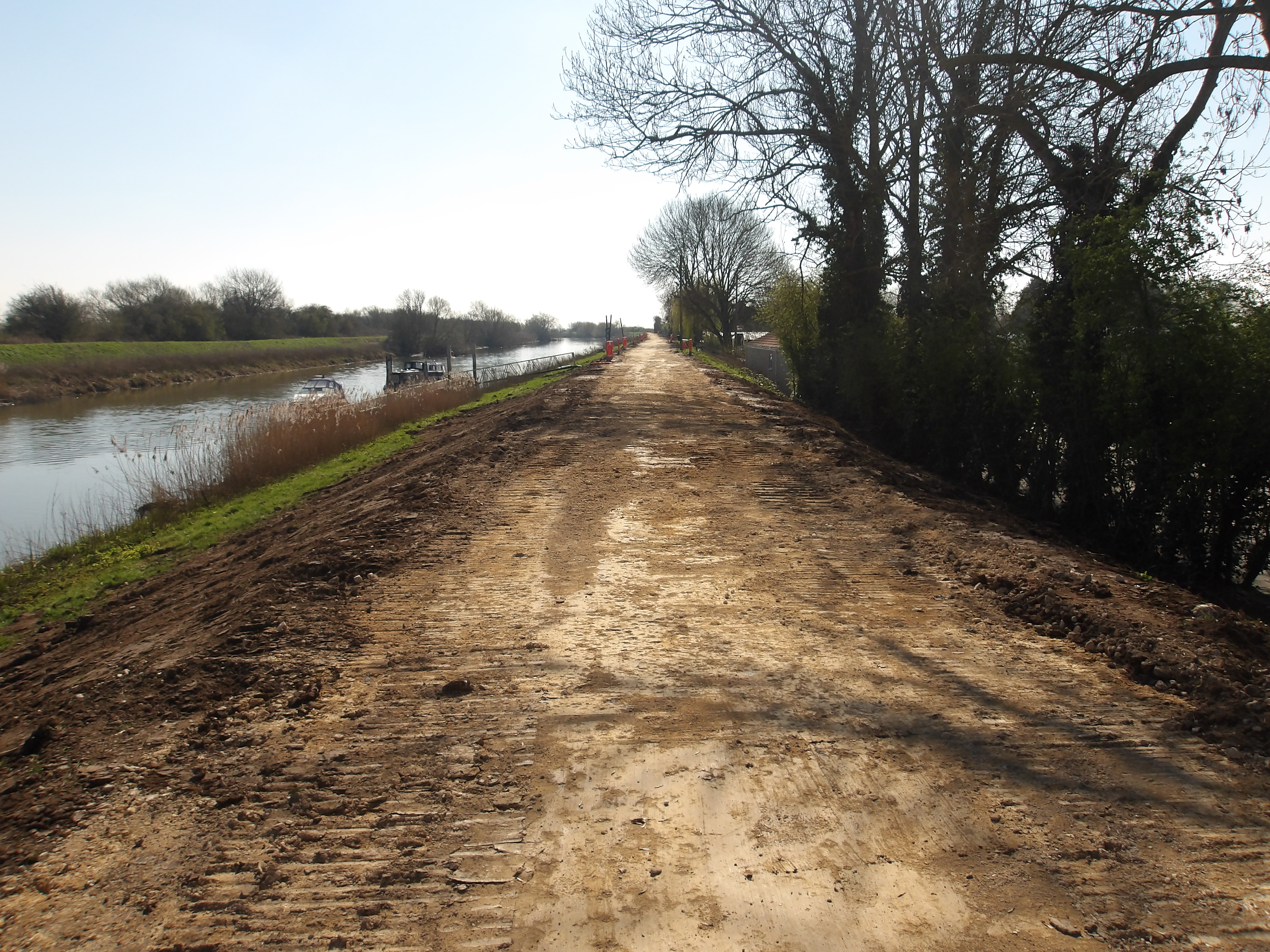
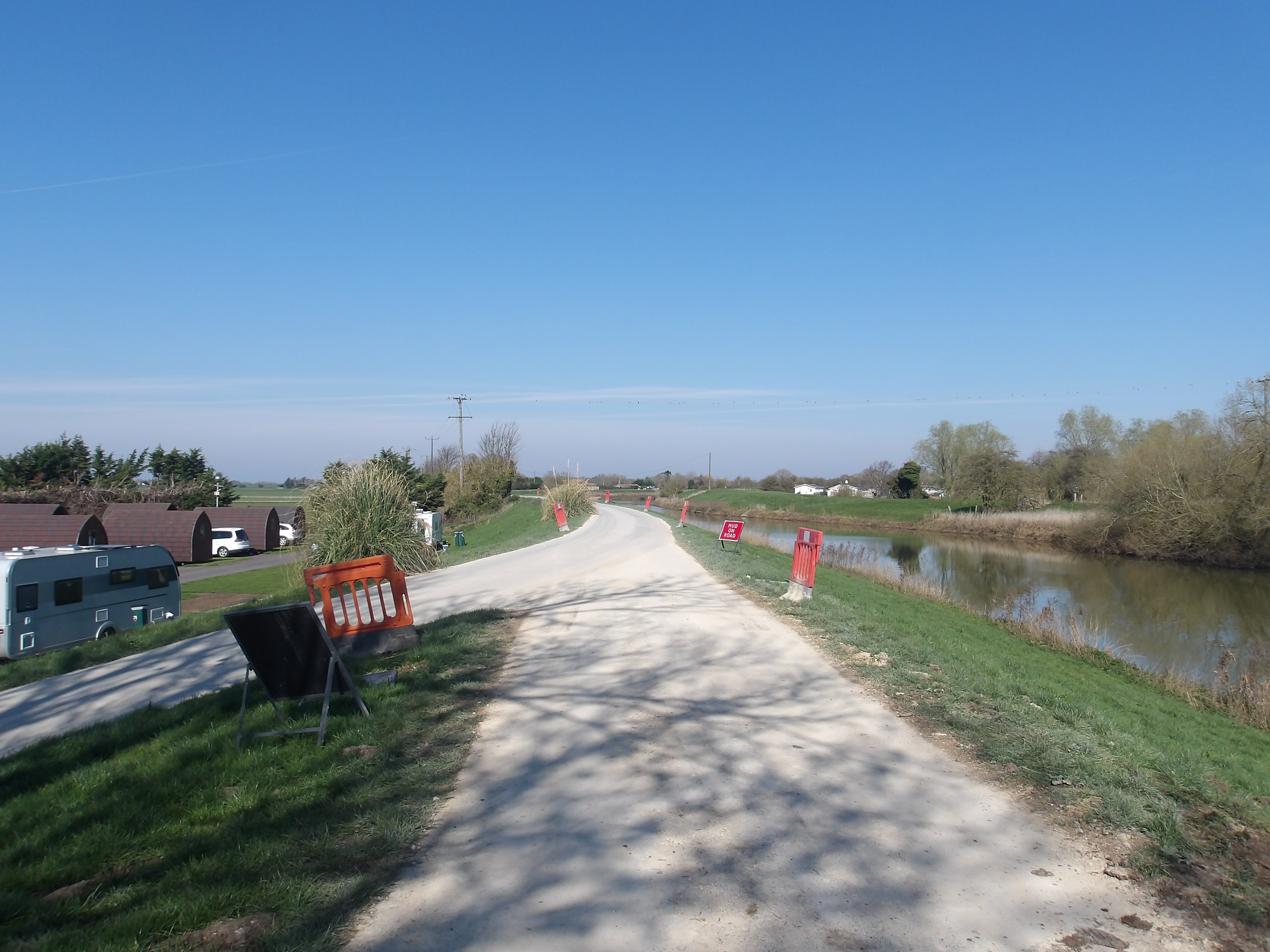
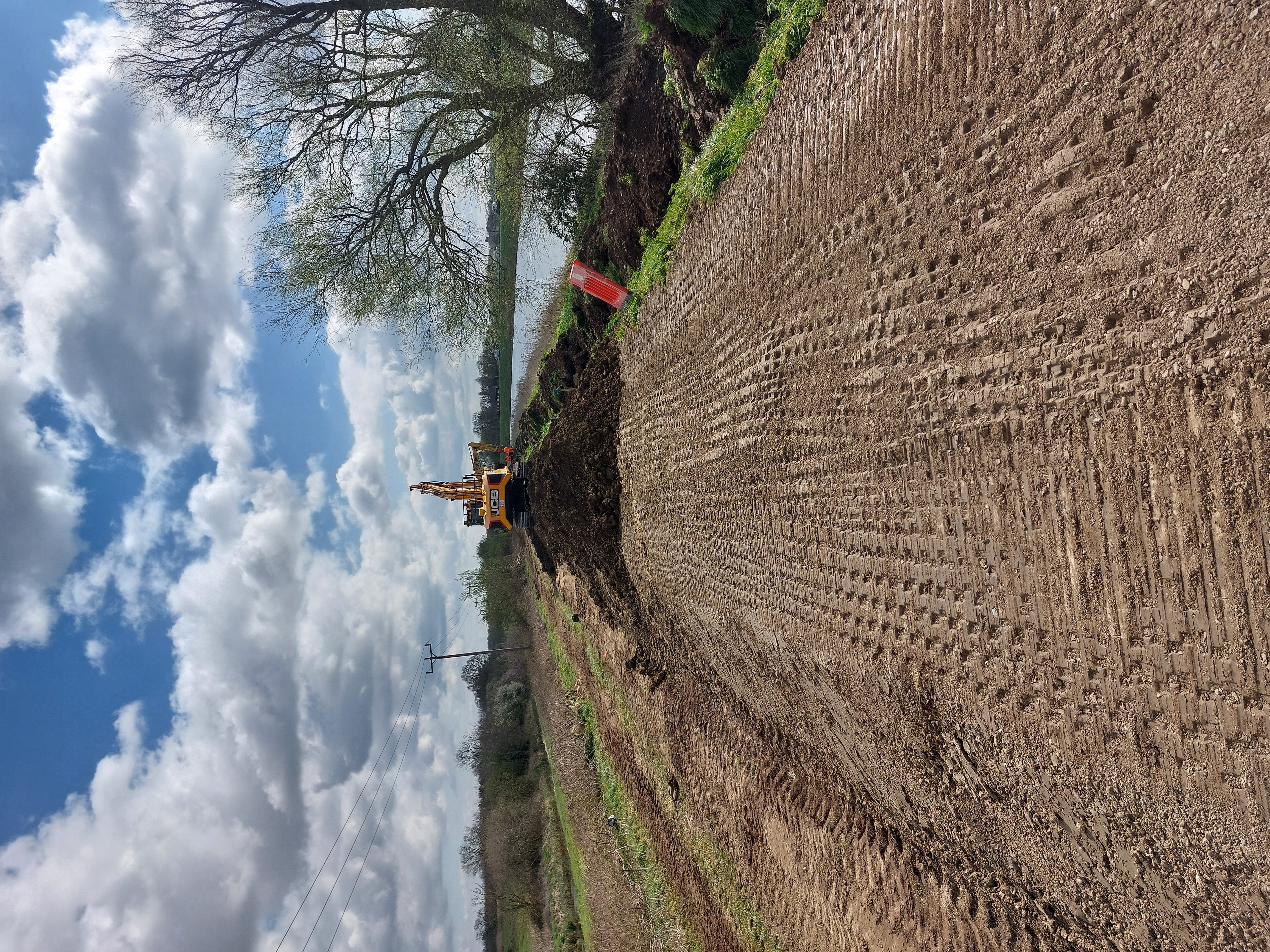
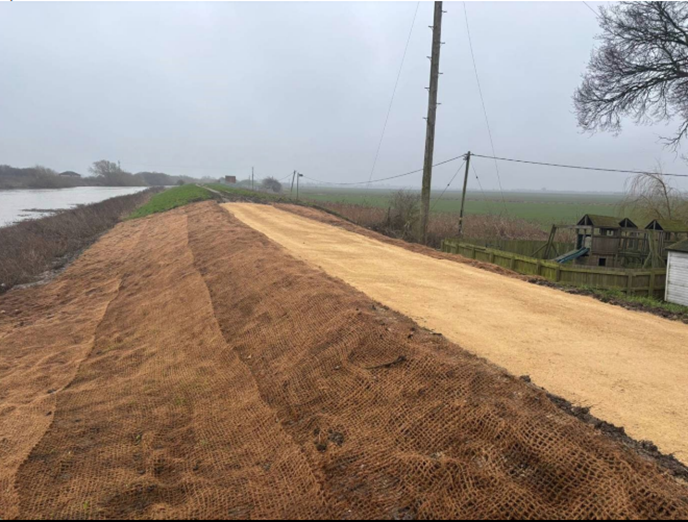
    At Chapel Hill, we have now reinstated the embankment crest to improve flood resilience in the area. The team is finishing the last stages of the work, including shaping the slopes and adding the final surface. Once this is complete, as the landowner we will allow people to use the crest as a walking route. This will create a new opportunity for riverside access while still providing flood protection for the community.

    Close up of a 360 digger on top of a river embankment.Works in progress at Chapel Hill. Repairs to the crest of a river embankment. A digger and a roller are on the top of the embankment in the distance carrying out work. Works nearing completion along the embankment crest at Chapel Hill.


    At Southrey, we have completed work to repair a low spot in front of the White Horse Inn. This strengthens that stretch of the bank and helps ensure a more consistent level of defence.


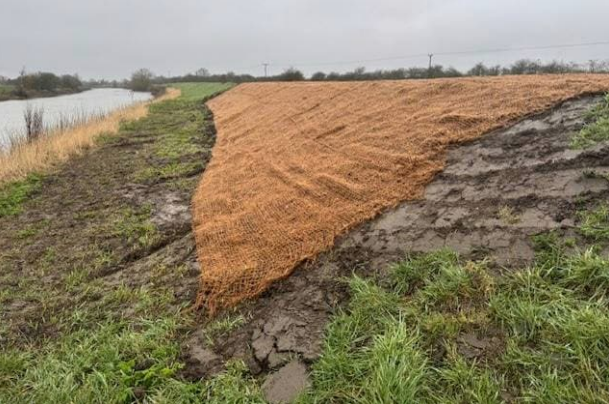
    A raised river embankment with a geotextile mesh covering bare earth where a low spot has recently been repaired.Completed repairs at Southrey.

    At Billinghay a section of bank on Skirth Road has now been restored and grass seeded. This will provide better protection against overtopping in the future.


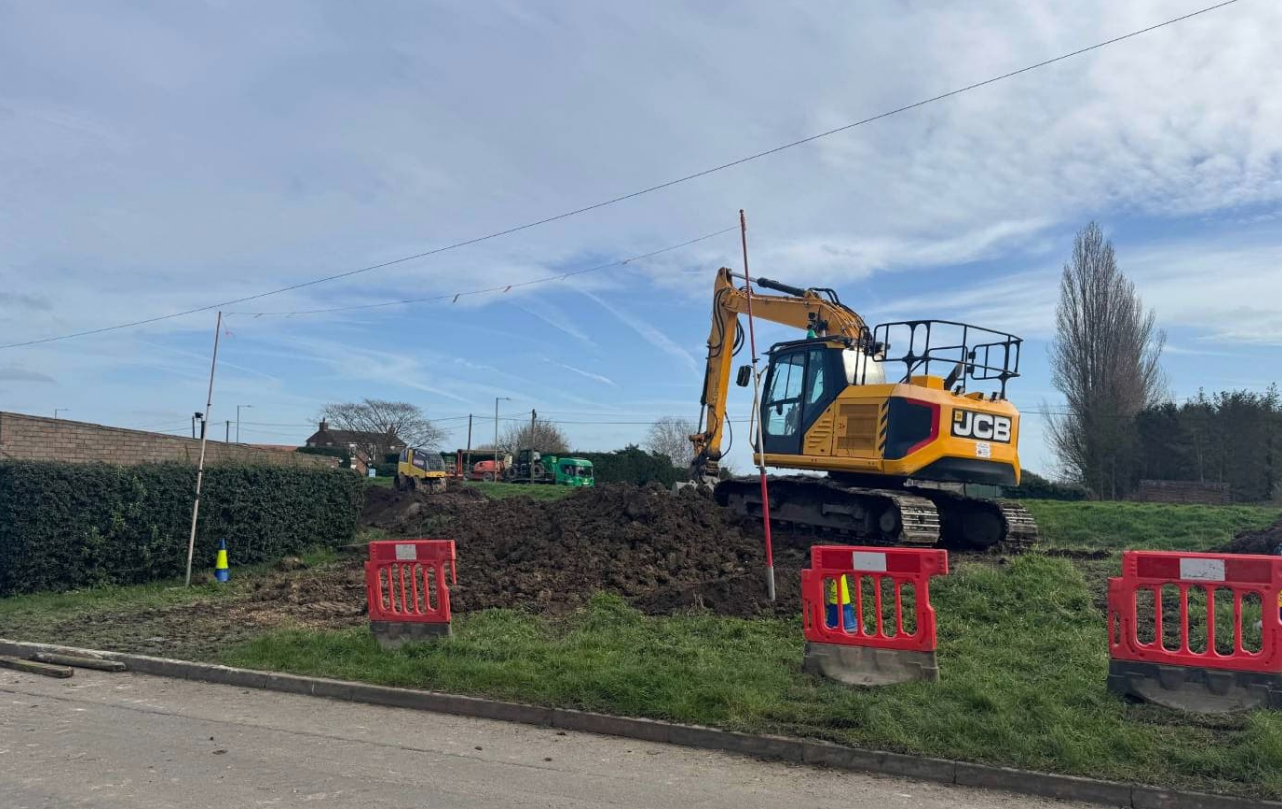
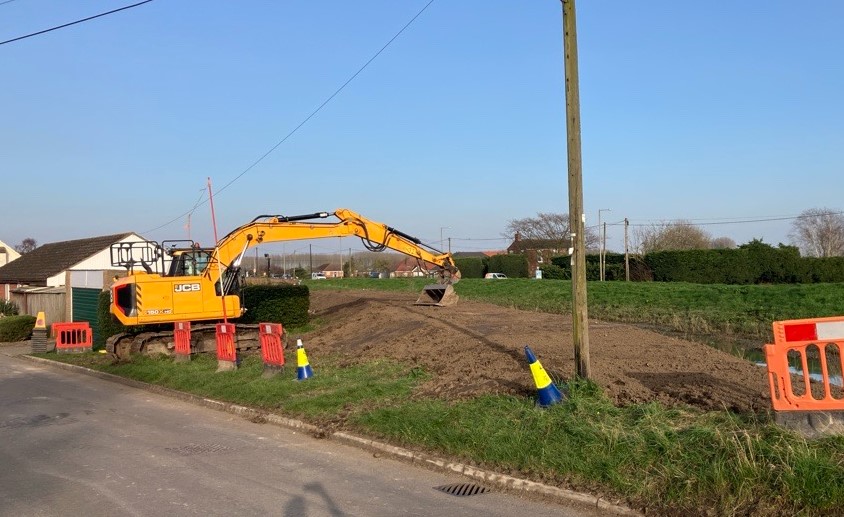
    A digger moving soil on a grass verge near an embankment.Embankment repairs in progress at Billinghay.


    A digger using its bucket to compact soil where repairs have been made on an embankment.Works at Billinghay near completion before the grass seed.


    Further downstream of Kirkstead Bridge, we have started work on additional low spots repairs along the Witham bank to improve resilience here too.


    A raised river embankment with a geotextile mesh covering bare earth where a low spot has recently been restored.Completed works at Woodhall Spa.


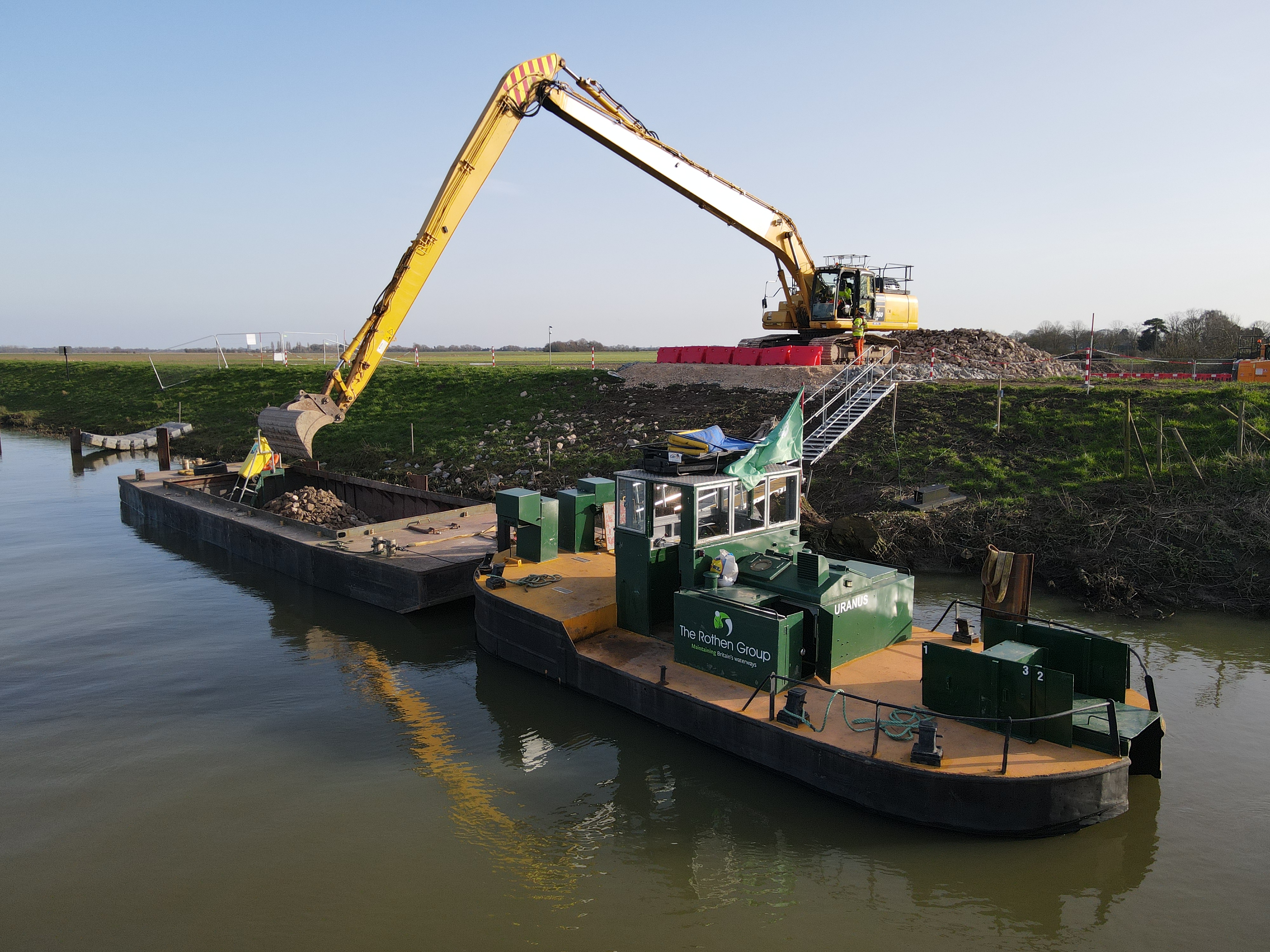
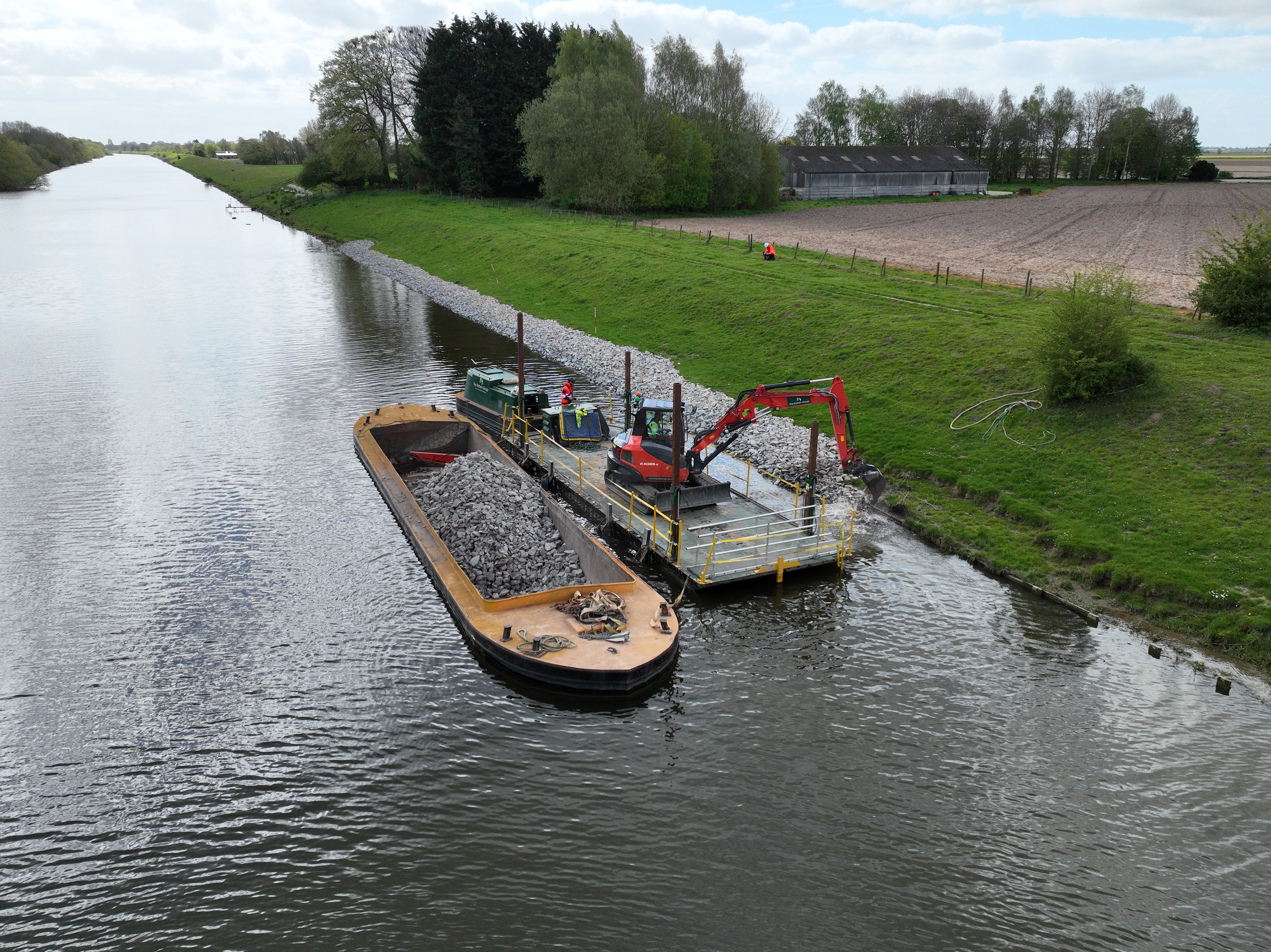
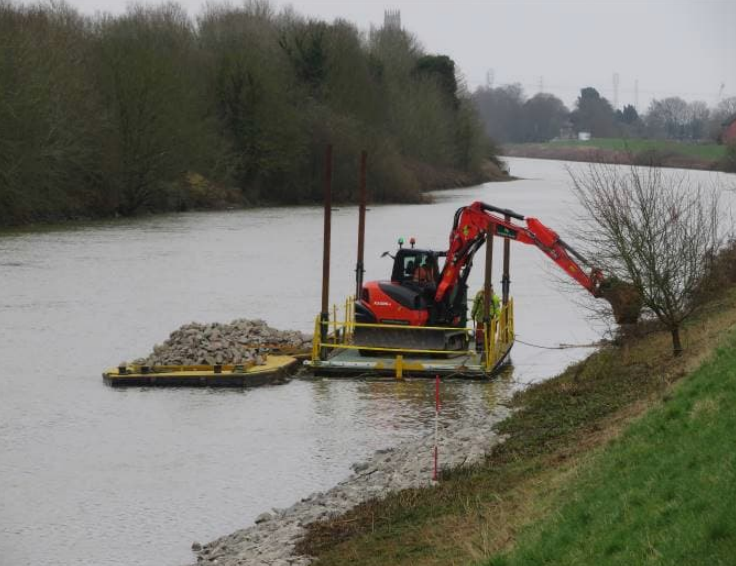
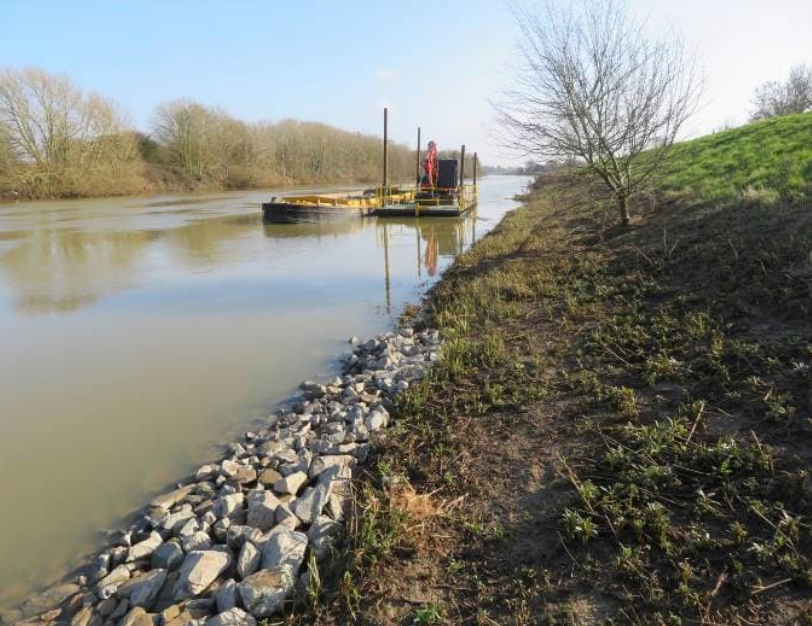
    At the same time, work to protect the toe of the embankments is getting underway. This will be delivered under a separate contract by Jackson Civil Engineering in partnership with Rothen Group. A temporary compound is now set up at Langrick, where stone is loaded onto a barge and taken by tug to the work sites. The stone is placed at the base of the embankment to repair erosion before the barge returns for more. Using this method, the team can install around 100 tonnes of stone per day.

    A close up of stone that has been placed at the bottom of an embankment.Stone in place at the toe of the embankment.


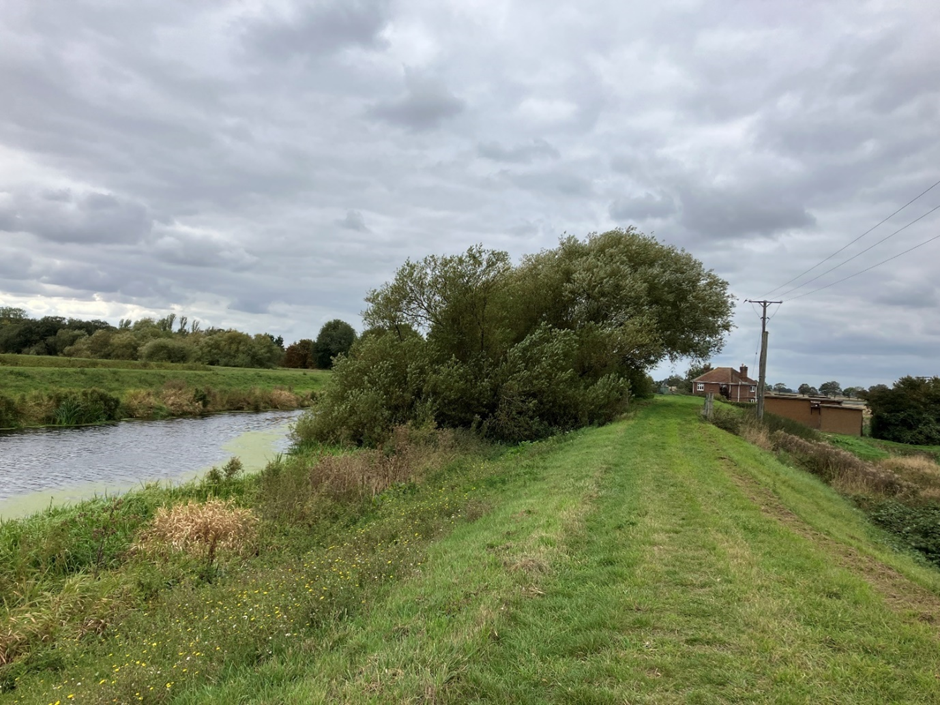
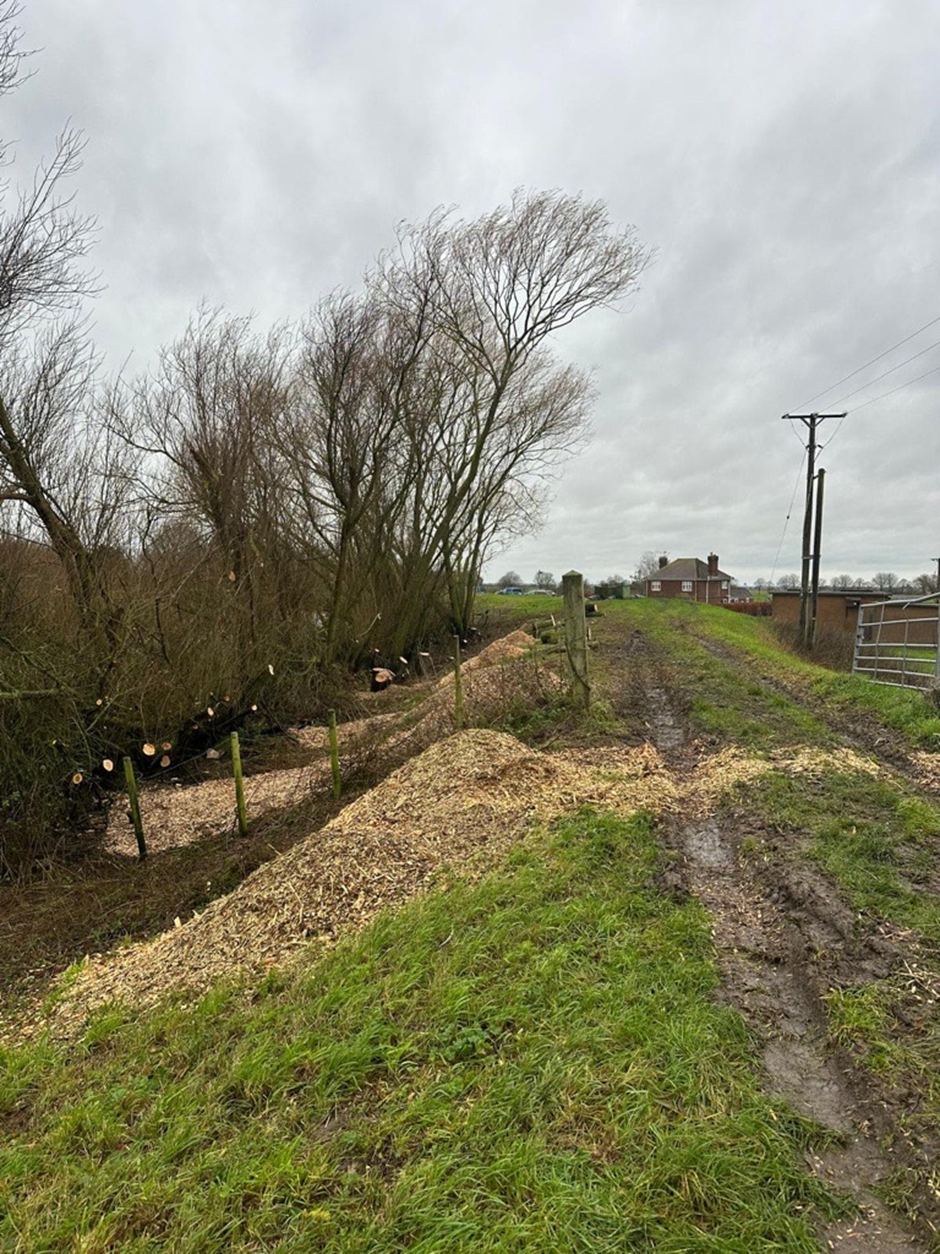
    Before we start these works, we need to cut back some of the vegetation so we have a safe and clear area to work in. Plants along the river are a vital part of the ecosystem but in some instances, they can make the embankments more susceptible to damage. We have only cleared areas we need so we can repair the embankments correctly.

    A raised river embankment with tress and bushes on the riverward side. There a house in the background.Before vegetation removal at Kyme Eau.


    A raised river embankment with some of the trees and bushes on the riverward side cut back. There is a house in the background.After vegetation removal at Kyme Eau.


  • Phase One: Embankments

    In November, Breheny Civil Engineering won the contract to deliver earthworks for this project. Their work includes addressing low spots, managing seepage, and other elements relating to raised riverbanks.

    Since then, works have been progressing well across several smaller sites in the Lower Witham area. Throughout December earthworks were completed at five sites. This involved the team topping up low embankment areas, carrying out localised repairs, and removing vegetation to improve long-term resilience.

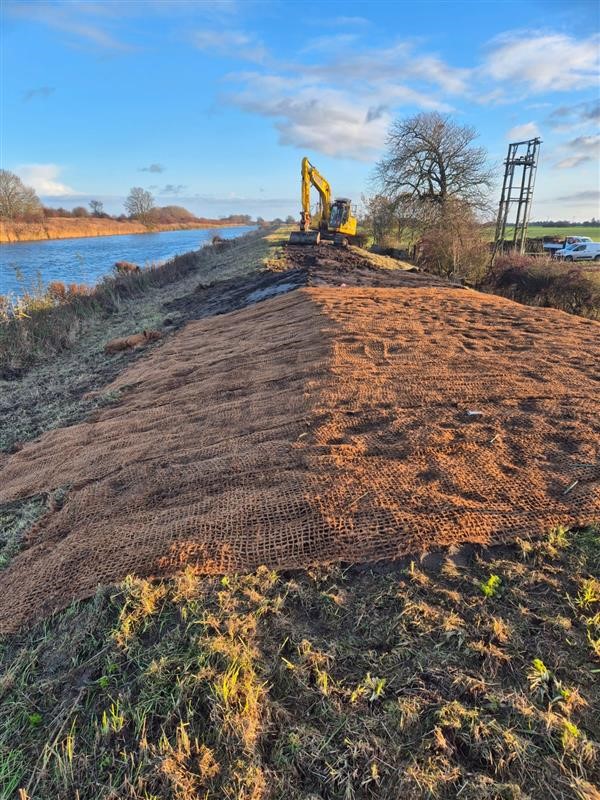
    At some sites, soil has been added to raise low areas, then seeded with grass and covered with a biodegradable geotextile. This material helps grass germinate and stabilises the soil while roots establish. Once the grass takes hold, the covering naturally breaks down, leaving a strengthened embankment. You may see this method used more widely where embankments are raised.

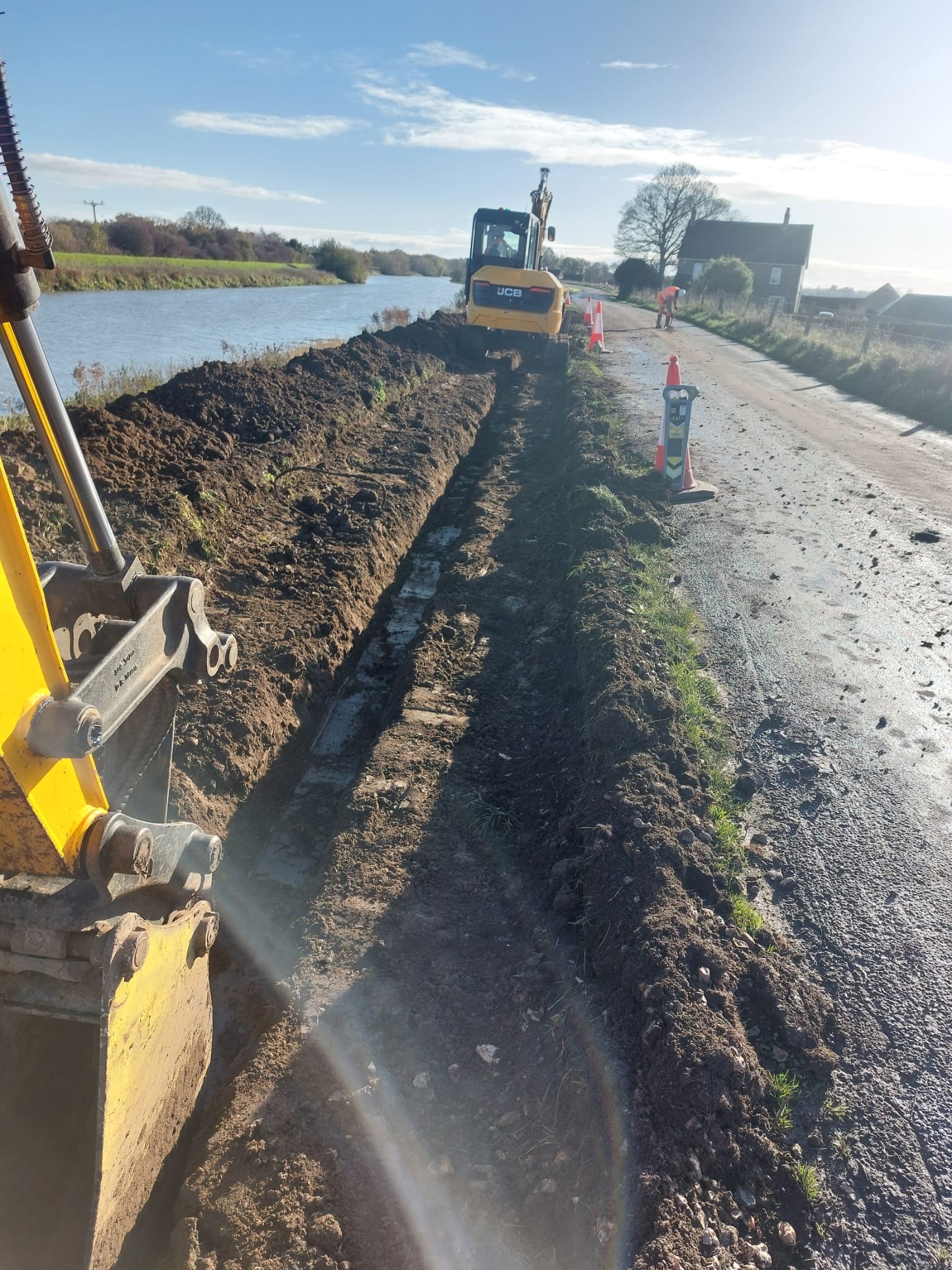
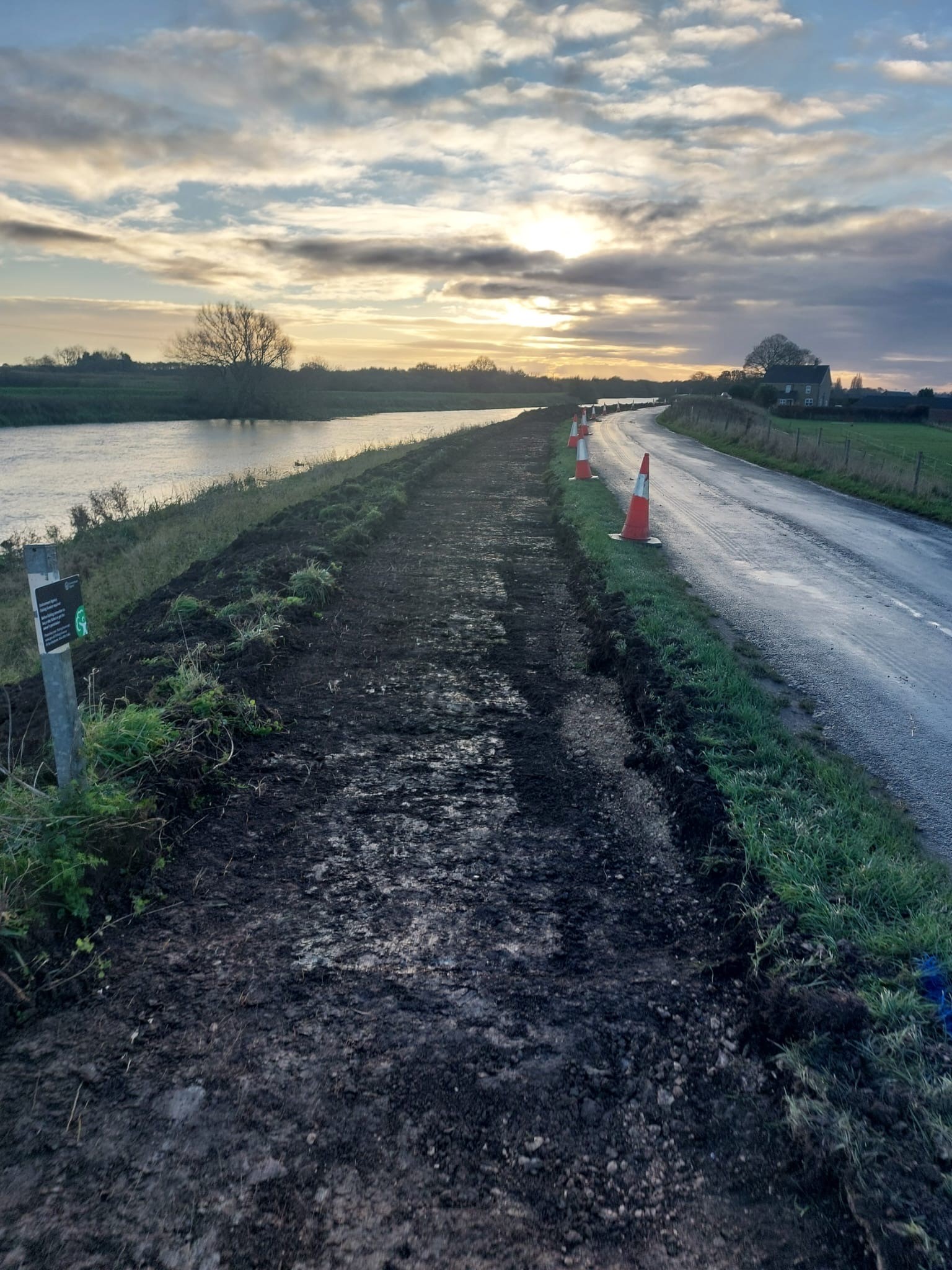
    A raised river embankment with a geotextile mesh covering bare earth where a low spot has recently been raised. There is a small digger in the background. Biodegradable geotextile covering an area where a low spot has recently been raised. Along the Witham Bank roadside flood wall, we have strengthened foundations by excavating a narrow trench and installing compacted clay. This reduces seepage risk and prevents future settlement of the wall. The defence height will now be improved by building a low concrete-bag wall to tie the embankment into the existing flood wall.


    Excavation works taking place along a river embankment, with a digger digging a trench and traffic cones marking the work area on the road.Excavation works carried out along a stretch of the Witham Bank flood wall.


    Traffic cones and recent ground works along a river embankment at sunset.Works completed along a stretch of the Witham Bank flood wall.


    Works were paused over Christmas and will resume in the New Year.

  • Phase One: Grand Sluice

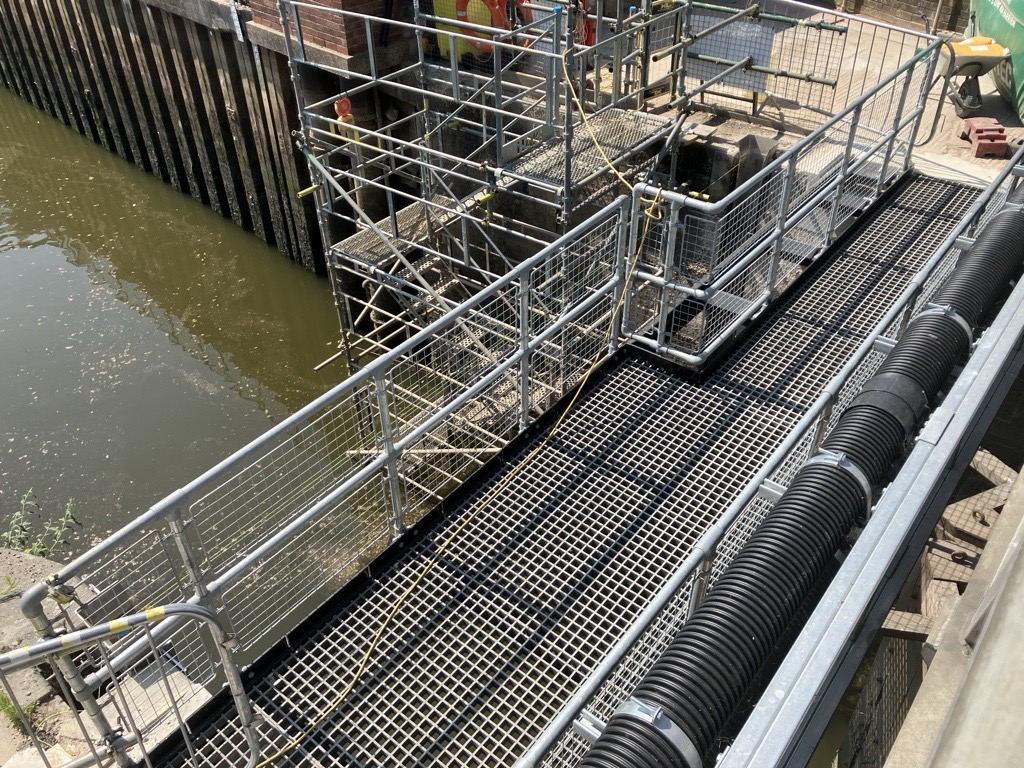
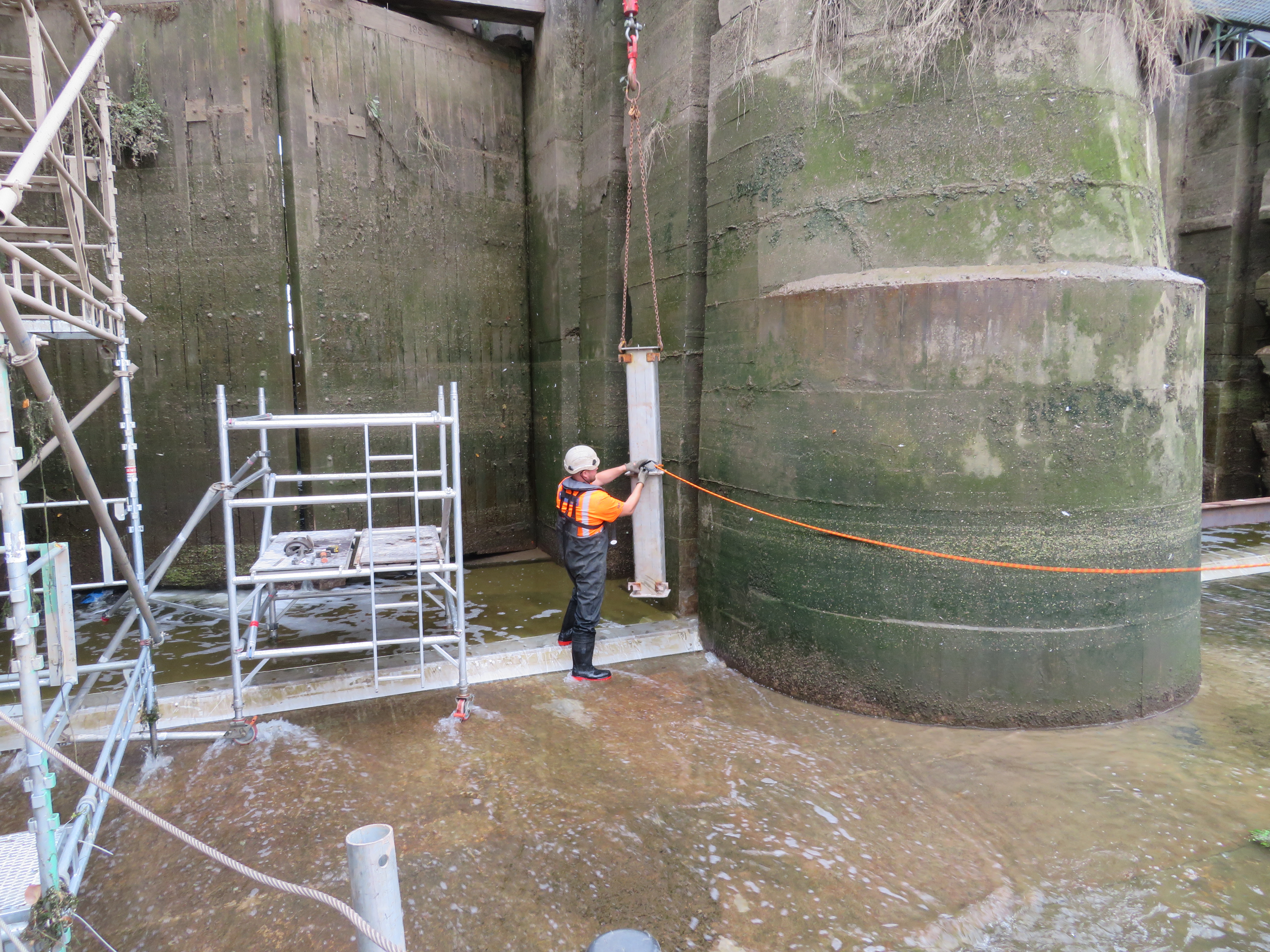
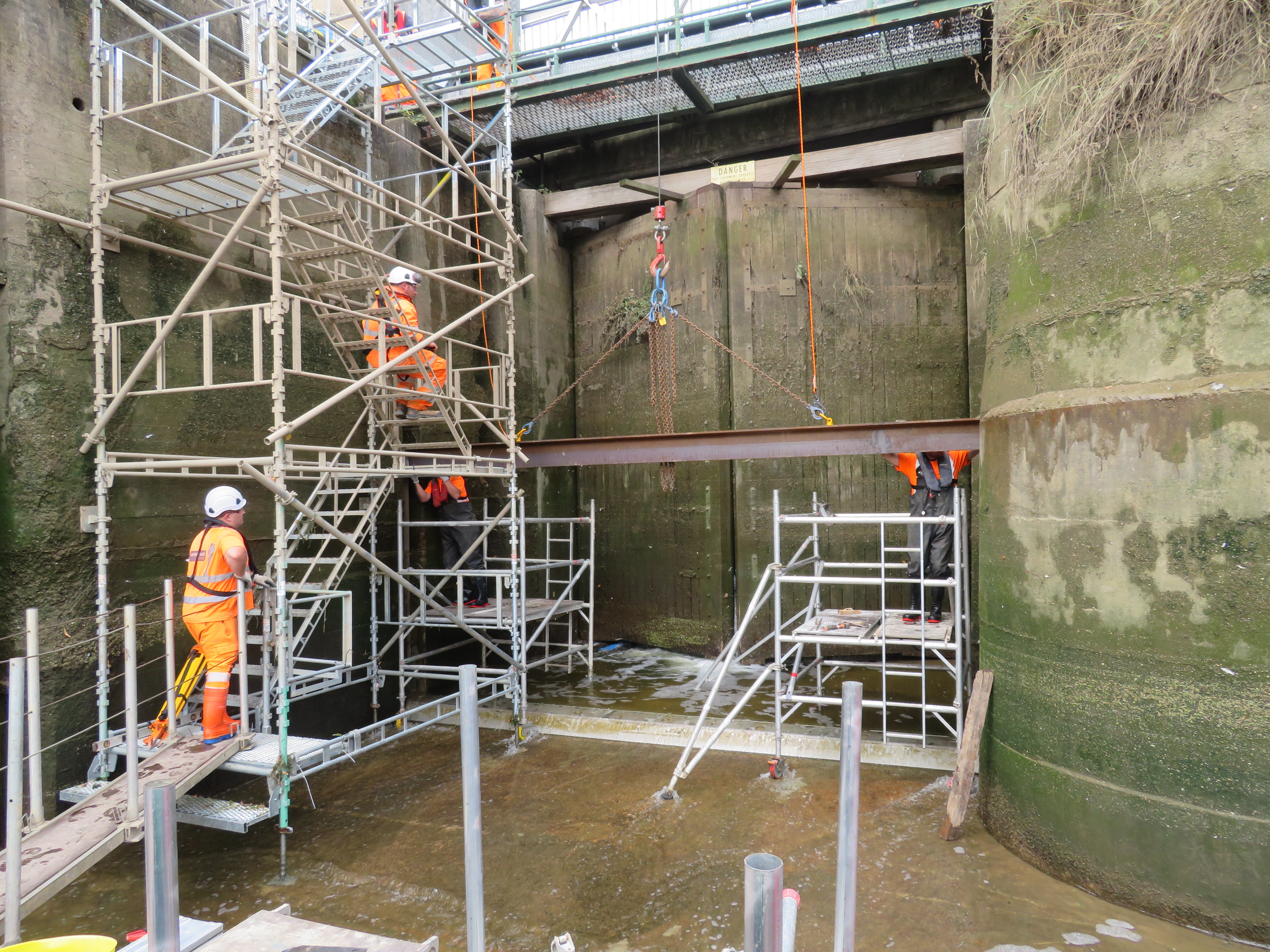
    Since our last update in July, work has continued at Grand Sluice to prepare the structure for its full refurbishment. Our contractors Jackson Civil Engineering Ltd. have been carefully installing stop log liners. These are essential as they will allow us to safely dewater the channels when the main refurbishment begins.

    Working with the tides on the downstream side has been particularly challenging. At low tide, the team can work on the bottom sections in dry conditions. But when the tide is higher, they need boats to install the liners.

    Upstream, significant work has taken place on the apron. Many of the timbers here are thought to have been in place since the sluice was built, making them over 250 years old! They have worn down over time as sand and gravel has passed through the sluice. These are now being replaced with new oak timbers to create a strong and even surface.

    As winter approaches, we will be pausing works at the sluice. This is a planned step to reduce flood risk and make sure the gates stay fully operational during wetter months. This approach follows best practice and was also used in the 1980's when the large timber tidal doors were refurbished. Pausing now also avoids the risk of costly delays if flooding were to force work to stop unexpectedly.

    While the sluice works pause, the contractor’s compound near Boston Rowing Club will be made smaller. The site will still be used to support other works on the Lower Witham.

    We expect to return to site in spring 2026 to continue the refurbishment. This will include replacing the gates. In the meantime, our project team will be finalising the detailed designs for these new gates, which will form the core of the main works.


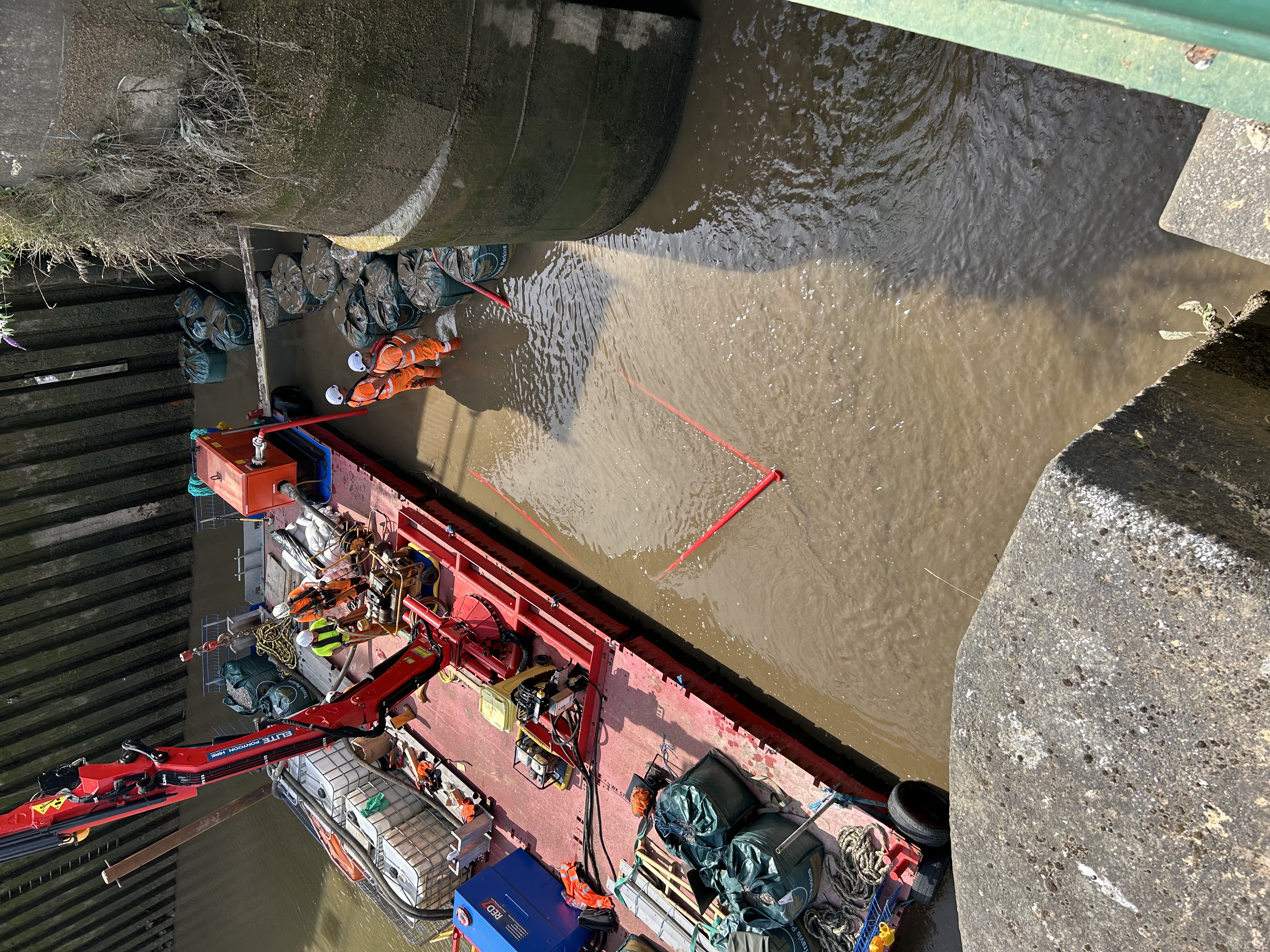
    A contractor installing stop log liners on on the downstream side of Grand Sluice.


    Contractors working on the downstream side of Grand Sluice during low tide.


  • Phase One: Embankments

    We are pleased to share the Full Business Case for this part of project has been approved. This means the team can now move ahead with delivering works on the ground, where funding allows.

    Preparations are already underway. The works have been put out to tender, and we've recently completed the evaluation process. Our preferred supplier will be announced by the end of October. In the meantime, the team is identifying areas where vegetation will need to be removed to reduce flood risk and allow space for maintenance works. We're also working with Lincolnshire County Council to apply for any necessary footpath closures.

    When we remove habitat such as trees and bushes for flood defence work, we must replace it elsewhere. This is known as mitigation. We are now planning the first phase of mitigation planting to replace vegetation removed during the embankment works. This will include planting new trees.

    The work will take place next to Hardy Gang Wood, part of the Bardney Limewoods and a designated Site of Special Scientific Interest (SSSI). While the new planting won’t automatically become part of the SSSI, the team is planning to use a similar mix of tree species to complement the existing woodland.

    We are working closely with partners including Lincolnshire County Council, the Internal Drainage Board, Natural England, Forestry England, and the tenant farmer to make sure the planting fits with their needs and the local landscape.

    Land where mitigation plating will take place.


  • Sustainable Recovery Pilot project

    It is recognised it will take time to agree on and put in place a more long-term and resilient approach to managing flood risk in the project area. In the meantime, it’s important we’re ready for any flooding that might happen.

    Last year, we started work on the Sustainable Recovery Pilot Contingency Plan, a short-term approach while we work on the bigger picture. Partners came together to share their plans, procedures and information on how they operate assets like pumps and penstocks.

    We used this local knowledge to work out which actions work best, which ones to avoid, and where we need to think carefully. The aim is to make sure we’re all working together in the most effective way to support the community if flooding happens.

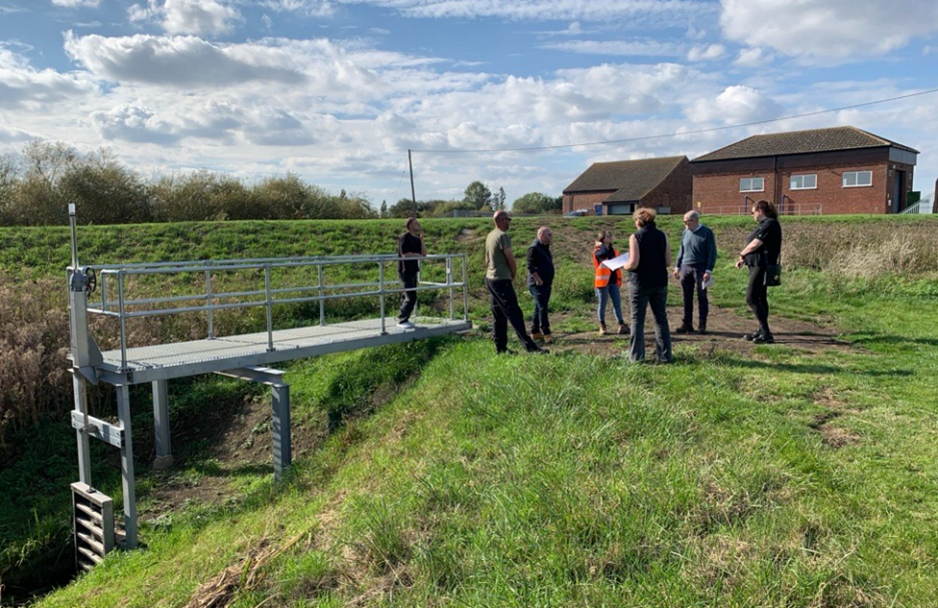
    Recently teams from the Environment Agency and Witham Third District Internal Drainage Board have been trialling this plan ahead of the winter, running through a simulation as well as getting out on site to visit and learn about key locations.

    The Sustainable Recovery Pilot project is a Fens 2100+ pilot project. Fens 2100+ is developing a Fens-wide approach to managing flood risk in a way that balances the needs of people, the environment and agriculture, both now and in the future.

    Witham Third District Internal Drainage Board and Environment Agency staff at New Cut Drain penstock.


  • Water situation

    On 01 July 2025 our area, Lincolnshire and Northamptonshire (LNA), entered Prolonged Dry Weather Status (PDW). The end of August and beginning of September saw wetter weather. This had a beneficial impact on rivers however groundwater levels largely remain below long term-term averages for this time of year. Based on current predictions, even a winter that sees average rainfall will not be enough to recharge these vital supplies.

    Dry weather and flooding

    During dry weather it is important to remain vigilant and prepared for flooding, particularly ‘surface water’ flooding. The extremely dry conditions we are experiencing increase that risk, with hard, dry ground having the same effect as roads and paved surfaces in sudden rainfall events. In extreme conditions, it can also cause rivers to rise very quickly increasing the risk of ‘fluvial’ flooding.

    How you can help

    We can all do our part to use water wisely and manage this precious resource.

    • Visit Waterwise for useful water saving tips and resources.
    • For drought-related concerns, contact Anglian Water via their website or by phone. The specific "drought" contact is drought@anglianwater.co.uk. You can find information and report issues on their website, Anglian Water.
    • Report sightings of fish in distress or other impact on the environment by telephoning our 24hr incident hotline: 0800 807060 or via our new online reporting process which can be accessed here: Report an environmental problem - GOV.UK.

    Useful links

    More information is available on our website: Dry Weather Information 2025 | Engage Environment Agency.

    GOV.UK blogs - Drought impacts continue despite changeable weather – Creating a better place , Winter farm preparation: a guide for farmers after a dry season – Creating a better place

    Drought summary reports are available here: https://www.gov.uk/government/publications/dry-weather-and-drought-in-england-summary-reports.

    Should you have any questions or need to contact us further, please do not hesitate to do so using the email address: LNcorrespondence@environment-agency.gov.uk.

  • River Witham Flood Warning Service improvements

    Our Flood Resilience Team has made improvements to the Flood Warning Service for communities along the River Witham between Lincoln and Boston.

    From now on, flood warnings will be issued for either a breach or overtopping scenario. Traditionally Flood Warnings are issued when overtopping is expected to affect property. It will now be possible to let communities know about a breach as soon as we become aware.

    The existing five fluvial Flood Warning Areas for the River Witham have been divided into 21 smaller areas to make warnings more specific. Six additional Flood Warning Areas have also been created for places that are not at risk from overtopping but could still be affected if a breach happened. These changes, going live this month, will make warnings timelier and reduce false alarms for those unlikely to be affected.

    To sign up for flood warnings, go to www.gov.uk/sign-up-for-flood-warnings or call Floodline on 0345 988 1188. You can also check current flood warnings and river levels at www.gov.uk/check-flooding.

    The team is also trying out a new way to raise awareness about flood risks with Flood Ready Eddie, an interactive AI chatbot. Residents in the Lower Witham can 'chat' with Eddie by scanning a QR code or sending a text, to learn how to stay safe and prepared.

    If you’d like more details about the changes in your area or can help spread the word about Flood Ready Eddie through social media, newsletters, or postcards, please contact the Flood Resilience Team at frt.lincsandnorthants@environment-agency.gov.uk

    A fish character Flood Ready Eddie, your virtual assistant to help you be prepared for flooding. He can help you find out how to sign up for flood warnings, monitor river levels online, put an emergency bag together and much more. Scan the QR code or text 'Hello Lower Witham' +447454313667.Lower Witham Flood Ready Eddie

  • Strategy update

    Work is continuing on the strategic baseline report for the area. This report will summarise the evidence gathered about the catchment. It will be used to inform the future strategic plan for the area.

    Work on building the Lower Witham hydraulic model is currently paused, due to the need to incorporate more data across the whole Witham catchment following the winter storms of 2023/2024.

    When completed the modelling will allow us to better understand how a range of scenarios would affect water levels and flood defences, taking into account the latest evidence and projections for climate change.

    Work on the model is expected to restart in summer 2025 and deliver by spring 2026. Future scenarios to be tested using the model will include hypothetical breach locations and different management and maintenance approaches.

  • Phase One: Grand Sluice

    Preparatory works for the Grand Sluice Refurbishment have now begun.

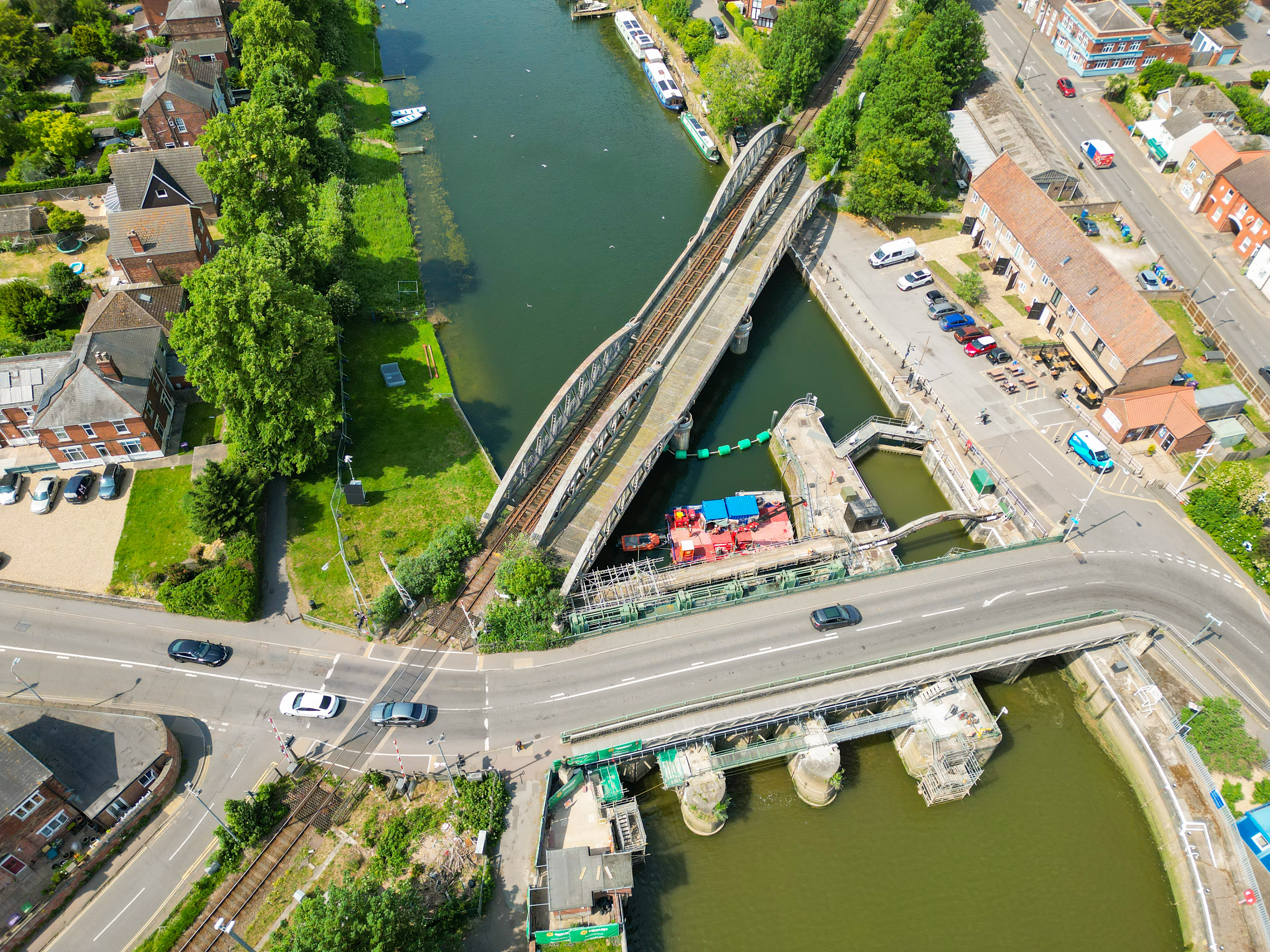
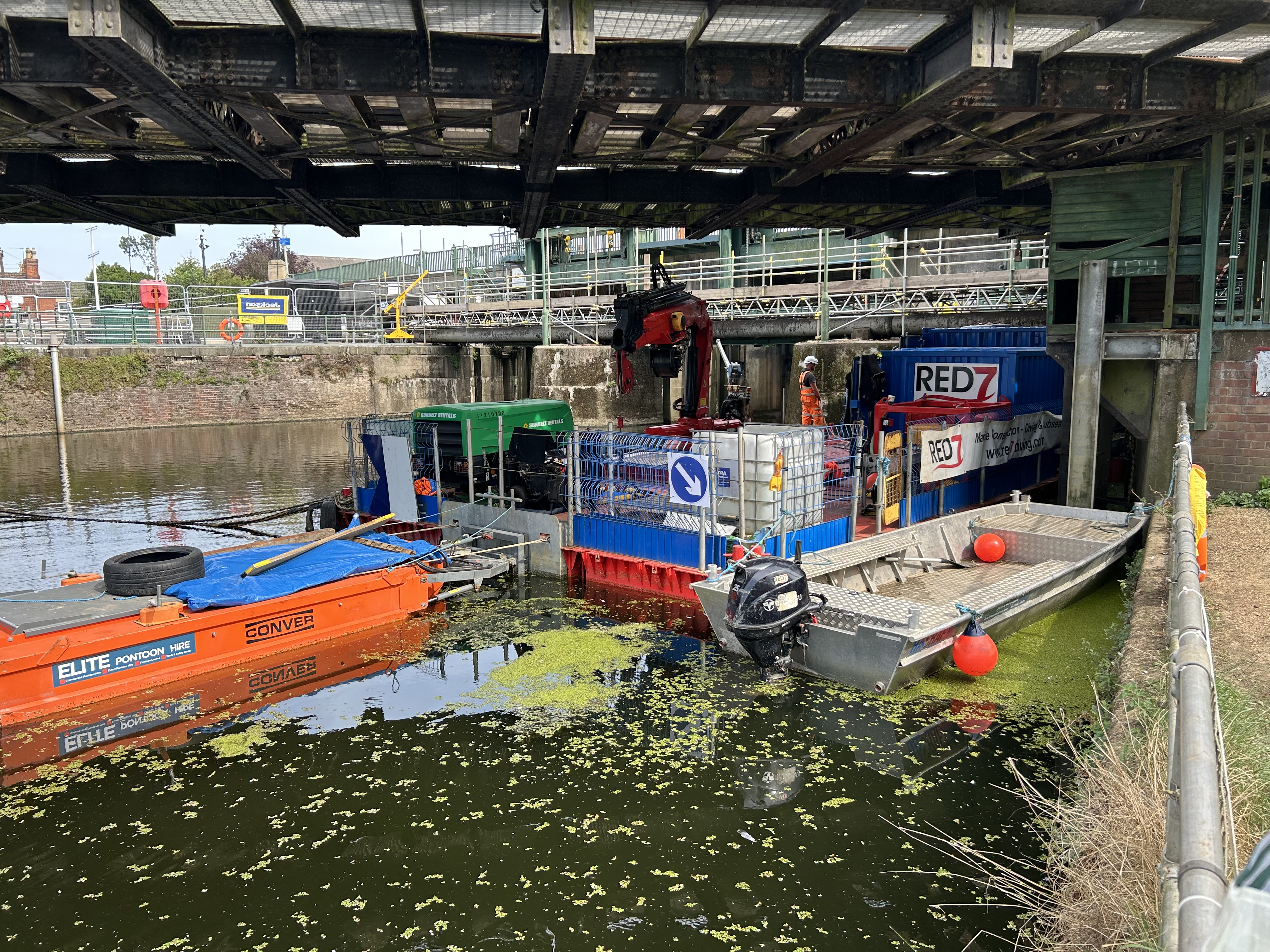
    Our contractors, Jackson Civil Engineering Ltd., are on site and have set up a compound behind the Boston Rowing Club. This will be used as their working area. A barge is also in position on the water to transport materials from the compound to Grand Sluice and is equipped with a crane that will be used during the works.

    This summer’s work will involve installing stop log grooves in each of the three channels, preparing Grand Sluice for the main refurbishment works, which are scheduled to begin in summer 2026.

    In May, the project team hosted drop in events within the community. These were held at both Fenside Community Centre and the Boston Market.

    Over 50 people attended to learn more about the preparatory works that will be taking place this summer. These events provided an opportunity for people to ask questions and express any concerns, leading to many productive discussions.

    Below, you can find answers to some of the most frequently asked questions from these events.

    Grand Sluice FAQ's

    Will these works include road closures?

    Although there are no planned road closures, there will be short durations when our contractors will need to operate traffic marshals during the delivery of materials. These will be scheduled to cause as little disruption as possible.

    Is aquatic weed flushing being considered?

    Yes. The project team are now finalising designs for tilting gate flaps, which are planned to be installed on the new vertical lift gates. These new gates will be installed as part of the main works due to start in 2026. The aim of the tilting flaps is to improve the efficiency of aquatic weed flushing without losing as much water from the system as weed flushing does now.

    We don't plan to open the sluice gates to flush weeds during our contractor's normal working hours (08:00 - 18:00) this summer. Instead, we'll coordinate with the Canal and Rivers Trust to do this in the evenings or during weekends when necessary.


    A barge equipped with a crane that will be used during the Grand Sluice refurbishment preparatory works.


  • Phase One: Embankments

    The project team has worked hard to develop the Full Business Case for the Phase One Embankment works. This has now been submitted for approval. Once approved this will confirm the funding for the project and will allow the team to begin delivering works on the ground.

Page last updated: 16 Mar 2026, 09:56 AM