Category Phase One: Embankments   Show all

  • Phase One: Embankments

    Since January, good progress has been made at several locations along the Lower Witham.

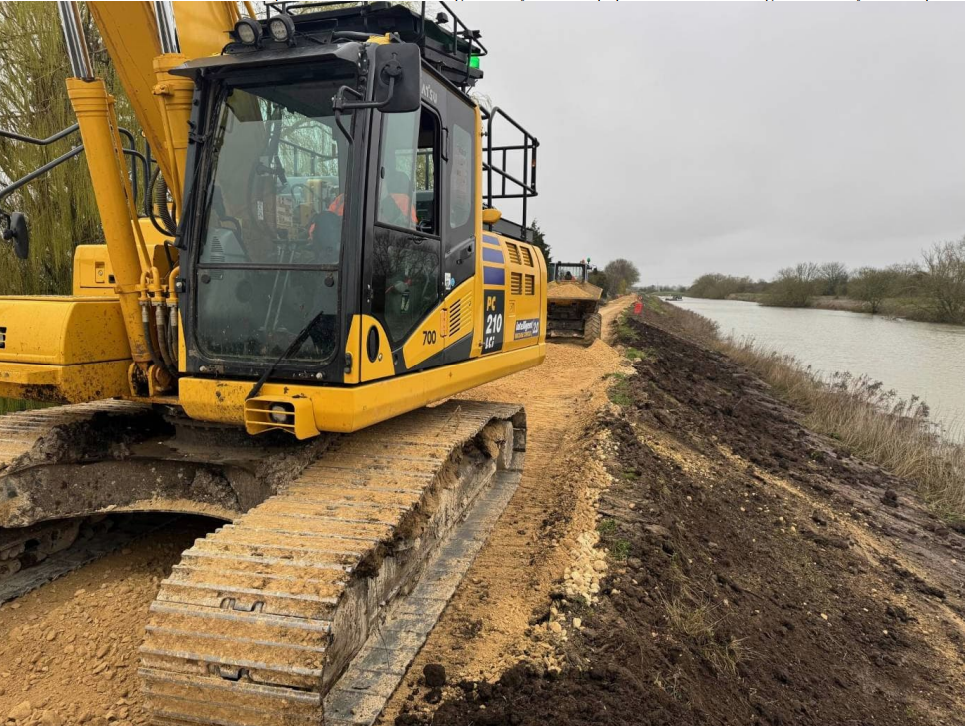
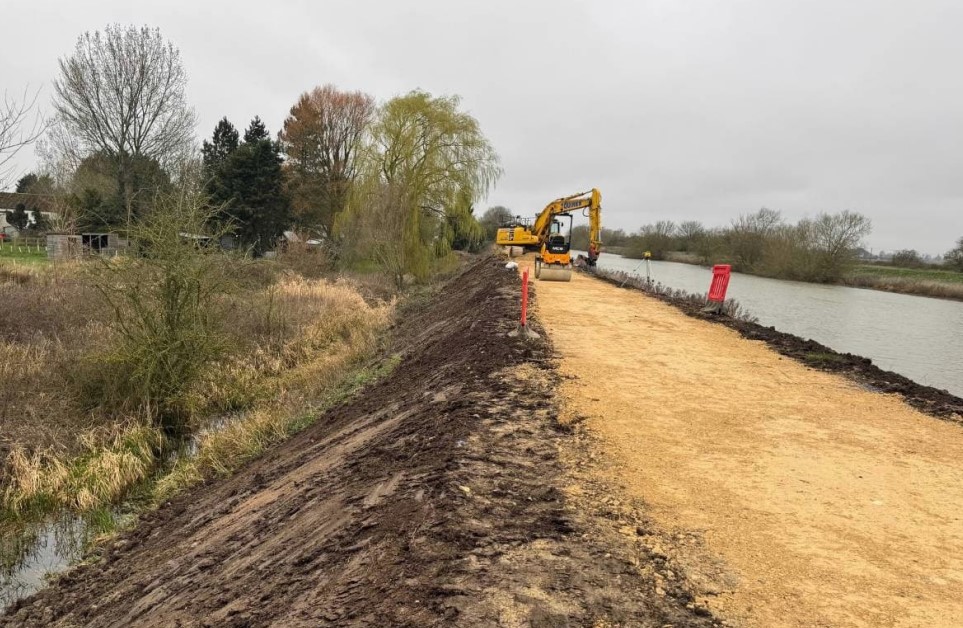
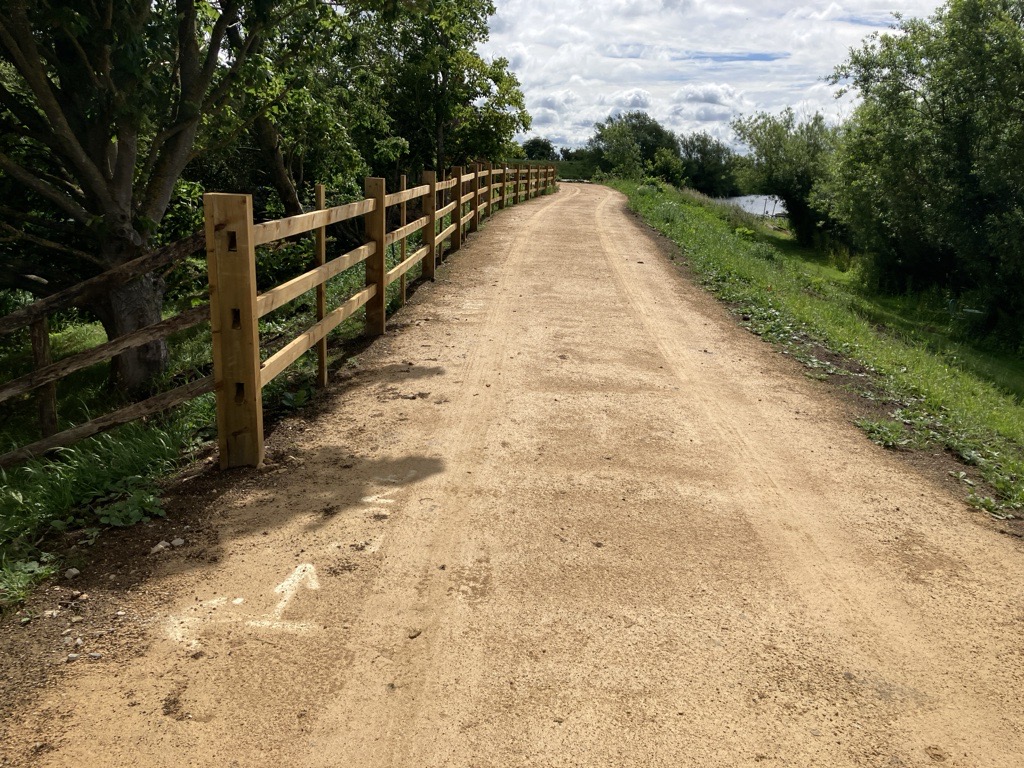
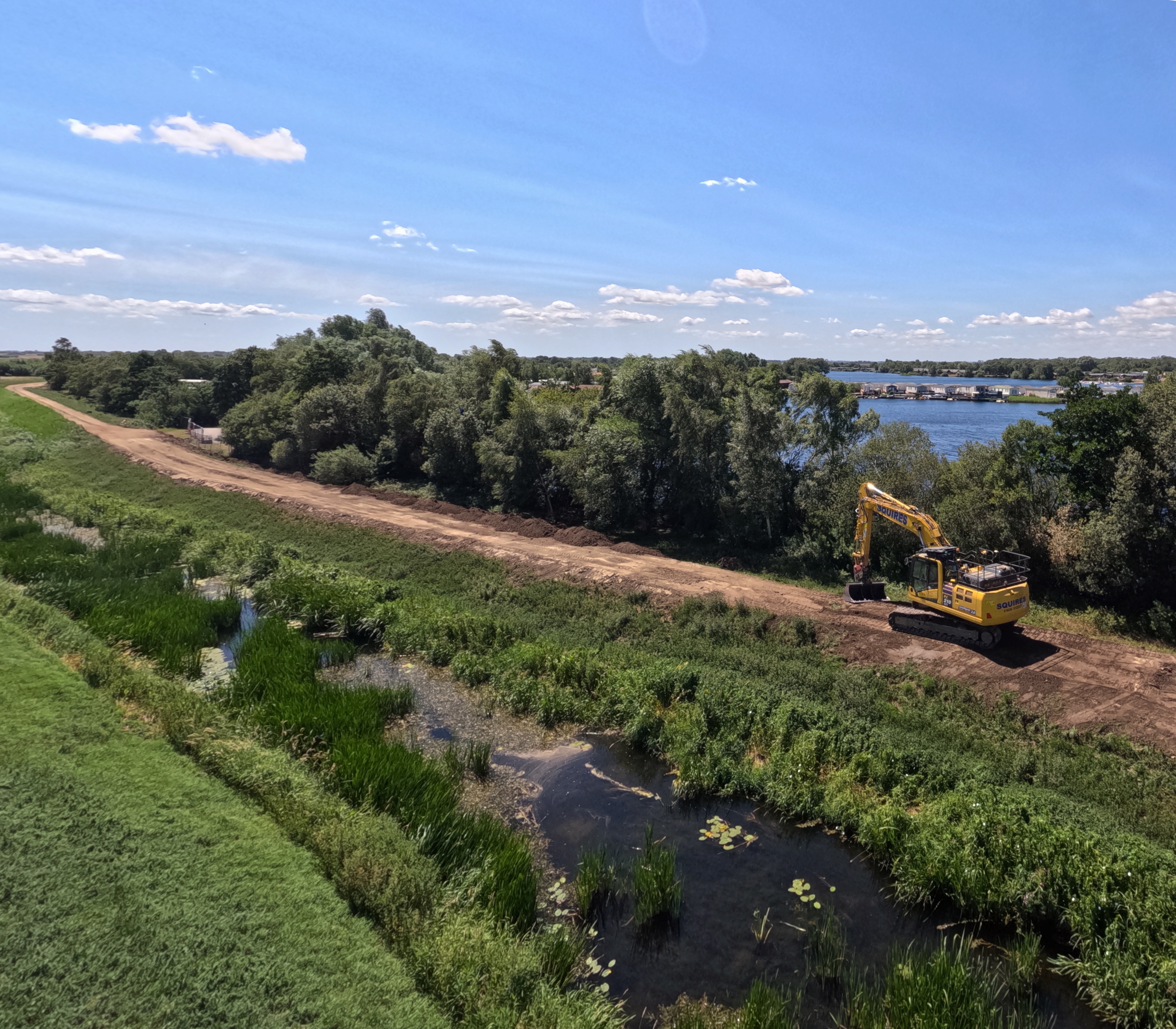
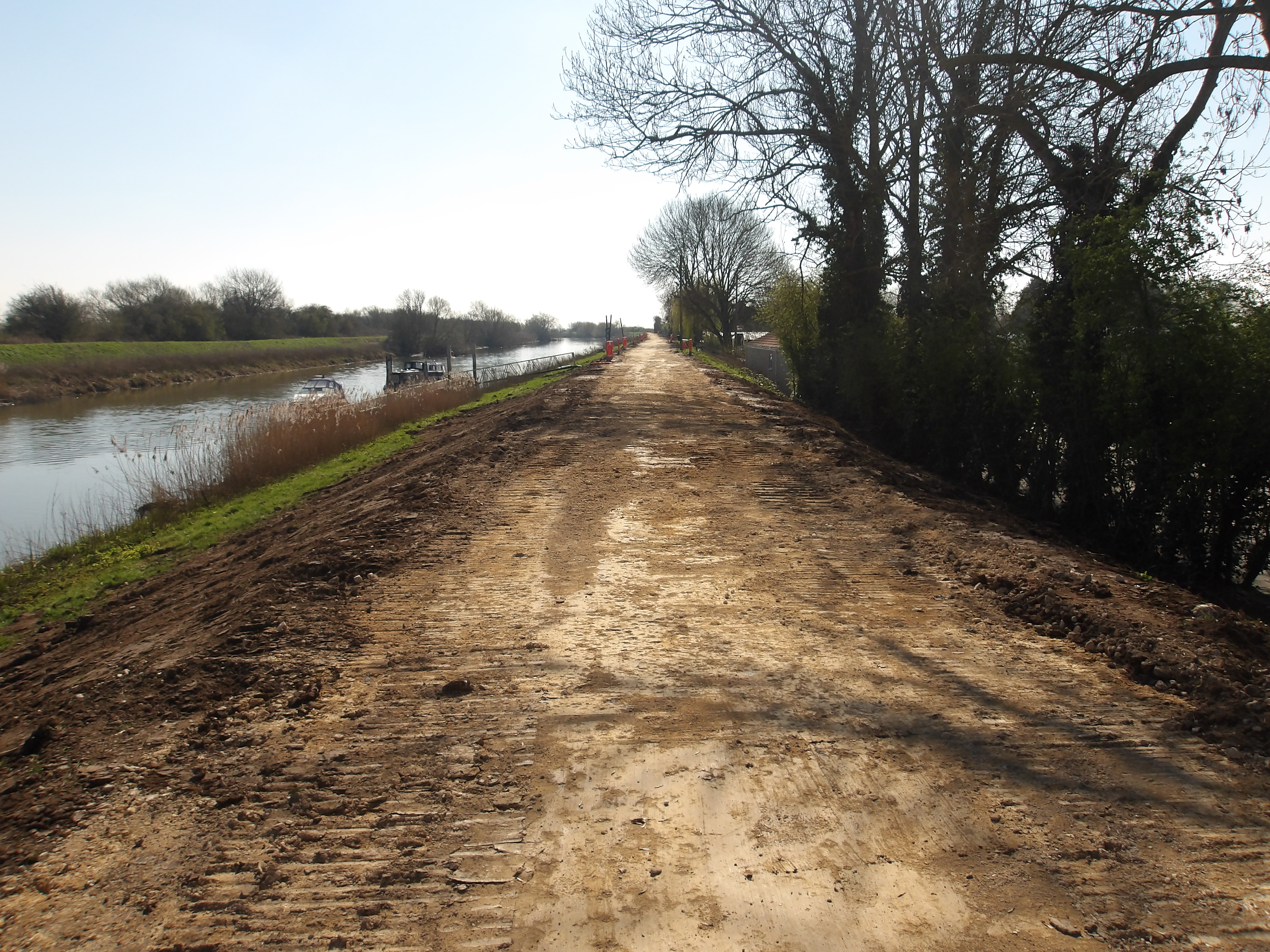
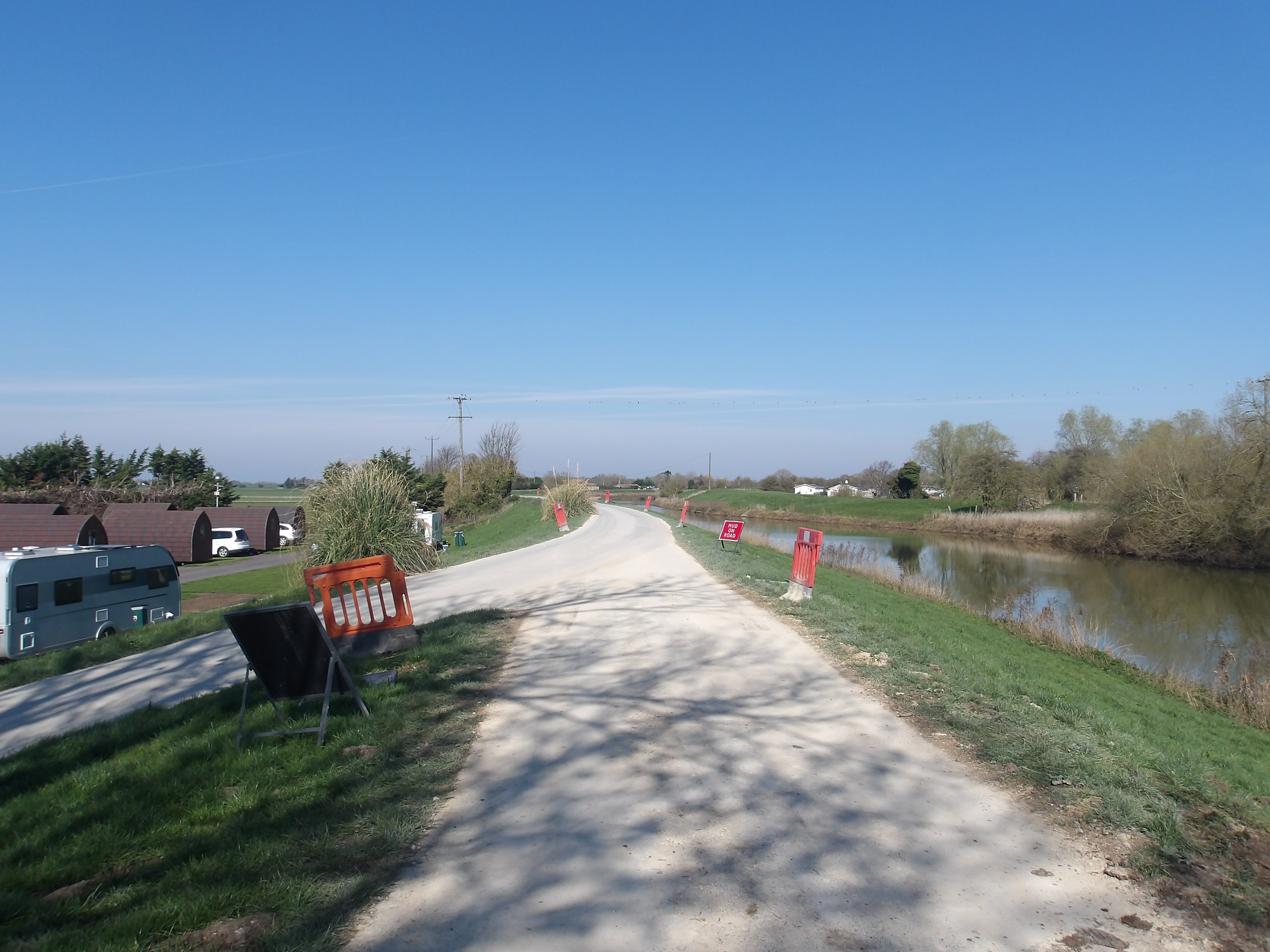
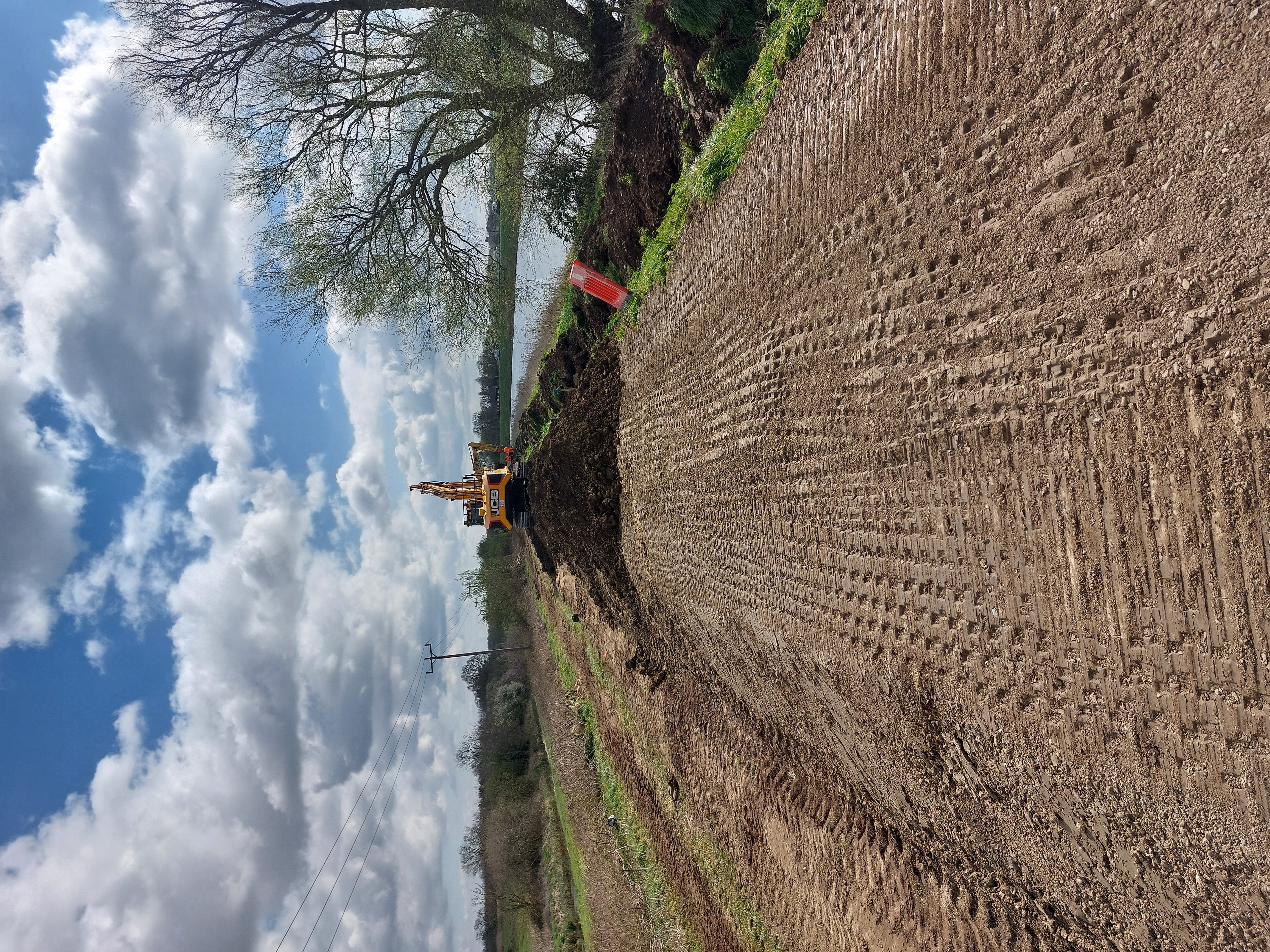
    At Chapel Hill, we have now reinstated the embankment crest to improve flood resilience in the area. The team is finishing the last stages of the work, including shaping the slopes and adding the final surface. Once this is complete, as the landowner we will allow people to use the crest as a walking route. This will create a new opportunity for riverside access while still providing flood protection for the community.

    Close up of a 360 digger on top of a river embankment.Works in progress at Chapel Hill. Repairs to the crest of a river embankment. A digger and a roller are on the top of the embankment in the distance carrying out work. Works nearing completion along the embankment crest at Chapel Hill.


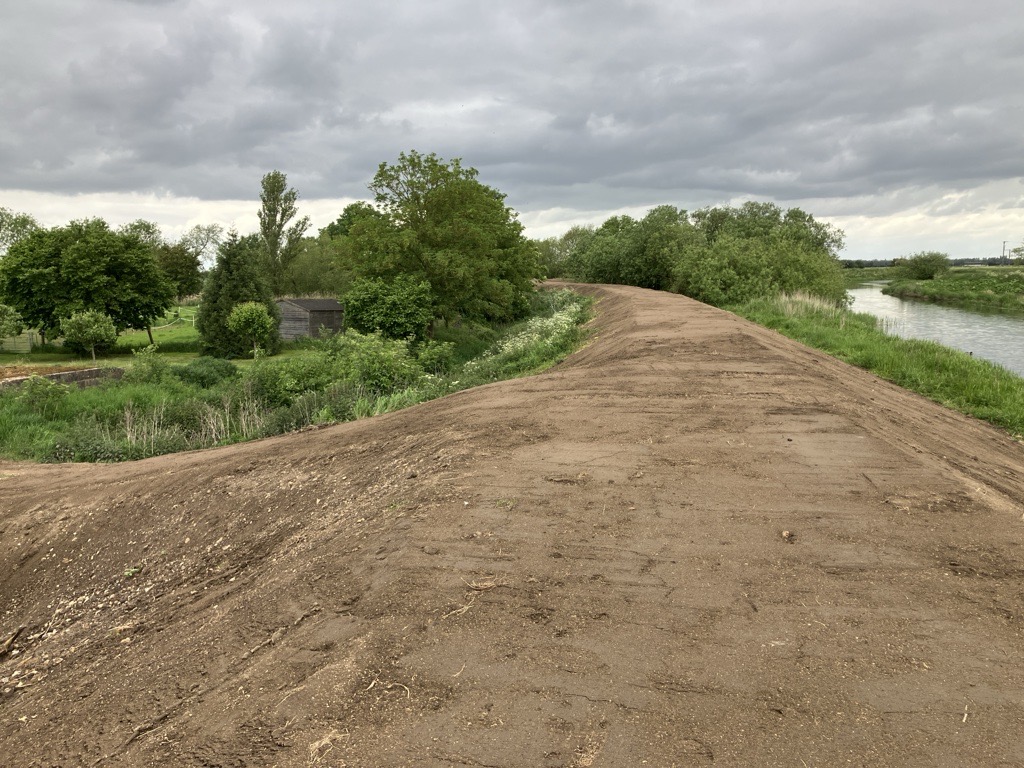
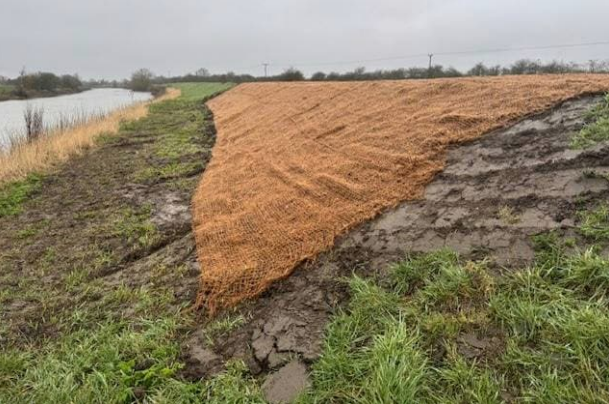
    At Southrey, we have completed work to repair a low spot in front of the White Horse Inn. This strengthens that stretch of the bank and helps ensure a more consistent level of defence.


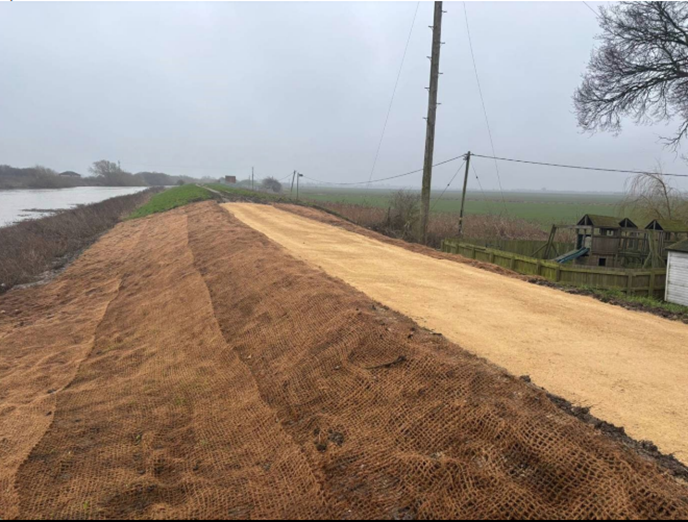
    A raised river embankment with a geotextile mesh covering bare earth where a low spot has recently been repaired.Completed repairs at Southrey.

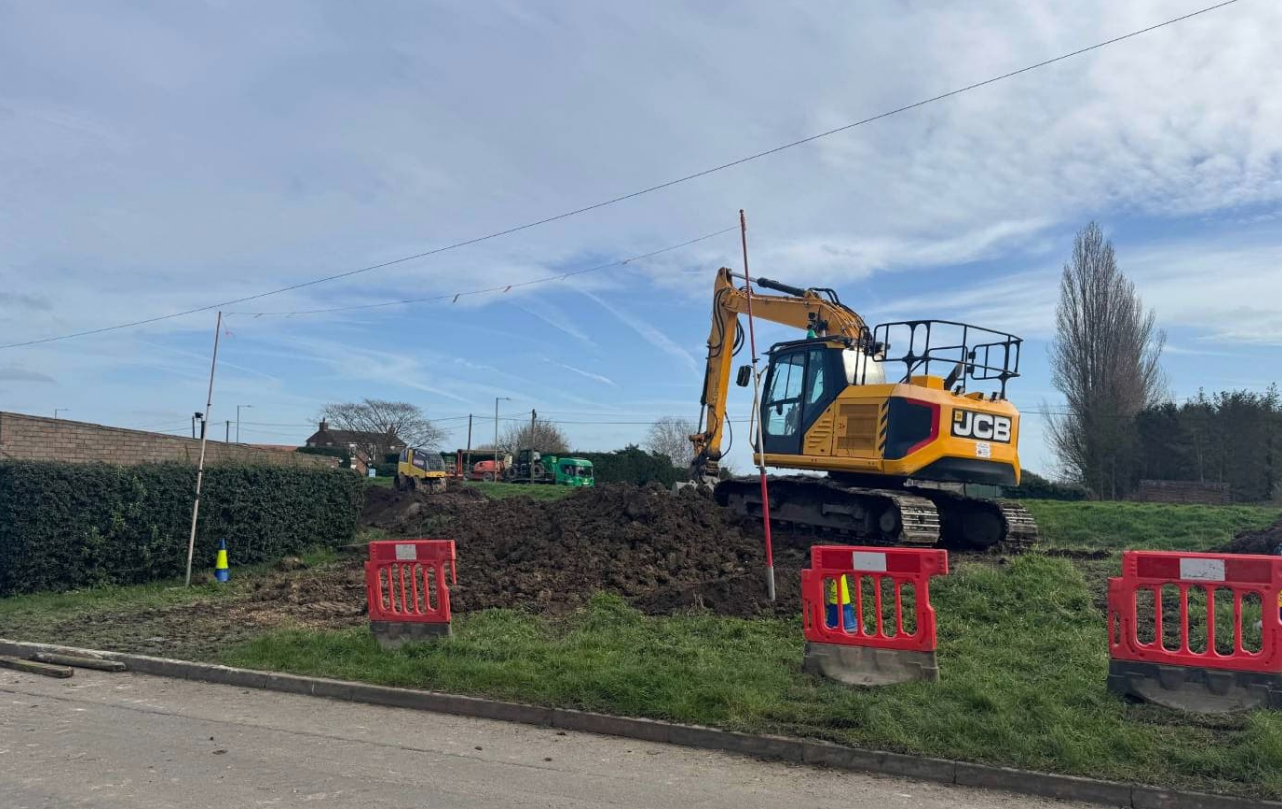
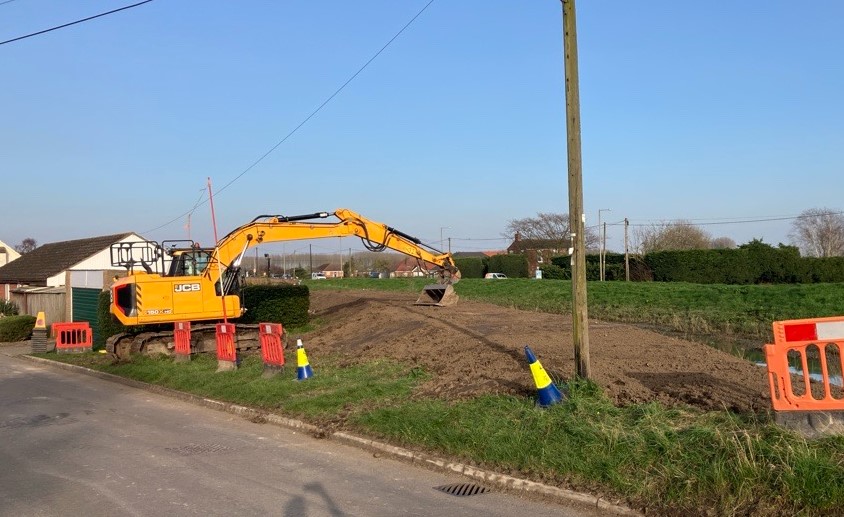
    At Billinghay a section of bank on Skirth Road has now been restored and grass seeded. This will provide better protection against overtopping in the future.


    A digger moving soil on a grass verge near an embankment.Embankment repairs in progress at Billinghay.


    A digger using its bucket to compact soil where repairs have been made on an embankment.Works at Billinghay near completion before the grass seed.


    Further downstream of Kirkstead Bridge, we have started work on additional low spots repairs along the Witham bank to improve resilience here too.


    A raised river embankment with a geotextile mesh covering bare earth where a low spot has recently been restored.Completed works at Woodhall Spa.


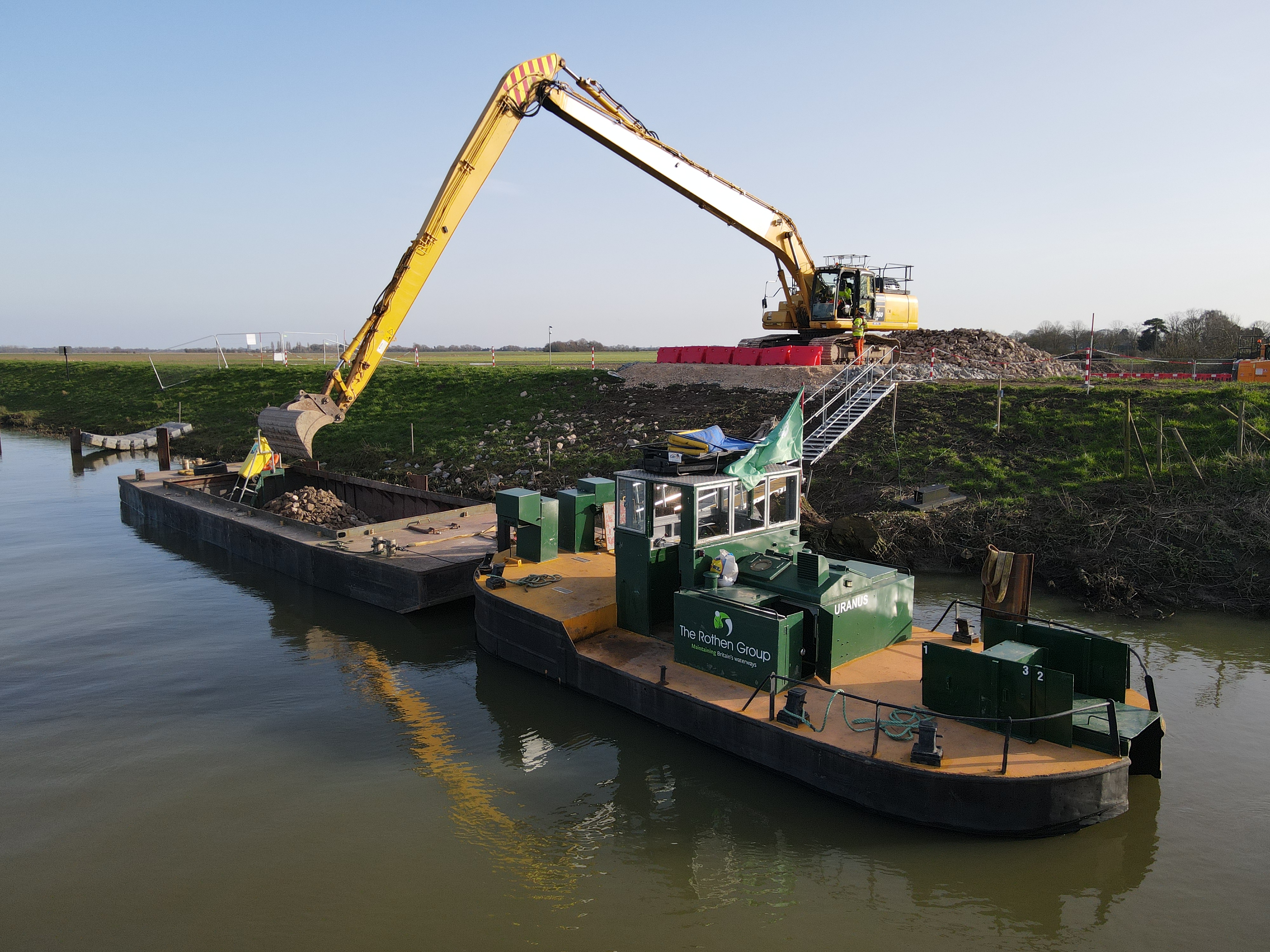
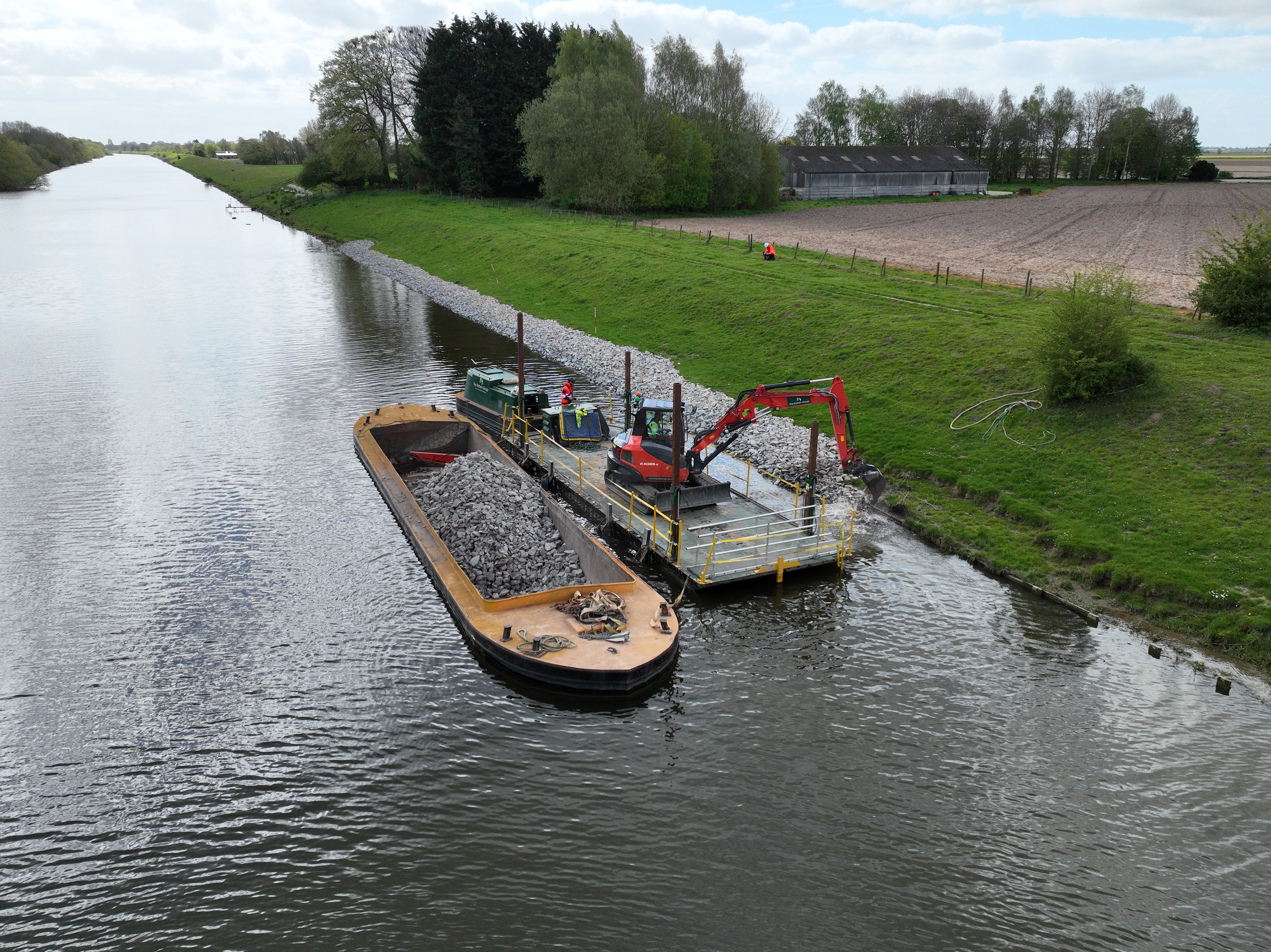
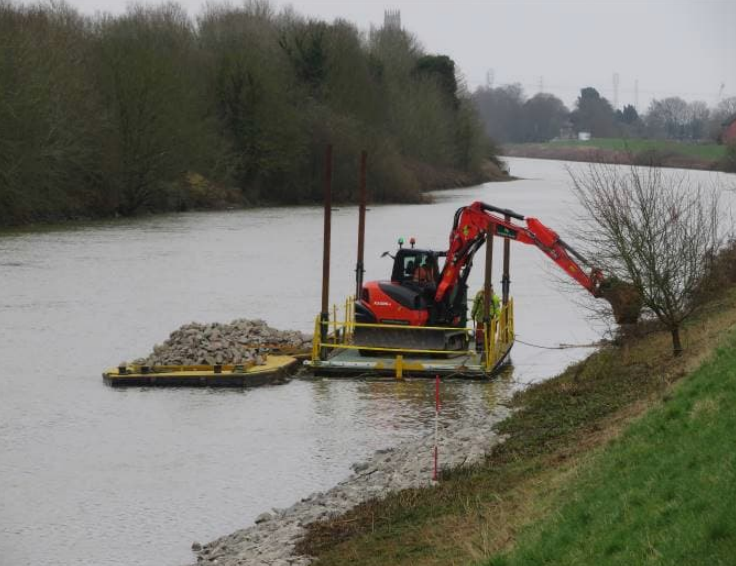
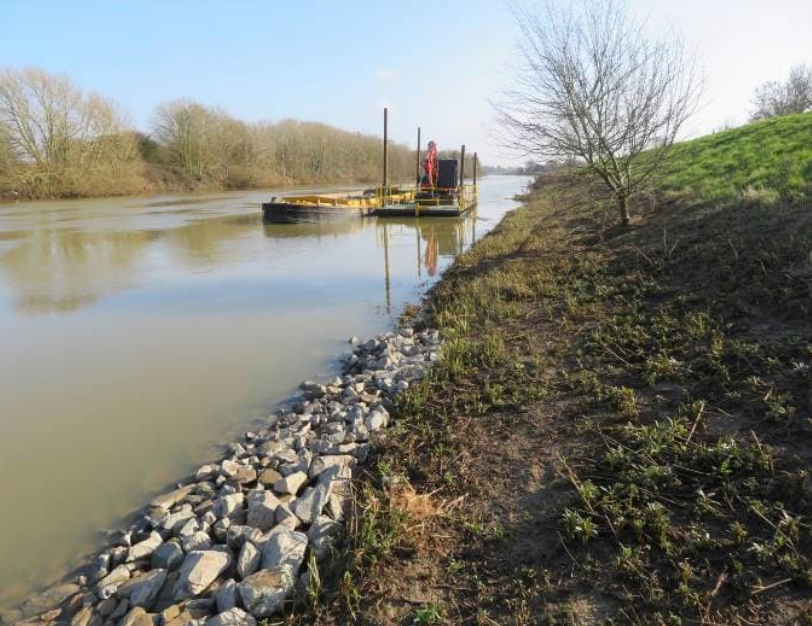
    At the same time, work to protect the toe of the embankments is getting underway. This will be delivered under a separate contract by Jackson Civil Engineering in partnership with Rothen Group. A temporary compound is now set up at Langrick, where stone is loaded onto a barge and taken by tug to the work sites. The stone is placed at the base of the embankment to repair erosion before the barge returns for more. Using this method, the team can install around 100 tonnes of stone per day.

    A close up of stone that has been placed at the bottom of an embankment.Stone in place at the toe of the embankment.


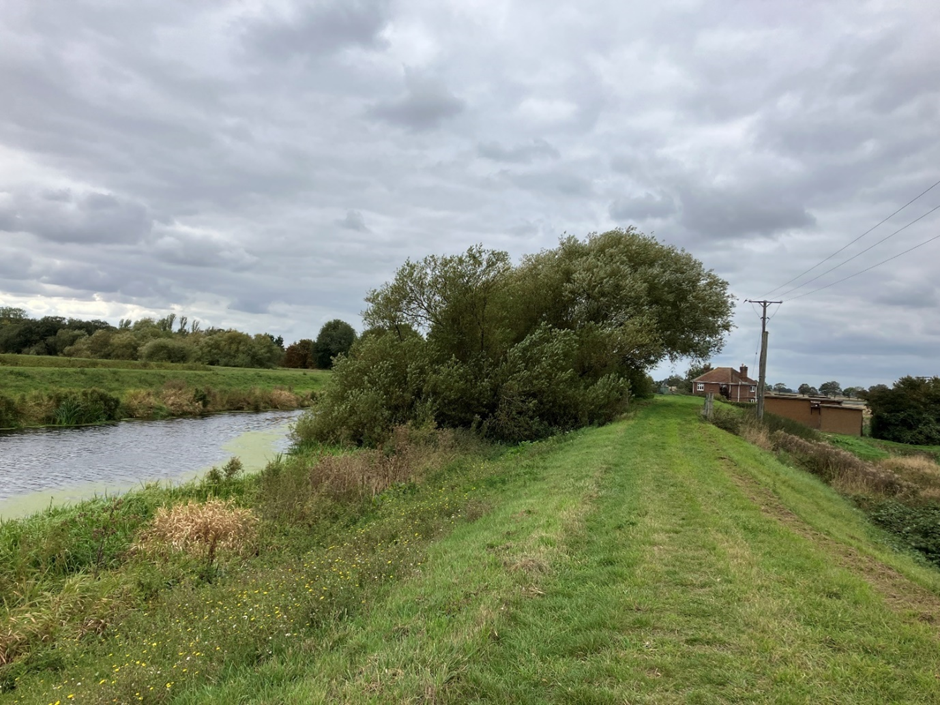
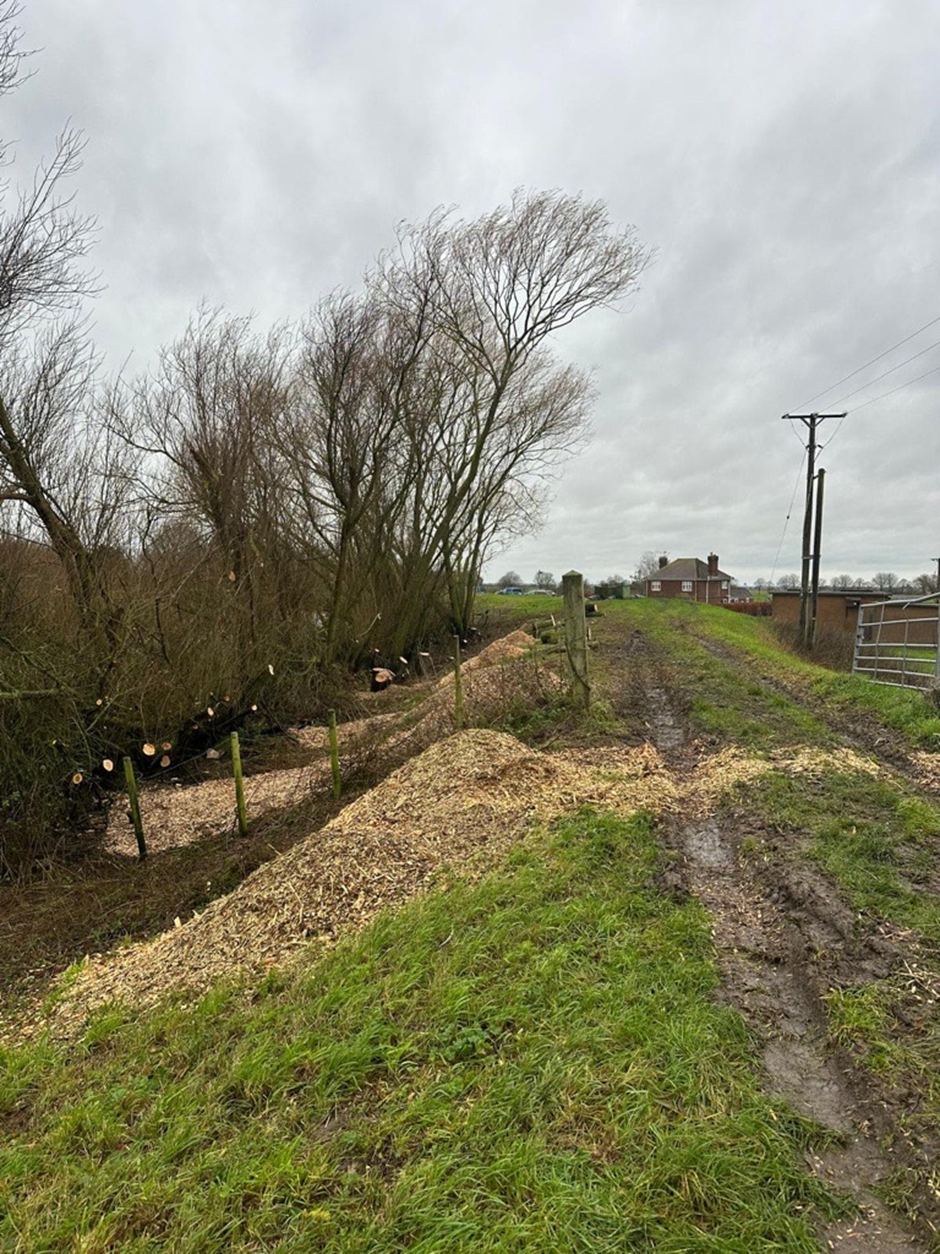
    Before we start these works, we need to cut back some of the vegetation so we have a safe and clear area to work in. Plants along the river are a vital part of the ecosystem but in some instances, they can make the embankments more susceptible to damage. We have only cleared areas we need so we can repair the embankments correctly.

    A raised river embankment with tress and bushes on the riverward side. There a house in the background.Before vegetation removal at Kyme Eau.


    A raised river embankment with some of the trees and bushes on the riverward side cut back. There is a house in the background.After vegetation removal at Kyme Eau.


  • Phase One: Embankments

    In November, Breheny Civil Engineering won the contract to deliver earthworks for this project. Their work includes addressing low spots, managing seepage, and other elements relating to raised riverbanks.

    Since then, works have been progressing well across several smaller sites in the Lower Witham area. Throughout December earthworks were completed at five sites. This involved the team topping up low embankment areas, carrying out localised repairs, and removing vegetation to improve long-term resilience.

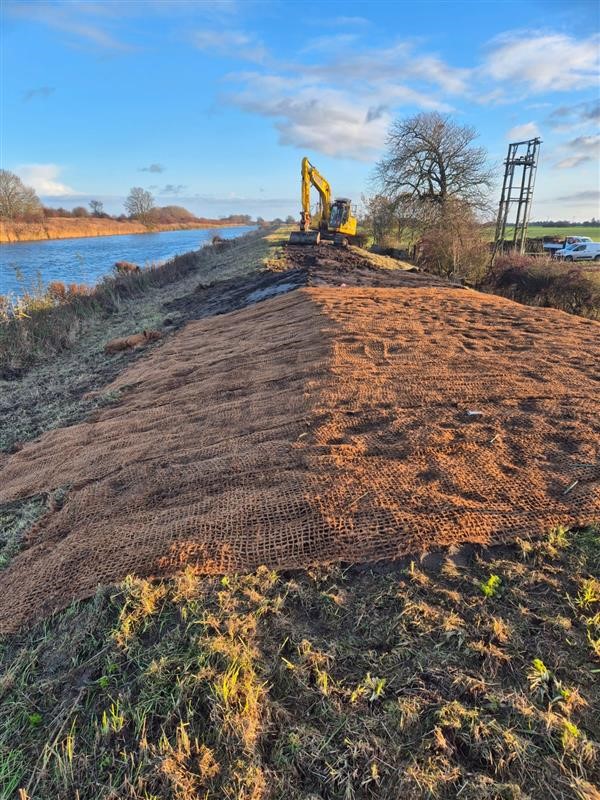
    At some sites, soil has been added to raise low areas, then seeded with grass and covered with a biodegradable geotextile. This material helps grass germinate and stabilises the soil while roots establish. Once the grass takes hold, the covering naturally breaks down, leaving a strengthened embankment. You may see this method used more widely where embankments are raised.

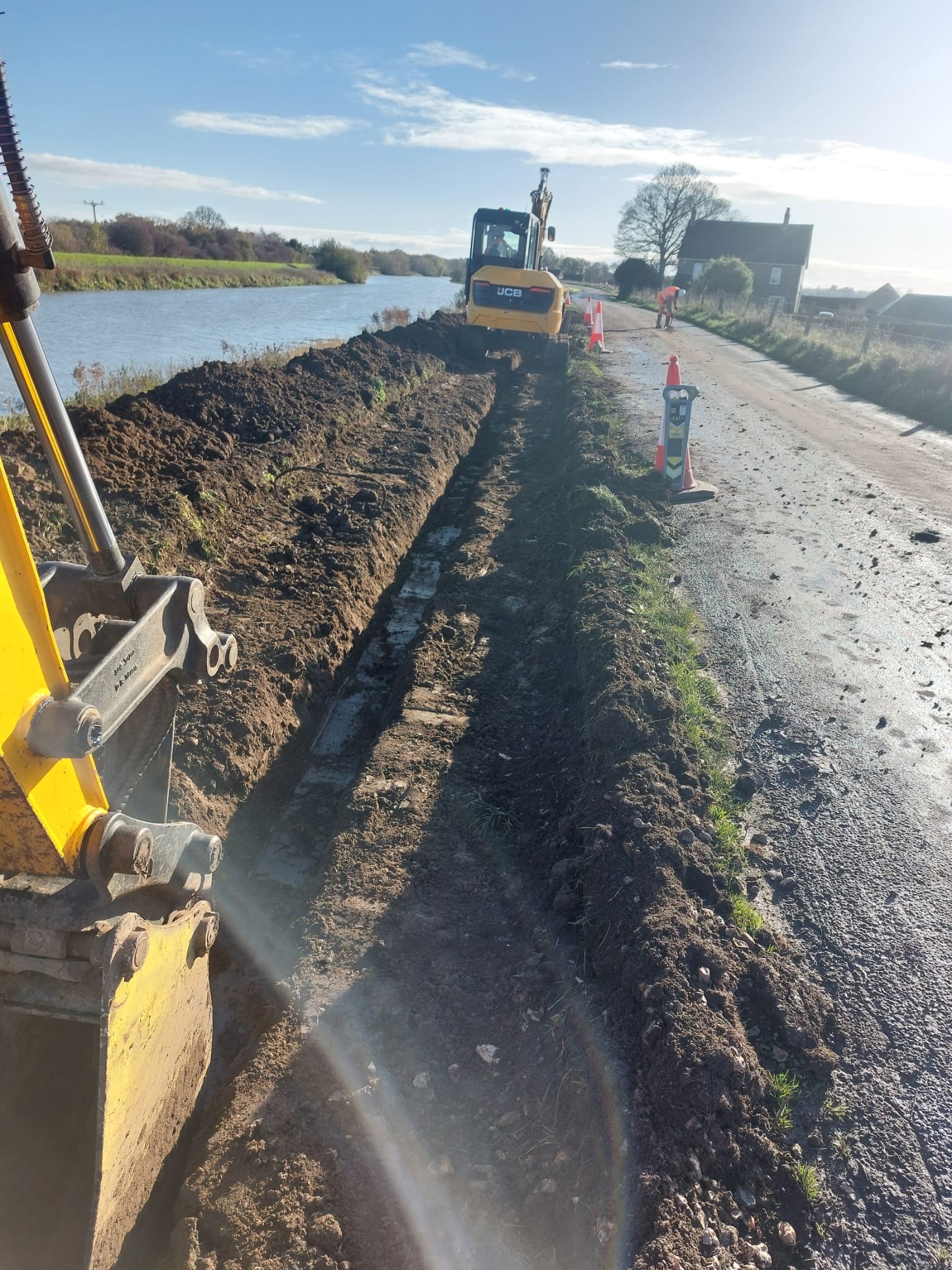
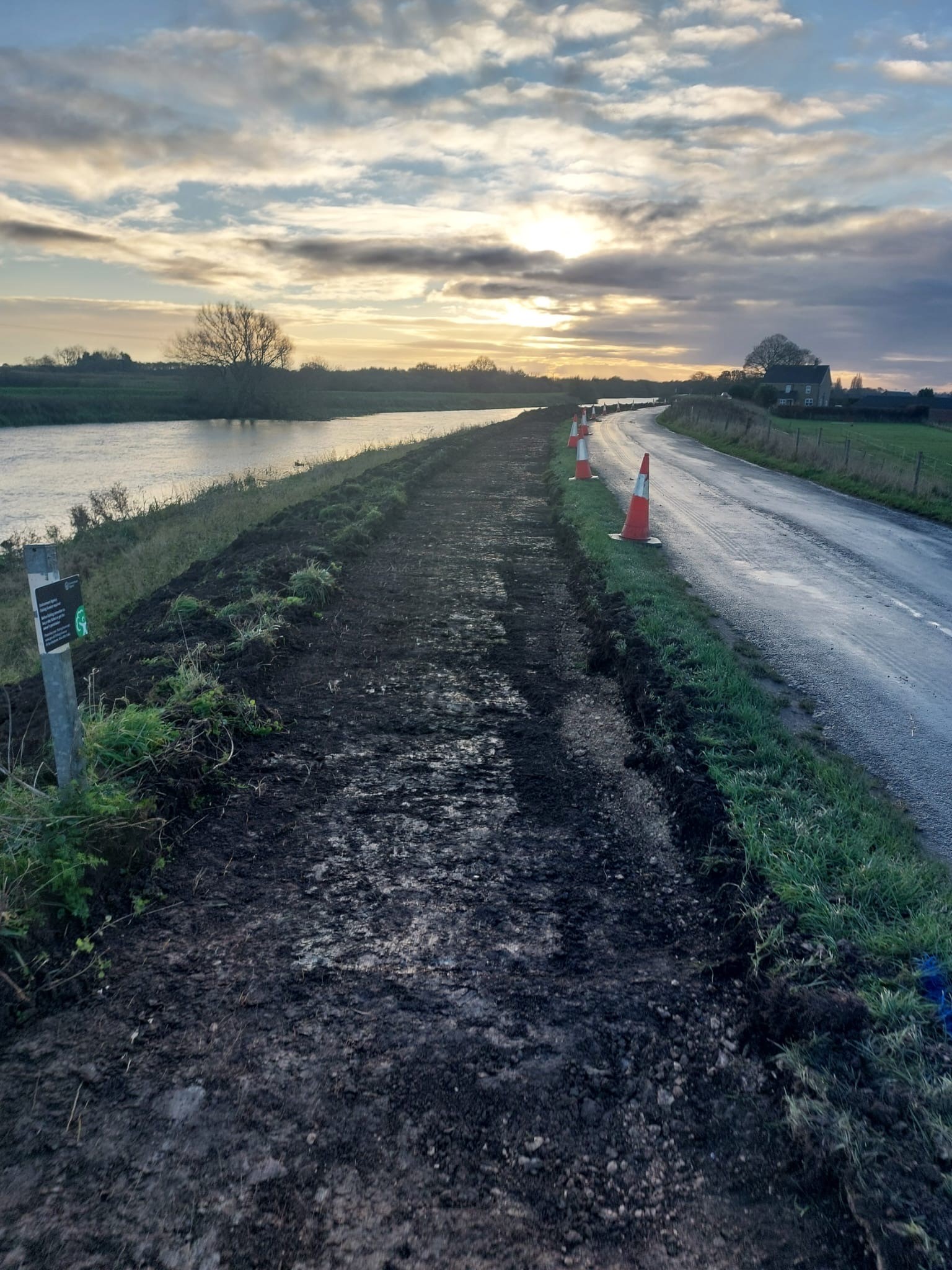
    A raised river embankment with a geotextile mesh covering bare earth where a low spot has recently been raised. There is a small digger in the background. Biodegradable geotextile covering an area where a low spot has recently been raised. Along the Witham Bank roadside flood wall, we have strengthened foundations by excavating a narrow trench and installing compacted clay. This reduces seepage risk and prevents future settlement of the wall. The defence height will now be improved by building a low concrete-bag wall to tie the embankment into the existing flood wall.


    Excavation works taking place along a river embankment, with a digger digging a trench and traffic cones marking the work area on the road.Excavation works carried out along a stretch of the Witham Bank flood wall.


    Traffic cones and recent ground works along a river embankment at sunset.Works completed along a stretch of the Witham Bank flood wall.


    Works were paused over Christmas and will resume in the New Year.

  • Phase One: Embankments

    We are pleased to share the Full Business Case for this part of project has been approved. This means the team can now move ahead with delivering works on the ground, where funding allows.

    Preparations are already underway. The works have been put out to tender, and we've recently completed the evaluation process. Our preferred supplier will be announced by the end of October. In the meantime, the team is identifying areas where vegetation will need to be removed to reduce flood risk and allow space for maintenance works. We're also working with Lincolnshire County Council to apply for any necessary footpath closures.

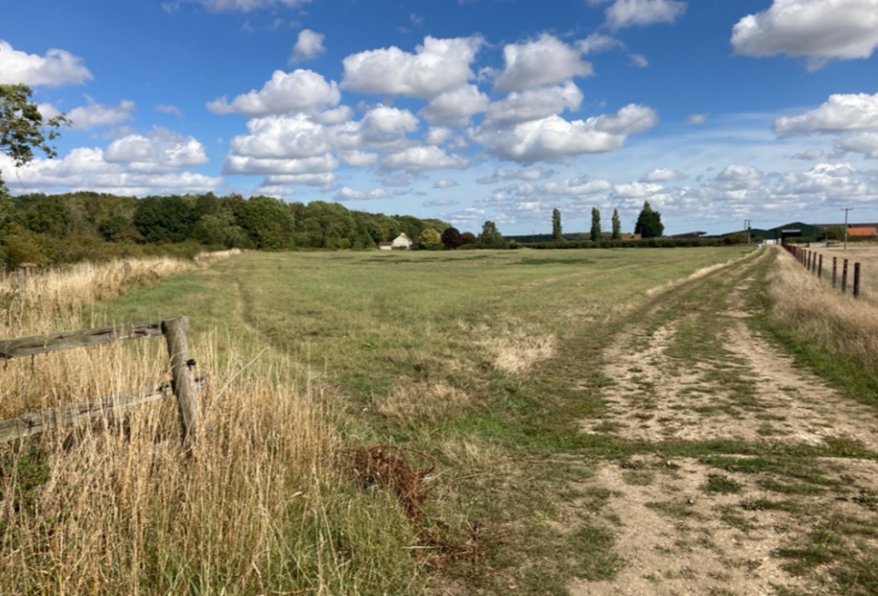
    When we remove habitat such as trees and bushes for flood defence work, we must replace it elsewhere. This is known as mitigation. We are now planning the first phase of mitigation planting to replace vegetation removed during the embankment works. This will include planting new trees.

    The work will take place next to Hardy Gang Wood, part of the Bardney Limewoods and a designated Site of Special Scientific Interest (SSSI). While the new planting won’t automatically become part of the SSSI, the team is planning to use a similar mix of tree species to complement the existing woodland.

    We are working closely with partners including Lincolnshire County Council, the Internal Drainage Board, Natural England, Forestry England, and the tenant farmer to make sure the planting fits with their needs and the local landscape.

    Land where mitigation plating will take place.


  • Phase One: Embankments

    The project team has worked hard to develop the Full Business Case for the Phase One Embankment works. This has now been submitted for approval. Once approved this will confirm the funding for the project and will allow the team to begin delivering works on the ground.