
Phase One: Embankments
Since January, good progress has been made at several locations along the Lower Witham.
At Chapel Hill, we have now reinstated the embankment crest to improve flood resilience in the area. The team is finishing the last stages of the work, including shaping the slopes and adding the final surface. Once this is complete, as the landowner we will allow people to use the crest as a walking route. This will create a new opportunity for riverside access while still providing flood protection for the community.
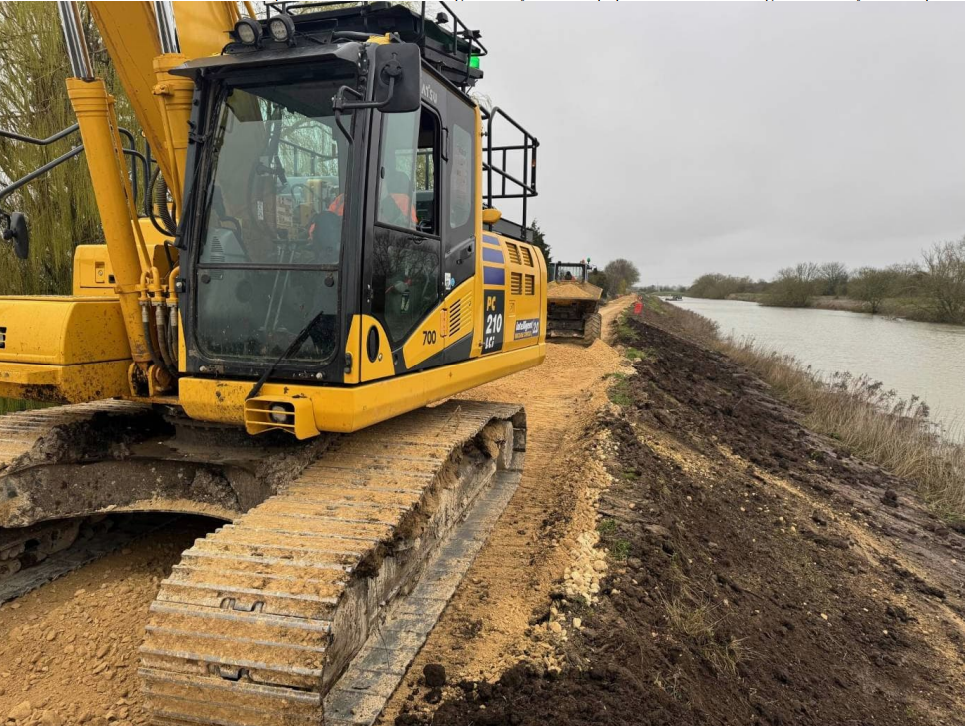 Works in progress at Chapel Hill. Works in progress at Chapel Hill. |
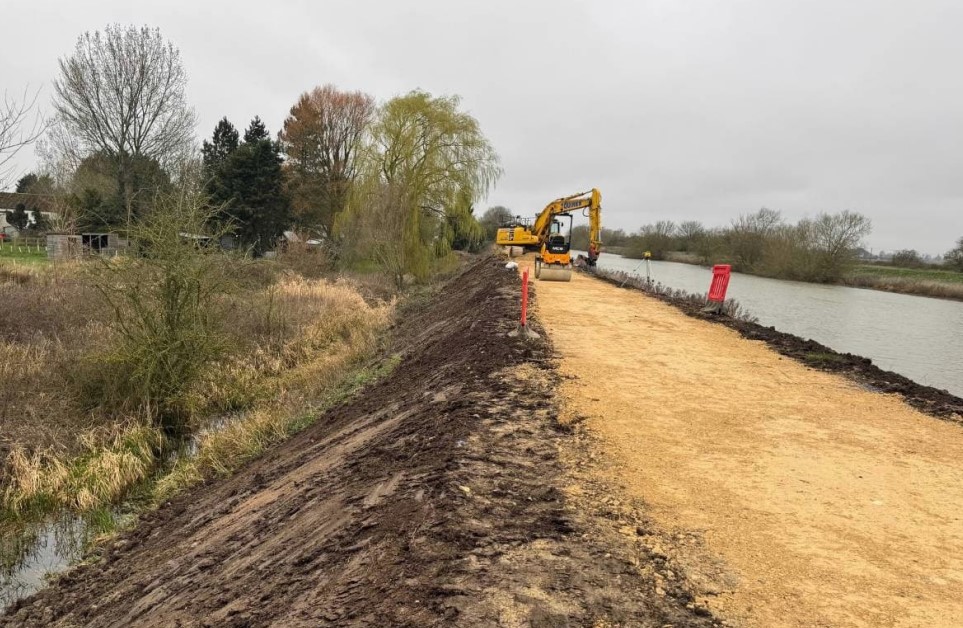 Works nearing completion along the embankment crest at Chapel Hill. Works nearing completion along the embankment crest at Chapel Hill. |
At Southrey, we have completed work to repair a low spot in front of the White Horse Inn. This strengthens that stretch of the bank and helps ensure a more consistent level of defence.
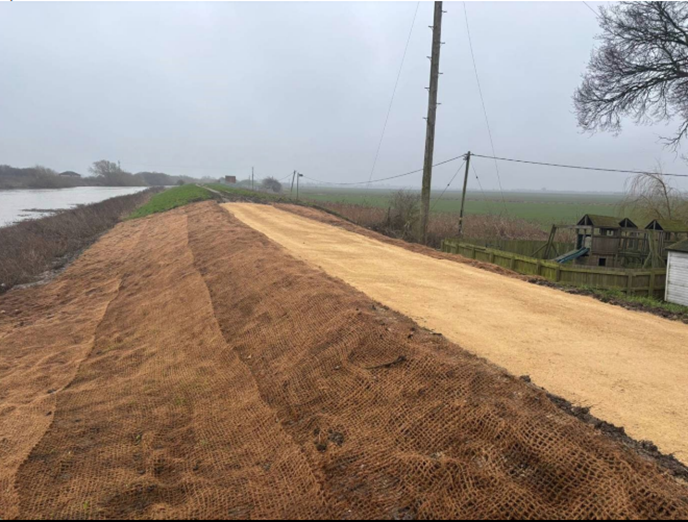 Completed repairs at Southrey.
At Billinghay a section of bank on Skirth Road has now been restored and grass seeded. This will provide better protection against overtopping in the future.
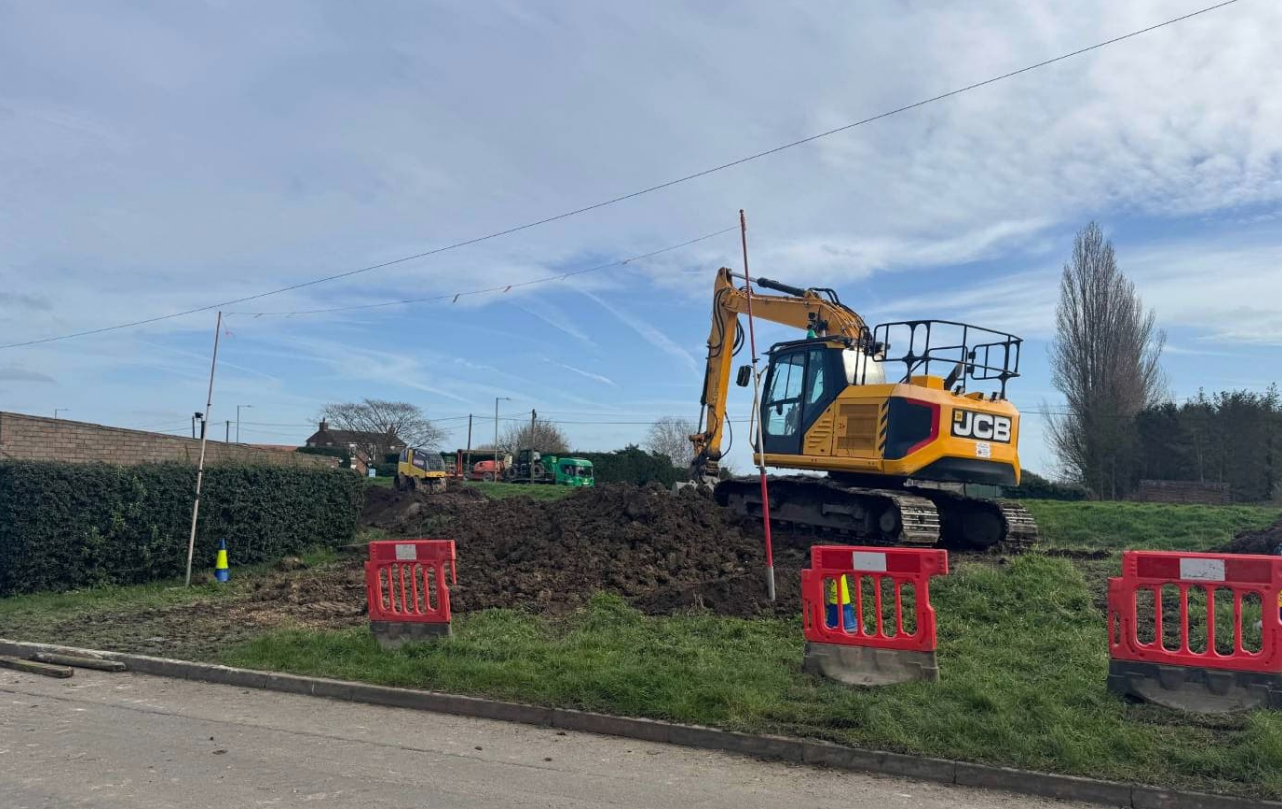 Embankment repairs in progress at Billinghay. Embankment repairs in progress at Billinghay. |
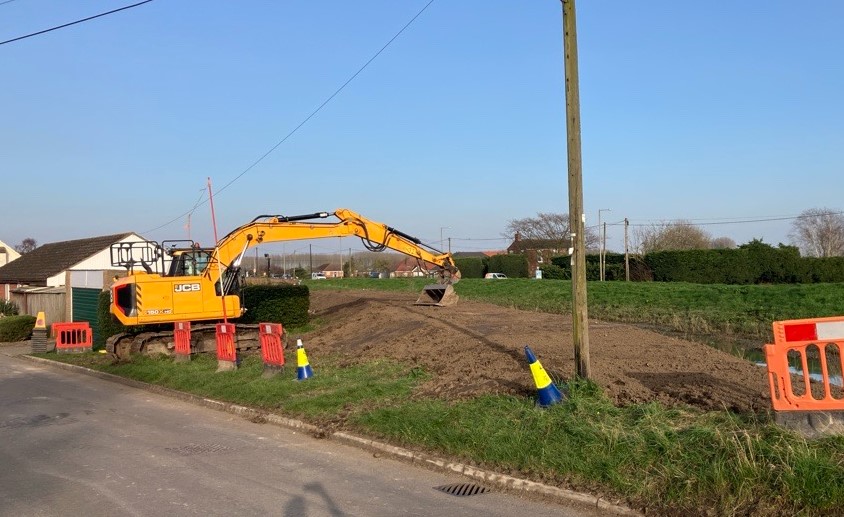 Works at Billinghay near completion before the grass seed. Works at Billinghay near completion before the grass seed. |
Further downstream of Kirkstead Bridge, we have started work on additional low spots repairs along the Witham bank to improve resilience here too.
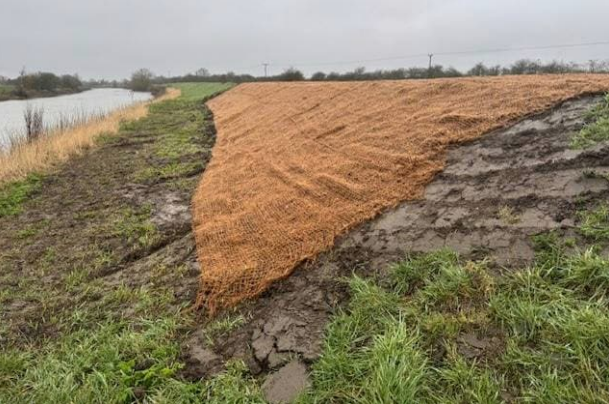 Completed works at Woodhall Spa.
At the same time, work to protect the toe of the embankments is getting underway. This will be delivered under a separate contract by Jackson Civil Engineering in partnership with Rothen Group. A temporary compound is now set up at Langrick, where stone is loaded onto a barge and taken by tug to the work sites. The stone is placed at the base of the embankment to repair erosion before the barge returns for more. Using this method, the team can install around 100 tonnes of stone per day. You can check out a video of the stone being being loaded onto a barge in our videos section- Videos | Lower Witham Flood Resilience Project | Engage Environment Agency.
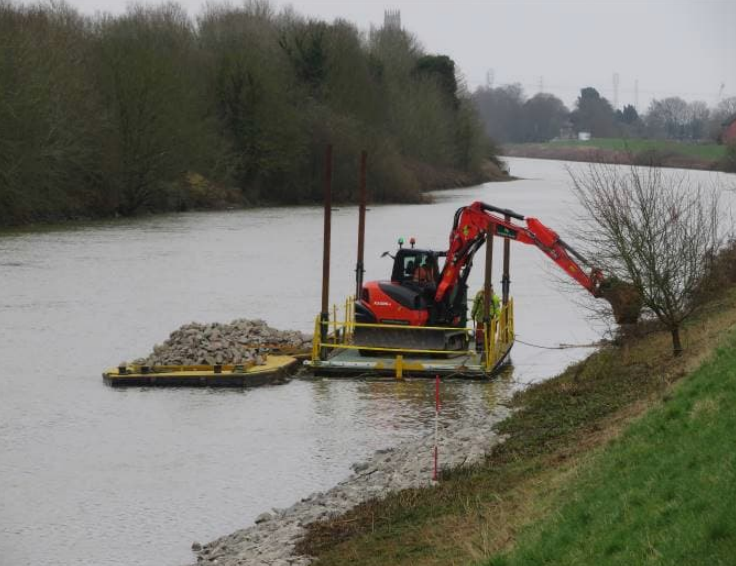 Stone being placed at the toe of an embankment Stone being placed at the toe of an embankment |
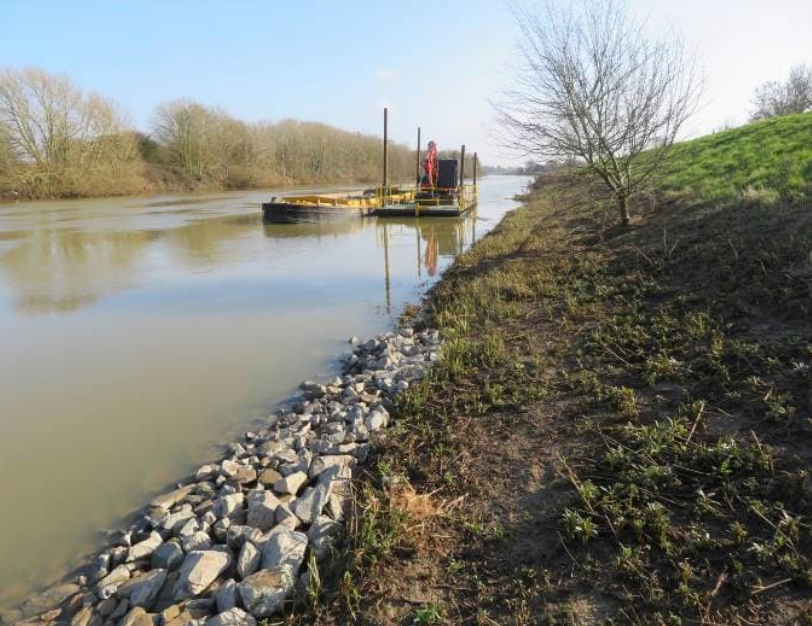 Stone in place at the toe of the embankment. Stone in place at the toe of the embankment. |
Before we start these works, we need to cut back some of the vegetation so we have a safe and clear area to work in. Plants along the river are a vital part of the ecosystem but in some instances, they can make the embankments more susceptible to damage. We have only cleared areas we need so we can repair the embankments correctly.
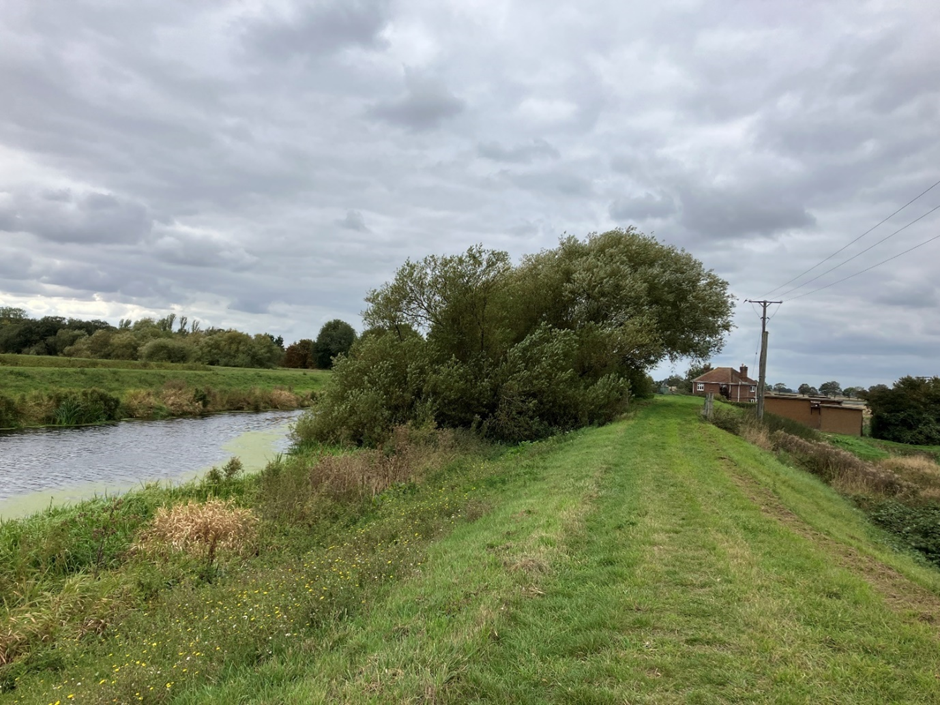 Before vegetation removal at Kyme Eau. Before vegetation removal at Kyme Eau. |
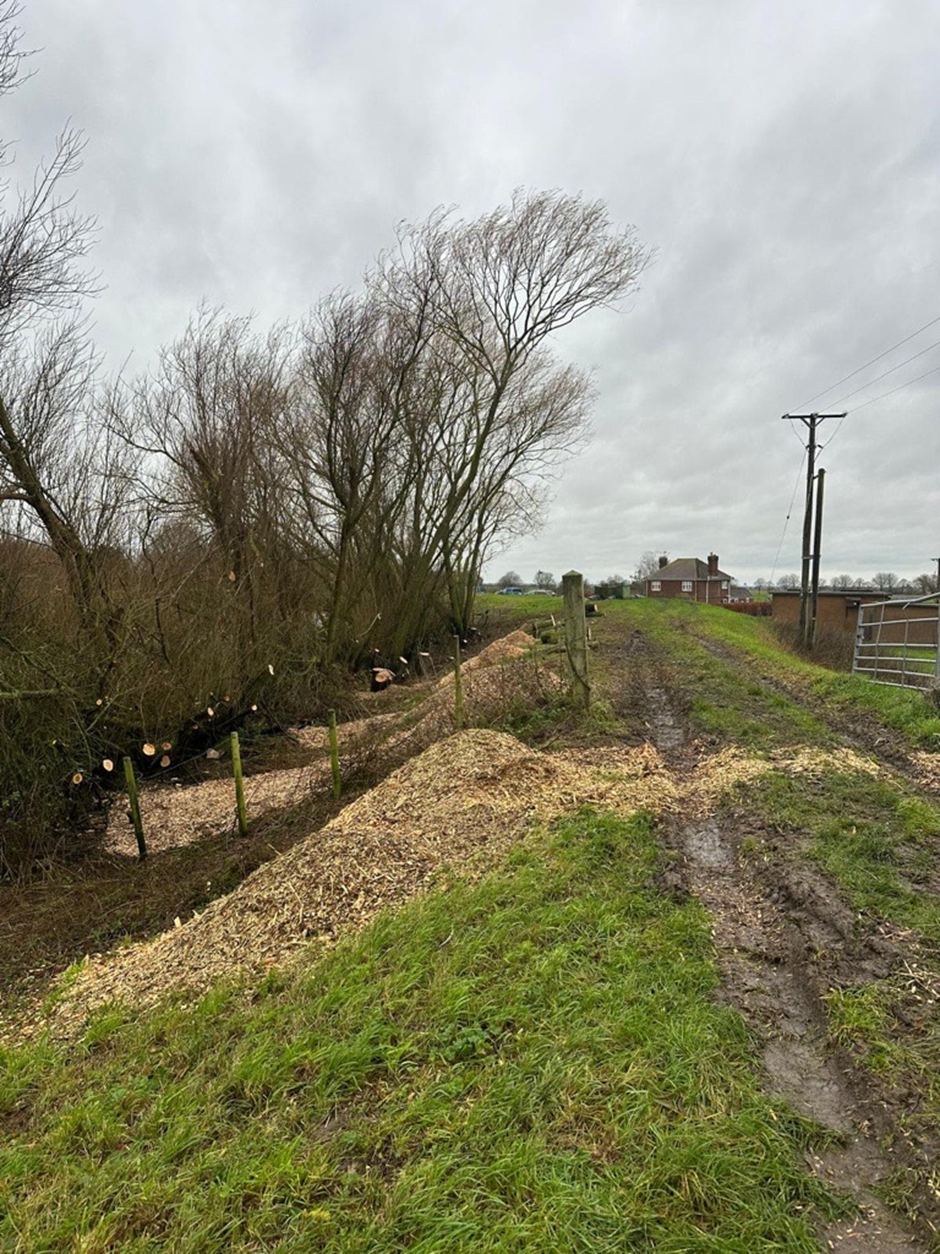 After vegetation removal at Kyme Eau. After vegetation removal at Kyme Eau. |

Thank you for your contribution!
Help us reach out to more people in the community
Share this with family and friends