We use cookies to ensure our site functions properly and to store limited information about your usage. You may give or withdraw consent at any time. To find out more, read our privacy policy and cookie policy.
Manage Cookies
A cookie is information stored on your computer by a website you visit. Cookies often store your settings for a website, such as your preferred language or location. This allows the site to present you with information customized to fit your needs. As per the GDPR law, companies need to get your explicit approval to collect your data. Some of these cookies are ‘strictly necessary’ to provide the basic functions of the website and can not be turned off, while others if present, have the option of being turned off. Learn more about our Privacy and Cookie policies. These can be managed also from our cookie policy page.
Strictly necessary cookies(always on):
Necessary for enabling core functionality. The website cannot function properly without these cookies. This cannot be turned off. e.g. Sign in, Language
Analytics cookies:
Analytical cookies help us to analyse user behaviour, mainly to see if the users are able to find and act on things that they are looking for. They allow us to recognise and count the number of visitors and to see how visitors move around our website when they are using it. Tools used: Google Analytics
Transforming the approach to investing in flood and coastal resilience for the future of the UK Fens
The Fens is one of the most distinctive landscapes in the UK. Once a natural marshland, it has become one of the most productive agricultural regions in the UK. The region underpins food security, economic productivity, and national infrastructure, producing a third of England’s vegetables and supporting 80,000 food chain jobs.
The marshes were drained in the 17th Century, using man-made engineering methods such as drainage systems, embankments and pumping stations. 87% of the Fens lies below mean spring tide level, making the area uniquely vulnerable to flooding and climate impacts. Being below sea level the water in the Fens must be constantly managed to ensure there is enough water for agriculture while also draining water off the landscape in heavy rain.
Following the second world war, in response to a demand for food production and catastrophic flood events there was significant investment in the Flood and Coastal Risk Management Assets (tidal defences, sluices, pumping stations etc). Many of the flood risk assets that were constructed at this time are still in place today and continue to protect the Fens from flooding.
What is Fens 2100+?
Fens2100+ is a partnership project bringing together the Environment Agency, the Association of Drainage Authorities (ADA), Internal Drainage Boards (IDBs), local authorities, the National Farmers Union (NFU), Anglian Water, and Natural England to develop a long-term plan to manage future flood risk in the Fens.
The Partnership aims to secure a climate resilient future for the Fens by aligning investment, strengthening system performance, and ensuring the decisions we take today are the right ones.
Why is it needed?
The Fens only function because a complex flood risk and water management asset system keeps the land dry.
It is a complex system of around 17,000 flood risk and water level management assets, such as pumping stations, tidal barriers, drainage channelsand embanked defences.
This critical system is estimated to deliver more than£58bn worth of benefits – both through direct protection to people and properties, businesses, critical infrastructure, and agricultural land, and through indirect benefits to the local economy, for example through jobs, and the food and drink sector supply chain.
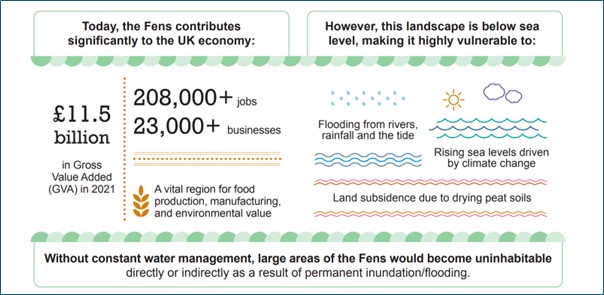
The above diagram shows how the Fens contributes to the UK economy, and the vulnerabilities it faces from being a lowland landscape
However, this flood risk and water management system faces significant challenges - many of the assets are reaching or beyond their design life, and under increasing pressure from climate related impacts including sea level rise, land subsidence from drying peat soils and more frequent flood events. If they fail, the consequences could be catastrophic.
The infographic below summarises the estimated economic impacts of flooding in the Fens under a ‘Do Nothing’scenario. It shows how flood risk could lead to substantial long‑term costs across multiple sectors, including properties, agriculture, transport, utilities, the local economy, the environment, and heritage.
The graphic highlights that losses run into tens of billions of pounds, with major impacts on homes, businesses, infrastructure, and livelihoods, illustrating the scale and breadth of potential consequences if no further action is taken to manage flood risk.
To meet these challenges, we must rethink and transform our approach, embedding resilience, innovation and long-term planning into every decision.
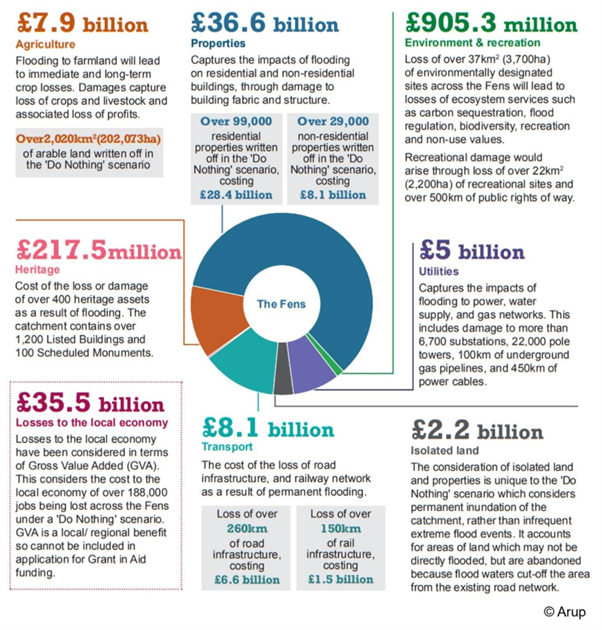
Estimated Economic Impacts of Flooding in the Fens under a ‘Do Nothing’ Scenario
A Plan towards a nation resilient to flooding and coastal change
The Fens 2100+ Partnership have produced a series of reports. For the first time, we have a collective set of robust evidence and important insights about flood risk and asset performance across the Fens. This equips decision-makers to shape the future of the Fens with confidence and clarity.
Baseline Summary and Catchment Baseline Reports
The baseline summary report outlines evidence from the seven Catchment Baseline Reports. It brings together data and insights from risk management authorities (RMAs) on their experience of managing flood risk assets.
Information in the Catchment Baseline Reports includes the historical and environmental context, the function of flood risk assets and their economic impact, current and future flood risks and investment challenges and opportunities.
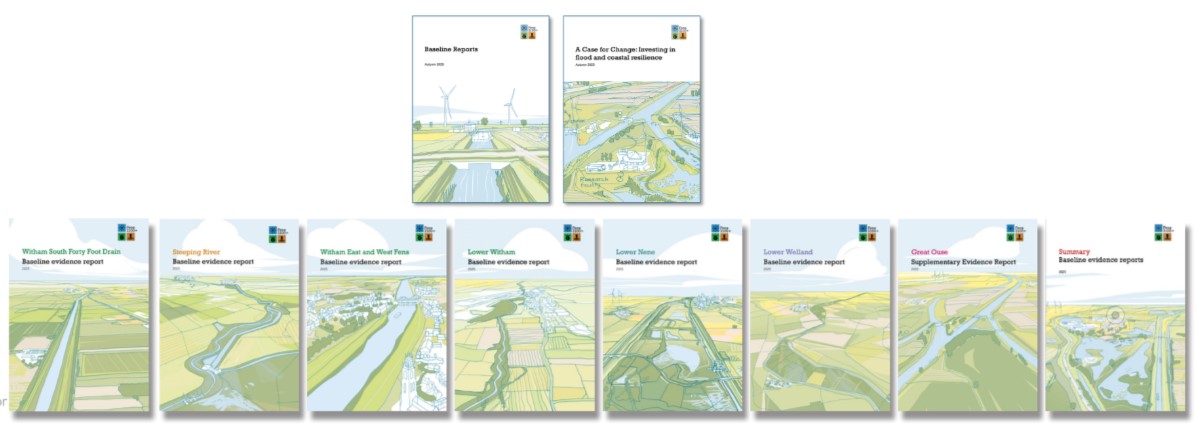
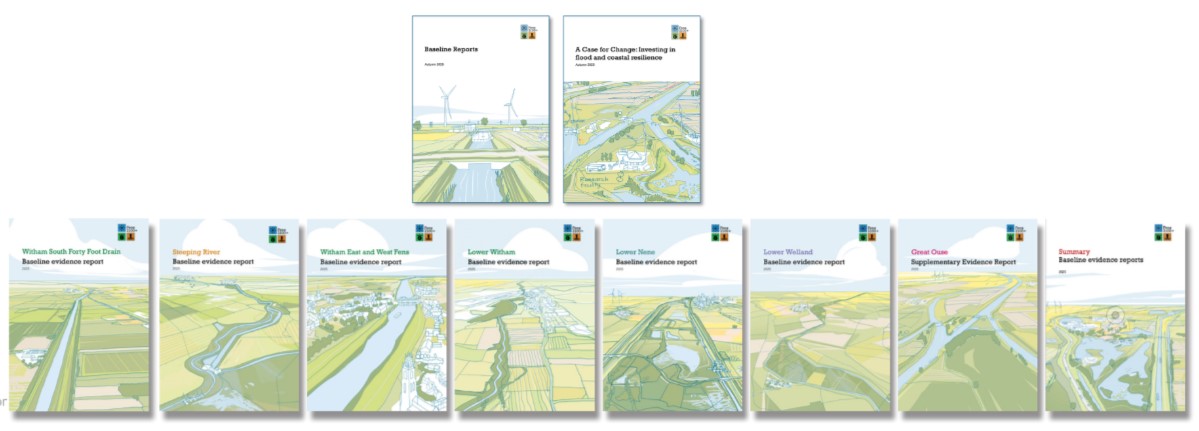
The image shows the front covers of the seven Catchment Baseline Reports, the baseline summary report and Case for Change
You can access the baseline summary report and catchment baseline reports on the gov.uk website. Our supporting video can be watched on YouTube.
Case for Change
The Fens 2100+ Case for Change builds upon the Catchment Baseline Reports. The Case for Change:
presents a unequivocal call to action to safeguard one of the United Kingdom’s most strategically important regions
demonstrates that the Fens faces a combination of pressures that now demands decisive, coordinated and long-term intervention
sets out a compelling, evidence-based rationale for transforming how flood, coastal, and water management infrastructure is planned, funded, and delivered across this critical region
Our Partnership Action Plan offers clear, practical steps that combine near-term risk mitigation with long-term transformation. The Fens2100+ partnership is focused on delivering this Partnership Action Plan.
Watch our video which explains why long-term adaptation is needed in the Fens.
Get involved!
Firstly we would like to encourage you to register with EHQ, this helps to interact with tools on this page.
Secondly if you would like to add this project to others that you follow on this platform, please subscribe. You will also be added to our e-mail list for any significant updates. We do not issue auto-notifications, so please do come back and check for updates.
Check-out our news feed for updates on the programme, and updates to this page
We will continue to add useful content to the information section for your reference
We will announce any opportunities to meet or discuss, either online or face-to-face
In the meantime, if you have any questions or comments you are welcome to contact us using our enquiries email.
Transforming the approach to investing in flood and coastal resilience for the future of the UK Fens
The Fens is one of the most distinctive landscapes in the UK. Once a natural marshland, it has become one of the most productive agricultural regions in the UK. The region underpins food security, economic productivity, and national infrastructure, producing a third of England’s vegetables and supporting 80,000 food chain jobs.
The marshes were drained in the 17th Century, using man-made engineering methods such as drainage systems, embankments and pumping stations. 87% of the Fens lies below mean spring tide level, making the area uniquely vulnerable to flooding and climate impacts. Being below sea level the water in the Fens must be constantly managed to ensure there is enough water for agriculture while also draining water off the landscape in heavy rain.
Following the second world war, in response to a demand for food production and catastrophic flood events there was significant investment in the Flood and Coastal Risk Management Assets (tidal defences, sluices, pumping stations etc). Many of the flood risk assets that were constructed at this time are still in place today and continue to protect the Fens from flooding.
What is Fens 2100+?
Fens2100+ is a partnership project bringing together the Environment Agency, the Association of Drainage Authorities (ADA), Internal Drainage Boards (IDBs), local authorities, the National Farmers Union (NFU), Anglian Water, and Natural England to develop a long-term plan to manage future flood risk in the Fens.
The Partnership aims to secure a climate resilient future for the Fens by aligning investment, strengthening system performance, and ensuring the decisions we take today are the right ones.
Why is it needed?
The Fens only function because a complex flood risk and water management asset system keeps the land dry.
It is a complex system of around 17,000 flood risk and water level management assets, such as pumping stations, tidal barriers, drainage channelsand embanked defences.
This critical system is estimated to deliver more than£58bn worth of benefits – both through direct protection to people and properties, businesses, critical infrastructure, and agricultural land, and through indirect benefits to the local economy, for example through jobs, and the food and drink sector supply chain.
The above diagram shows how the Fens contributes to the UK economy, and the vulnerabilities it faces from being a lowland landscape
However, this flood risk and water management system faces significant challenges - many of the assets are reaching or beyond their design life, and under increasing pressure from climate related impacts including sea level rise, land subsidence from drying peat soils and more frequent flood events. If they fail, the consequences could be catastrophic.
The infographic below summarises the estimated economic impacts of flooding in the Fens under a ‘Do Nothing’scenario. It shows how flood risk could lead to substantial long‑term costs across multiple sectors, including properties, agriculture, transport, utilities, the local economy, the environment, and heritage.
The graphic highlights that losses run into tens of billions of pounds, with major impacts on homes, businesses, infrastructure, and livelihoods, illustrating the scale and breadth of potential consequences if no further action is taken to manage flood risk.
To meet these challenges, we must rethink and transform our approach, embedding resilience, innovation and long-term planning into every decision.
Estimated Economic Impacts of Flooding in the Fens under a ‘Do Nothing’ Scenario
A Plan towards a nation resilient to flooding and coastal change
The Fens 2100+ Partnership have produced a series of reports. For the first time, we have a collective set of robust evidence and important insights about flood risk and asset performance across the Fens. This equips decision-makers to shape the future of the Fens with confidence and clarity.
Baseline Summary and Catchment Baseline Reports
The baseline summary report outlines evidence from the seven Catchment Baseline Reports. It brings together data and insights from risk management authorities (RMAs) on their experience of managing flood risk assets.
Information in the Catchment Baseline Reports includes the historical and environmental context, the function of flood risk assets and their economic impact, current and future flood risks and investment challenges and opportunities.
The image shows the front covers of the seven Catchment Baseline Reports, the baseline summary report and Case for Change
You can access the baseline summary report and catchment baseline reports on the gov.uk website. Our supporting video can be watched on YouTube.
Case for Change
The Fens 2100+ Case for Change builds upon the Catchment Baseline Reports. The Case for Change:
presents a unequivocal call to action to safeguard one of the United Kingdom’s most strategically important regions
demonstrates that the Fens faces a combination of pressures that now demands decisive, coordinated and long-term intervention
sets out a compelling, evidence-based rationale for transforming how flood, coastal, and water management infrastructure is planned, funded, and delivered across this critical region
Our Partnership Action Plan offers clear, practical steps that combine near-term risk mitigation with long-term transformation. The Fens2100+ partnership is focused on delivering this Partnership Action Plan.
Watch our video which explains why long-term adaptation is needed in the Fens.
Get involved!
Firstly we would like to encourage you to register with EHQ, this helps to interact with tools on this page.
Secondly if you would like to add this project to others that you follow on this platform, please subscribe. You will also be added to our e-mail list for any significant updates. We do not issue auto-notifications, so please do come back and check for updates.
Check-out our news feed for updates on the programme, and updates to this page
We will continue to add useful content to the information section for your reference
We will announce any opportunities to meet or discuss, either online or face-to-face
In the meantime, if you have any questions or comments you are welcome to contact us using our enquiries email.
You can access the Baseline Summary Report, Case for Change, seven Catchment Baseline Reports with supporting appendices, and two videos that introduce the partnership and explain why long-term adaptation in the Fens is so important.
We want to take this opportunity to say a massive thank you to everyone who has helped us get to this point. The publication of the reports is a direct result of the collective work we have done as a partnership over the past few years and marks an exciting milestone for Fens 2100+.
Together, we are transforming our approach to secure a climate-resilient future for the Fens.
You can access the Baseline Summary Report, Case for Change, seven Catchment Baseline Reports with supporting appendices, and two videos that introduce the partnership and explain why long-term adaptation in the Fens is so important.
We want to take this opportunity to say a massive thank you to everyone who has helped us get to this point. The publication of the reports is a direct result of the collective work we have done as a partnership over the past few years and marks an exciting milestone for Fens 2100+.
Together, we are transforming our approach to secure a climate-resilient future for the Fens.
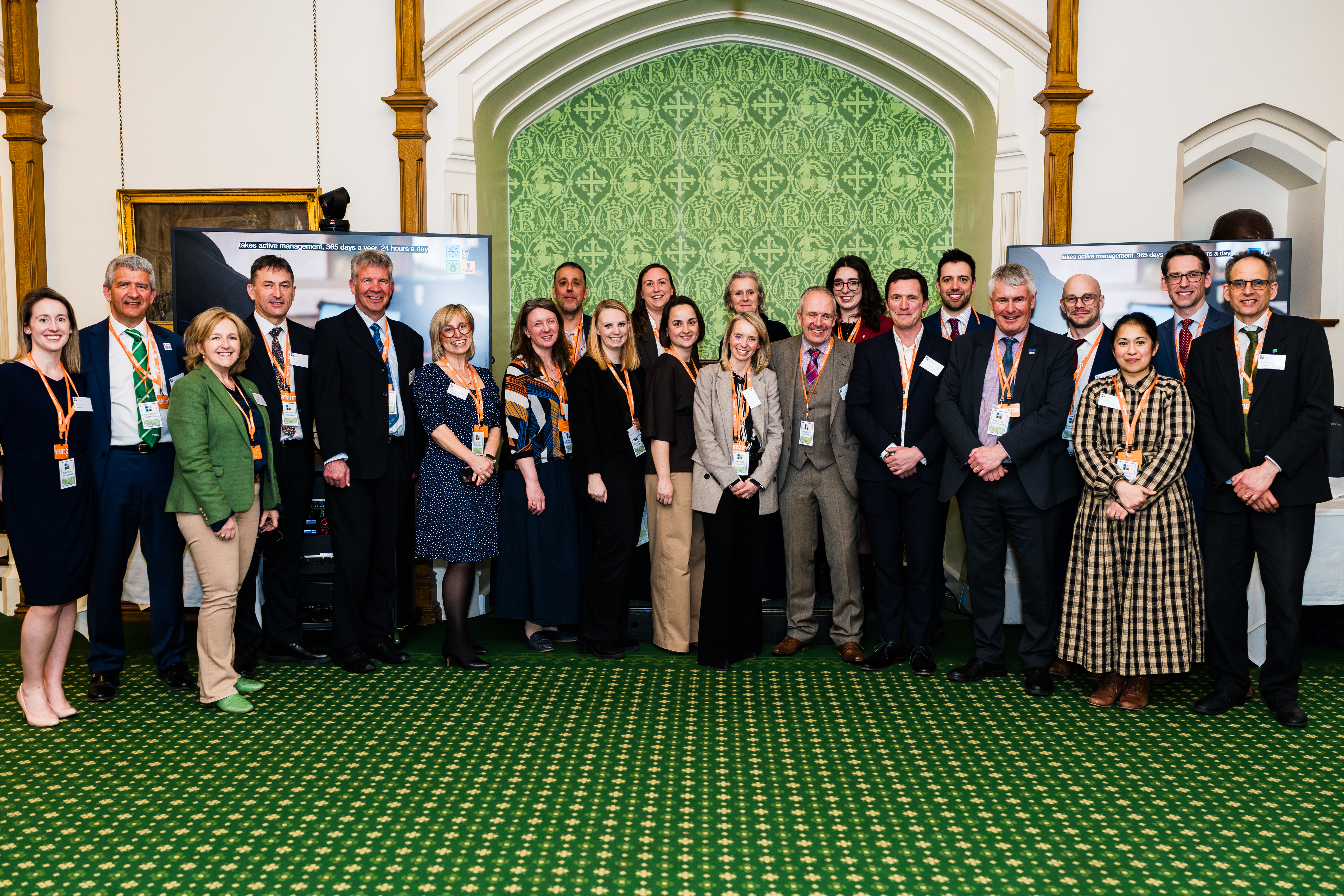
Parliamentarians and regional leaders gathered last week for a special Fens2100+ event, to hear about the work of the Fens2100+ partnership and recently completed the Catchment Baseline reports and supporting Case for Change document.
Representatives from across the Fens partnership attended to discuss how collective action is essential to safeguard the Fens and secure a safer, more resilient future for everyone who depends on them.
The event opened with Sir John Hayes MP, who reflected on his many years serving his constituency in the heart of the Fens and the importance of the drainage network.
Speakers from across the partnership discussed the Fens economic and social importance. They described the area as the “breadbasket of England”, underpinning billions of pounds in agricultural output, while also hosting fast‑growing towns, ambitious economic plans, major energy infrastructure and vital east–west and north–south transport corridors. The Fens landscape was highlighted as essential to food production, water supply, carbon storage and biodiversity.
The Catchment Baselines and Case for Change are due to be published w/c 30 March. We will update this page with the links.
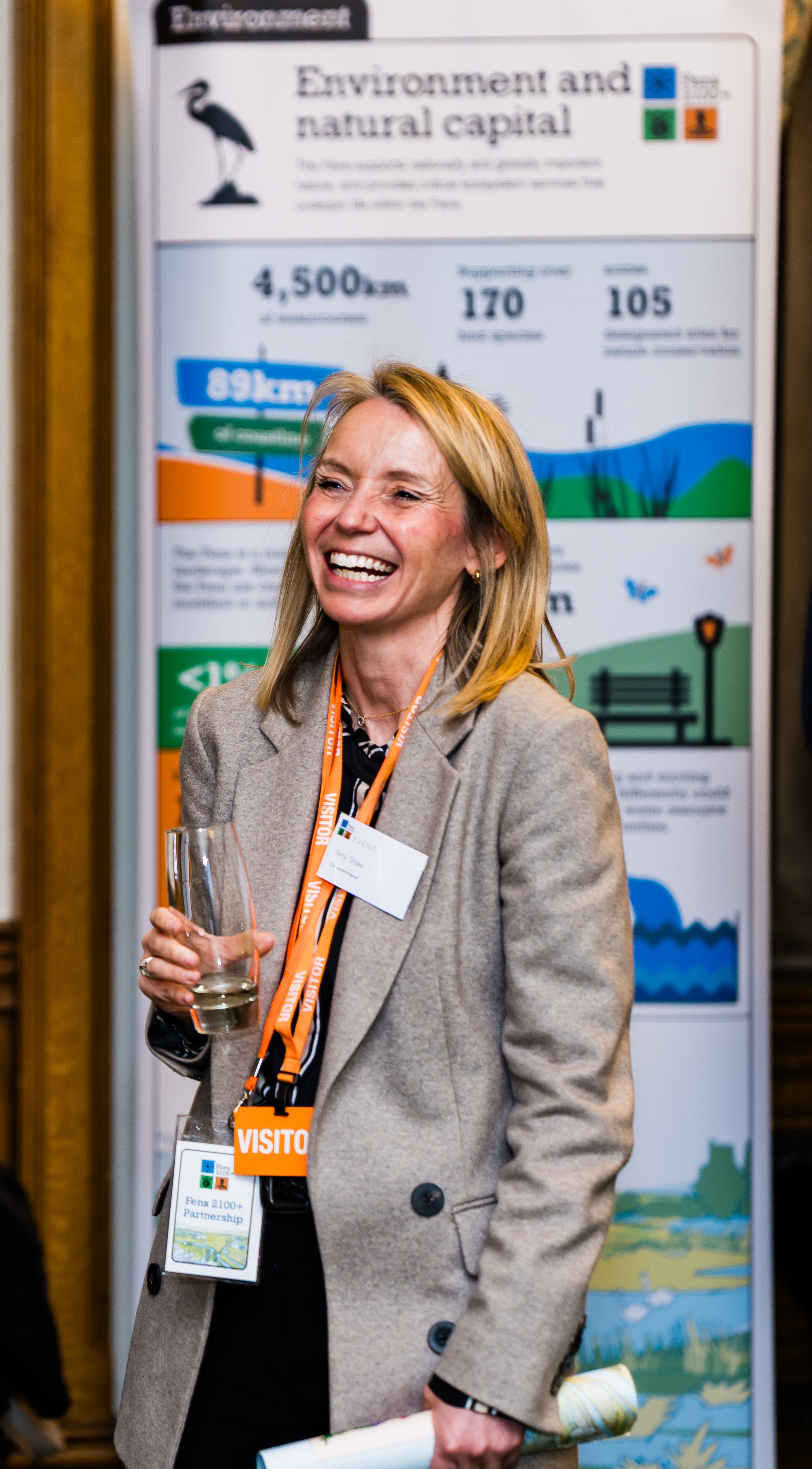
Amy Shaw - Fens 2100+ Executive Director
Parliamentarians and regional leaders gathered last week for a special Fens2100+ event, to hear about the work of the Fens2100+ partnership and recently completed the Catchment Baseline reports and supporting Case for Change document.
Representatives from across the Fens partnership attended to discuss how collective action is essential to safeguard the Fens and secure a safer, more resilient future for everyone who depends on them.
The event opened with Sir John Hayes MP, who reflected on his many years serving his constituency in the heart of the Fens and the importance of the drainage network.
Speakers from across the partnership discussed the Fens economic and social importance. They described the area as the “breadbasket of England”, underpinning billions of pounds in agricultural output, while also hosting fast‑growing towns, ambitious economic plans, major energy infrastructure and vital east–west and north–south transport corridors. The Fens landscape was highlighted as essential to food production, water supply, carbon storage and biodiversity.
The Catchment Baselines and Case for Change are due to be published w/c 30 March. We will update this page with the links.
Fens 2100+ programme director Amy Shaw, and strategy advisor Anna Robotham, recently visited Harrowden’s turf farm, a visit hosted by the RSPB. Situated within the Ouse catchment we learnt about the challenges and opportunities of climate change for the region’s agricultural sector. We explored the benefits of farm clusters, groups of neighbouring farms joining their efforts in making space for nature. In the context of the challenges brought by increased climatic extremes in a carefully managed landscape, the concept of farm clusters is gaining momentum and we are keen to support such initiatives.
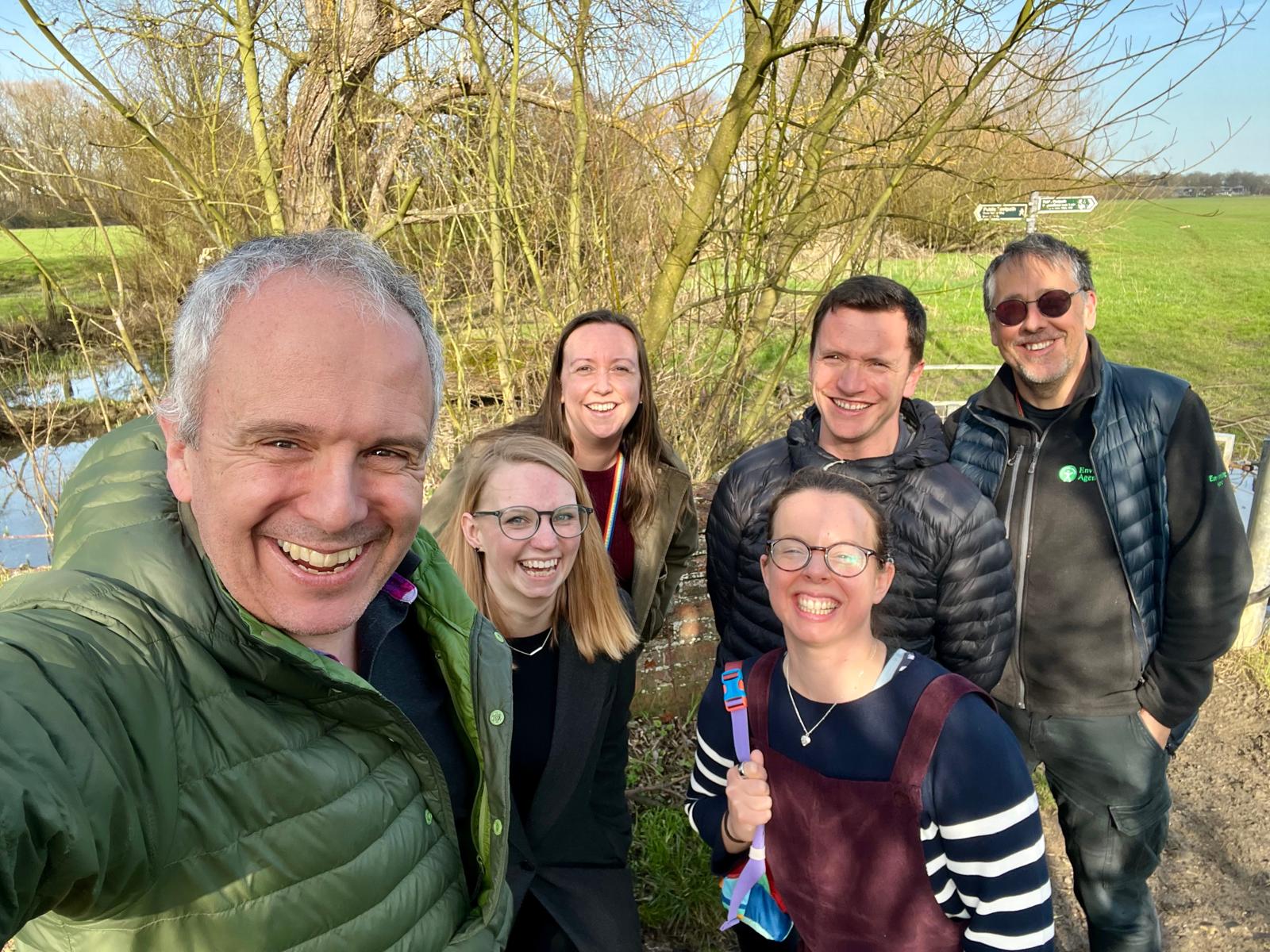
After completing intensive work on the next phase of the Fens 2100+ programme, team members from Fens 2100+, Arup and Rivelin Bridge took a well‑earned walk together in the Fens. The group included (from left to right): Steven Trewhella (Rivelin Bridge), Hannah Smith (Arup), Louise Wilson (Fens 2100+ core team), Anna Robotham (Fens 2100+ core team), Tom Freer (Fens 2100+ core team) and Andy Bailey (Fens 2100+ core team).
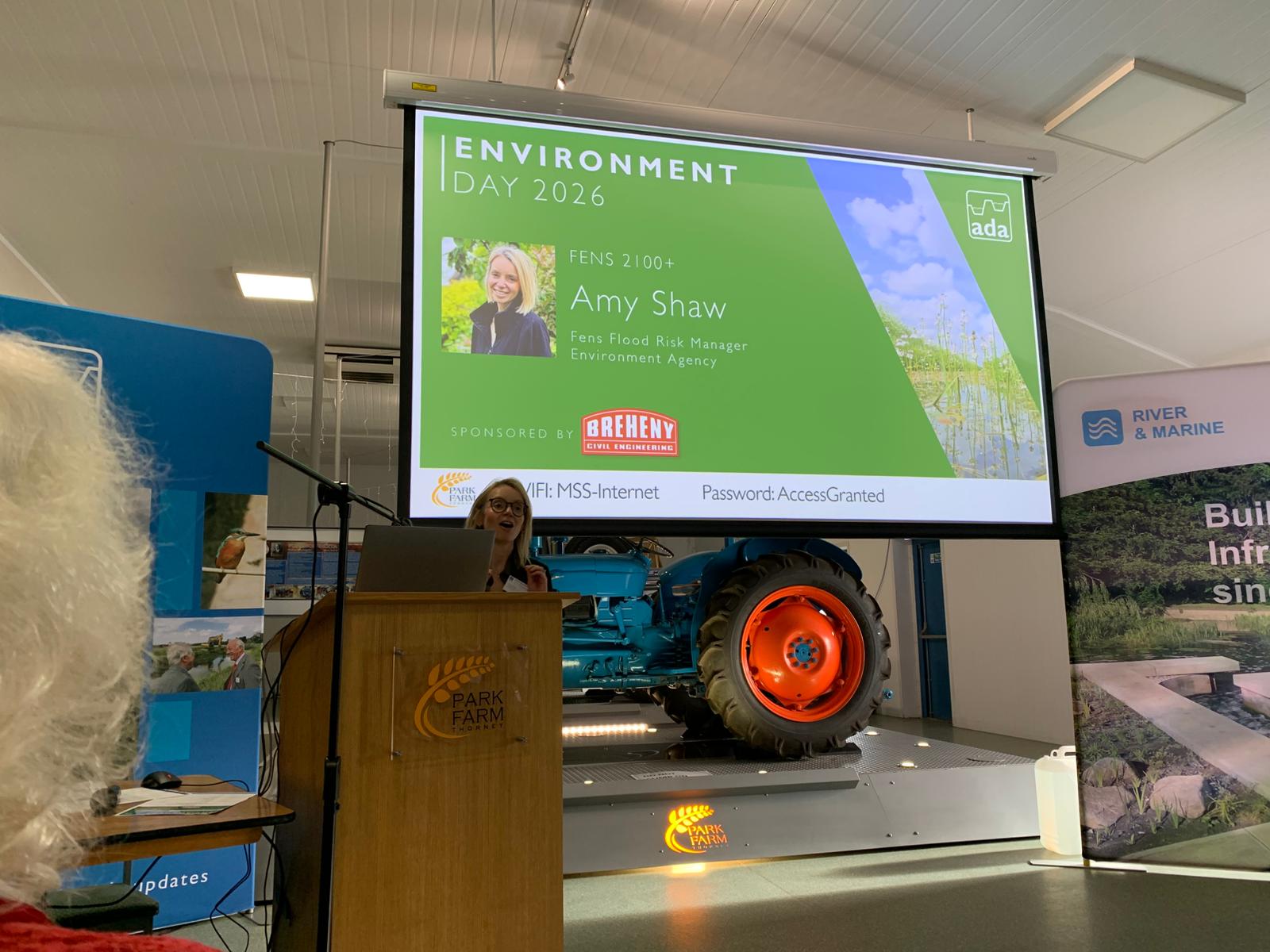
The Fens 2100+ team was pleased to speak at the Association of Drainage Authorities (ADA) Annual Environment Day in February. ADA, a key Fens 2100+ partner and member of our Programme Board, brings together organisations involved in water management to discuss the challenges and opportunities facing lowland watercourses and the freshwater environment.
Amy Shaw, Fens 2100+ Flood Risk Manager, delivered a presentation sharing insights and evidence from our upcoming publications. She highlighted the Fens 2100+ partnership action plan designed to help secure a climate‑resilient and thriving future for the Fens.
The Fens 2100+ team was pleased to speak at the Association of Drainage Authorities (ADA) Annual Environment Day in February. ADA, a key Fens 2100+ partner and member of our Programme Board, brings together organisations involved in water management to discuss the challenges and opportunities facing lowland watercourses and the freshwater environment.
Amy Shaw, Fens 2100+ Flood Risk Manager, delivered a presentation sharing insights and evidence from our upcoming publications. She highlighted the Fens 2100+ partnership action plan designed to help secure a climate‑resilient and thriving future for the Fens.
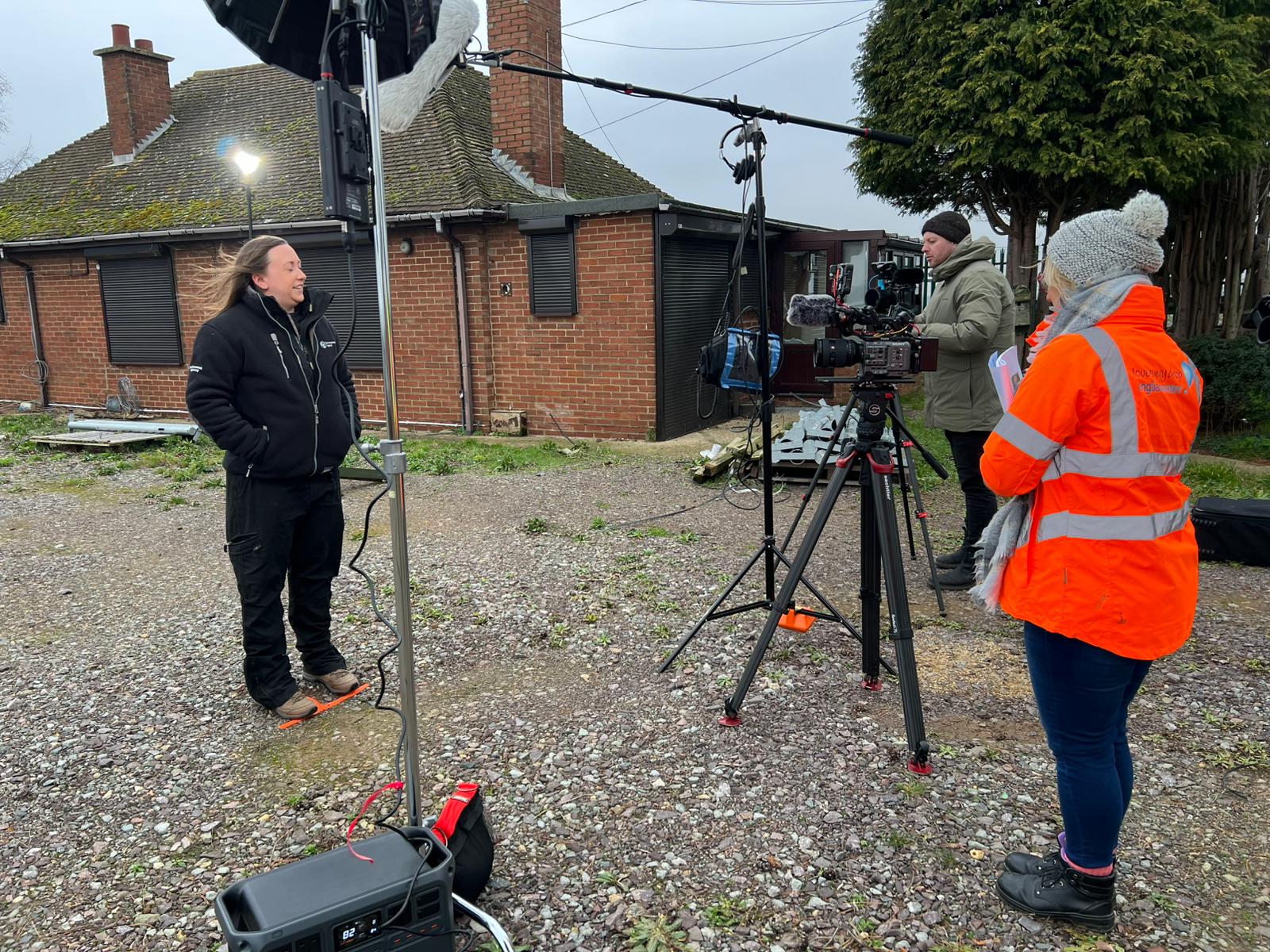
The Fens 2100+ team has been busy filming videos to support the upcoming Baseline Reports and Case for Change documents, which will soon be published on GOV.UK. Despite very cold weather, the Fens team and local partners worked hard throughout the day to capture footage and explain the history and importance of the Dog‑in‑a‑Doublet structure to water management in the Fens.
The Case for Change video sets out why long‑term adaptation is essential for the Fens. It highlights growing pressures from climate change, increased flood risk, water scarcity and land subsidence. The video explains why current approaches are no longer enough and why a coordinated, long‑term strategy is needed. It brings together flood risk management, water resources, agriculture, nature recovery and economic growth, forming the strategic basis for both the Fens 2100+ and Future Fens programmes.
The Catchment Baseline video gives a clear picture of the Fens as they are today. It brings together evidence on the area’s physical, environmental, agricultural and socio‑economic characteristics, as well as the current flood and water management systems. This shared baseline provides the foundation for exploring future adaptation options and supports the development of long‑term, integrated solutions through Fens 2100+ and Future Fens.
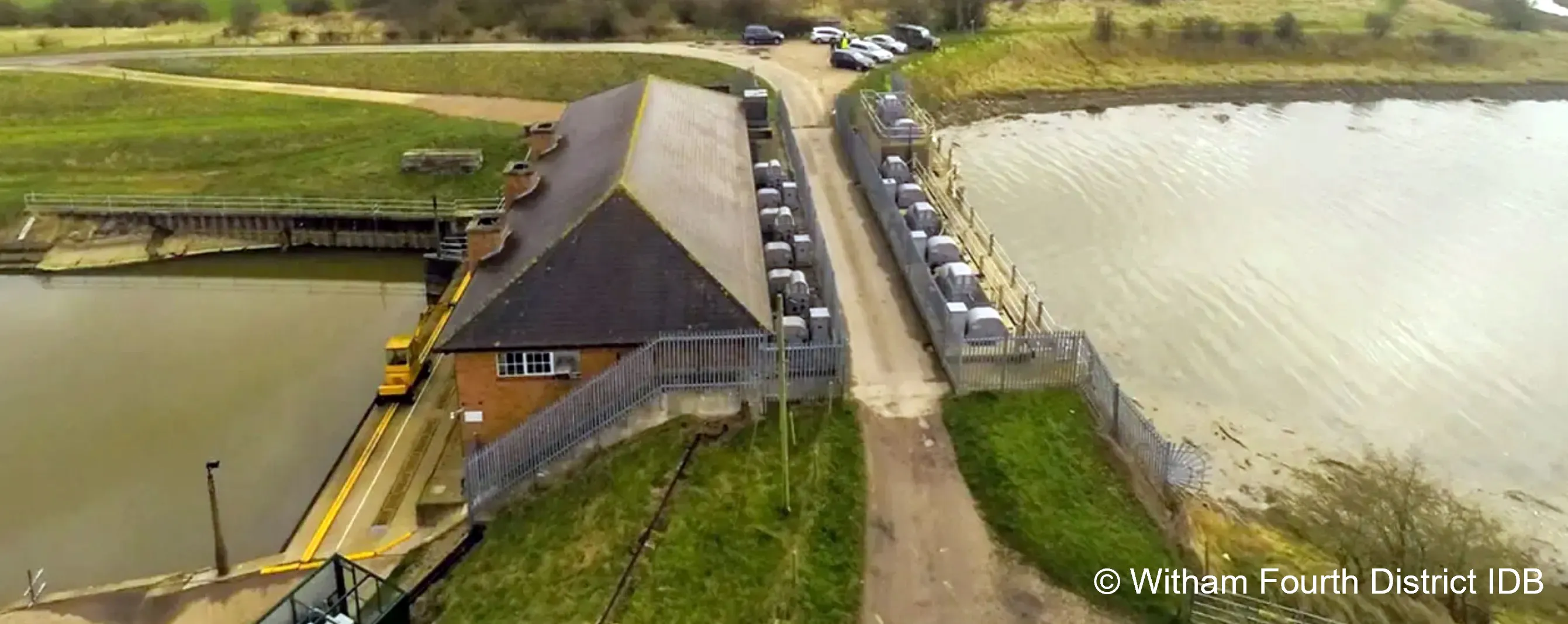
Filming also focused on the Dog‑in‑a‑Doublet Sluice and lock, located east of Peterborough on the River Nene. This structure is a vital tidal navigation and flood management asset that separates the tidal and non‑tidal sections of the river. It includes a lock, automated sluice gates that stop saltwater from moving upstream, and an adjacent pumping station. These features help maintain safe navigation levels and protect irrigation water and local ecosystems. The site is also a recognised flood‑risk location, forming part of the Tidal River Nene flood‑warning area that stretches from the sluice to Wisbech.
The Fens 2100+ team has been busy filming videos to support the upcoming Baseline Reports and Case for Change documents, which will soon be published on GOV.UK. Despite very cold weather, the Fens team and local partners worked hard throughout the day to capture footage and explain the history and importance of the Dog‑in‑a‑Doublet structure to water management in the Fens.
The Case for Change video sets out why long‑term adaptation is essential for the Fens. It highlights growing pressures from climate change, increased flood risk, water scarcity and land subsidence. The video explains why current approaches are no longer enough and why a coordinated, long‑term strategy is needed. It brings together flood risk management, water resources, agriculture, nature recovery and economic growth, forming the strategic basis for both the Fens 2100+ and Future Fens programmes.
The Catchment Baseline video gives a clear picture of the Fens as they are today. It brings together evidence on the area’s physical, environmental, agricultural and socio‑economic characteristics, as well as the current flood and water management systems. This shared baseline provides the foundation for exploring future adaptation options and supports the development of long‑term, integrated solutions through Fens 2100+ and Future Fens.
Filming also focused on the Dog‑in‑a‑Doublet Sluice and lock, located east of Peterborough on the River Nene. This structure is a vital tidal navigation and flood management asset that separates the tidal and non‑tidal sections of the river. It includes a lock, automated sluice gates that stop saltwater from moving upstream, and an adjacent pumping station. These features help maintain safe navigation levels and protect irrigation water and local ecosystems. The site is also a recognised flood‑risk location, forming part of the Tidal River Nene flood‑warning area that stretches from the sluice to Wisbech.
Andy Bailey, Senior Strategy Adviser for Fens 2100+, visited County Hall in Norwich to present the Fens 2100+ programme to the Norfolk Strategic Flooding Alliance (NSFA).
The NSFA, created in February 2021, brings together organisations involved in planning for and responding to flooding in Norfolk. Members include the Environment Agency, Anglian Water, Norfolk County Council, all district councils, the Norfolk Resilience Forum, the Broads Authority, the Water Management Alliance and Water Resources East. More than 30 organisations take part.
The Alliance aims to give Norfolk residents confidence that flood risks are managed as effectively as possible. Its vision, objectives and structure are set out in the Norfolk Strategic Flooding Alliance strategy (PDF, 275 KB) which supports coordinated, countywide responses to both coastal and inland flooding.
Henry Cator OBE chairs the NSFA. He also serves as President of the Association of Drainage Authorities, the national membership body for organisations involved in drainage, water level management and flood risk management. The NSFA Board meets every two months at County Hall in Norwich.
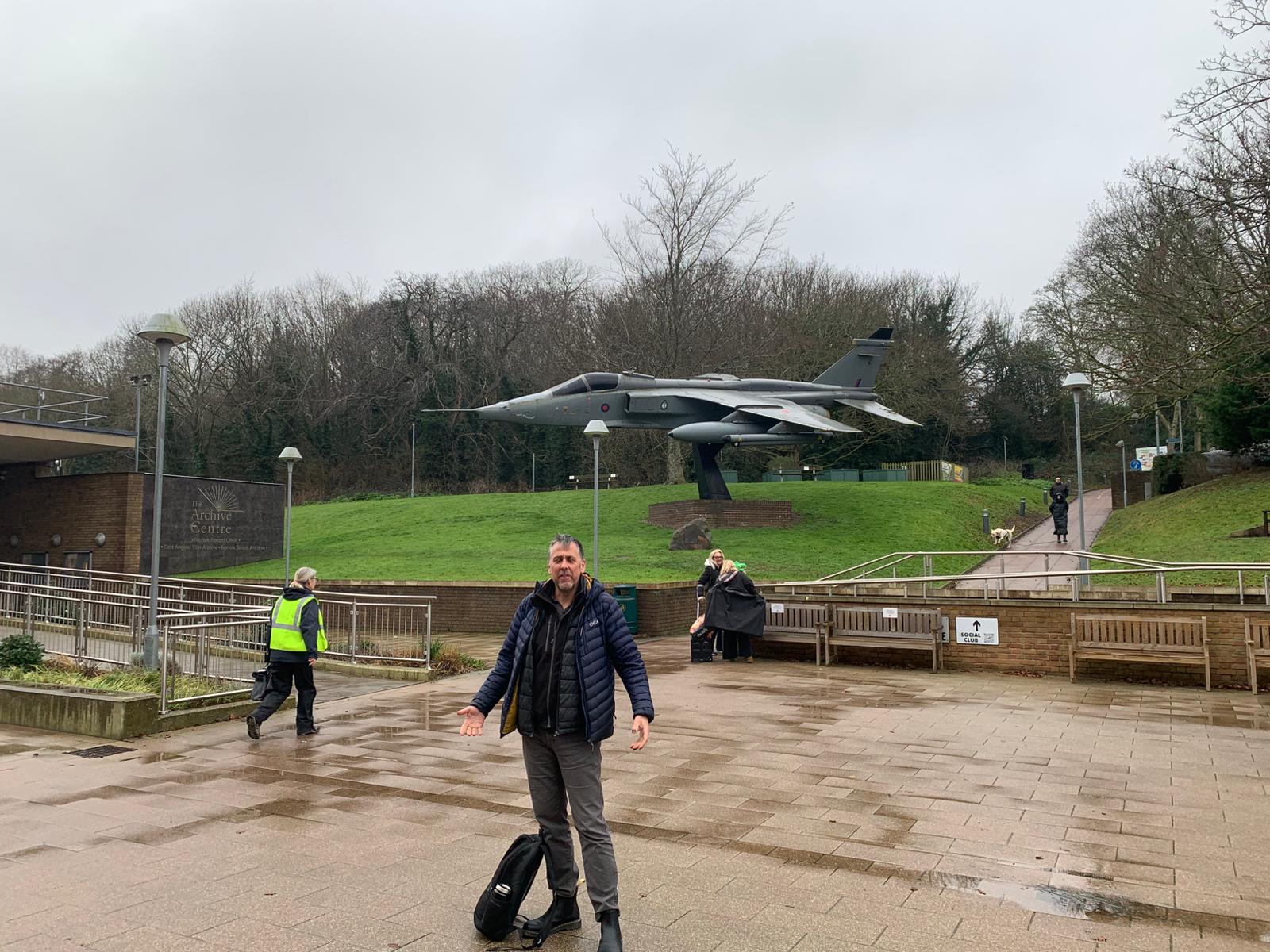
The Fens 2100+ presentation was well received, and the team made several useful connections. During the visit, Andy saw the SEPECAT Jaguar GR1 (serial XW563) on display at County Hall. This former Cold War strike aircraft previously served as a gate guardian at RAF Coltishall. It was moved to Norfolk County Council headquarters in 2007 to act as a permanent memorial to the Jaguar Force and the area’s military history following the airbase’s closure.
Andy Bailey, Senior Strategy Adviser for Fens 2100+, visited County Hall in Norwich to present the Fens 2100+ programme to the Norfolk Strategic Flooding Alliance (NSFA).
The NSFA, created in February 2021, brings together organisations involved in planning for and responding to flooding in Norfolk. Members include the Environment Agency, Anglian Water, Norfolk County Council, all district councils, the Norfolk Resilience Forum, the Broads Authority, the Water Management Alliance and Water Resources East. More than 30 organisations take part.
The Alliance aims to give Norfolk residents confidence that flood risks are managed as effectively as possible. Its vision, objectives and structure are set out in the Norfolk Strategic Flooding Alliance strategy (PDF, 275 KB) which supports coordinated, countywide responses to both coastal and inland flooding.
Henry Cator OBE chairs the NSFA. He also serves as President of the Association of Drainage Authorities, the national membership body for organisations involved in drainage, water level management and flood risk management. The NSFA Board meets every two months at County Hall in Norwich.
The Fens 2100+ presentation was well received, and the team made several useful connections. During the visit, Andy saw the SEPECAT Jaguar GR1 (serial XW563) on display at County Hall. This former Cold War strike aircraft previously served as a gate guardian at RAF Coltishall. It was moved to Norfolk County Council headquarters in 2007 to act as a permanent memorial to the Jaguar Force and the area’s military history following the airbase’s closure.
For an update on the Fens 2100+ programme, check out our latest newsletter in the documents section. We hope you enjoy reading about the Fens 2100+ programme. If you have any comments or suggestions on how to improve this newsletter , please contact us at Fens2100@environment-agency.gov.uk
Check our new Fens 2100+ leaflet which explains the ambitions of the Fens 2100+ programme. We would be delighted to have your feedback. Let us know what you think by emailing fens2100@environment-agency.gov.uk
Click here to play video
Fens 2100+ Baseline Report: A landscape of national importance
This Fens 2100+ Baseline Report video provides the first shared, system wide evidence base for understanding flood risk and water management across the whole of the Fens.
Click here to play video
Fens 2100+ Case for Change
This video explains why long term adaptation is needed in the Fens.
Click here to play video
An overview of the Denver Complex