
Dry Weather Information - drought 2026
Understanding the dry weather situation
Climate change is bringing more extreme and unpredictable weather patterns to England. The Environment Agency is coordinating the national response to dry weather and drought conditions, working to protect water supplies for homes, businesses, farmers and the environment.
Our role includes convening the National Drought Group, monitoring water levels, supporting farmers with irrigation guidance, working with local communities, protecting wildlife and aquatic habitats, and planning for long-term water security. This balanced approach ensures we safeguard both water resources and the natural environment while supporting the needs of people and businesses across England.
See also the Let's Save Water campaign to learn how to protect our precious water.
Latest situation
Mid Sept: Water bosses updated the National Drought Group on their leakage reduction plus autumn and winter preparedness plans, as research shows above-average rainfall needed to end drought by April 2027. Almost three-quarters of England remain in drought. Drought is only over when rivers, groundwaters and reservoirs are back to normal levels – and the latter two continue to recede, as expected. New research has shown we need 120% of typical rainfall over the next seven months for all areas to be considered out of drought. Read more here
3 September: After hearing discussion at the National Drought Group, the Secretary of State visited Havant Thickett to see the new reservoir being developed to strengthen water resilience amid the ongoing drought. Read more here
We're featuring examples of the Environment Agency's work on social media, for example on Instagram recently we highlighted how our Hydrometry and Telemetry teams are on the ground year-round, providing the expertise behind critical decisions for communities, farmers and nature. Teams have been closely monitoring river levels at Wansford Gauge to determine how much water can be taken from the river during recent dry conditions.
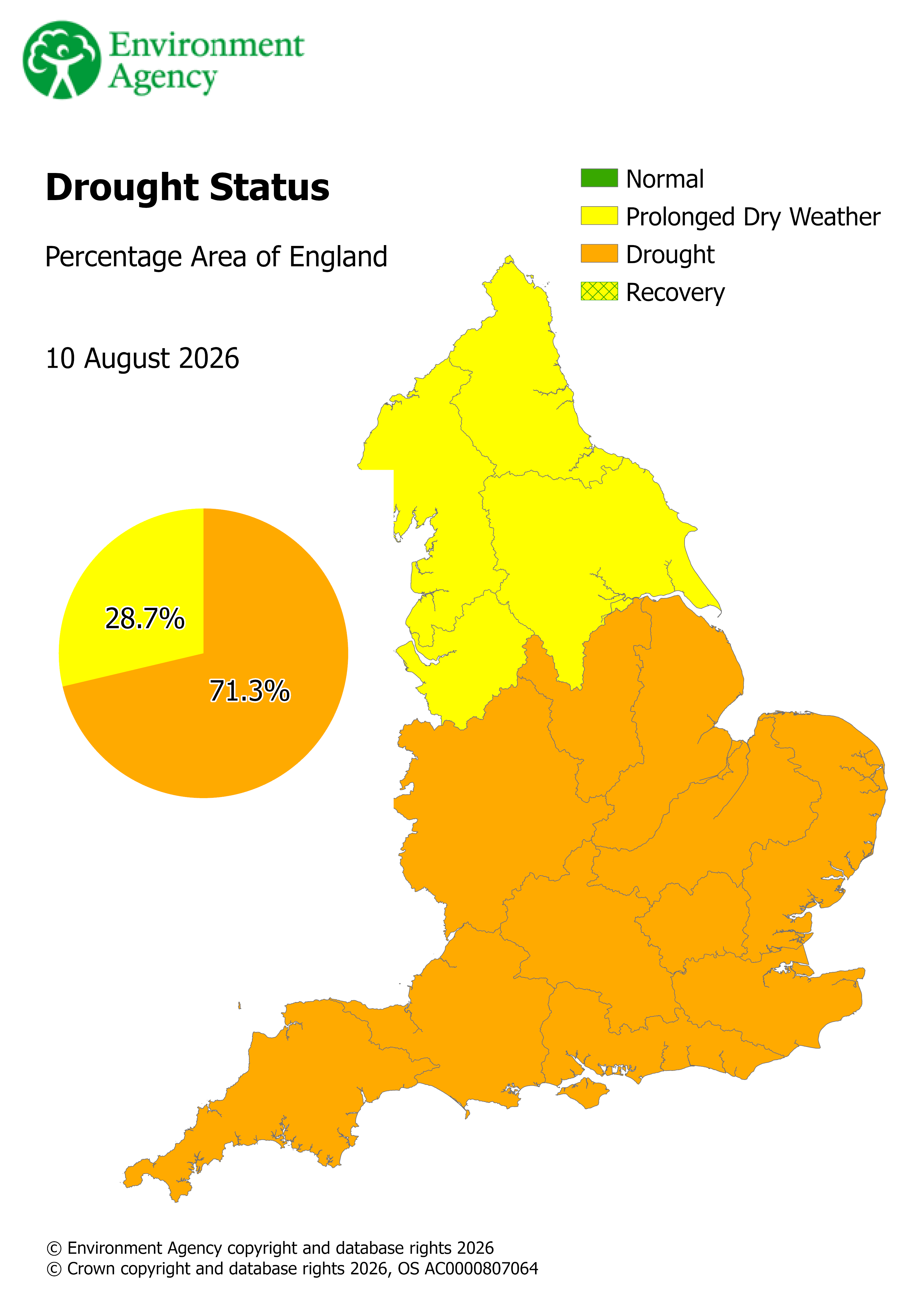
End of August update: The National Drought Group has moved to weekly meetings as drought conditions continue to intensify, despite the recent rainfall. The move marks a further step change in the government’s response to the continued threat posed by wildfires and drought and follows the COBR meeting, chaired by Prime Minister Andy Burnham. The expert group includes the Met Office, government, regulators, water companies, farmers, Canal & River Trust, anglers, and conservation experts
New factsheet: Managing ponds, lakes and fisheries during drought information is available in the FAQs.
By mid August, 71% of England was now in drought, with the remainder under prolonged dry weather. This follows England’s driest July since records began in 1836, with only 5% of average August rainfall recorded so far and further hot, dry weather forecast.
Drought conditions are continuing to place pressure on water resources, agriculture, public water supplies and the environment. Rivers, reservoirs and groundwater levels are declining, while rising river temperatures and low flows are increasing risks to fish, wildlife and water-dependent habitats. Farmers are reporting reduced crop yields, livestock producers are using winter feed earlier than normal, and restrictions on agricultural abstraction are increasing in some areas. Find out more about what's happening here.
House of Lords Environment and Climate Change Committee - Inquiry on Drought Preparedness
The Environment Agency gave evidence in February. The full report can be read here.
Frequently asked questions
If you have a question regarding dry weather, please check out our FAQs.
Our scientific research
The Environment Agency's Chief Scientist's Group works with leading scientists from universities, research institutes, and consultancies to improve understanding of drought, its impacts, and how to build resilience. Our research helps us develop better forecasting capabilities and targeted interventions to protect the environment during dry periods.
Learn more about our drought research.

-
 Dry Weather and Drought Frequently Asked Questions
- What is a drought, and how is it different from prolonged dry weather?
- What is the Environment Agency's role during drought?
- How does the drought affect water supplies for homes and businesses?
- How is the drought affecting farmers?
- What's your advice on managing ponds, lakes and fisheries during drought?
- How can I protect my fish from the impacts of thunderstorms?
- How is wildlife being affected?
- What is the National Drought Group?
- How can I report environmental incidents related to drought?
- What can I do to help conserve water?
- Where can I get more information?
- How is climate change affecting drought in England?
