Frequently asked questions
Dry Weather and Drought Frequently Asked Questions
Convening the National Drought Group to coordinate response across government, water companies, farming organisations, and experts
Monitoring water companies' implementation of their dry weather plans
Supporting farmers with irrigation guidance and water management advice
Working with local authorities to protect communities and the environment
Conducting scientific research to improve drought forecasting and response
Enhancing compliance activity and taking enforcement action where necessary to protect water resources
Issuing updated 'prospects for irrigation' forecasts
Providing guidance on irrigation scheduling and equipment optimisation
Facilitating water trading and sharing between abstraction licence holders
Supporting the establishment of Water Abstractor Groups
Offering Local Resource Option (LRO) screening studies to help groups of farmers identify tailored water resilience solutions
Taking shorter showers (aim for 4 minutes or less)
Installing a water butt to collect rainwater for garden watering
Fixing leaky taps, toilets, and pipes promptly
Turning off taps when brushing teeth or washing dishes
Using washing machines and dishwashers only when full
Using a watering can instead of a hose in the garden
Watering plants in the early morning or evening to reduce evaporation
Visit our Water Hub for regular updates
Contact your local water company for information on water restrictions in your area
For general enquiries, please contact the Environment Agency’s National Customer Contact Centre: enquiries@environment-agency.gov.uk(External link)
If you are a journalist with a media enquiry or interview request, please contact: newsdesk@defra.gov.uk(External link) or visit our website for area specific contact details: Media enquiries - Environment Agency - GOV.UK(External link)
Publishing a National Framework for Water Resources in June 2025
Supporting £104 billion of investment in water infrastructure over the next five years
Working with other regulators to evaluate plans for nine new strategic reservoirs for public water supply by 2050 as part of a joined up national response to future pressures.
Working with water companies to reduce leakage by 50% by 2050
Investing in technology for smarter water management
Conducting scientific research to improve our understanding of drought impacts
What is a drought, and how is it different from prolonged dry weather?
A drought occurs when a period of low rainfall creates a shortage of water that adversely affects water supplies, farmers, the environment, or industry. Prolonged dry weather is an extended period of abnormally low rainfall that stresses water resources but hasn't yet reached drought threshold conditions. The Environment Agency and water companies have specific triggers that determine when an area moves from dry weather status to drought status.
What is the Environment Agency's role during drought?
The Environment Agency has a statutory duty under The Water Resources Act 1991 to safeguard water resources in England. Our responsibilities include:
How does the drought affect water supplies for homes and businesses?
Water companies are responsible for maintaining these supplies and may implement their drought plans if conditions worsen. These plans contain measures such as campaigns on water usage, changes to abstraction permits, and potentially hosepipe bans (also known as Temporary Usage Bans or TUBs).
Decisions about hosepipe bans/TUBs are made by individual water companies based on their drought plans. TUBs are an effective way to reduce demand and increase public awareness about the water situation. By saving water through not using hosepipes, it leaves more water in the environment for essential needs, wildlife and habitats.
The Environment Agency expects water companies to follow their drought plans and take appropriate steps to reduce demand and leakage. This ensures that more water remains available in the environment for farmers, wildlife, and other users during periods of water scarcity.
How is the drought affecting farmers?
Farmers have started irrigating earlier than normal in response to the dry weather. The period of prolonged dry weather means soils are extremely dry for the time of year and river flows are dropping to low levels. The Environment Agency is supporting farmers by:
What's your advice on managing ponds, lakes and fisheries during drought?
Owners are responsible for managing drought impacts and fish welfare: The owner or managing authority is responsible for monitoring conditions, maintaining fish welfare, planning for drought and taking action when water levels or water quality begin to affect fish populations.
Act early to protect fish and reduce risks: Monitor water levels, temperatures, water quality and fish behaviour regularly. Consider temporary or permanent aeration, reducing fish stocks, developing drought management plans and arranging fish rescues or removals where conditions can no longer safely support fish. Emergency aeration can be effective during acute low-oxygen events but should not be relied upon as a long-term solution for drought-prone waters.
The owners responsibility: We can provide technical advice, fish welfare guidance, regulatory support, fish movement authorisations and operational assistance where appropriate. However, we cannot manage privately owned or council-owned ponds on behalf of owners, guarantee operational intervention in every incident, or retrospectively authorise fish movements.
Our resources are prioritised towards fisheries and angling waters: We have a statutory duty to protect, maintain and improve fisheries in England. The Fisheries Service is primarily funded through rod licence income and prioritises operational responses towards rivers, fisheries, fish populations and waters that support recreational angling. Amenity ponds and lakes that are not managed as fisheries remain the responsibility of the owner or managing authority, although technical advice and regulatory support will be provided where appropriate.
Fish movements and restocking require careful consideration: Fish must not be moved without the necessary Environment Agency authorisations. Unauthorised fish movements can spread disease, parasites, invasive non-native species and unwanted fish species. Wildlife rescue groups, volunteers and members of the public should seek advice before attempting fish rescues. Where drought impacts are recurring, owners should carefully consider long-term sustainability before restocking and avoid repeated cycles of fish rescue, mortality and restocking.
Contact us and further information
For fisheries advice and support, contact our Fisheries Team on 03708 506 506, Monday to Friday, 8am to 6pm. To report fish in distress, fish mortality events, pollution incidents or other environmental emergencies, contact our Incident Hotline on 0800 80 70 60, 24 hours a day.
You can apply to move live fish here.
How can I protect my fish from the impacts of thunderstorms?
See our factsheet here.
How is wildlife being affected?
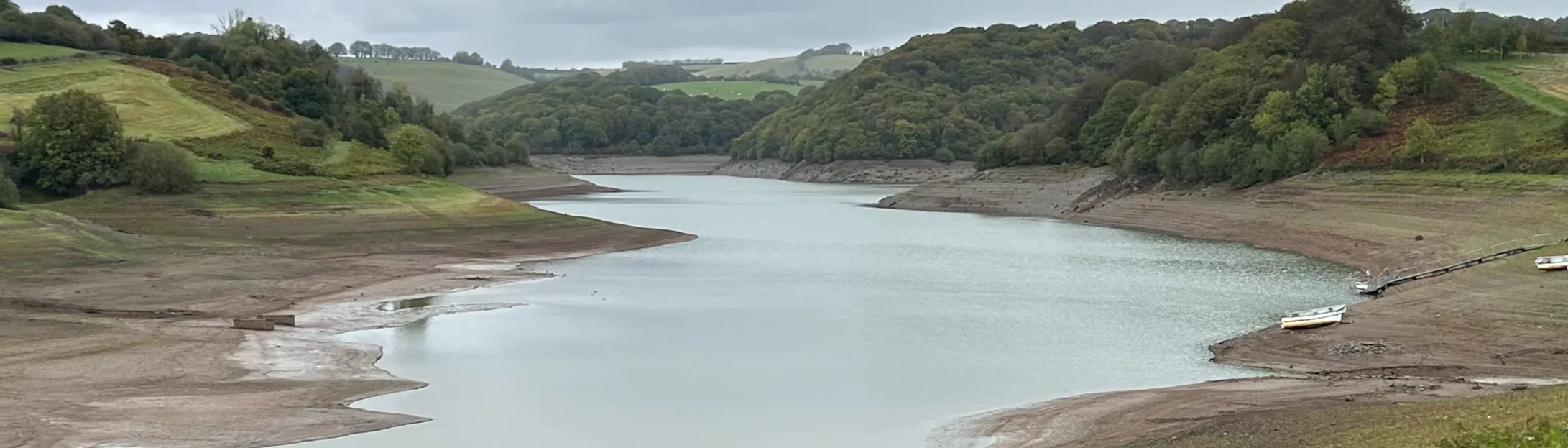
Low water levels and drought conditions can stress ecosystems and wildlife. Effects include low oxygen levels in water that can lead to fish kills, increased algal blooms, and restricted movement of wildlife in rivers.
What is the National Drought Group?
The National Drought Group brings together key organisations involved in managing drought, including the Environment Agency, water companies, the Met Office, government departments, farming organisations, and environmental experts. The group meets regularly during dry periods to coordinate response efforts, share information, and implement measures to protect water supplies and the environment.
How can I report environmental incidents related to drought?
If you see dead fish, wildlife in distress, drastically low water levels, pollution, or other environmental concerns, please report them to the Environment Agency's 24-hour incident hotline at 0800 80 70 60.
What can I do to help conserve water?
Every action to save water helps protect our environment and ensure supplies for everyone. Simple steps include:
Access the Consumer Council for Water’s (CCW) website for further guidance: Drought - CCW(External link) and watch their video: Help us to protect essential water supplies – and the environment - YouTube(External link)
Where can I get more information?
How is climate change affecting drought in England?
The changing climate means we are likely to see more summer droughts in the coming decades, despite periodic flooding. The rapid transition from the record rainfall and flooding in 2023-2024 to the current dry conditions demonstrates the increasing volatility of our weather patterns. The Environment Agency is planning for these changes through improved forecasting, infrastructure investment, and collaborative water resource management.
What is being done to build long-term water resilience?
The Environment Agency is planning for future water needs through: