Shanklin Coastal Defence Scheme
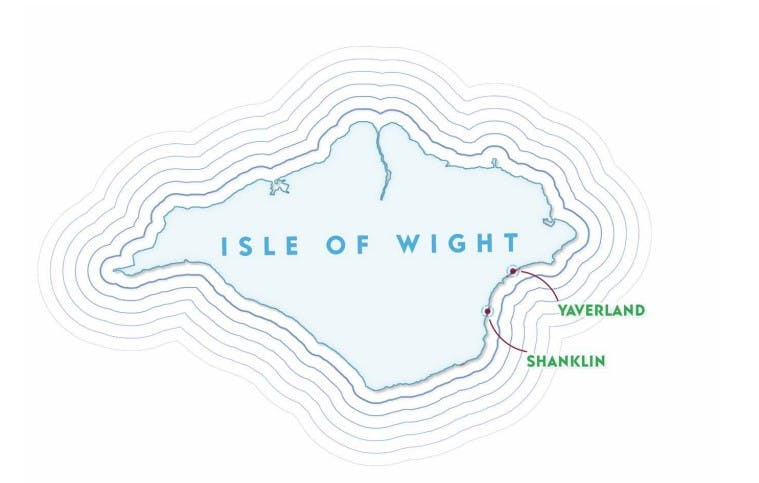
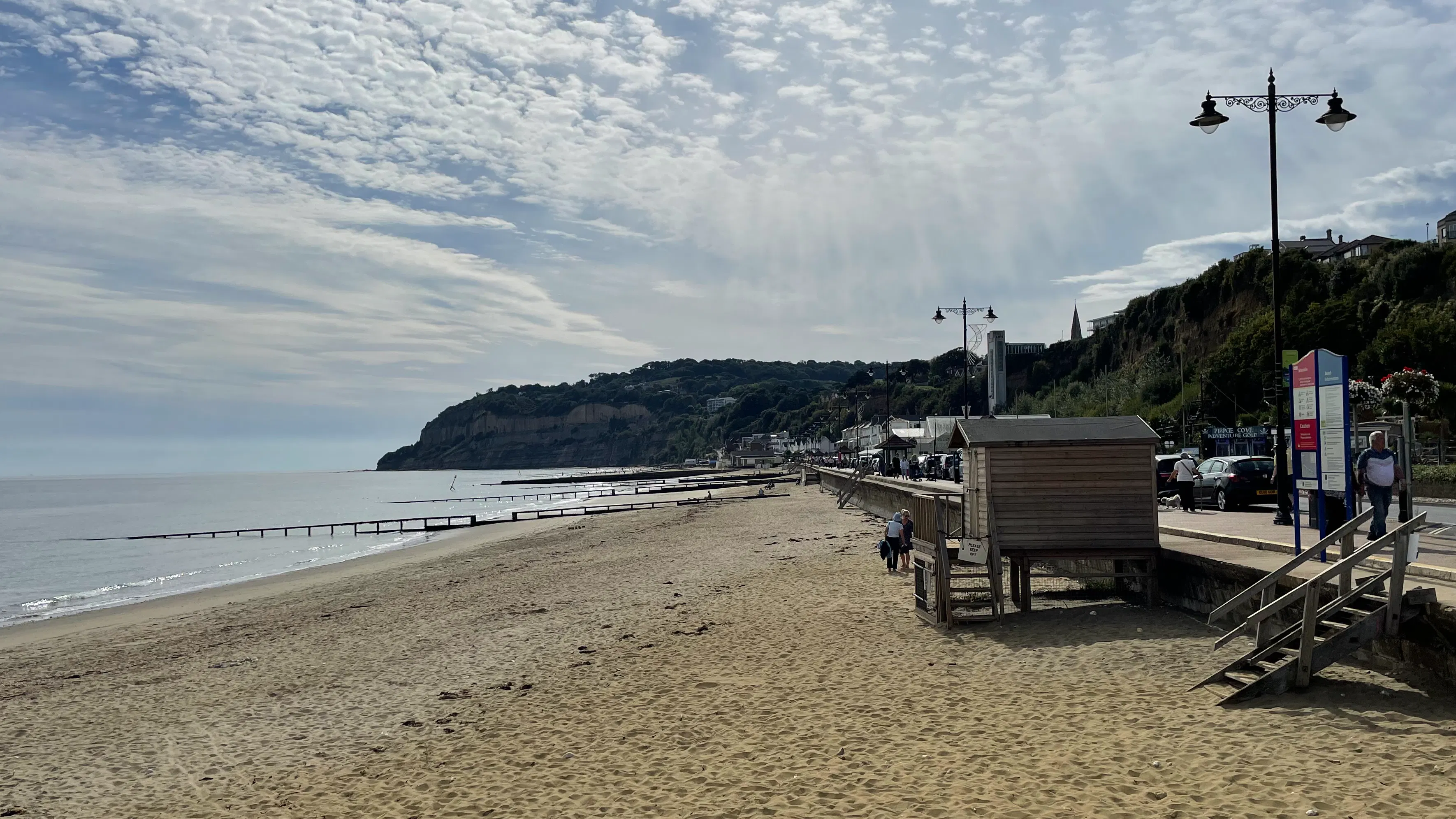
The Environment Agency, are working in partnership with the Isle of Wight Council to explore a sustainable future for the coastal frontage at Shanklin Esplanade, located on the eastern coast of the Isle of Wight.
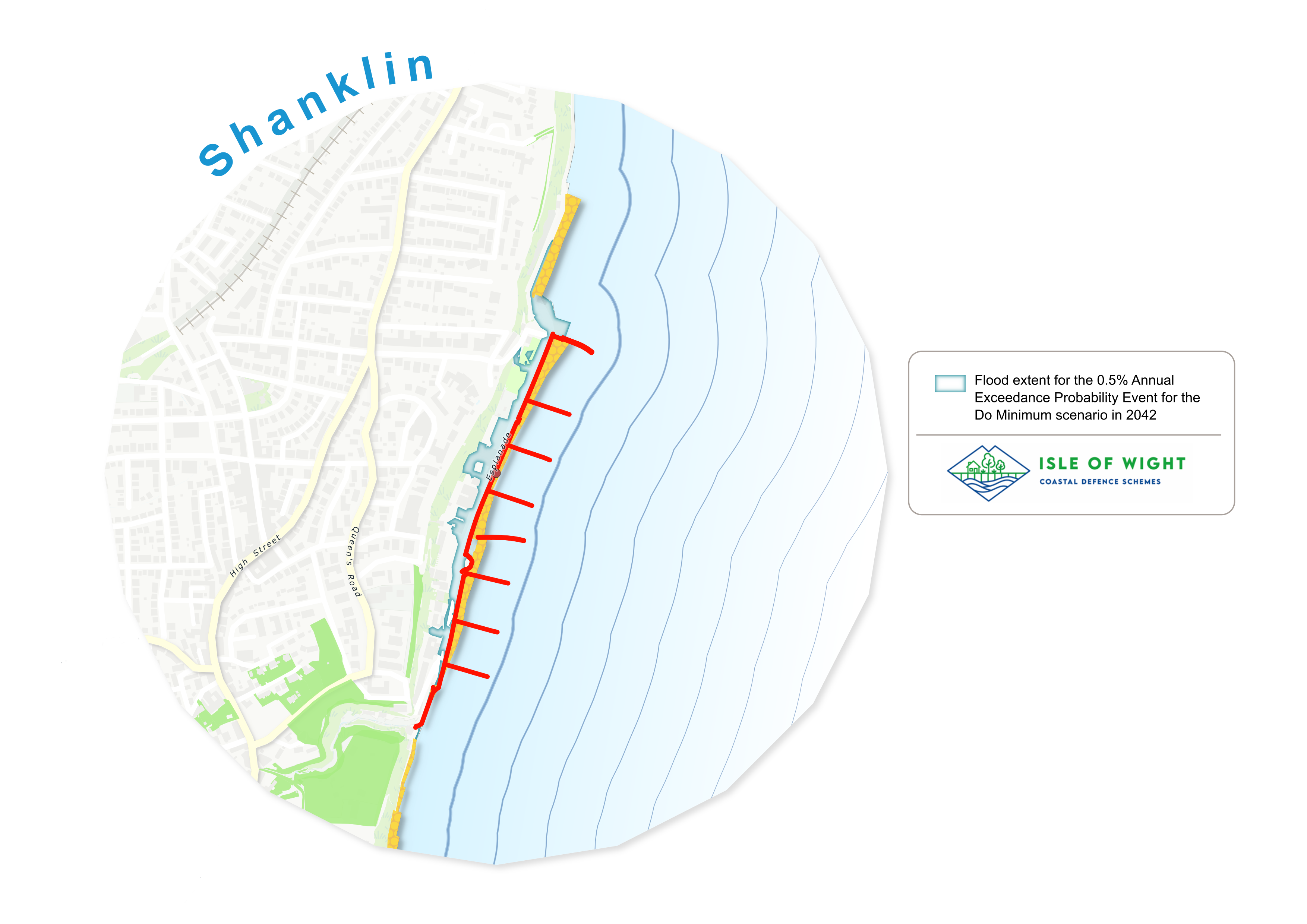
With current coastal defences reaching the end of their useful life, plans are progressing plans to upgrade 900m of coastal defences to reduce the impact of coastal flooding and erosion for the next 50 years. This scheme will better protect homes, businesses and infrastructure and provide over £80 million worth of benefits to people, property and the environment.
How To Get Involved
Join the Coastal Community Group
Want to have your say about the coastal defence schemes in The Bay? This forum provides an opportunity for you to hear the latest information, ask questions and speak directly to the project team.
If you would like to register your interest to participate in or present to the Sandown Bay Coastal Community Group for the Shanklin and Yaverland Coastal Defence Schemes, please get in touch.
Register for updates
Stay up to date with the Shanklin Coastal Defence Scheme using the 'Subscribe' button. This will add you to our mailing list for notifications when we release any significant updates or announce events. You can also come back to visit this page at any time and check the 'Newsfeed' section below which will be regularly updated with news and project progress.
Register with Engagement HQ by clicking the 'Register' button in the side information bar. This will enable you to interact with our page by sharing your ideas and asking a question in the sections below.
Sign up to our Newsletter
Want to receive updates on this project or other coastal defence projects across the Isle of Wight?
Email us at IOW_FDschemes@environment-agency.gov.uk(External link)(External link) and let us know which projects you're interested in, and we'll add you to our mailing list.
-
A big thank you to Jaxson!
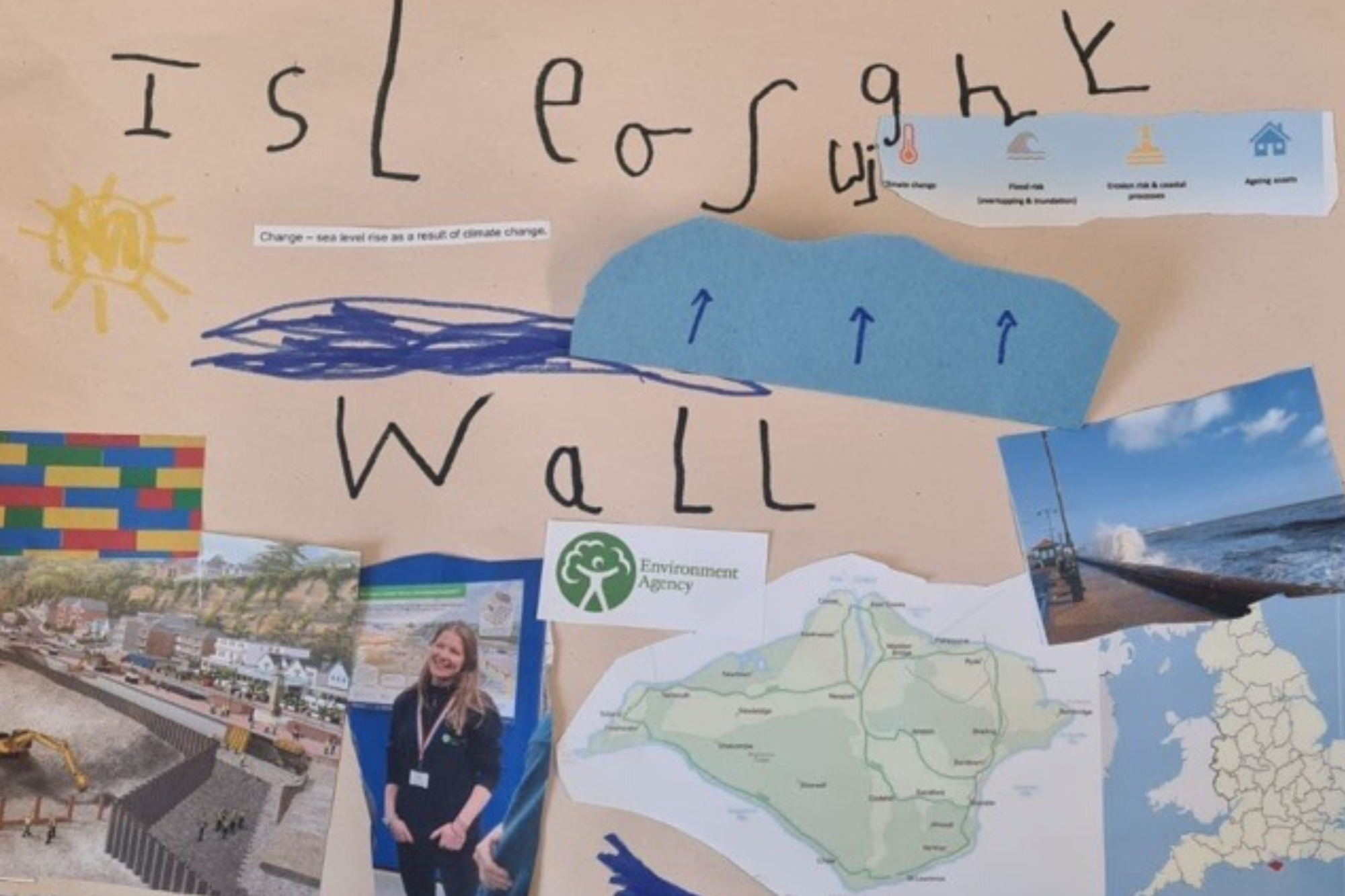
We’d love to give a huge thank you to Jaxson, aged 4, for creating this amazing science poster about coastal defences on the Isle of Wight.
Jaxson’s school set him a homework project on ‘Change and Adapt’, and with help from his mum, he learned all about how storms have damaged the Sandown seawalls and why we need to repair and replace coastal defences to keep protecting our coastline as the climate changes.
The Coastal Defence project team think Jaxson’s poster is poster is fantastic—it includes maps, photos of the coast, and even creative artwork to show the importance ofContinue reading
-
Preferred Option
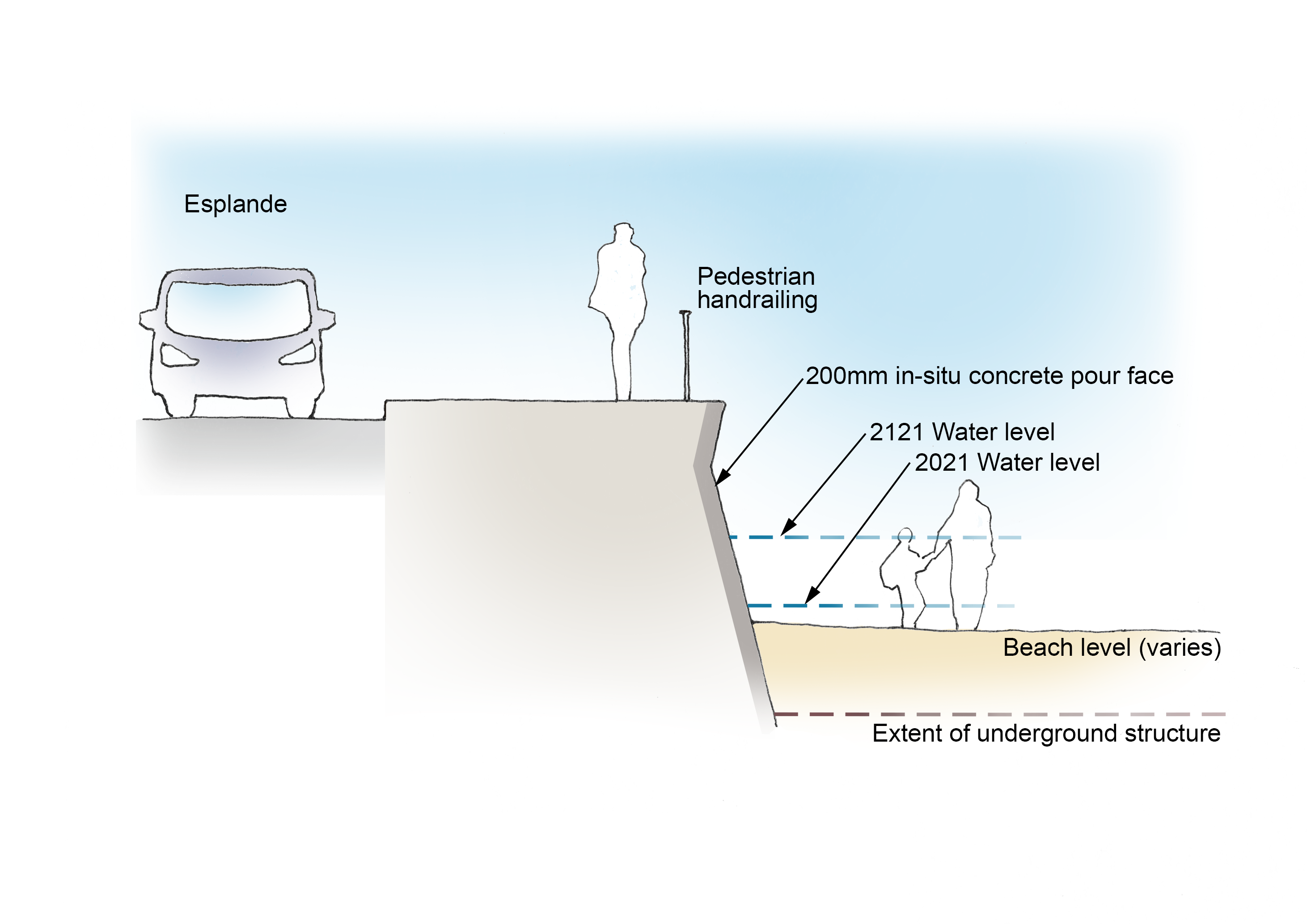
Out of the 5 short list of options, Option 3 (Keep the existing defence level) has been chosen by Isle of Wight Council as the preferred way forward following a recommendation made by the Environment Agency.
Option 1: Do Nothing
Option 2: Do Minimum
Option 3: Keep the existing defence level
Option 4: Raise the level of the defence in stages into the future
Option 5: Raise the defence level now
Option 3 will involve construction works to refurbish the sea wall, timber groynes and concrete groynes. The methodology for refurbishment will be confirmed during the next stage as theContinue reading
-
Financial analysis
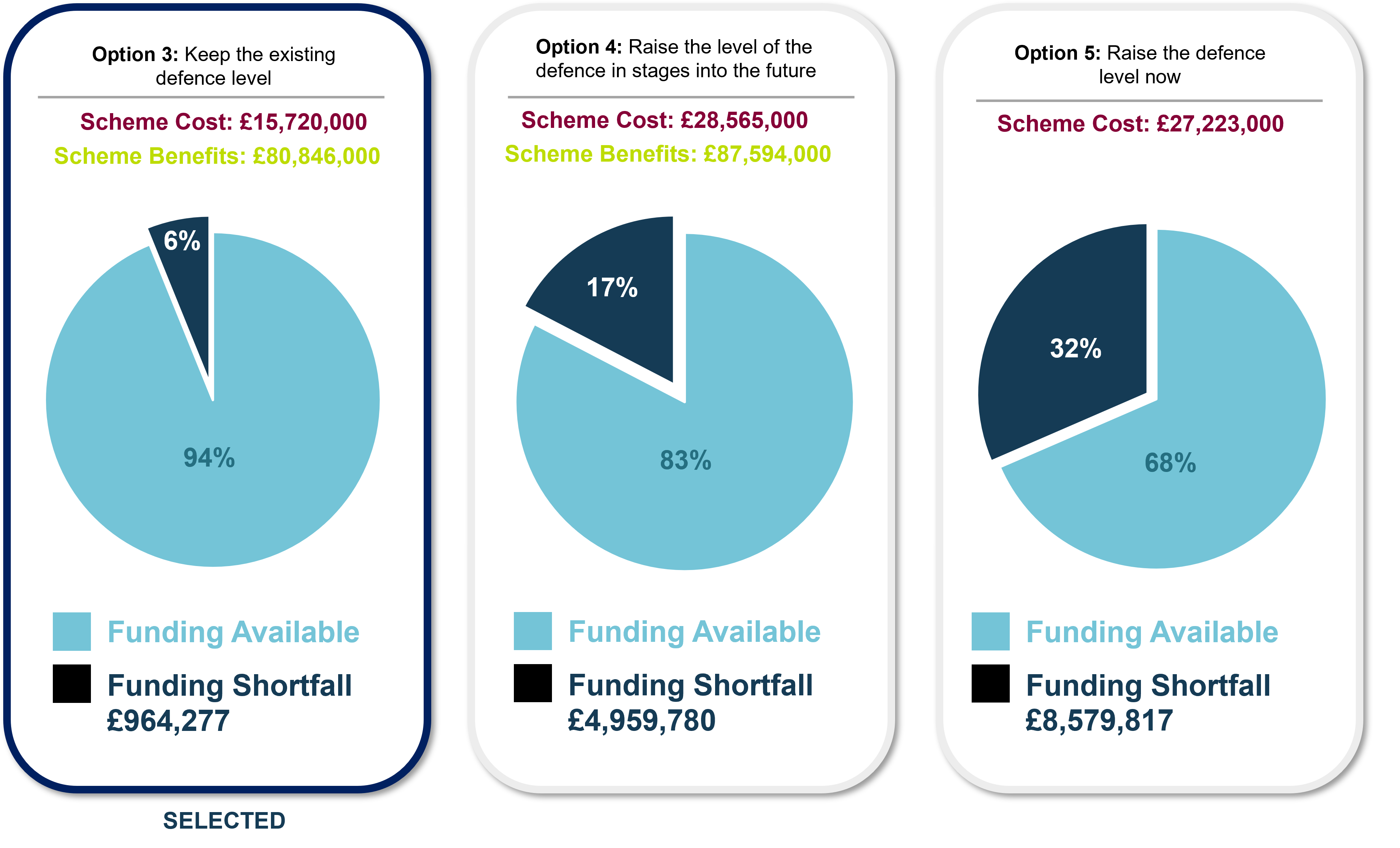
Option 3 provides over £80 million worth of benefits to people, property and the environment. The additional benefits associated with Option 4 and Option 5 are not as great. The figure below shows the cost to construct Option 3 is significantly less compared with Option 4 and Option 5. Increasing the height of the sea wall almost doubles the cost of the scheme. The public consultation told us that there is interest locally in raising the height of the existing defences however the funding shortfall of £4.9million and £8.5million for Option 4 and Option 5 respectively makes these unviable optionsContinue reading
-
Updated flood risk assessment
Flood modelling uses predicted river flows, rainfall, and coastal levels combined with topographic data and flow equations to generate flood risk information (such as depth, velocity, flood levels, and hazards). Our team of specialists updated the coastal flood modelling for Shanklin to ensure it uses the latest information and software available.
The main coastal threat to Shanklin is erosion of the sea defences due to their current poor condition. Our latest modelling predicts that failure of the coastal defences would lead to the loss of the beach amenity and access to the esplanade. This which would have significant knock-on impactsContinue reading
-
Summary of Short List Consultation Responses
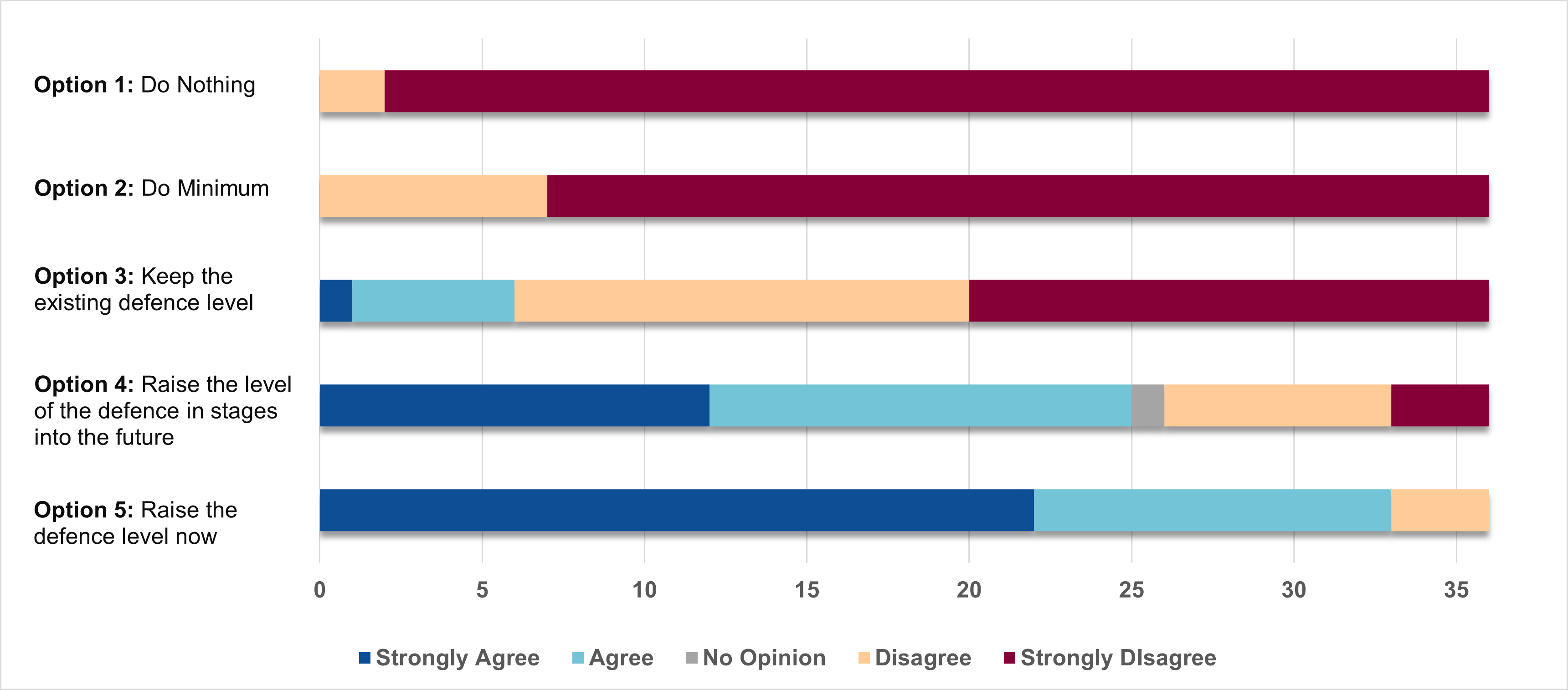
We received 42 responses in total. Of the 42 responses, 36 people gave their permission for us to publish their response.
Summary of key findings from the consultation responses:
- No one favoured the do nothing or do minimal option (short list Option 1 and Option 2). Respondents told us that better protection from coastal erosion and flooding is a priority.
- Option 5 was the most favourable option to raise the defences now to address future sea level rise. A total of 33 of the 36 respondents agreed or strongly agreed with taking option 5 forward. Respondents told us that thereContinue reading
-
Short List of Options
The Environment Agency and Isle of Wight Council are working together to manage coastal erosion and flood risk from the sea. Climate change is bringing more frequent and severe floods and storm events. The coastal defences in Shanklin include the sea wall and groynes. The beach also provides an important role by protecting the coastline behind it. The sea wall and groynes are in a poor condition and are reaching the end of their useful life. Without intervention the risk and severity of flooding and coastal erosion will continue to increase.
We have been looking at what we can doContinue reading
-
Public Questionnaires
Public Realm Questionnaire - Summer 2022
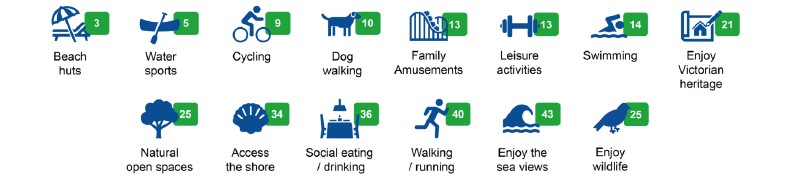
Our public realm questionnaire ran from 16th May 2022 to 31st July 2022, seeking views on how people interact with Shanklin Esplanade, what is most valued about it, and the perceptions amongst stakeholders of flood and coastal erosion risks both now and in the future. This will help to inform how we engage with stakeholders going forward, and capture any concerns, ideas and opportunities in the shortlist of options that we present to the public in Summer 2023.
A copy of the response summary report can be found here if you would like toContinue reading
-
Surveying and Investigations

To support the option development process, we need to collect data to better understand the current risk from coastal flooding and erosion from the sea. This is called the 'Surveying and Investigations' phase of the project. This will help us to make decisions about how best to manage the risk now and in the future.
Ground Level and Ground Penetrating Radar (GPR) Surveys - June 2022
Our contractors will be completing survey work using GPS equipment to obtain accurate land level measurements. They'll also be using ground penetrating radar to survey beneath the surface of the existing sea wall.
GroundContinue reading



-
Project Team
-
Partners

-
Consultants

-
Contractors



-
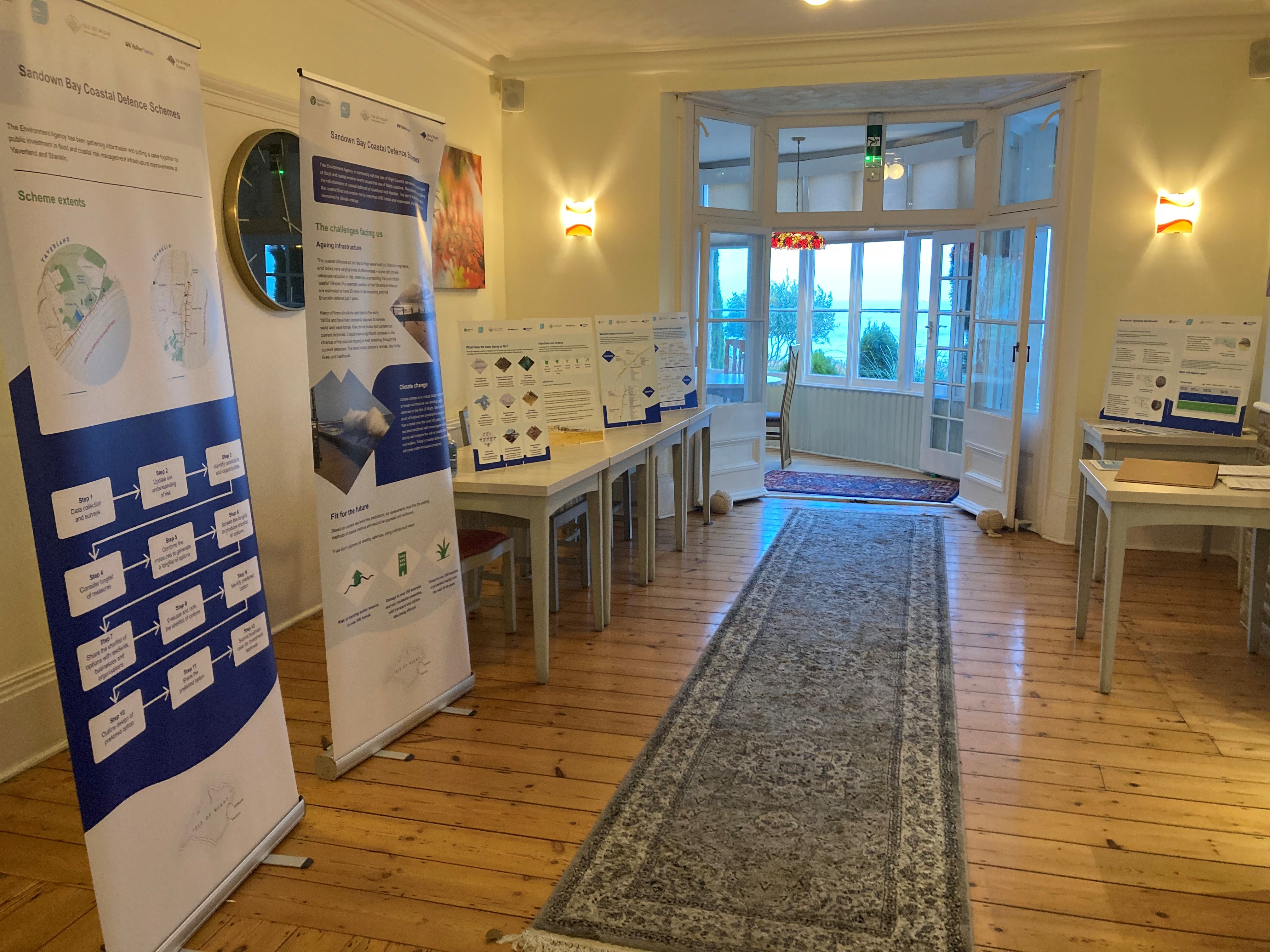
 February 2025 - Preferred Option Exhibition Material
-
 Poster 1 - The need for the scheme (444 KB) (pdf)
-
Poster 2 - Assessment of options (223 KB) (pdf)
-
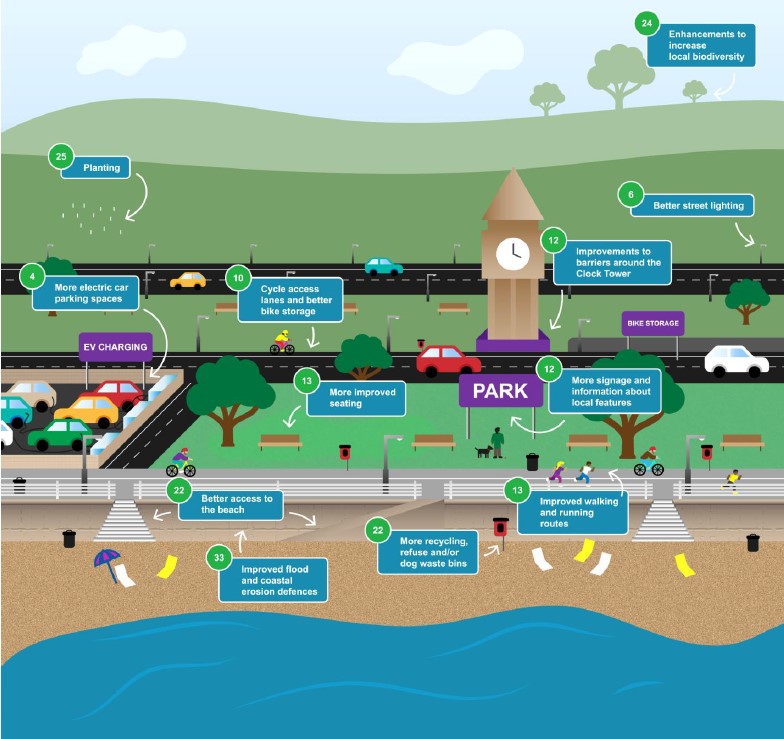
Poster 3 - What improvements would you like to see (873 KB) (pdf)
-
Poster 4 - What might happen during the refurbishment (1.32 MB) (pdf)
-
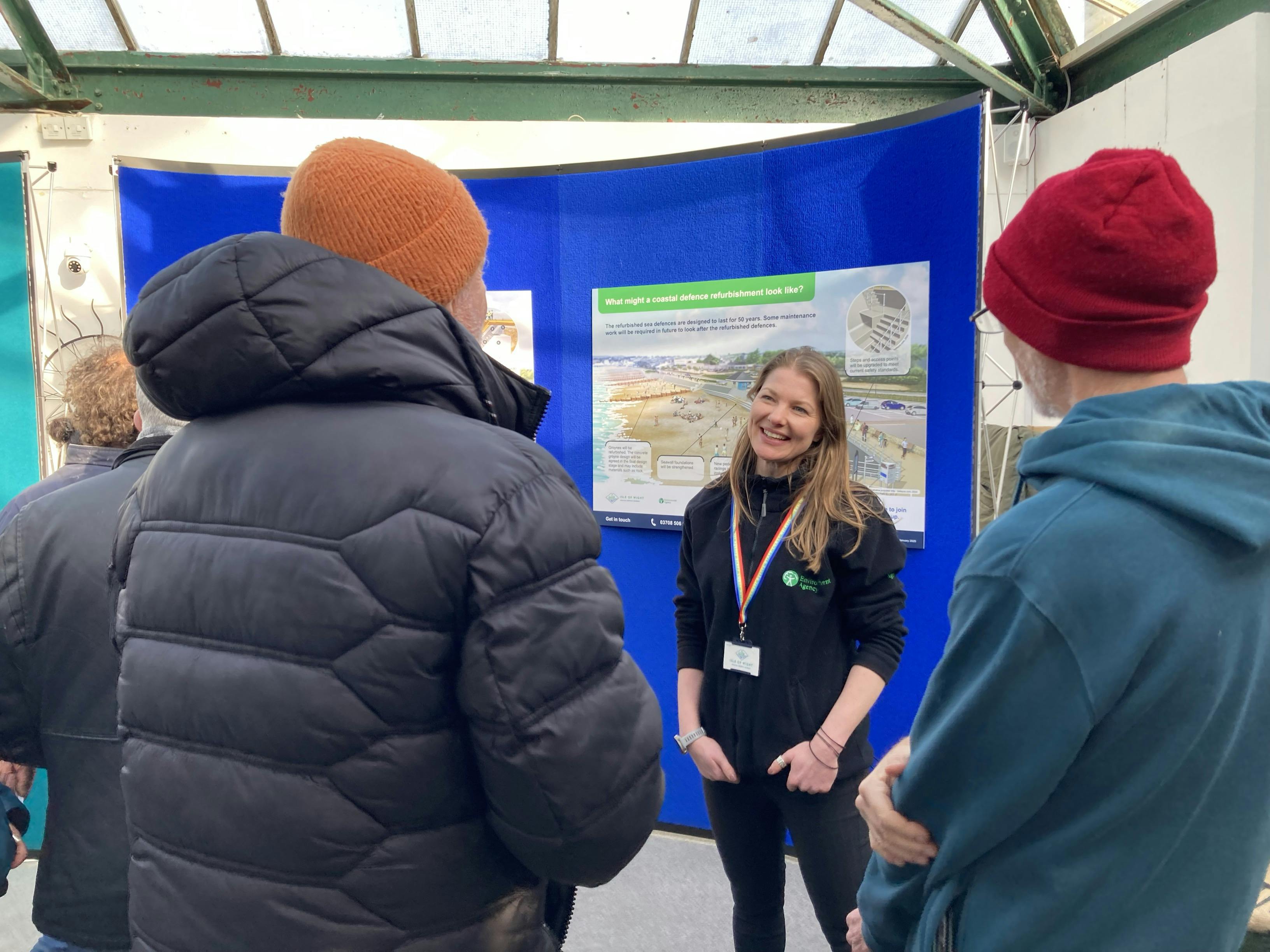
Poster 5 - What might a coastal defence refurbishment look like (1.41 MB)
-
-
November 2023 - Short List Consultation Material
-
Banner 1 - Introduction (468 KB) (pdf)
-
Banner 2 - Scheme extent (326 KB) (pdf)
-
Poster 1 - Survey and Investigations (315 KB) (pdf)
-
Poster 2 - Constraints and Opportunities (293 KB) (pdf)
-
Poster 3 - Measures considered (233 KB) (pdf)
-
Poster 4 - Project objectives and criteria (335 KB) (pdf)
-
Poster 5 - Short List (319 KB) (pdf)
-
Shanklin short list consultation responses March 2024 (784 KB) (pdf)
-
Build your own sea defence!
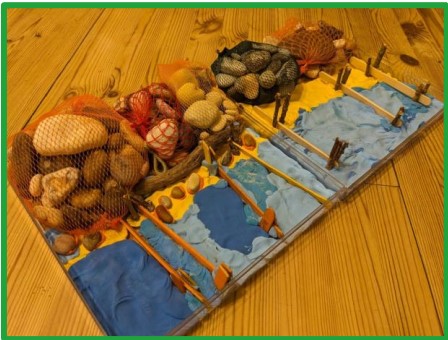
We received a range of very creative and innovative entries for our competition to build a sea defence from any materials that can be found at home or school. We are delighted to announce that siblings James (age 8) and Amelie (age 5) received the top prize of an adoption pack from Wildheart Animal Sanctuary plus some books and a nature craft kit. The judges were impressed by their use of recycled materials such as lollipop sticks and naturally occurring materials such as driftwood and twigs to create the groynes which work to maintain beach levels.
Beach to the Future!
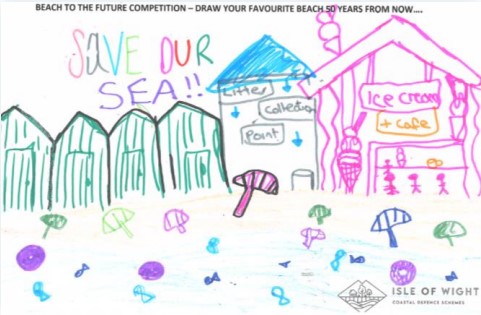
Congratulations to Zara (age 10) who is the winner of our ‘Beach to the Future’ competition. Zara’s design includes measures to tackle plastic pollution and encourages us all to make changes to protect our coastal environments. Thank you to Dinosaur Isle for providing a year’s membership to Dinosaur Isle as the prize.
-

-
Working with clay, members of the community designed and created habitat features that will be incorporated into the Vertipools being installed across the Bay. These features will help create homes for marine life and enhance biodiversity along the shoreline for years to come!