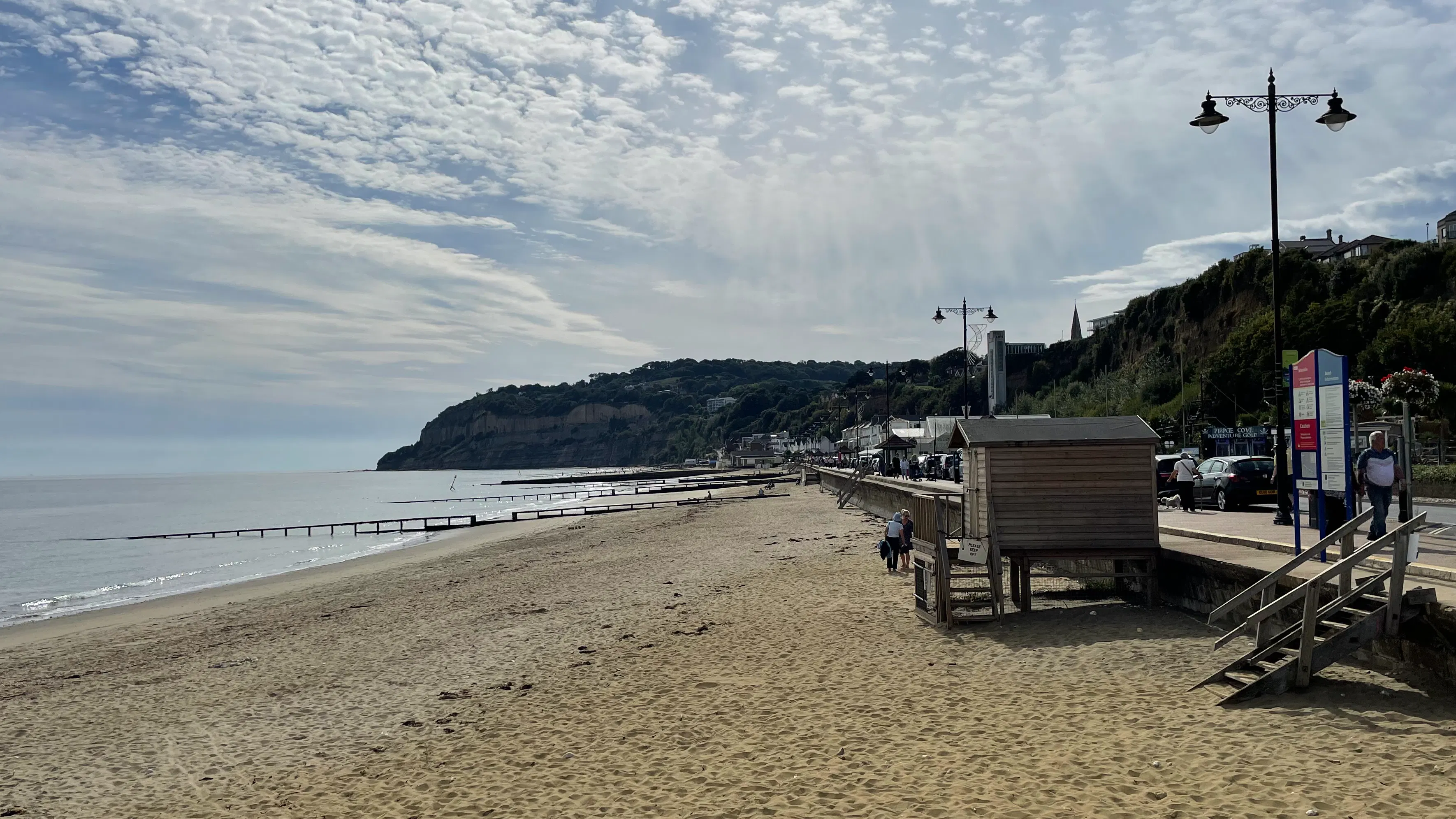
Surveying and Investigations

To support the option development process, we need to collect data to better understand the current risk from coastal flooding and erosion from the sea. This is called the 'Surveying and Investigations' phase of the project. This will help us to make decisions about how best to manage the risk now and in the future.
Ground Level and Ground Penetrating Radar (GPR) Surveys - June 2022
Our contractors will be completing survey work using GPS equipment to obtain accurate land level measurements. They'll also be using ground penetrating radar to survey beneath the surface of the existing sea wall.
Ground investigation work - January 2023
Ground investigation work starts on 23rd January 2023 to help us assess the possible options for sea wall and groyne refurbishment. Specialist equipment will be used to drill boreholes through the sea wall and retrieve concrete cores which are sent to the laboratory for analysis. Machine excavated trenches located at intervals along the sea wall and next to the groynes will also be required. The results from the investigations will increase our understanding of the ground conditions and underground structures, including the foundations of the existing sea defences. Further details can be found here

Findings of the ground investigative work
- A total of four concrete cores were extracted at strategic locations along the concrete sea wall. Ferruginous Sands Formation (weathered bedrock) was encountered in all boreholes. This comprised a mixture of granular and cohesive soils described to range between very dense silty sand and firm sandy clay.
- The sea walls are much thinner than modern engineering standards. This tells us that works to the foundations will be needed as part of the refurbishment work.
- Borehole cores extracted from the ground have been donated to the British Geological Society. Their data sets provided useful information for our projects, and we hope our contribution will help others in the future.
The below image shows one of the borehole cores extracted from the ground and stored in its wooden container:

Coastal processes assessment
We completed a coastal processes assessment to get an understanding of the sediment movement across the beach.

- The historic trends in beach profile from 2004 to 2020 were reviewed. The min/max envelope in the above image shows the beach level overall remains relatively stable across the survey period.
- Short term fluctuations are observed and indicate seasonal changes.
- The overall stable condition is attributed to the constant nourishment of sediment received from the south-north net sediment transport rate of 25,000m3/year on average. The assessment shows that the two concrete groynes known as Osbourne and Hope Groynes are important for the long-term stability of beach levels.
- Past storm events have caused beach levels to lower by up to 1metre in front of the sea walls.
- One of the major physical impacts of a rise in sea level includes erosion of beaches. Our coastal processes assessment shows that beach levels are expected to lower by less than 5cm by 2040 and up to 2m by 2125. It is expected that the toe of the sea wall will have sufficient beach cover to protect it from erosion for the next 50 years. After this point, works to prevent scour at the toe of the sea wall may be needed.

Thank you for your contribution!
Help us reach out to more people in the community
Share this with family and friends