Background FAQs
Why do we need the scheme?
Ageing Infrastructure
The existing seawall was originally built pre-1900s and is over 100 years old. The concrete groynes are of a similar age (Osborne groyne 1878 and Hope Groyne 1901), whilst the wooden groyne field was completed in 1980.
The seawall is in a poor condition with cracks, voids, exposed fill and widespread damage. The sea wall is at high risk of failure in the short term. The northernmost concrete terminal groyne, Hope Groyne, has already failed. The six existing timber groynes are estimated to have a remaining life of less than 5 years without any intervention.
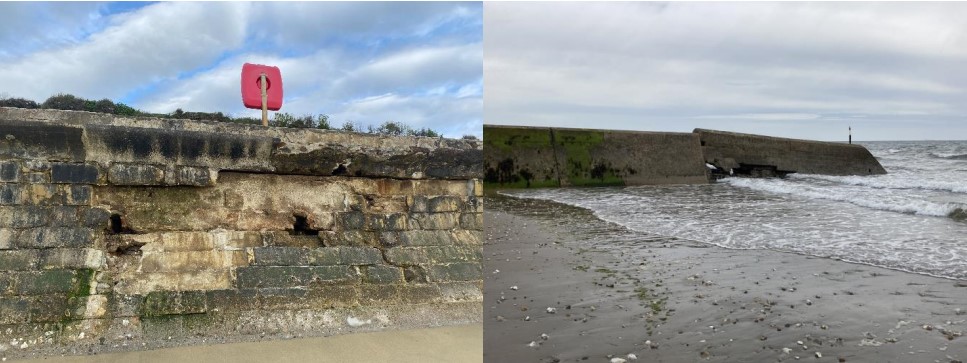 Poor condition of the existing sea wall (left) and failed Hope Groyne (right)
If nothing is done to address this, the defences will continue to deteriorate and become increasingly susceptible to coastal erosion. Major capital works are now needed if the coastal defences are to remain effective.
Climate Change
Sea level is predicted to rise by over a metre in the next 100 years. This rise in sea level combined with more regular and powerful storms will increase the risk of coastal flooding and erosion. This is therefore a critical factor in why we need to invest and improve our existing coastal defences on the Isle of Wight. 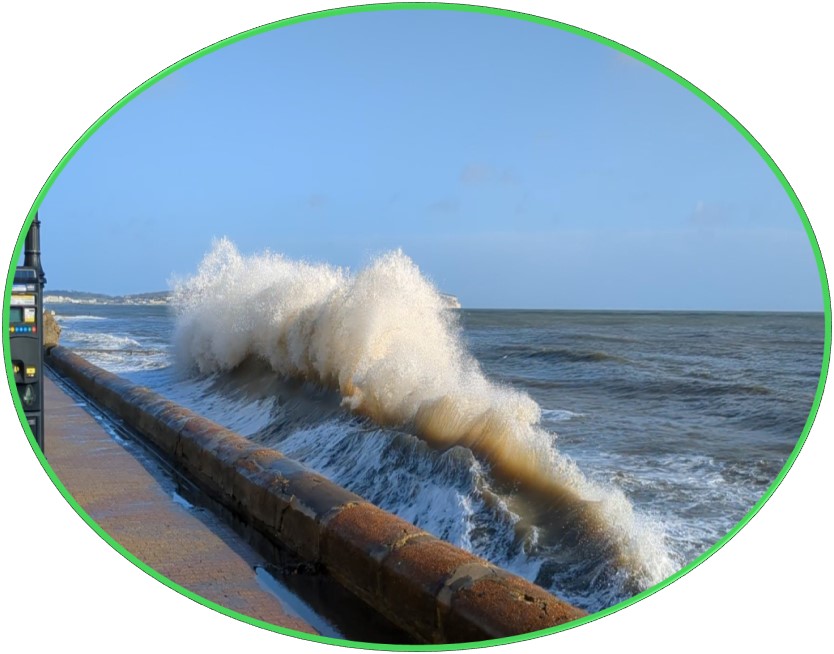
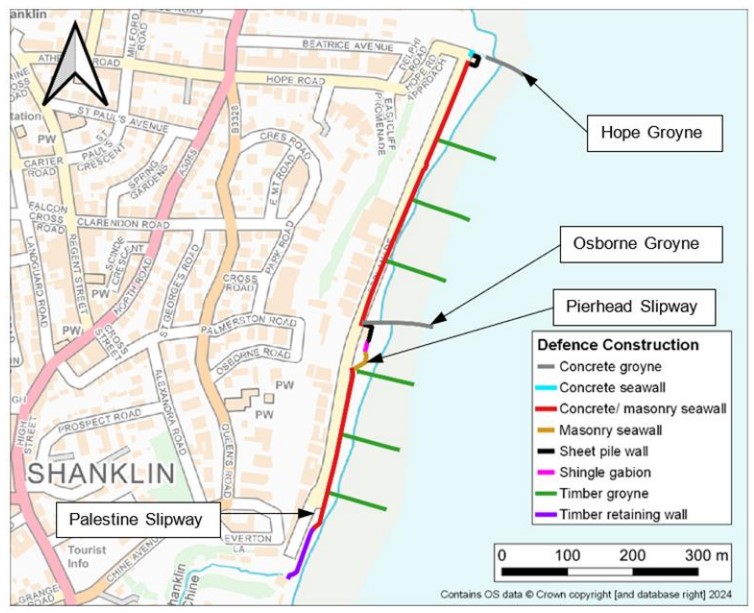 Shanklin coastal defences