The Maxey Cut banks refurbishment

The Maxey Cut is a flood relief channel built in the 1950s to reduce flooding in Market Deeping and Deeping St James. It does this by diverting high flows away from the original flow route of the River Welland, allowing them instead to flow along the Maxey Cut.
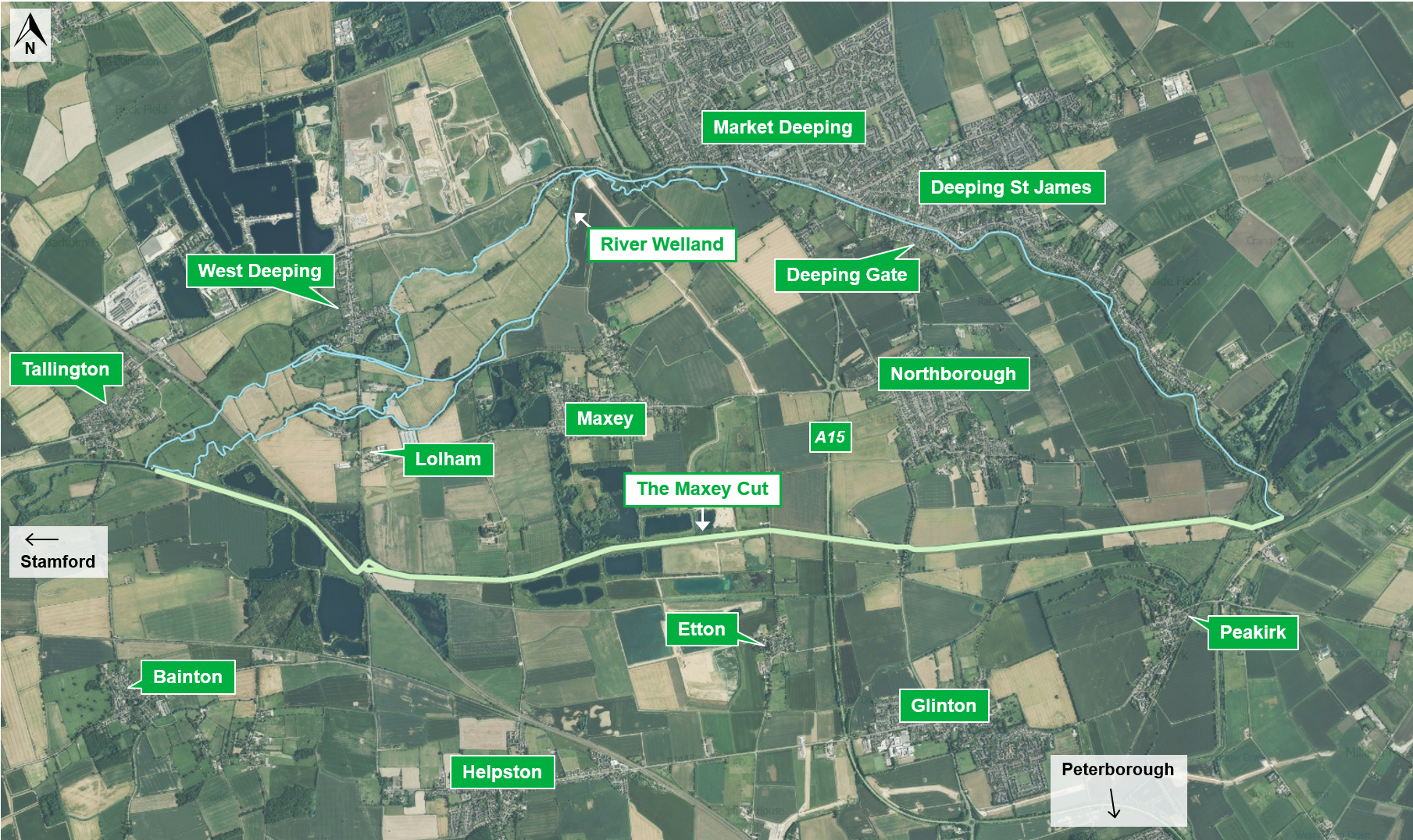


Aerial map showing the location of the Maxey Cut with surrounding towns/villages and the River Welland labelled.Aerial image showing the extent of the Maxey Cut

The channel flows between raised flood banks which are between 1m and 3m in height above surrounding ground levels. Today, it also provides additional flood risk benefits to communities along the river from Tallington footbridge to where it meets the River Welland near Peakirk.
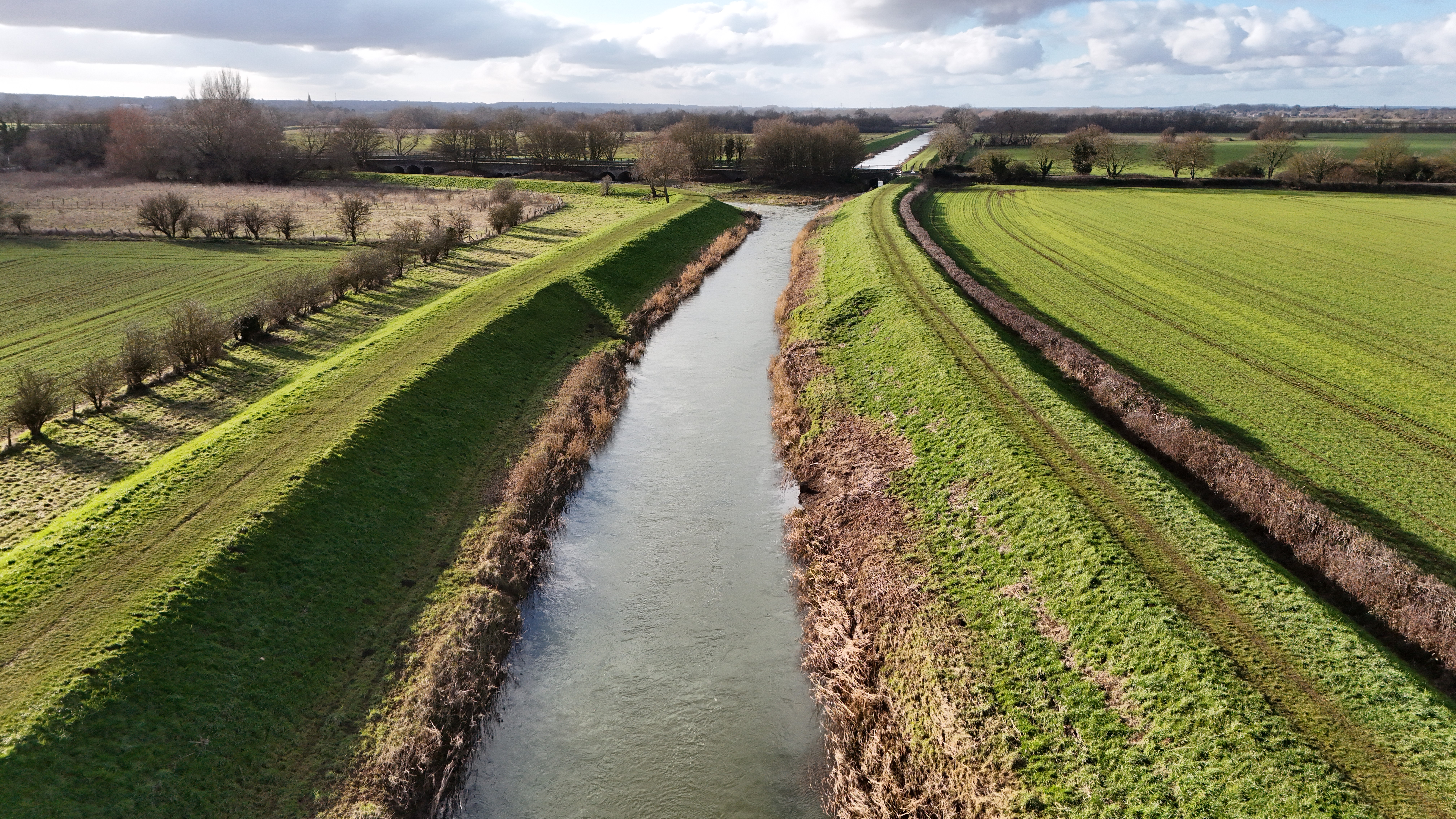


Photograph taken from a drone showing an aerial view from medium distance of the Maxey Cut river channel with raised earth embankments on either side of the river.Drone image showing the Maxey Cut looking upstream towards Nine Bridges (Lincoln Road)
Why is the project needed?

The lifecycle of the banks means they are now due for refurbishment to sustain the standard of service that they were built to provide. The project team has been exploring refurbishment options along the Maxey Cut to maintain their effective flood risk management.


What will the project achieve?


When and where will works take place?

Construction work is scheduled to take place between Spring 2027 and Autumn 2028, subject to funding approvals. The works are planned to be carried out along the Maxey Cut within the Maxey, Glinton and Newborough parishes.


We want you to get involved!

We welcome any feedback you may have about the project or this page. Let us know your thoughts by filling out our 'Have your say: Feedback form' located at the bottom of this page. Let us know if there's any additional information that it would be useful to see here!


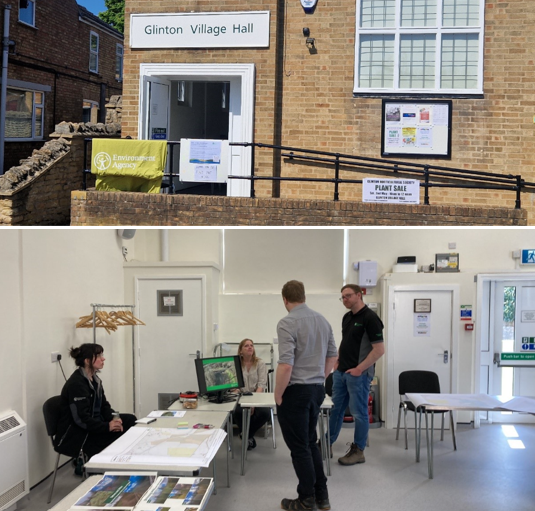
You are invited to attend our public drop in event at Glinton Village Hall on the 22nd April. Please find out more by clicking here or on the Engagement Events section of this page.


How can I keep informed about this project?

You can stay up to date on the project by:

  • Registering with EngagementHQ to get the most out of this platform and to interact with some of the tools available on this page. See the information panel to register.
  • Subscribing to this page to add this project to others you follow on the platform and to be added to our mail list. We don't send notifications, unless there are significant updates to content or changes to planned events so please check this page regularly. See the information panel to subscribe.
  • Regularly checking this page as we will be posting regular updates, advertising future public events, and asking for your input.
  • Checking out the news feed section.


Where can I go to get more information?

If you have a question please check our Frequently Asked Questions section in the information panel. Let us know if there are more FAQ's you would like to see answered.

If you can't find the answer to your question in our FAQ's you are welcome to contact us using LNenquiries@environment-agency.gov.uk and we will get back to you. Please include 'Maxey Cut' in the subject line.


The Maxey Cut is a flood relief channel built in the 1950s to reduce flooding in Market Deeping and Deeping St James. It does this by diverting high flows away from the original flow route of the River Welland, allowing them instead to flow along the Maxey Cut.


Aerial map showing the location of the Maxey Cut with surrounding towns/villages and the River Welland labelled.Aerial image showing the extent of the Maxey Cut

The channel flows between raised flood banks which are between 1m and 3m in height above surrounding ground levels. Today, it also provides additional flood risk benefits to communities along the river from Tallington footbridge to where it meets the River Welland near Peakirk.


Photograph taken from a drone showing an aerial view from medium distance of the Maxey Cut river channel with raised earth embankments on either side of the river.Drone image showing the Maxey Cut looking upstream towards Nine Bridges (Lincoln Road)
Why is the project needed?

The lifecycle of the banks means they are now due for refurbishment to sustain the standard of service that they were built to provide. The project team has been exploring refurbishment options along the Maxey Cut to maintain their effective flood risk management.


What will the project achieve?


When and where will works take place?

Construction work is scheduled to take place between Spring 2027 and Autumn 2028, subject to funding approvals. The works are planned to be carried out along the Maxey Cut within the Maxey, Glinton and Newborough parishes.


We want you to get involved!

We welcome any feedback you may have about the project or this page. Let us know your thoughts by filling out our 'Have your say: Feedback form' located at the bottom of this page. Let us know if there's any additional information that it would be useful to see here!


You are invited to attend our public drop in event at Glinton Village Hall on the 22nd April. Please find out more by clicking here or on the Engagement Events section of this page.


How can I keep informed about this project?

You can stay up to date on the project by:

  • Registering with EngagementHQ to get the most out of this platform and to interact with some of the tools available on this page. See the information panel to register.
  • Subscribing to this page to add this project to others you follow on the platform and to be added to our mail list. We don't send notifications, unless there are significant updates to content or changes to planned events so please check this page regularly. See the information panel to subscribe.
  • Regularly checking this page as we will be posting regular updates, advertising future public events, and asking for your input.
  • Checking out the news feed section.


Where can I go to get more information?

If you have a question please check our Frequently Asked Questions section in the information panel. Let us know if there are more FAQ's you would like to see answered.

If you can't find the answer to your question in our FAQ's you are welcome to contact us using LNenquiries@environment-agency.gov.uk and we will get back to you. Please include 'Maxey Cut' in the subject line.


  • 22nd April Glinton drop in session - all invited

    You are invited to a drop in session at Glinton Village Hall on Wednesday 22nd April between 1.30 and 3.30pm.

    This drop in session is your chance to learn more about the Maxey Cut banks refurbishment project and ask the project team any questions that you may have.

    Everyone is welcome - we look forward to seeing you!

    Location and access details are as follows:

    Address: Glinton Village Hall, High St, Glinton, Peterborough PE6 7JP

    Parking: There is no on site parking available, however, on road parking is available near Glinton Church and is a 2 minute walk from the Village Hall.

    Public transport: Glinton is serviced by many local bus routes. Glinton Crossroad Bus Stop is a 2 minute walk from the Village Hall. Please find directions here.

  • December 2025 update

    Project timeline

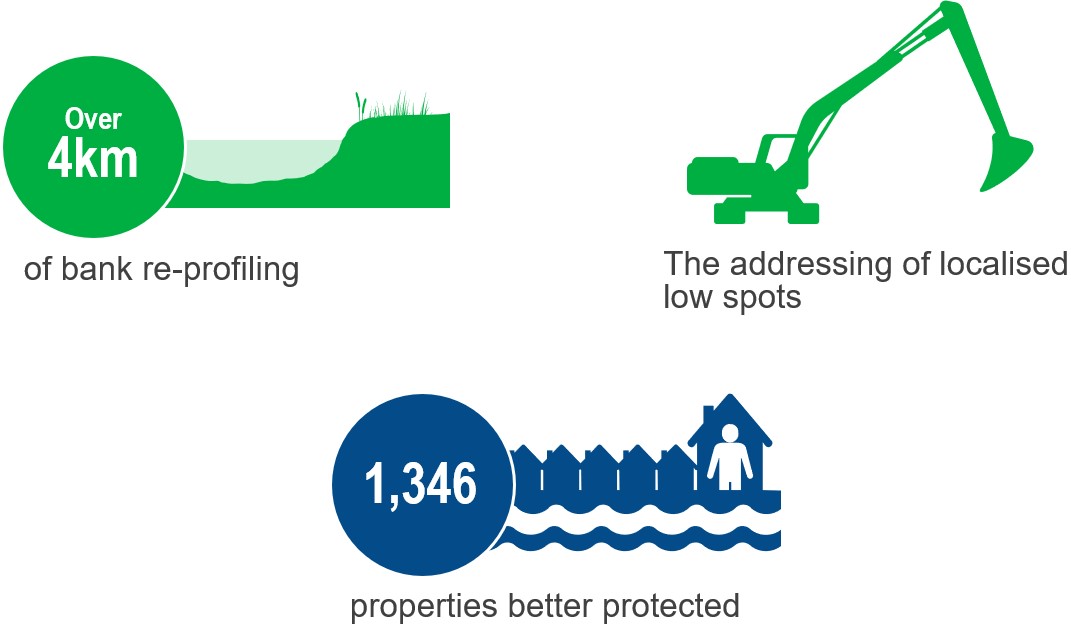
    The construction schedule has shifted: work is now planned for Spring 2027 to Autumn 2028, depending on funding. Planned works include vegetation clearance, fixing low spots, and re‑profiling around 4.3 km of embankment across Maxey, Glinton, and Newborough parishes.

    Work completed so far

    Survey data from geophysical, LiDAR, archaeological, and ecological studies has been used to finalise the Outline Design for the preferred option.

    What’s next

    • Preparing an Outline Business Case to secure funding.
    • Additional ecological surveys, including wintering bird studies.
    • Ongoing engagement with landowners and tenants.

    Impact on local residents

    Surveyors may be visible along embankments and nearby fields Monday to Friday, 08:00–18:00.

  • May 2025 update

    Project timeline

    Construction is planned between Winter 2026 and Summer 2028, subject to funding and approval.

    Preparation works, scoping the locations where works are to take place, and design, have already begun. The project will likely include vegetation removal, topping up low spots on embankments, access improvements to carry out routine maintenance, and restoring banks that have eroded in channel.

    Work completed so far

    A LiDAR topographical, and ecological survey have been completed to help us understand the work needed.

    A LiDAR survey (Light Detection and Ranging) collects highly accurate, three-dimensional data of the Earth's surface. The data collected supports project development by identifying 'low spots' and other features of the banks and enabling our project team to identify priority areas for the project works.

    Geophysical surveys have been carried out to inform our understanding of local archaeology. Ecological surveys are ongoing to help us understand what species are present and what we can do to protect and improve their populations. To date, bat and owl surveys have been completed.

    What's next

    • Our project team will be working on developing the outline design incorporating elements to maintain the standard of service by stabilising banks and to improve maintenance by widening the banks and adding access routes where feasible.
    • Analysis of the LiDAR results will allow the project team to provide design solutions and forecast costs to bring the banks back to the previous standard of service.
    • Ecology field work including water vole, otter, newt, and breeding bird surveys.

    Impact on local residents

    Surveyors may be visible along embankments and nearby fields Monday to Friday, 08:00–18:00.

  • 2025 - Slope stability assessment appraisal

    A risk‑based method was used to identify embankment sections needing stability improvements. This approach highlighted areas with higher failure risk or significant consequences if a breach occurred. In total, 4.3 km of embankments were recommended for intervention.

  • Winter 2024/25 - LiDAR, archaeological and ecological surveys

    These surveys have been carried out to inform the project plans and develop the Outline Design.

    Figure 1: An aerial view of river embankment with ground survey underway.

  • 2021 - Embankment engineering assessment

    The assessment used the 2017 ground investigation findings and compared current crest levels with the 2016 flood model data. It found sections of embankments to be unstable or only marginally stable, and recommended stability improvement works in these areas.

  • 2017 - Ground investigation and geotechnical condition assessment

    The investigation included drilling 42 boreholes along the crest of the embankments at 200‑metre intervals on alternative banks. Nineteen standpipes were also installed to monitor groundwater levels.

    Soil and material samples from the drilling were tested in a laboratory.

    Seepage analysis was also carried out to understand how changing groundwater levels during different flood scenarios could affect the stability of the embankments and to identify where water might seep through.

Page last updated: 25 Mar 2026, 05:13 PM