
Further information
- 1947 – 1949: Widening, regrading and raising the flood banks of the tidal channel of the Welland from Fosdyke Bridge to Marsh Road, Spalding.
- 1948 – 1949: Piling and dredging the existing channel from Cowbit Road Sluices to Locks Mill, Spalding.
- 1948 – 1953: Construction of the Spalding Coronation Channel.
- 1954: Installation of a new lock at Pigeon End at the downstream end of the Coronation Channel.
- 1951 – 1953: Widening the channel from Locks Mill to Folly River through Cowbit and Crowland Washes, and constructing a new cradge bank and weirs at Four Mile Bar and Crowland Bridge to allow the washes to be used as a reservoir if needed.
- 1954 – 1955: The construction of the Maxey Cut
- 1954 – 1956: The widening, straightening and embanking of the old river Welland from Tallington to about half a mile up-stream of Uffington Bridge.
- 1955 – 1957: Construction of the Greatford Cut from Market Deeping to Greatford to take the surplus flow from the River Glen
The construction of the Maxey Cut
The Maxey Cut is a man-made channel constructed in 1955 as part of the River Welland Major Improvement Scheme, to divert flood flows away from the Deepings when the River Welland is in flood.
This history of the cut begins in the 1940’s when planning of the above scheme was started by the River Welland Catchment Board in 1944 to create flood defences along the Welland catchment between Stamford and its outfall into the Wash.
Whilst other works forming part of the River Welland Major Improvement Scheme commenced in 1947, the construction of the Maxey Cut did not begin until 1954.
Giant diggers were used to widen and reshape the old Maxey North Drain, running from Peakirk and extending as far upstream as Lolham Bridges. The soil dug out from these excavations was used to build the flood embankments on either side of the cut to prevent any further flooding of the surrounding land.
Along this section, the bed width of the channel varied between 45 and 50 feet, and around 242,000 cubic yards of soil had to be removed. The main excavation works were carried out by G. Wimpey & Co., while the River Welland Catchment Board’s workforce formed and shaped the embankments.
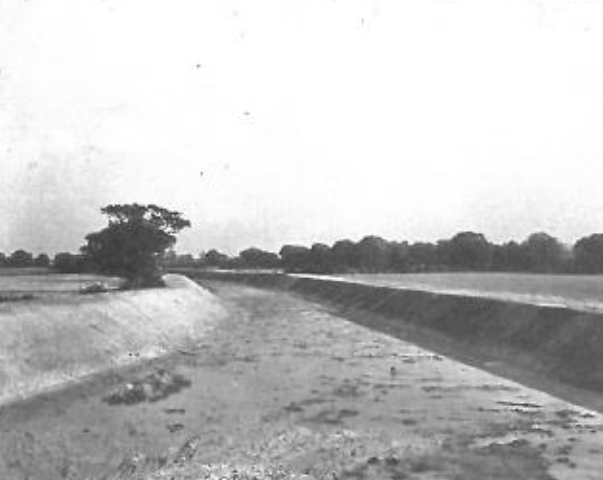
Photograph showing the newly constructed Maxey Cut downstream of Lolham Bridges
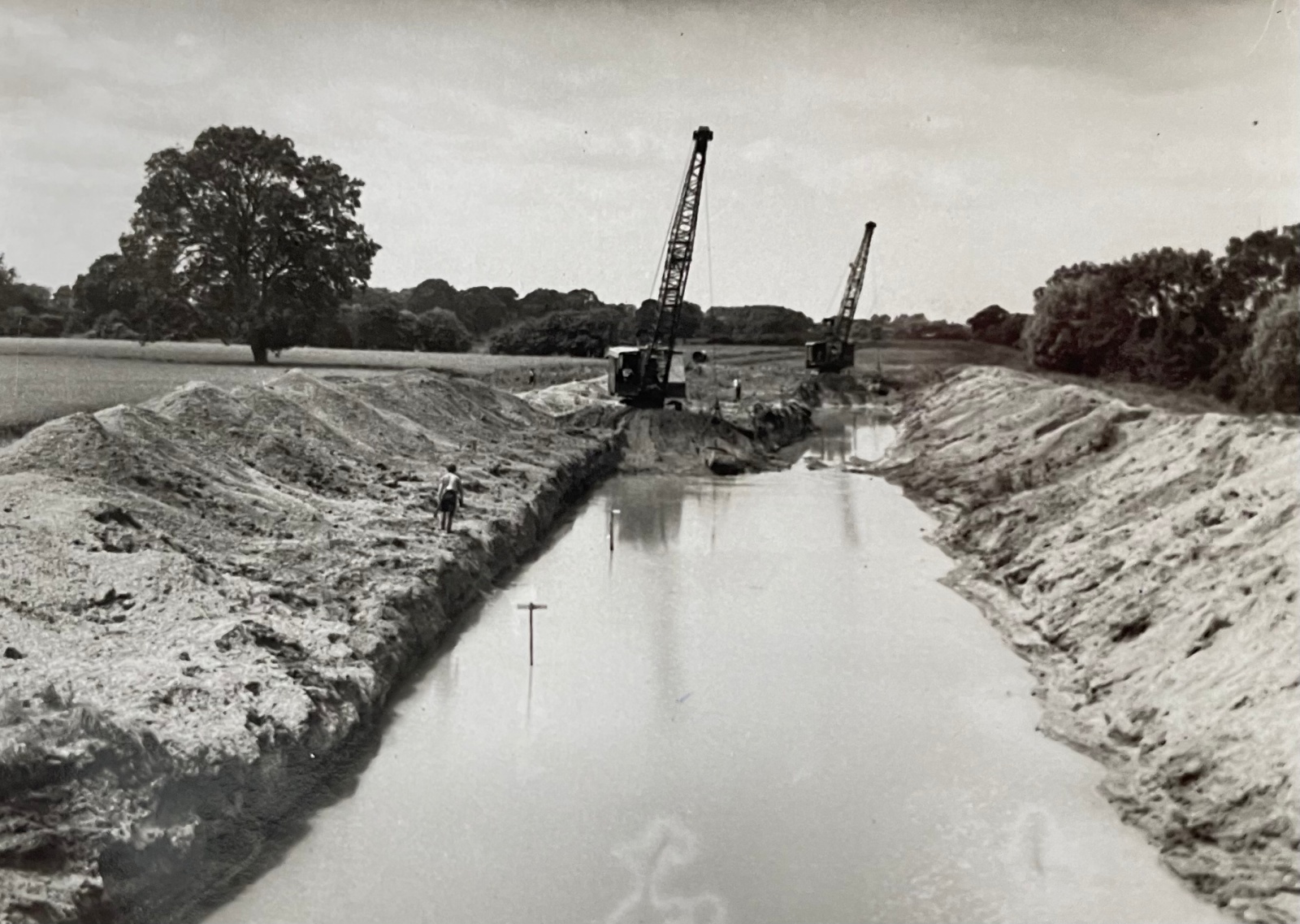 Photograph showing the construction of the Maxey Cut downstream of Maxey Road Bridge
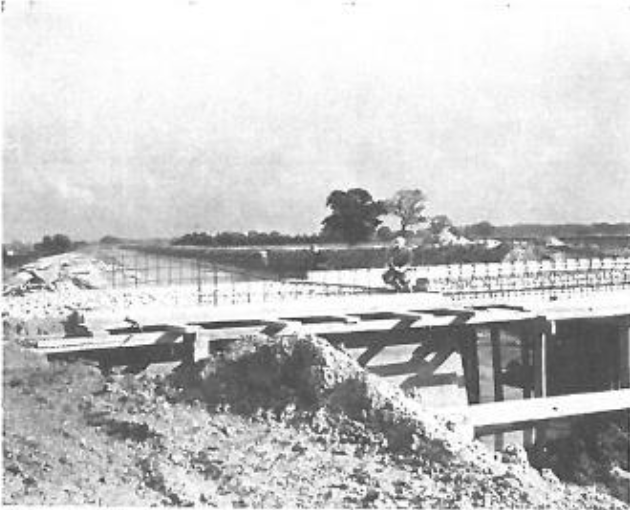 Photograph showing the construction of Etton Road Bridge
From Lolham Bridges to Tallington, a completely new channel had to be surveyed, designed and created. This channel runs alongside the main railway line before turning across the countryside to Tallington. It was dug to a channel bed width of 45 feet and required 92,000 cubic yards of soil to be excavated. This soil was then used to build the flood embankments on either side of the cut. As before, the excavations were completed by G. Wimpey & Co., and the embankments were formed by the Welland River Board.
These works were completed by the winter of 1955, allowing the Maxey Cut to be operational early in 1956.
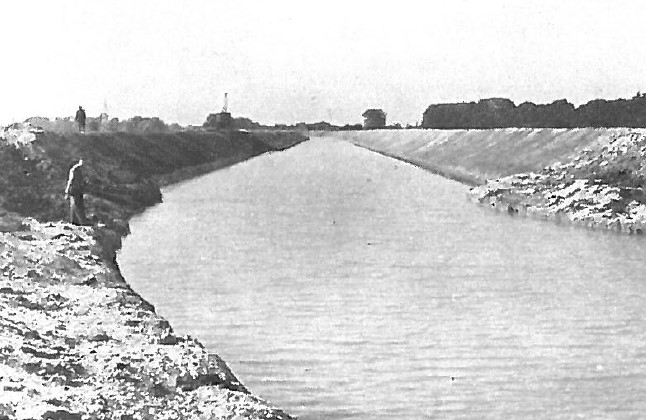
Photograph showing the newly constructed Maxey Cut upstream of Lolham Bridges
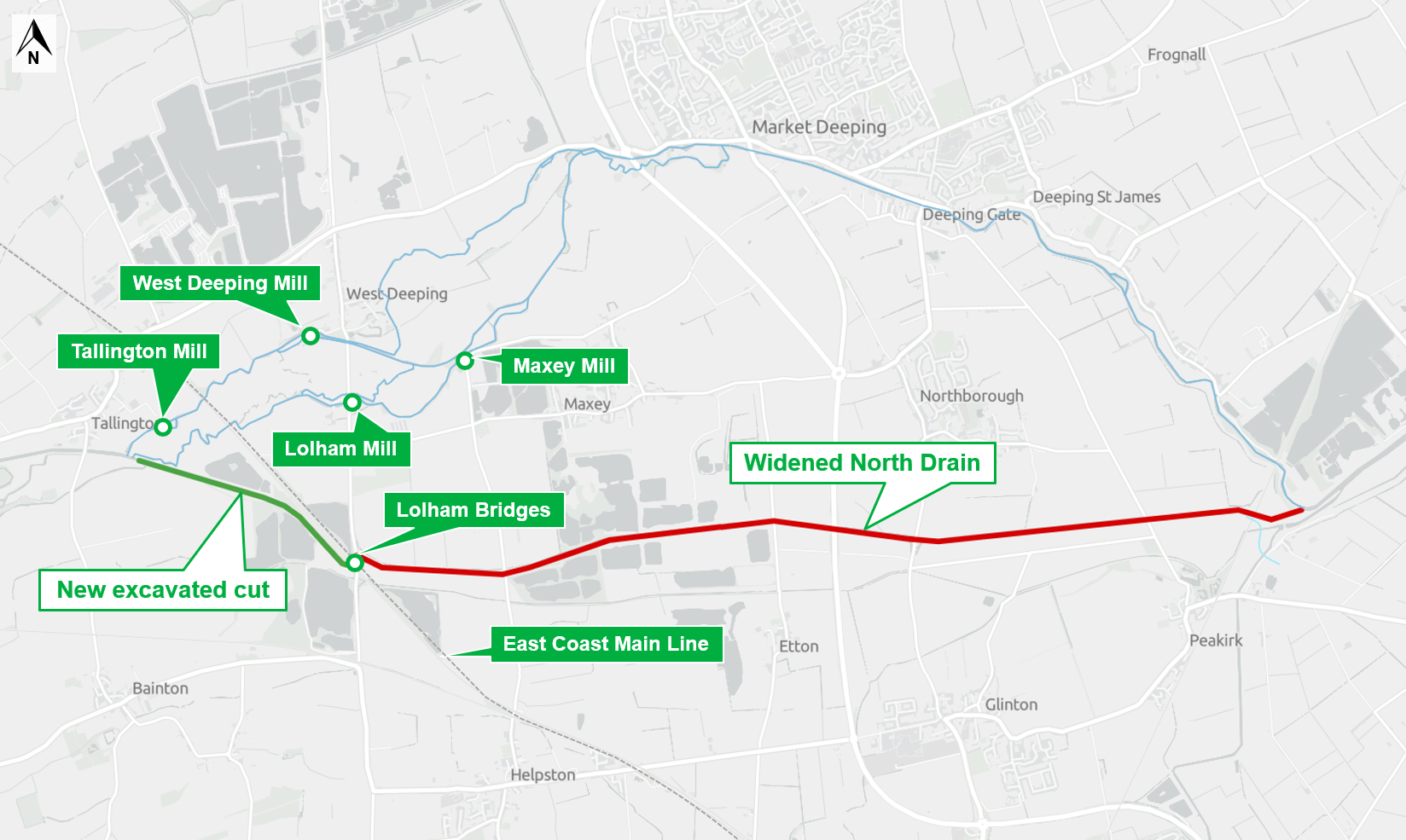
Map showing the newly excavated section and the length of the North Drain that was widened to form the Maxey Cut
At its upstream end, the Maxey Cut joins two branches of the River Welland, one flowing toward Tallington and West Deeping Mills, and the other to Lolham and Maxey Mills. To allow normal flows along these channels, Tallington Weir and the Lolham and West Deeping Millstream Sluices were built. These structures allow normal flows along the River Welland millstream channels and ensure flood flows are directed down the Maxey Cut.
The River Welland Major Improvement Scheme
The Maxey Cut was constructed as part of the River Welland Major Improvement Scheme, which was first approved and initiated by the River Welland Catchment Board in 1944.
Work on the scheme commenced in 1947, soon after the disastrous floods of that year. The scheme was designed to allow for conditions as bad, or even worse, as conditions were experienced at the peak of the 1947 flood which was the worst experienced within living memory.
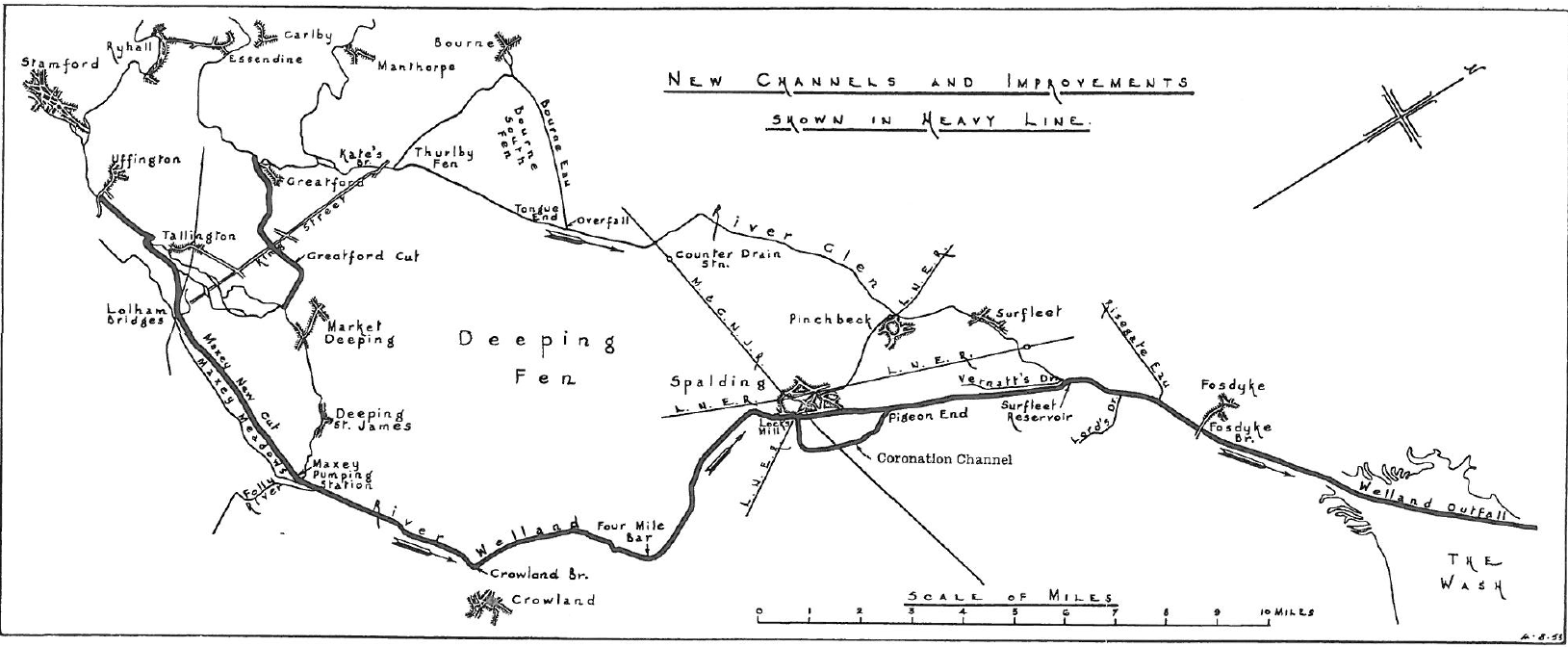
Map produced in the 1950's showing the extent of the River Welland Major Improvement Scheme
The size of the scheme meant that the works had to be completed in stages. The works completed were as follows: