Humber 2100+
Humber 2100+ is a partnership working on a new long-term strategy to manage tidal flood risk in the Humber region over the next 100 years.
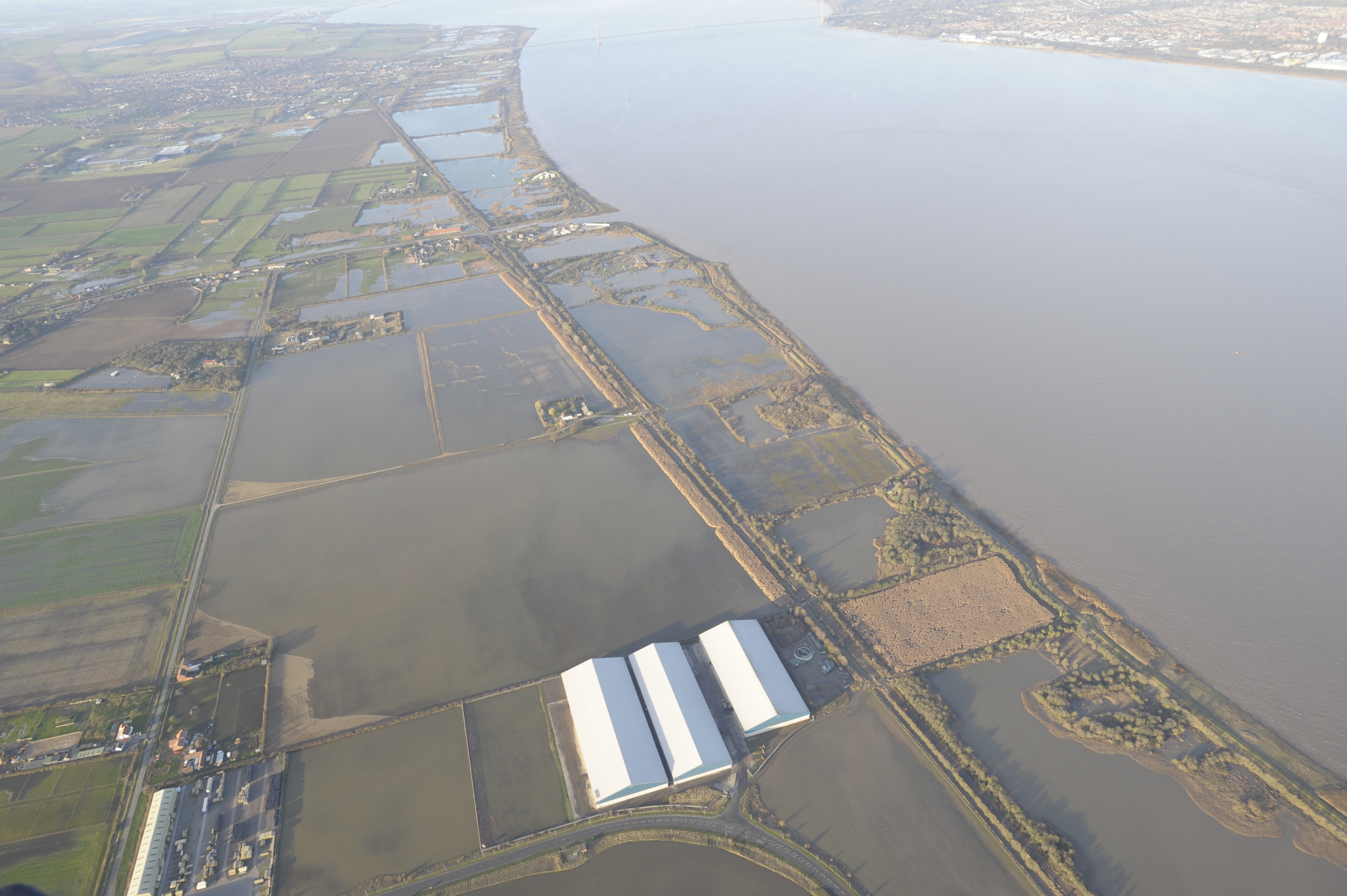
There are over half a million people and thousands of businesses within the Humber 2100+ study area, as well as thousands of hectares of land, important industry, and infrastructure. It is also an internationally important natural asset for both people and wildlife. However, a substantial portion of this region is at risk of flooding during an extreme flood event.
As sea level rise accelerates, severe flooding will happen much more often, and we need to rethink how we manage the impacts so communities can continue to thrive.
To find out more about the background of this strategy, and why it's so important, explore the information bar or click here. Remember to check for the Latest News updates at the bottom of the page, and opportunities to get involved!
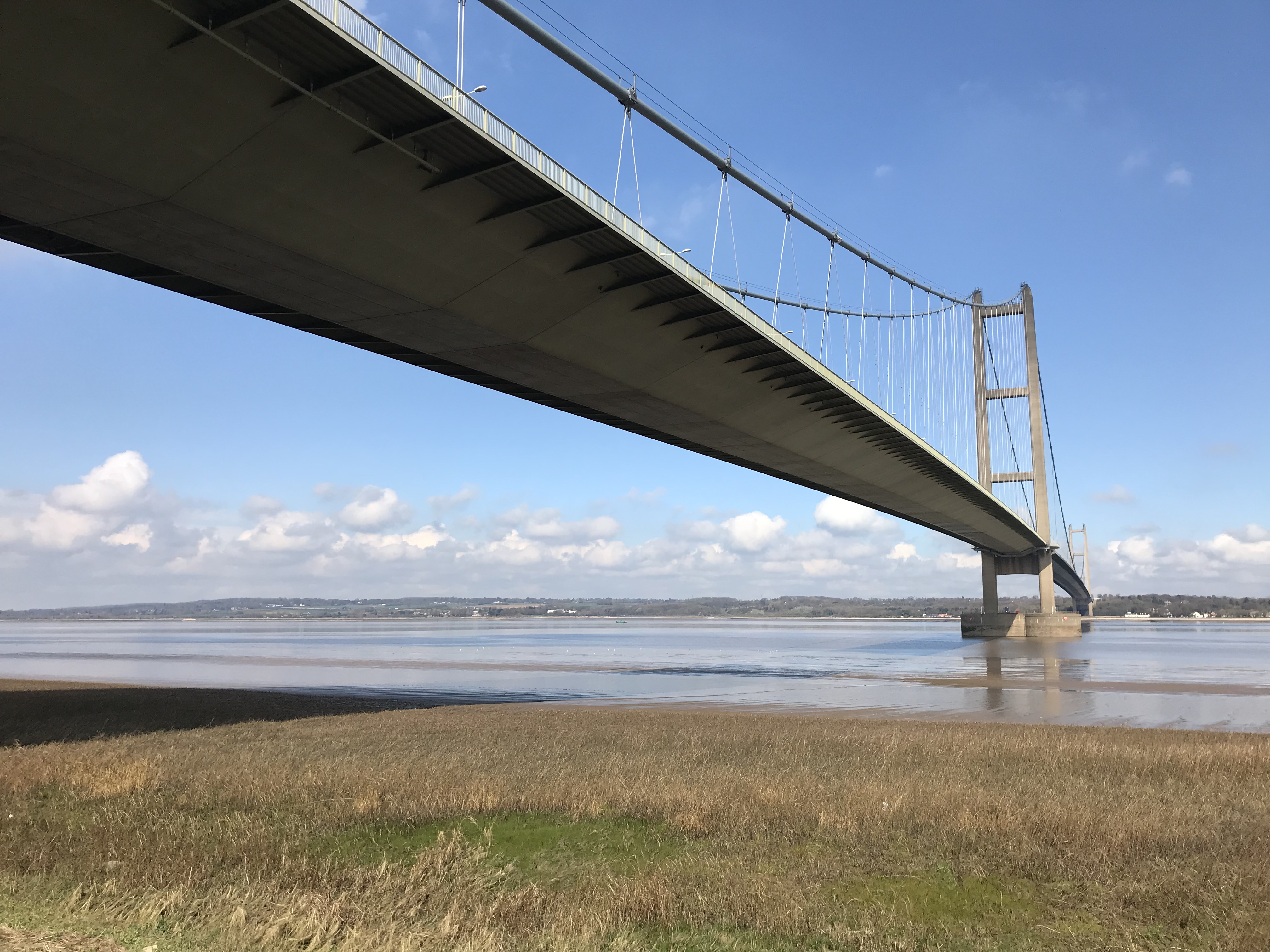
View of the Humber Bridge from the south bank
Get involved now!
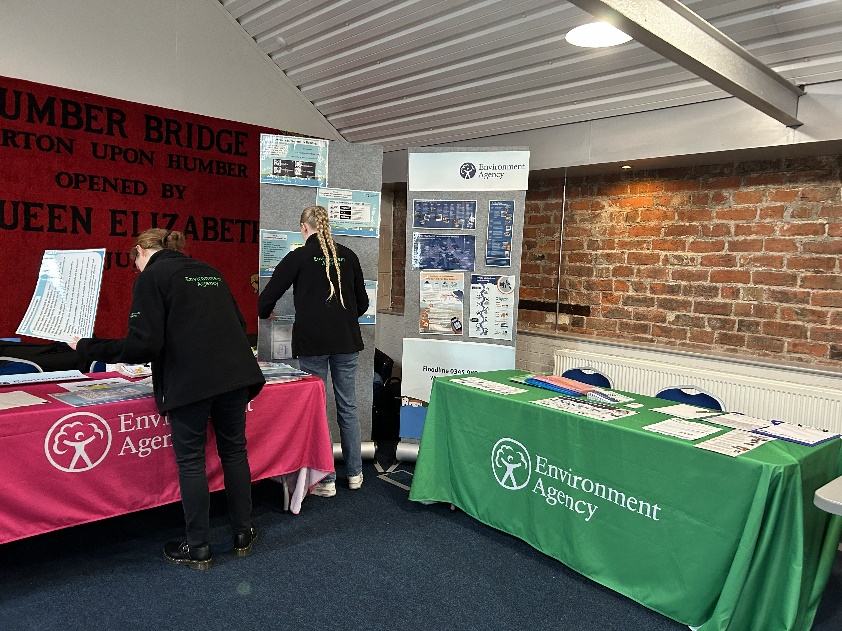
Local people, businesses and other interested parties will be able to participate in the development of the new Humber Strategy. We will engage and consult at key decision points and encourage you to get involved and help us shape the future of the Humber Estuary. We want to know more about you, the people, communities and organisations that this strategy will reach.
We want you to Register and Subscribe, so we can notify you of the latest news and updates for Humber 2100+.
If you've already got ideas you want to share with us, use the "tell us what you think" tool below. Or, if you have a question, use the "ask a question" tab below. We want to grow a community around the Humber 2100+ strategy and would love to share your ideas and questions with everyone else, but we will always ask you first.
Check your flood risk and prepare
Climate change is one of the biggest global threats we face. Globally, intense storms are becoming more frequent and climate change is already increasing sea levels around the UK coast. Although we work tirelessly to reduce the risk of flooding, we can never eliminate the risk completely.
With large areas around the Humber at risk of tidal flooding, it is important for us to work together to ensure that communities and businesses are better prepared for flooding.
In order for the Humber to thrive and continue to be a great place to live and work, the partnership is committed to working with others and the wider community to help lessen the impact that flooding can have on homes, land and businesses on and around the estuary.
What you can do to be better prepared:
- Check your flood risk
- Sign up for Free Flood Warnings
- Prepare a personal or business flood plan
- Install property level resilience

Humber 2100+ is a partnership working on a new long-term strategy to manage tidal flood risk in the Humber region over the next 100 years.
There are over half a million people and thousands of businesses within the Humber 2100+ study area, as well as thousands of hectares of land, important industry, and infrastructure. It is also an internationally important natural asset for both people and wildlife. However, a substantial portion of this region is at risk of flooding during an extreme flood event.
As sea level rise accelerates, severe flooding will happen much more often, and we need to rethink how we manage the impacts so communities can continue to thrive.
To find out more about the background of this strategy, and why it's so important, explore the information bar or click here. Remember to check for the Latest News updates at the bottom of the page, and opportunities to get involved!
View of the Humber Bridge from the south bank
Get involved now!
Local people, businesses and other interested parties will be able to participate in the development of the new Humber Strategy. We will engage and consult at key decision points and encourage you to get involved and help us shape the future of the Humber Estuary. We want to know more about you, the people, communities and organisations that this strategy will reach.
We want you to Register and Subscribe, so we can notify you of the latest news and updates for Humber 2100+.
If you've already got ideas you want to share with us, use the "tell us what you think" tool below. Or, if you have a question, use the "ask a question" tab below. We want to grow a community around the Humber 2100+ strategy and would love to share your ideas and questions with everyone else, but we will always ask you first.
Check your flood risk and prepare
Climate change is one of the biggest global threats we face. Globally, intense storms are becoming more frequent and climate change is already increasing sea levels around the UK coast. Although we work tirelessly to reduce the risk of flooding, we can never eliminate the risk completely.
With large areas around the Humber at risk of tidal flooding, it is important for us to work together to ensure that communities and businesses are better prepared for flooding.
In order for the Humber to thrive and continue to be a great place to live and work, the partnership is committed to working with others and the wider community to help lessen the impact that flooding can have on homes, land and businesses on and around the estuary.
What you can do to be better prepared:
- Check your flood risk
- Sign up for Free Flood Warnings
- Prepare a personal or business flood plan
- Install property level resilience

-
Stallingborough February 2026 update
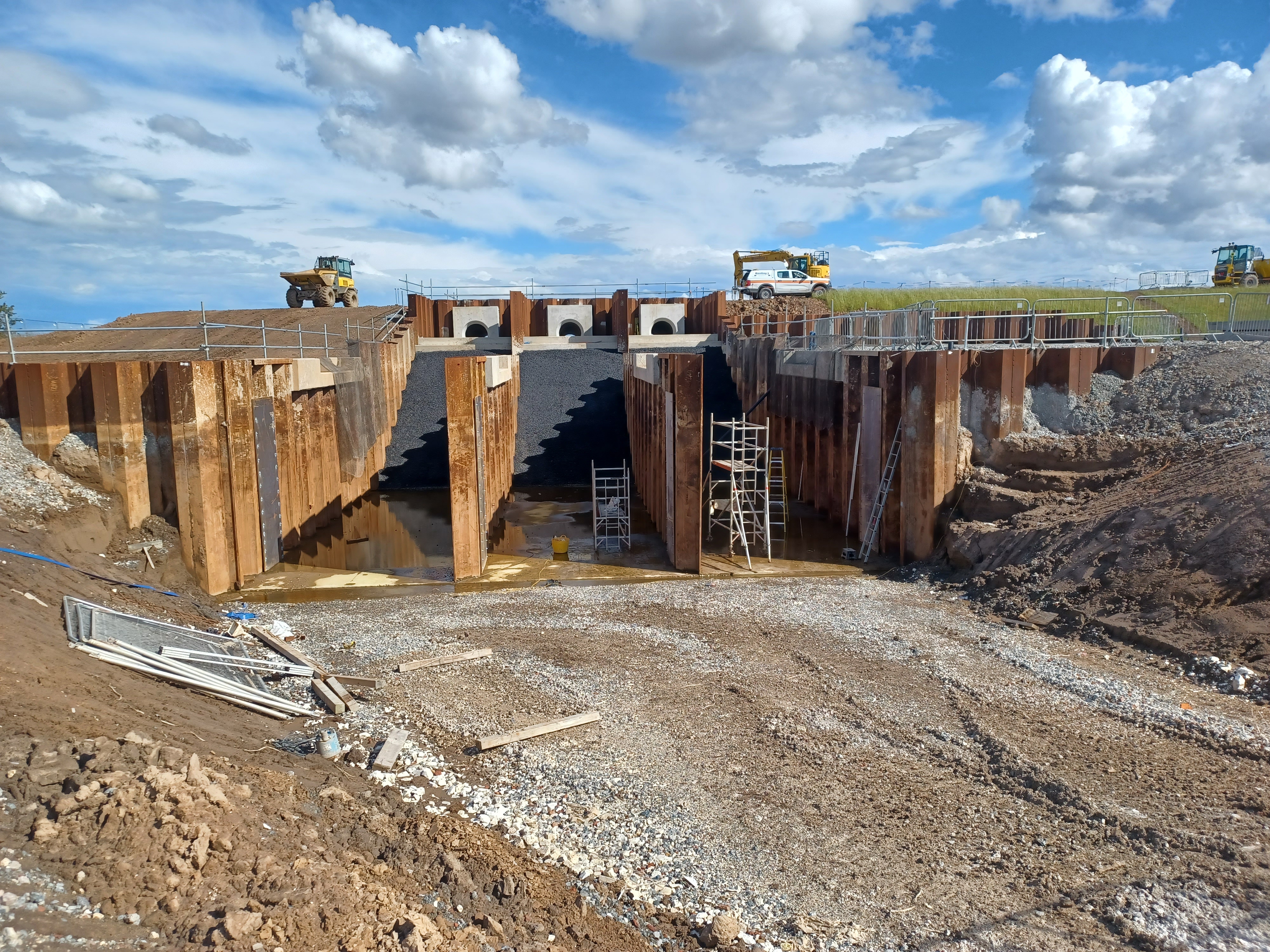
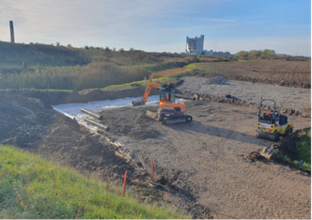
Throughout the third year of construction in 2025 both the access tracks across the foreshore to Oldfleet Drain and New Cut Drain outfalls have been completed. This includes the complex additional water main crossings at the southern end near Pyewipe.
The design of the Oldfleet Drain overflow system is now complete and approved, allowing construction works to commence in December 2025.
The additional construction works to clear the New Cut Drain outfall in a safe manner, have been deferred to spring/summer 2026. The project team have identified an alternative and more efficient method to desilt the outfall culvert, but the amended Marine Licence from the MMO is still awaiting approval (now expected by Spring 2026).
The project team have worked with the Area Fisheries Biodiversity and Geomorphology (FBG) team to explore some fish and eel compensatory habitat for impacts of the outfall improvements. This is expected to be undertaken along the upper reaches of the River Freshney, throughout 2026.
Landscape reinstatement work, particularly around New Cut Drain/ Pyewipe area has been designed, and the works are expected to be completed by March 2026. Environmental enhancements are being finalised, with delivery under a separate 5-year landscape maintenance contract from Autumn 2026.
-
Barton to New Holland February 2026 update
The first stage business case for the project was approved in August 2025, for an estimated cost of £39M. Since then, the project team and consultant Arup have agreed the scope and programme to develop the Final Business Case (FBC), including detailed design, necessary evidence, consents and approvals.
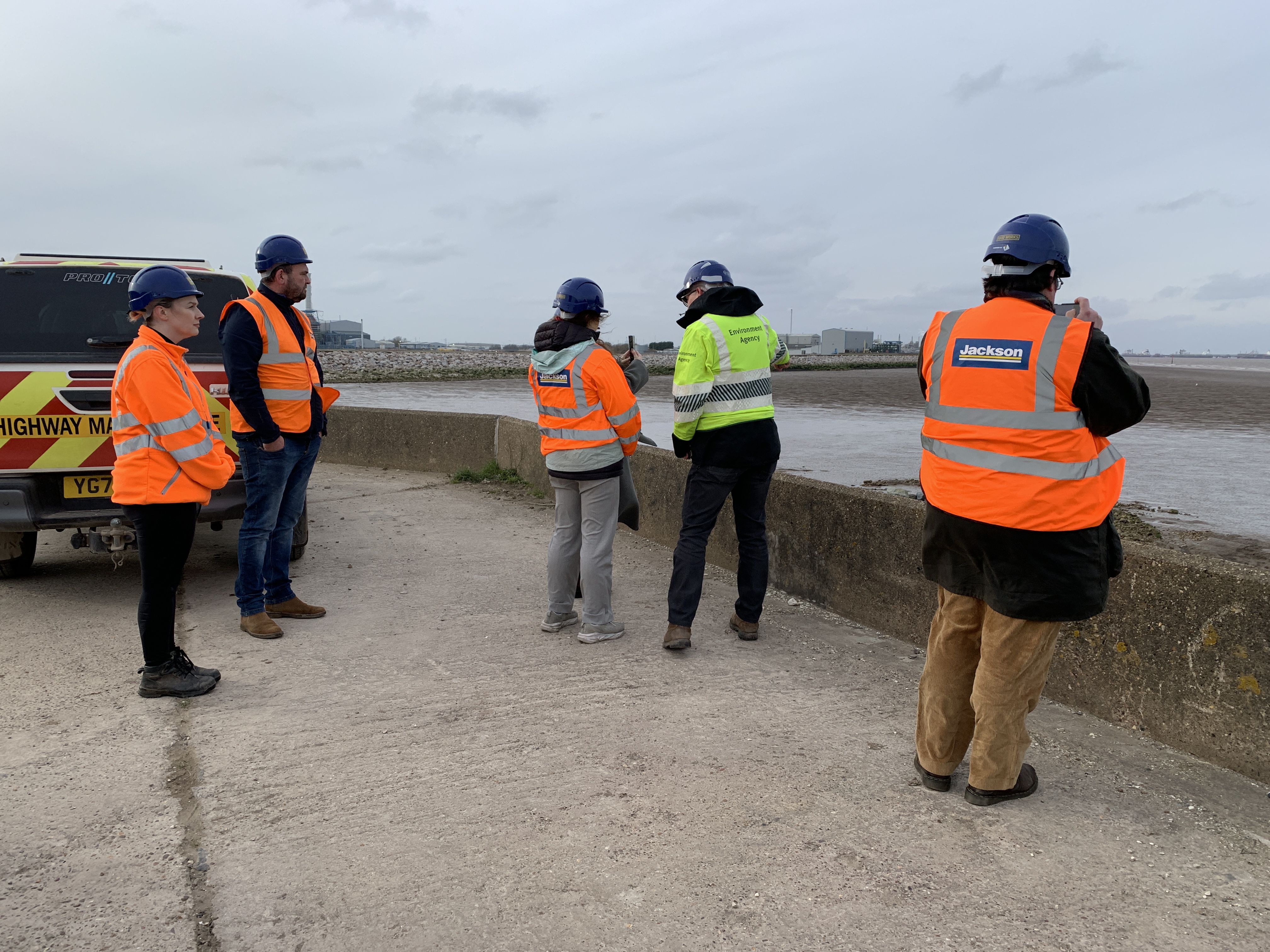
We are also continuing to employ our framework contractor Jackson Civil Engineering to help advise on construction methods, costs and enabling works. As such, the second phase of the ground investigation has now been completed, with associated reports due shortly.
The project team are continuing to consider the scope of asset resilience and repairs that could be incorporated into the scheme, e.g. at Barrow Haven and the team have had very productive meetings with Councillors from North Lincolnshire Council.
The ecological surveys have continued, with both bat and badger habitat surveys now progressing. Involved landowners have been informed. The project team are actively trying to spot any opportunities to significantly reduce the amount of funding contributions required. Construction is expected to take around 2 years, with the ambition to commence late 2027/28.
-
Dutch River - Engagement ahead of construction
Works are progressing steadily following mobilisation and site set-up at the end of September despite the recent wet weather and high spring tides causing some challenges. The focus is currently around the downstream areas near Goole.
Extensive engagement has been ongoing ahead of and alongside mobilisation and construction start, including:
- Discussions with landowners including Internal Drainage Boards (IDBs), Canal & Rivers Trust (CRT) and Associated British Ports (ABP) as well as other stakeholders, such as Network Rail, Exolum, Northern Gas Networks and Yorkshire Water, concerning the works and associated access, agreements, permits and permissions for the delivery phase.
- Discussions with local residents and businesses around potential construction impacts and planned mitigation
- Briefings issued to local MP (David Davis); ERYC; Goole Town Council and local Parish Councils
- Press Release issued to coincide with Flood Action Week, which has received strong local coverage
The work is expected to continue over two earthworks seasons, with completion planned for summer 2027.
-
Exploring next steps and governance - Humber 2100+ update
The project team have now produced a stakeholder facing publication which summarises the evidence from the ‘Understand Risk’ phase of work. This has been reviewed by partners, and the intention is to begin sharing this more widely during the spring, and to publish it on gov.uk.
Alongside this work, the team have also been continuing to review the evidence, considering the implications for next steps, and for our ‘business as usual’ work. A key aspect of this has been the decision to begin developing a strategic case for asset management on the Humber, in response to the stronger understanding we now have of the interconnectedness of risk around the estuary and the importance of continued investment in our existing assets.
In mid-November, a Humber 2100+ summit meeting was held, with senior attendees from all partner organisations. The purpose of this was to discuss what changes may be needed to the project’s governance structure in light of the evidence base. This was a very successful event, with great engagement from all attendees. There was a consensus that changes to governance arrangements would likely be needed, but further work will be required in the New Year to refine this and develop options.
The next phase of the Humber Adaptation Pathways project will commence in the New Year. This work will provide an adaptation pathway framework which can be used by Humber 2100+ and will involve a series of workshops with partners to consider future aspirations to shape pathway development.
-
Middle Humber Capital Maintenance Programme February 2026 update
Our focus at the moment for the Saltmarshe to Yokefleet area is preparing the Business case. There has been a start-up meeting and a site walkover/familiarisation visit involving the wider project team and delivery partners. Engagement with Yokefleet Estate concerning these works is also continuing and an update meeting took place in mid-January.
-
The Outstrays - February 2026 Update
Update on Skeffling and Winestead Pumping Stations
After a great construction season last year, JBA Bentley staff were able to finish building Skeffling pumping station in November, on time and according to their work schedule. The pumps were then tested in December and responsibility for their operation is due to be handed over to the Environment Agency this month or in March. The pumps have been specially designed to be eel friendly, allowing mature eels to migrate from the drains on site to the Sargasso Sea to spawn, but also allowing returning juvenile eels to safely pass from the sea to freshwater in Soak Drain. In recognition of this achievement, JBA Bentley manager Rob Culledge was invited to make a presentation about designing and building less damaging pumps at a European Knowledge Transfer conference in November last year.
The new pumping station at Skeffling in December 2025, with a pond in the foreground, created to enhance the range of habitats on siteIn April demolition of the existing pumping station at Skeffling will begin with preparatory work commencing in March. Once this task is completed, the works compound off Long Lane will be removed. Part of the existing tarmacked site compound will then be turned into a public car park, big enough to hold 20 cars. In the autumn this year a plot next to the car park will be planted with seedlings of deciduous trees including maple, apple, cherry and oak and then surrounded by a hedgerow of hawthorn, blackthorn, holly and guelder rose. Deer proof fencing will be used around this to protect the young seedlings.
JBA Bentley staff will also install the two remaining interpretation panels for the site. One will be placed in the new car park and the last one on the embankment, close to the old Skeffling pumping station, offering a map of the site to guide visitors around it.
Work on Winestead pumping station will also restart in early March, with JBA Bentley staff returning to site at the end of February to prepare for the new construction season. If the weather is favourable and everything goes to plan, this pumping station should be completed by the end of the year. JBA Bentley will then return in 2027 to demolish the existing Winestead pumping station, once the new one is fully operational.
Access on The Outstrays: Paths and Bridleways
At both pumping station sites, we will still need to put in place some access restrictions this year to ensure the safety of all visitors to The Outstrays. These are described below.
a) From the Eastern (Skeffling) end of the scheme
In the last newsletter we mentioned our intention to remove the existing diversion onto Long Lane and open up the bridleway along the embankment, once work on the new Skeffling pumping station was completed. Currently there is a gate across the embankment top, and directions for walkers to follow the diversion to avoid going past the new pumping station. However, this change has been delayed as we must work out a design that will meet required bridleway standards of access whilst limiting vehicle access on top of the embankment. We have met with ERYC’s Public Right of Way officer to finalise plans for this and intend to open up the route along the embankment after the old pumping station is demolished. This route will not be suitable for disabled visitors; instead, wheelchair users and other disabled visitors should follow the route to the bridleway from the new Skeffling car park.
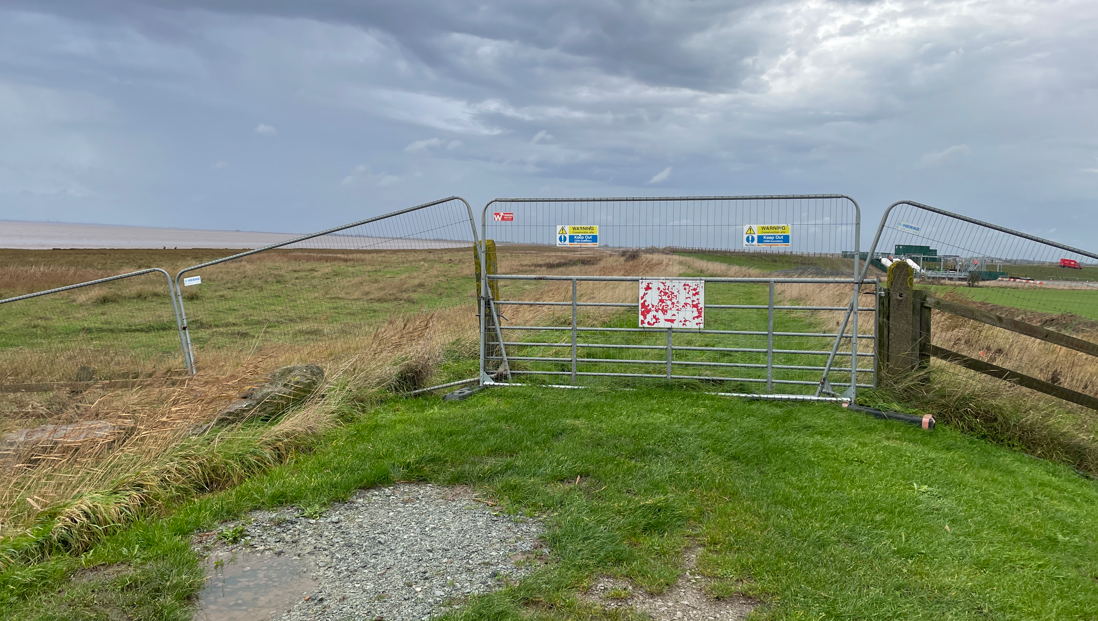
The gate across the embankment at Skeffling pumping station, in place until after the pumping station is demolishedThe demolition of the old Skeffling pumping station in April this year should not affect public access along this section of the bridleway for site users. Our contractors will manage the site very carefully to maintain access and meet public safety standards whilst the work is carried out and the car park on the dry side of the embankment will still be open. However, visitors will no longer be able to park their cars on top of the embankment whilst the demolition is carried out.
b) From the Western (Outstrays) end
At some point later on this year, we anticipate that the track to the existing Winestead pumping station will need to be temporarily closed to the public. This is because the excavation of inlet and outlet channels to and from the new pumping station will cut cross this path to connect to Winestead Drain, resulting in vehicles working on the track. This work is likely to be in the summer / autumn months. We know that the track is a popular route for walkers and so hope to reopen it at the end of October this year, once the new pumping station is built. However, we’ll probably need to close it again in 2027 when work to demolish the old pumping station begins. We’ll provide more information about any restrictions here after plans for this year’s construction are finalised.
Whilst work on the new Winestead pumping station continues during 2026, we will need to divert a section of the King Charles III England Coast Path (ECP) on Sunk Island around Outstrays Farm. We are currently working with ERYC officers and our contractors to develop a route for this and will give details of this diversion later in the year.
c) Around the Wet Grassland Area and Haverfield
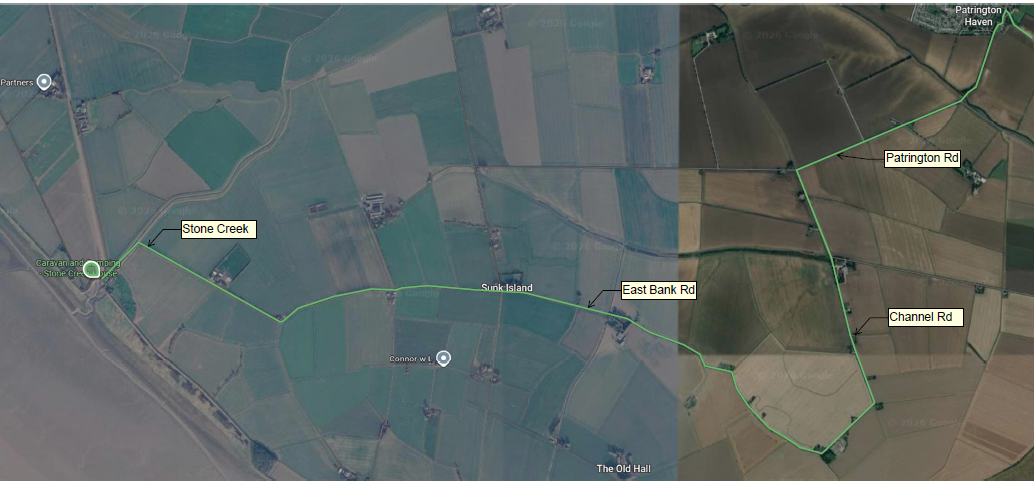
The current route for the diversion of the ECP at Outstrays Farm (shown in darker blue on the map to the right), avoiding the small bridge over Winestead Drain, will continue until next year.In spite of this, the boundary track around the wet grassland area (shown in turquoise) remains open for now. However, this will be closed to the public when work begins to strengthen this bridge in 2027. After this work is completed, the ECP diversion will be permanently removed, avoiding the long trek to Patrington Haven and down Mulberry Lane.
You can find an up-to-date version of the route for this section of the coast path at the ECP interactive website; King Charles III England Coast Path - North East Map and Information - National Trails. Just click on the map for the trail running from the Humber Bridge to Easington and enlarge the section from Sunk Island to Skeffling to see the route (turquoise line shown above). This is the approved route around the managed realignment site.
Screenshot from the King Charles III England Coast Path website, showing the diversion of the path around the western end of the sitePlease be aware that if you are using an old map to navigate around the site, the paths shown will no longer be accurate. This includes former rights of way across the West Two wet grassland area which no longer exist. Crossing this protected area disturbs wildlife and so is not permitted. The same is true for the old flood embankment; it is no longer a designated route. It is also not possible for visitors to cross the intertidal area south of Welwick, to reach Welwick Saltmarsh; this is not accessible to the public.
We plan to put some additional signs in place this spring to help visitors navigate around the site and keep to public paths. If you spot somewhere where you think there are gaps in the signage and some extra signs would help indicate the right route to take, please let us know, using the project’s email address (supplied at the end of this newsletter).
Please make sure you follow all instructions on site and avoid climbing over gates and fences where signs indicate that there is no public access. These restrictions have been put in place to provide safe spaces for wildlife in the new intertidal and wet grassland habitats, where they can nest and breed without being disturbed by humans or dogs. Disturbing birds is an offence under the Wildlife and Countryside Act 1981. So, if you see anyone ignoring instructions to stay out of fenced-off areas, please notify the police of a potential wildlife crime by visiting www.humberside.police.uk. or calling 101.
Connecting Bridleways
Another finishing touch to the scheme will be to designate a new bridleway through Haverfield, connecting two existing ‘dead-end’ bridleways at each end of the site, one off Sheep Trod Lane and the other from Mulberry Lane. This creates a route which allows horse riders to travel from Skeffling to Patrington Haven without having to use the main road. We have been liaising with ERYC officers to agree the details of this route.
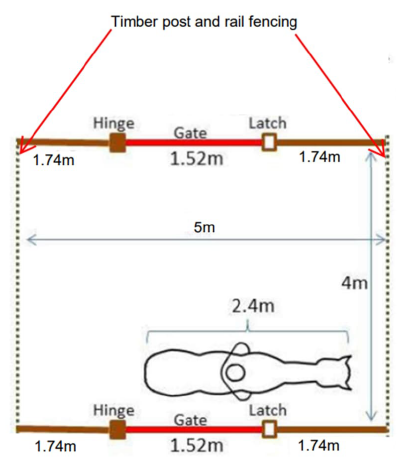
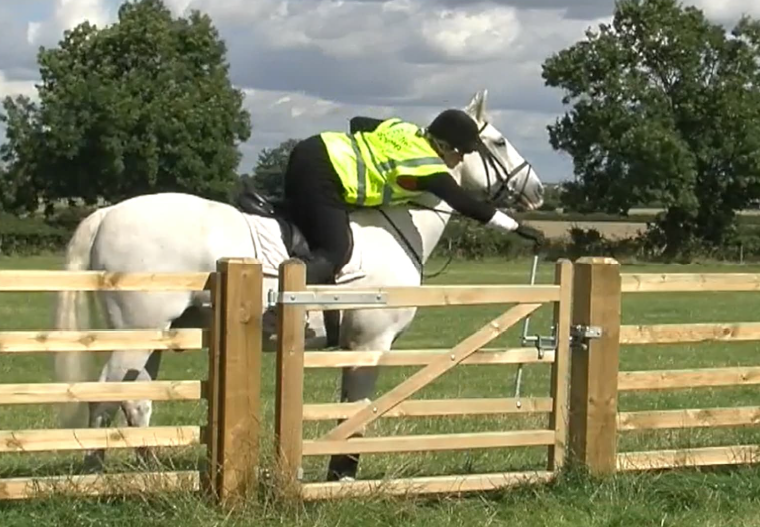
To avoid a sensitive area of grassland along the southern edge of Haverfield, the route will run beside the drainage ditch at the northern edge; there is already a track here for occasional drain maintenance. Last autumn, we did a survey to ensure the proposed path would not damage existing habitats in that area and then drew up some plans. This will involve some vegetation clearance before bird nesting season this year to connect a path from the entrance off Mulberry Lane to the path along the drain. We are also finalising gate designs at this entrance to Haverfield to discourages motorcycle access but permit horse riders, walkers and cyclists. This is a difficult balance to achieve.
In December last year, project manager Anthony Kidd (right) met with ERYC's Public Rights of Way Officer Andrew Chudley and senior engineer Rebecca Johnson from WSP to check details of the route for the new bridleway
Photo of Haverfield from 1989, after quarrying of the sand and gravel there had stopped, supplied by Howard Frost. This is now covered in trees and scrubYou may already know that part of Haverfield is designated as a Site of Special Scientific Interest (SSSI) and was once a stretch of sand dunes and a beach on the edge of the estuary, facing Sunk Island. The sandy, calcium-rich soils found here attract a very different range of wildlife, suited to these conditions. In the last century sand and gravel was quarried here, probably from the 1920’s until the early 1950’s, creating the landscape shown in the photo to the left.
The southern side of this stretch of land is particularly favourable for butterflies because of the shelter from bushes on the northern side and the wildflowers and grasses beside the track. Howard Frost, member of the Outstrays Recording Group and previously voluntary warden for Haverfield, reports that 19 of the 23 butterfly species recorded across the Outstrays site since about 1985 have been spotted in this relatively small area! It was also here that the only wild orchid ever seen in Haverfield was recorded in 2022.For anyone interested in knowing more about the Environment Agency funded archaeological recording of the Second World War gun battery site at Welwick, an article about the work has just been published in ‘Fort; the international journal of fortification and military architecture’. You can read it here: https://engageenvironmentagency.uk.engagementhq.com/38044/widgets/144486/documents/101247
As part of The Outstrays scheme, we had to demolish the unsafe Nissen hut, so this was archaeologically recorded beforehand, to produce an archive record of the structure. We also recorded the associated gun-site, which remains in-situ, and can be seen from the new footpath. An interpretation board has been erected on the footpath overlooking the site of the battery.
Managing The Outstrays
Whilst we continue to work to find a manager for the site, JBA Bentley’s ecology team will monitor a range of environmental variables on the intertidal and wet grassland areas on our behalf. This will give us a baseline record of changes as these habitats evolve after the breach was created. This information will help us measure how the site is performing as a whole. Once a site manager is in post, we hope to publish annual reports, sharing the results of monitoring activities and data collection from the site.
Contact Us
Environment Agency
For enquiries, you can contact us by email: Welwick.Skeffling@environment-agency.gov.uk. Or by phoning our National Customer Contact Centre on 03708 506506 and asking for Anthony Kidd, Project Manager, or Nikky Wilson, Engagement Specialist.
JBA Bentley
For enquiries about the work on site, contact Paul Craig, the site manager on 07837 454048. He will continue to take calls during the winter when the site compound at Outstrays is closed.
-
Barton to New Holland Tidal Flood Alleviation Scheme - October 2025
The business case for the project was submitted at the end of May and was approved in early August with estimated capital costs of £39m, to deliver 1300 better protected properties across three communities. In parallel, focus through the summer has been on building the programme and contract to develop the Full Business Case, including detailed design, evidence, consents and approvals. This includes an ongoing review of the best procurement strategy.
The diligent work to engage with the planners from North Lincolnshire Council early, has resulted in an agreement that most of the proposed resilience improvement along this frontage can be undertaken using the Environment Agency’s permitted development rights. This will save the project considerable development time/cost and should enable a swifter passage to construction. However, the Marine Licence and other envisaged consents need to be considered with the programme constrictions.
The ecological surveys have been completed, and the second phase of the ground investigations are to be completed through the Autumn, to reduce disturbance to the surrounding sensitive habitats. Landowners are being informed. The project’s Resilience Advisory Group continued to be informed of progress, and further guidance will be sought from the Steering Group. Funding contributions are also being sought.
-
The Dutch River: River Went to Ouse Confluence
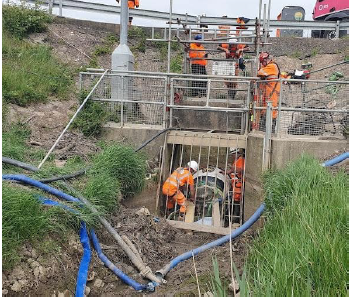
An Initial Assessment (IA) of the condition of flood defences along the Dutch River was undertaken as part of a wider strategic review of flood risk management assets in the Middle Humber area, informing the MH-CaMP programme. The Dutch River: River Went to Ouse Confluence project is a capital maintenance initiative aimed at addressing issues identified through the IA. The works will help reduce the likelihood of failure or breach, maintaining the current standard of protection provided by approximately 10km of defences on the left (northern) bank of the river.
The proposed works include topping up low spots, widening the crest, and stabilising the embankment slope at key locations. Mobilisation began in the week of 29 September, slightly later than planned, with current activity focused around the upstream end of Dutch River Side, where progress has been steady.
The scheme also incorporates improvements to the existing ‘Greenway’ pedestrian footpath and cycleway, which runs nearly 5km between Rawcliffe Bridge and Goole Docks.
-
Middle Humber - Progress Update
Following approval of an overarching Strategic Outline (business) Case in 2014, the Middle Humber Programme initially proposed a ‘Bundle 1’ comprising three work packages located on the left bank of the Dutch River upstream of Goole, and either side of the River Ouse at Reedness and Yokefleet. Our focus at the moment is on progressing the Saltmarshe to Yokefleet area.
-
Humber 2100+: Transitioning towards the next phase
Following endorsement of the Humber 2100+ ‘Understand risk’ evidence base by all partners earlier in the year, the project team have been focused on digesting the implications of the evidence base for future work and considering what further evidence might be required for the next stage. The outputs have been shared with key Environment Agency colleagues through a series of internal webinars, and partners have also been encouraged to consider what the evidence might mean for their own organisational plans and priorities. Work is continuing to develop a product to allow the outputs to be presented to wider stakeholders beyond the Humber 2100+ partnership.
In parallel, work has been underway to consider future governance arrangements for Humber 2100+, as the project moves from evidence production to the development of an adaptation pathway. A summit meeting for all partners is planned for early November at which this topic will be discussed in more detail, and a steer sought from partners.

Signup Banner
Follow Project
Follow us on social media
About the project
Why do we need a new tidal strategy for the Humber?
The Humber: A National Asset
News Categories
- Barton to New Holland (4)
- Beckingham Marshes (2)
- Dutch River (Went to Ouse) (2)
- Humber 2100+ Updates (4)
- Middle Humber (4)
- Skeffling (4)
- Stallingborough (3)
Contact us
-
Project Team