
 |
About the project
- Tidal flood risk is increasing and will continue to increase over time
- Flooding is likely to become more frequent, more extensive and longer lasting
- Existing defences will be overtopped more often
- Simply maintaining or raising defences in the same way will not be enough on its own
- Maintaining and improving existing defences
- Creating space for water through flood storage
- Working with natural processes and developing nature-based solutions
- Considering how land is used across the estuary
- Improving resilience
- Exploring more ambitious, longer-term options such as major infrastructure (e.g. tidal barrier)
- Planning for a range of possible futures
- Keeping options open and avoiding making decisions that could limit future choices
- Building in decision points where changes in approach can be made
- Responding to new information as it becomes available
- Ensuring that today’s decisions do not create long-term problems or risks
- Apply adaptation pathways at an estuary scale
- Integrate the adaptation pathway framework into Humber 2100+
- Explore improved governance arrangements for the Humber 2100+ programme
- Investigating whether a digital tool could help support flexible and adaptive decision-making
What is Humber 2100+?
Humber 2100+ a new approach
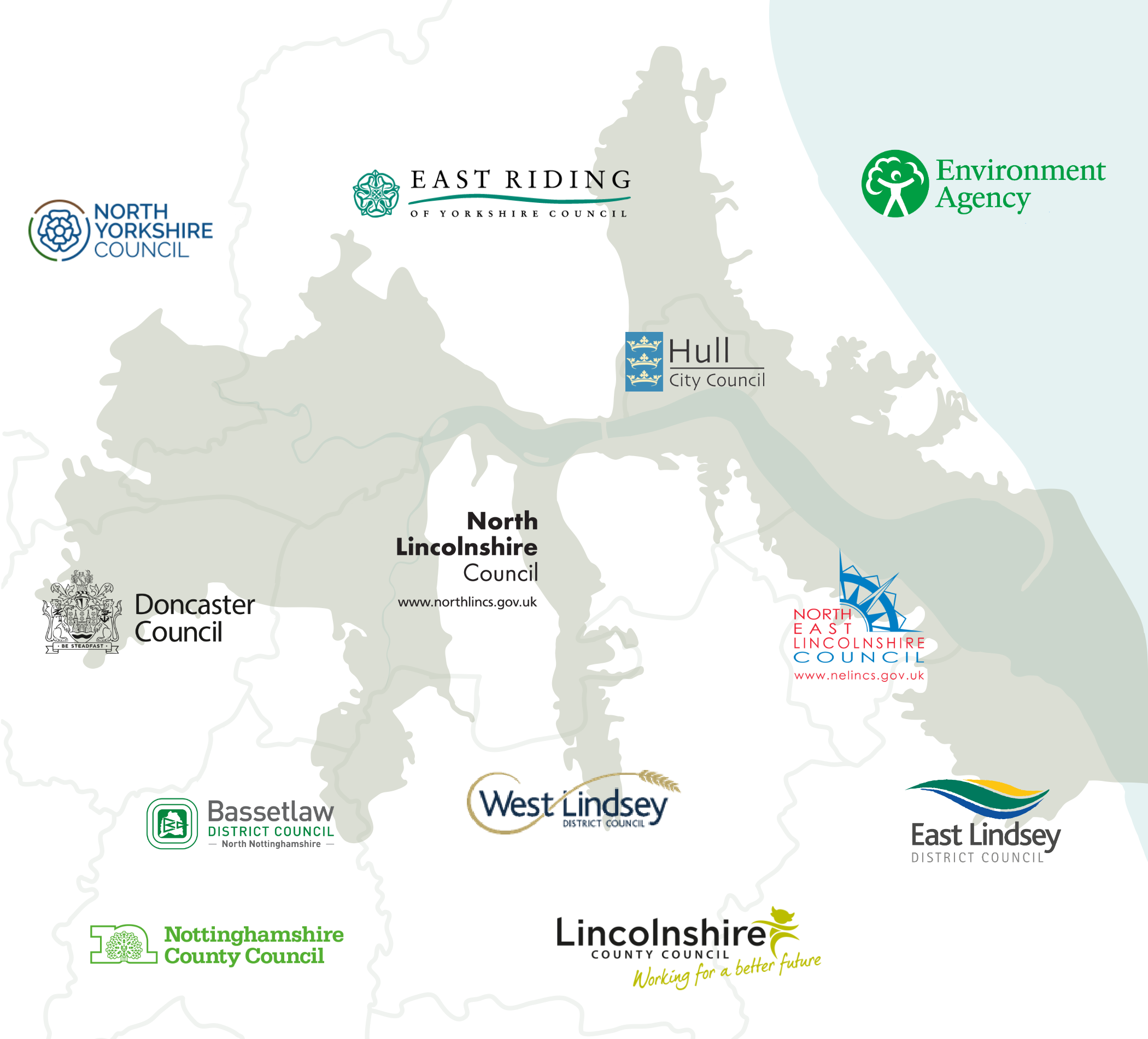
Humber 2100+ is a partnership of 11 local authorities from around the Humber and the Environment Agency working together, with support from Natural England and Internal Drainage Boards. Together, we are developing a long-term adaptive approach to managing tidal flood risk, helping to support a sustainable, resilient, and prosperous future for the Humber.Flood risk has always been a part of life for those living around the estuary. The Humber is home to over half a million people, major industries, important infrastructure and extensive areas of high quality agricultural land. As more people choose to lie and work here, the potential consequences of flooding have increased, making effective flood risk management more important than ever.
Significant progress has already been made. Since the publication of Planning for the Rising Tides in 2008, over £350 million has been invested in flood risk management, helping improve flood protection to over 70,000 properties, supporting communities, businesses and economic growth across the region.
These improvements continue to play a vital role today. However, the challenge we face is changing.
Why change is needed
Sea levels are rising and our climate is changing. This means there will be more water in the estuary on every tide, not just during storms and extreme events. Over time, this increases pressure on defences, making flooding more likely and increasing the impacts when it happens.
Our evidence shows that:
The Humber is a highly connected estuary system, meaning that actions in one place can affect water levels and flood risk elsewhere. Raising defences in one location, or raising defences everywhere, can unintentionally increase pressure across the system or shift risk to other areas.
We know that sea levels are rising, but we cannot be certain how quickly this will happen, or how wider environmental, social, and economic factors will change.
This means that while past investment has made a real difference, the scale and nature of future tidal risk requires a different, more flexible approach.
What is the Humber 2100+ partnership?
Managing tidal flood risk across a large and complex estuary like the Humber requires a coordinated, long-term effort.
The partnership is at the core of this, bringing together organisations with the responsibility, expertise, and local knowledge needed to plan for the future. The partnership has a shared set of objectives, principles and ambitions, reflecting both the needs of the whole estuary and local priorities, rather than focusing on individual locations in isolation.
The evidence shows that no single solution will be enough to manage future tidal flood risk. Instead, different approaches will need to be combined and applied in the right places and at the right time. Working together, the Humber 2100+ partnership is considering a range of flood risk management approaches for the Humber, including:
|
Where are we now?
What we've learned - Understanding Risk
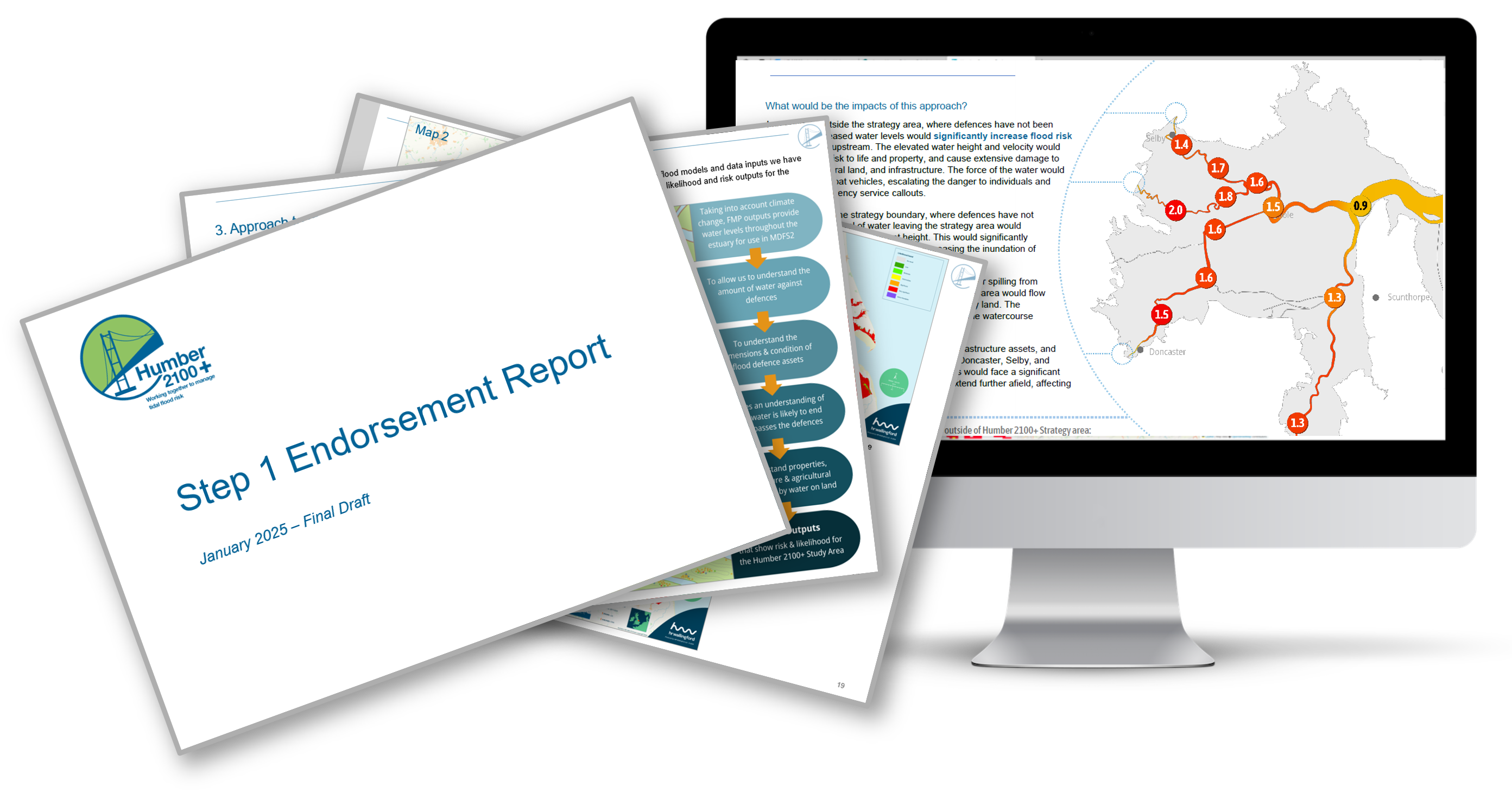
The partnership has recently completed the Understanding Risk phase, which provides a shared evidence base across all partners. This work has been about building a common understanding of the challenge, ensuring that future decisions are based on robust and agreed evidence. The evidence base has been formally endorsed by all partners.
Understand Risk explored how tidal flood risk could change over time, looking at short, medium, and long term (around 25, 50 and 100 years into the future), and considered a wide range of environmental, social and economic factors.
Risk is increasing over time – Across all future scenarios, flood risk increases significantly over time, even where existing defences continue to be maintained.
More water on every tide – Sea level rise means that every high tide will bring more water into the estuary, increasing day-to-day pressure on defences.
Flooding will become more frequent and widespread – A ‘raise defences everywhere’ approach would create significant challenges, including increased water levels within the estuary and greater consequences if flooding does occur. This highlights the need for a balanced, system-wide approach.
The Humber must be managed as a connected system – the Humber is interconnected, meaning local actions can influence risk elsewhere. Effective flood risk management must consider the estuary as a whole.
We will be publishing our Understand Risk publication on gov.uk in the coming months, so keep posted to find out more.
Humber Adaptation Pathways Project
A flexible and adaptive way forward
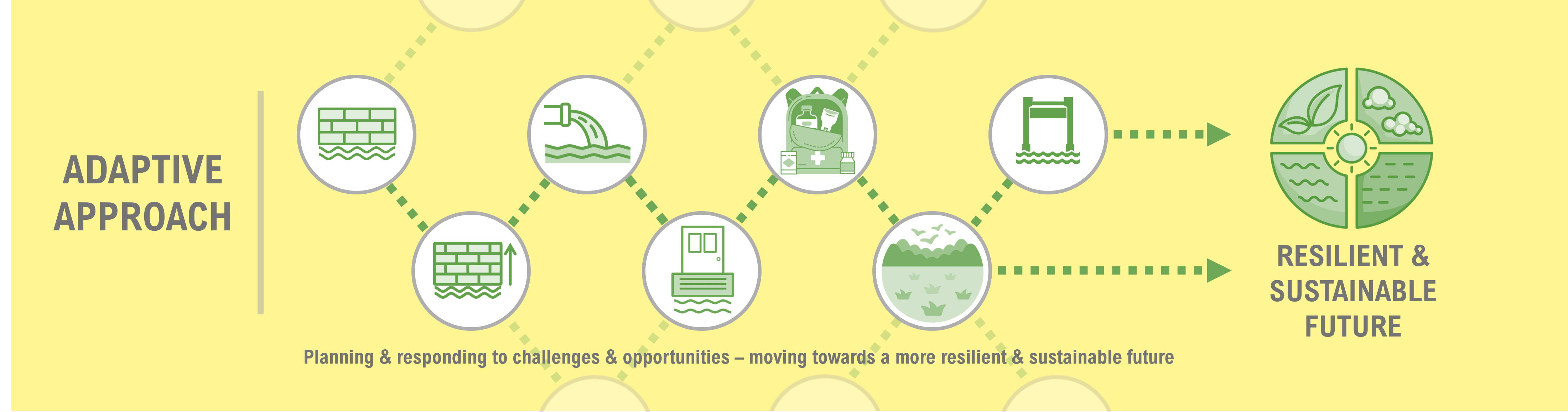
We don’t know precisely how quickly our climate will change, or the pace and scale of sea level rise. To tackle this, Humber 2100+ is taking an adaptive approach, one that allows decisions to evolve over time as new evidence emerges or outside factors shift.
This means:
The future approach will need to be flexible and responsive, and able to evolve as challenges and opportunities arise.
Understanding Risk forms a strong foundation on which to build the future adaptive approach to managing tidal risk around the Humber.
Humber Adaptation Pathways Pilot (HAP)
To help transition towards adaptation, the Humber is part of the Environment Agency’s Adaptation Pathways Programme pilot, funded through the Flood and Coastal Innovation Programme. The pilot aims to develop, test and share guidance, resources and tools to better integrate adaptation into large scale projects.
An adaptation pathway is a decision-making approach, that enables actions to be taken under uncertainty. It helps decision-makers identify what actions can be taken now and what may be needed in the future.
The Humber Adaptation Pathways project (HAP) is looking to:
The project will help us develop a method for creating an Adaptation Pathway on the Humber, so that we have an agreed approach for how best to do this when the time comes.
Find out more about Humber Adaptation Pathways and other pilots taking place across the country here.
Humber Community Panel
Humber 2100+ is already making good use of some of the wider work coming out of the pilot.
The pilot enabled the delivery of the Humber Community Panel (also known as a citizen’s panel).. This engagement exercise brought together 19 demographically representative participants from across the Humber area, who took part in four sessions in April 2024.
The sessions were supported by expert ‘witnesses’ and focused on exploring participants’ views on what matters most to them in terms of managing tidal flood risk.
The panel generated recommendations and insights, which will be used to help inform future engagement and will be considered as we make plans for the future. The process has helped embed community perspectives at an early stage, ensuring that local priorities and values are better reflected in long-term planning.
The Humber Community Panel was one of several panels that took place across the Adaptation Pathways pilot, exploring how deliberative engagement methods can strengthen inclusive and transparent decision-making in the face of a changing climate.
Watch the video below to find out more about the Humber Community Panel and how this technique has been used across the wider Adaptation Pathway pilots.