We use cookies to ensure our site functions properly and to store limited information about your usage. You may give or withdraw consent at any time. To find out more, read our privacy policy and cookie policy.
Manage Cookies
A cookie is information stored on your computer by a website you visit. Cookies often store your settings for a website, such as your preferred language or location. This allows the site to present you with information customized to fit your needs. As per the GDPR law, companies need to get your explicit approval to collect your data. Some of these cookies are ‘strictly necessary’ to provide the basic functions of the website and can not be turned off, while others if present, have the option of being turned off. Learn more about our Privacy and Cookie policies. These can be managed also from our cookie policy page.
Strictly necessary cookies(always on):
Necessary for enabling core functionality. The website cannot function properly without these cookies. This cannot be turned off. e.g. Sign in, Language
Analytics cookies:
Analytical cookies help us to analyse user behaviour, mainly to see if the users are able to find and act on things that they are looking for. They allow us to recognise and count the number of visitors and to see how visitors move around our website when they are using it. Tools used: Google Analytics
A partnership working group on governance took place in April, and a second took place in June, with a focus on defining actions for all partners to take forward and developing a common understanding of potential governance models. Work on the strategic approach to asset management is also continuing to progress. The project team have also published a stakeholder facing publication on gov.uk. This summarises the evidence from the ‘Understand Risk’ phase of work.
The Humber Adaptation Pathways project design phase is continuing with activity for the coming months focused on developing the method for pathway refinement. Two workshops areContinue reading
A partnership working group on governance took place in April, and a second took place in June, with a focus on defining actions for all partners to take forward and developing a common understanding of potential governance models. Work on the strategic approach to asset management is also continuing to progress. The project team have also published a stakeholder facing publication on gov.uk. This summarises the evidence from the ‘Understand Risk’ phase of work.
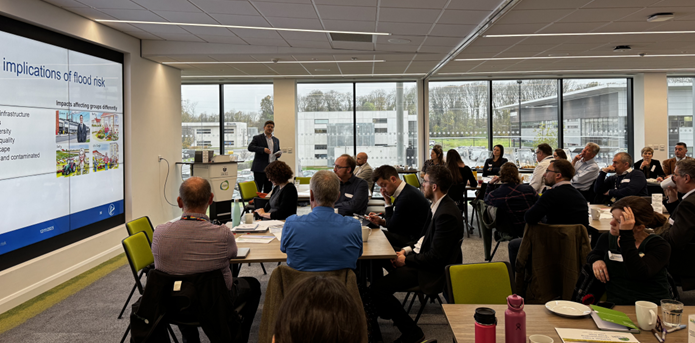
The Humber Adaptation Pathways project design phase is continuing with activity for the coming months focused on developing the method for pathway refinement. Two workshops are also being held through the summer/early autumn. The intention is that work will support partner understanding of the implications of the ‘Understanding Risk’ evidence and allow them to participate in pathway development in the future, as well as shaping elements of the pathway design process.
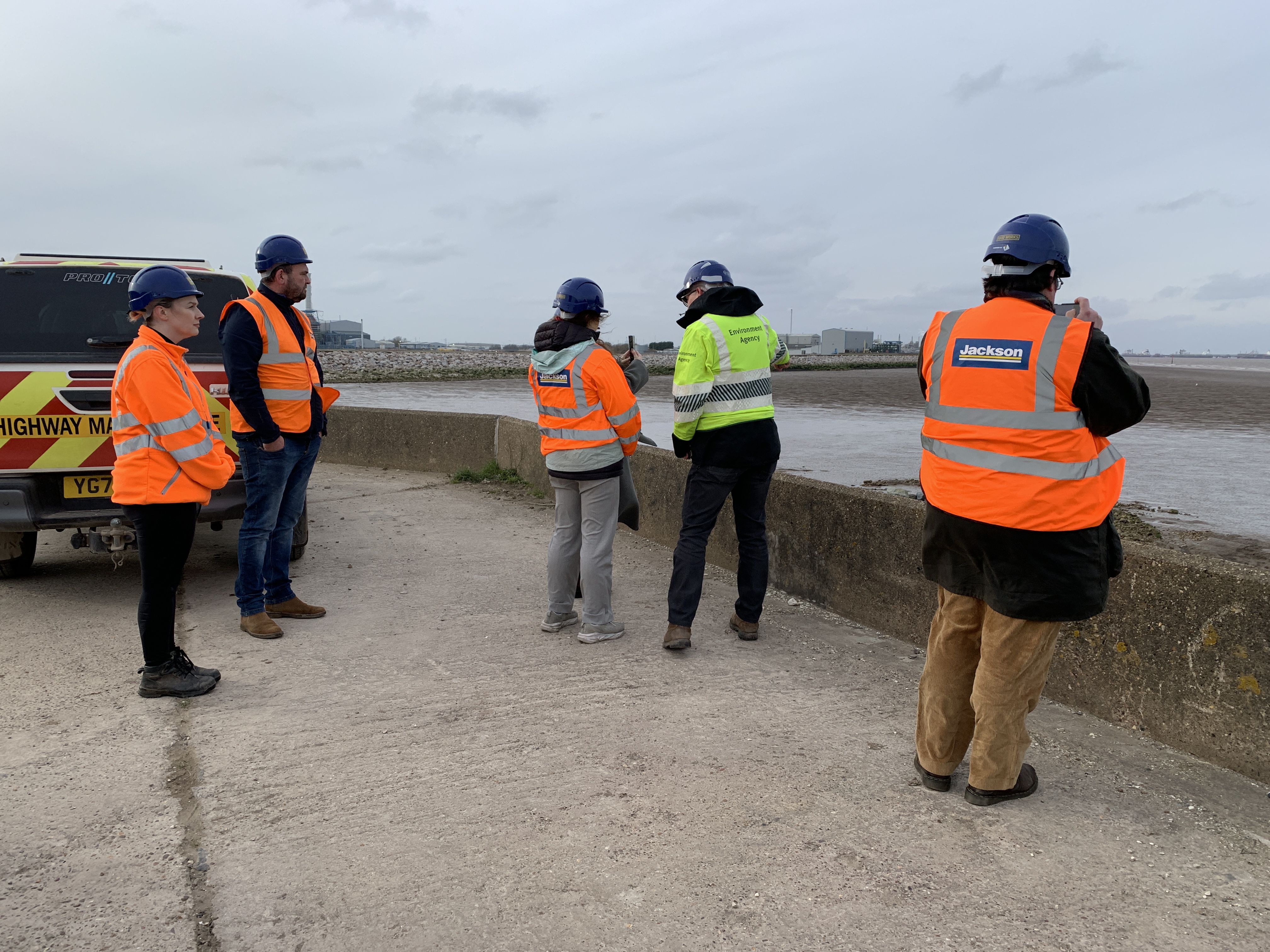
In February, the Humber 2100+ team and partners participated in a visit from the Climate Change Committee. The team were able to share work done so far on the Humber to support adaptation and also set out future challenges and opportunities.
Climate Change Committee visit Stallingborough
Understanding Risk now live on GOV.UK!
Our ‘Understanding Risk’ publication has now been published on Gov.uk. It presents the Humber 2100+ evidence base in an accessible, public-facing format, helping readers understand tidal flood risk around the Humber Estuary. Visit the link below or scan the QR code to find out more!
Lincolnshire Flood Resilience Roadshows are taking place across greater Lincolnshire this year to help communities prepare for, respond to and recover from flooding. These free events offer valuable advice alongside practical and emotional tools for recovery from a range of bodies, including emergency services, local organisations and wellbeing partners. There are also demonstrations and workshops for families to get involved with.
Delivered in partnership between Lincolnshire County Council and SHINE, the Environment Agency's Humber team joined other organisations in Barton on 12th March. We joined the Lincolnshire project team to provide updates to the community about the Humber 2100+ projectContinue reading
Lincolnshire Flood Resilience Roadshows are taking place across greater Lincolnshire this year to help communities prepare for, respond to and recover from flooding. These free events offer valuable advice alongside practical and emotional tools for recovery from a range of bodies, including emergency services, local organisations and wellbeing partners. There are also demonstrations and workshops for families to get involved with.
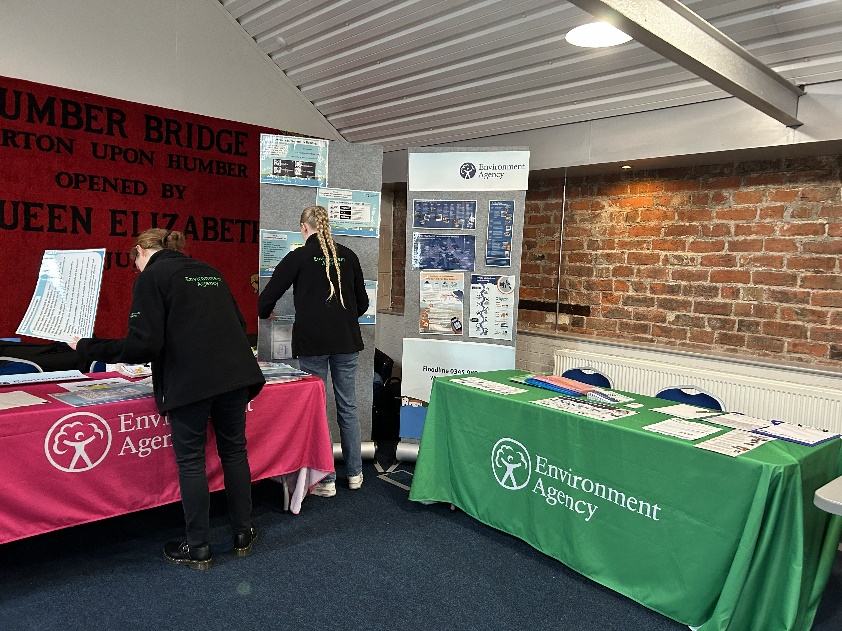
Delivered in partnership between Lincolnshire County Council and SHINE, the Environment Agency's Humber team joined other organisations in Barton on 12th March. We joined the Lincolnshire project team to provide updates to the community about the Humber 2100+ project and the Barton to New Holland Tidal Alleviation Scheme and to encourage people to sign up for flood alerts and flood warnings in their area.
Setting up the Environment Agency stall with colleagues from Lincs and Northants area teams
The project team have now produced a stakeholder facing publication which summarises the evidence from the ‘Understand Risk’ phase of work. This has been reviewed by partners, and the intention is to begin sharing this more widely during the spring, and to publish it on gov.uk.
Alongside this work, the team have also been continuing to review the evidence, considering the implications for next steps, and for our ‘business as usual’ work. A key aspect of this has been the decision to begin developing a strategic case for asset management on the Humber, in response to the stronger understanding weContinue reading
The project team have now produced a stakeholder facing publication which summarises the evidence from the ‘Understand Risk’ phase of work. This has been reviewed by partners, and the intention is to begin sharing this more widely during the spring, and to publish it on gov.uk.
Alongside this work, the team have also been continuing to review the evidence, considering the implications for next steps, and for our ‘business as usual’ work. A key aspect of this has been the decision to begin developing a strategic case for asset management on the Humber, in response to the stronger understanding we now have of the interconnectedness of risk around the estuary and the importance of continued investment in our existing assets.
In mid-November, a Humber 2100+ summit meeting was held, with senior attendees from all partner organisations. The purpose of this was to discuss what changes may be needed to the project’s governance structure in light of the evidence base. This was a very successful event, with great engagement from all attendees. There was a consensus that changes to governance arrangements would likely be needed, but further work will be required in the New Year to refine this and develop options.
The next phase of the Humber Adaptation Pathways project will commence in the New Year. This work will provide an adaptation pathway framework which can be used by Humber 2100+ and will involve a series of workshops with partners to consider future aspirations to shape pathway development.
Following endorsement of the Humber 2100+ ‘Understand risk’ evidence base by all partners earlier in the year, the project team have been focused on digesting the implications of the evidence base for future work and considering what further evidence might be required for the next stage. The outputs have been shared with key Environment Agency colleagues through a series of internal webinars, and partners have also been encouraged to consider what the evidence might mean for their own organisational plans and priorities. Work is continuing to develop a product to allow the outputs to be presented to wider stakeholders beyondContinue reading
Following endorsement of the Humber 2100+ ‘Understand risk’ evidence base by all partners earlier in the year, the project team have been focused on digesting the implications of the evidence base for future work and considering what further evidence might be required for the next stage. The outputs have been shared with key Environment Agency colleagues through a series of internal webinars, and partners have also been encouraged to consider what the evidence might mean for their own organisational plans and priorities. Work is continuing to develop a product to allow the outputs to be presented to wider stakeholders beyond the Humber 2100+ partnership.
In parallel, work has been underway to consider future governance arrangements for Humber 2100+, as the project moves from evidence production to the development of an adaptation pathway. A summit meeting for all partners is planned for early November at which this topic will be discussed in more detail, and a steer sought from partners.
The Humber 2100+ ’Understand Risk’ evidence base has now been endorsed by all members of the partnership. This is a key milestone for the project as these outputs form the basis for understanding strategic flood risk across the Humber going forwards and enable us to work together on an adaptive approach to managing tidal risk across the interconnected estuary system.
The outputs from Understand Risk will inform the next stages of the project, as well as shaping our ongoing investment on the ground. The project team and partners are currently focused on moving into ‘Agree approaches’ (Step 2), with aContinue reading
The Humber 2100+ ’Understand Risk’ evidence base has now been endorsed by all members of the partnership. This is a key milestone for the project as these outputs form the basis for understanding strategic flood risk across the Humber going forwards and enable us to work together on an adaptive approach to managing tidal risk across the interconnected estuary system.
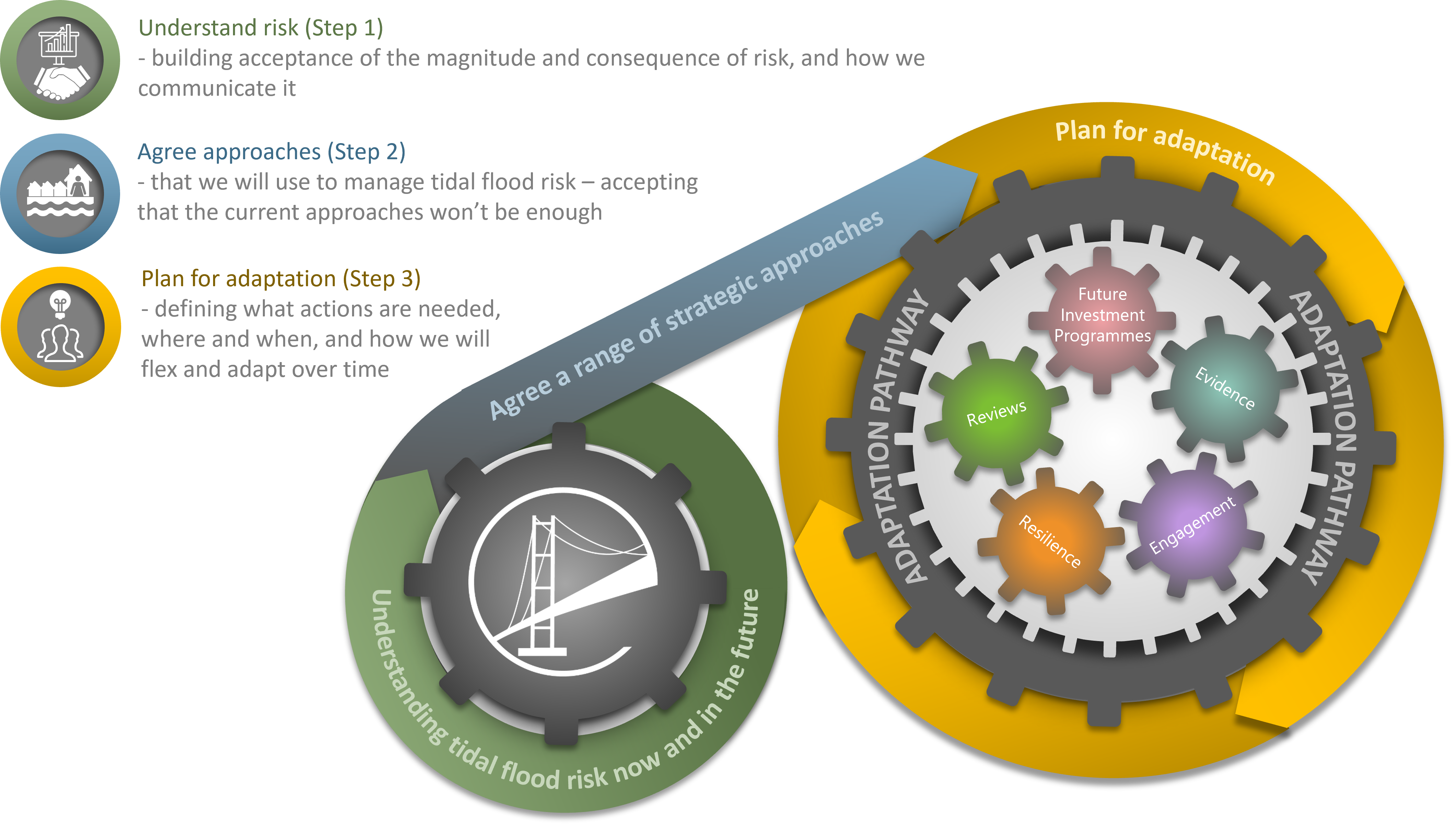
The outputs from Understand Risk will inform the next stages of the project, as well as shaping our ongoing investment on the ground. The project team and partners are currently focused on moving into ‘Agree approaches’ (Step 2), with a number of key areas of work progressing. These include reviewing our governance arrangements to ensure they are still appropriate as we move into the next stage of the project; consideration of the evidence required to produce ‘approaches’ for managing tidal flood risk; and reflections on the lessons learned from Understand Risk. The partnership is also working on ways to present the Understand Risk outputs to the wider public.
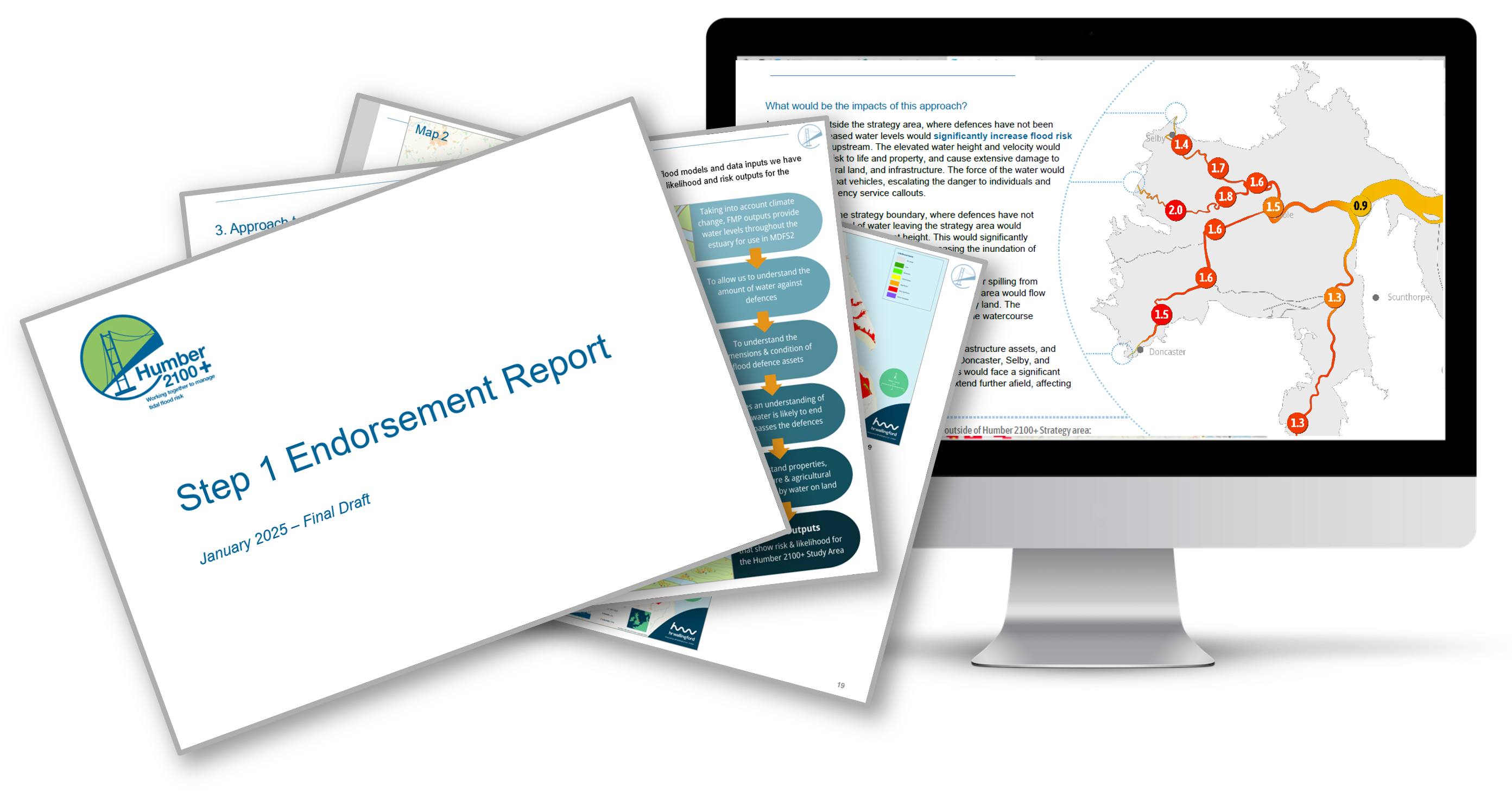
The Humber 2100+ project team have now completed the technical work for Step 1 (Understand Risk) of the project and presented the full set of outputs to partners. The 'Understand Risk' step is about building a solid foundation of evidence to create an accurate picture of future tidal flood risk around the Humber – essentially ensuring a common understanding of the challenge we face.
The outputs were presented for partner 'endorsement' via a summary report and a detailed evidence pack in January. 9 of the 11 local authority partners in the project, and the Environment Agency, have now formally endorsedContinue reading
The Humber 2100+ project team have now completed the technical work for Step 1 (Understand Risk) of the project and presented the full set of outputs to partners. The 'Understand Risk' step is about building a solid foundation of evidence to create an accurate picture of future tidal flood risk around the Humber – essentially ensuring a common understanding of the challenge we face.
The outputs were presented for partner 'endorsement' via a summary report and a detailed evidence pack in January. 9 of the 11 local authority partners in the project, and the Environment Agency, have now formally endorsed the outputs, (including the picture of risk, the methodology and data behind them). We are confident that formal endorsement from the remaining partners will follow very shortly. This is a key milestone for the project as these outputs will form the basis for understanding strategic flood risk across the Humber going forwards. They will inform Step 2 of the project, as well as shaping our ongoing investment on the ground. Having positive endorsement from all partners means that we will be able to work together on an adaptive approach to managing tidal risk across the interconnected estuary system.
Work is now underway to begin Step 2, with a number of key areas of work progressing. These include a governance review; consideration of the evidence required to ‘agree approaches’ for managing tidal flood risk; and reflections on the lessons learned from Step 1. The partnership is also working on ways to present the Step 1 outputs to the wider public.