River Thames Navigation and Assets
Welcome to the new Engagement HQ Page for all things River Thames.
This page covers the River Thames within the Environment Agency's jurisdiction, from Cricklade to Teddington,
Here you will find all the latest news and updates about the river and our work, including information on locks, weirs, boat moorings, monitoring stations, flood defences, bridges and more.
Our work helps to protect people, property and the environment from flooding, drought and pollution.
We regularly receive enquiries about our work on and around the River Thames. This page will highlight the topics and areas of our work that generate the most interest, making it easier to find the information you need.
If you are interested in a topic that is not currently covered on this site, please contact our enquiries team at enquiries_THM@environment-agency.gov.uk.
Please be aware that the information published on this page reflects the latest information available to us. Where there are no more recent updates, the information already published remains the most up to date information we hold. (19/10/2026)
How To Use This Page
Please use the map below to determine which river catchment your query relates to. Each catchment of the river is split by the red markings and labelled A-G. You can then visit the ‘What's In My Area’ section to access information relevant to that catchment. Information relevant to the whole river is stored under the 'River Wide Information' section.
Other pages containing information that is relevant to the River Thames and wider area, including our National Navigation page and information on Flood Alleviation Schemes, can be found under the relevant drop down menus. You will also find other useful resources and information on how to contact us.
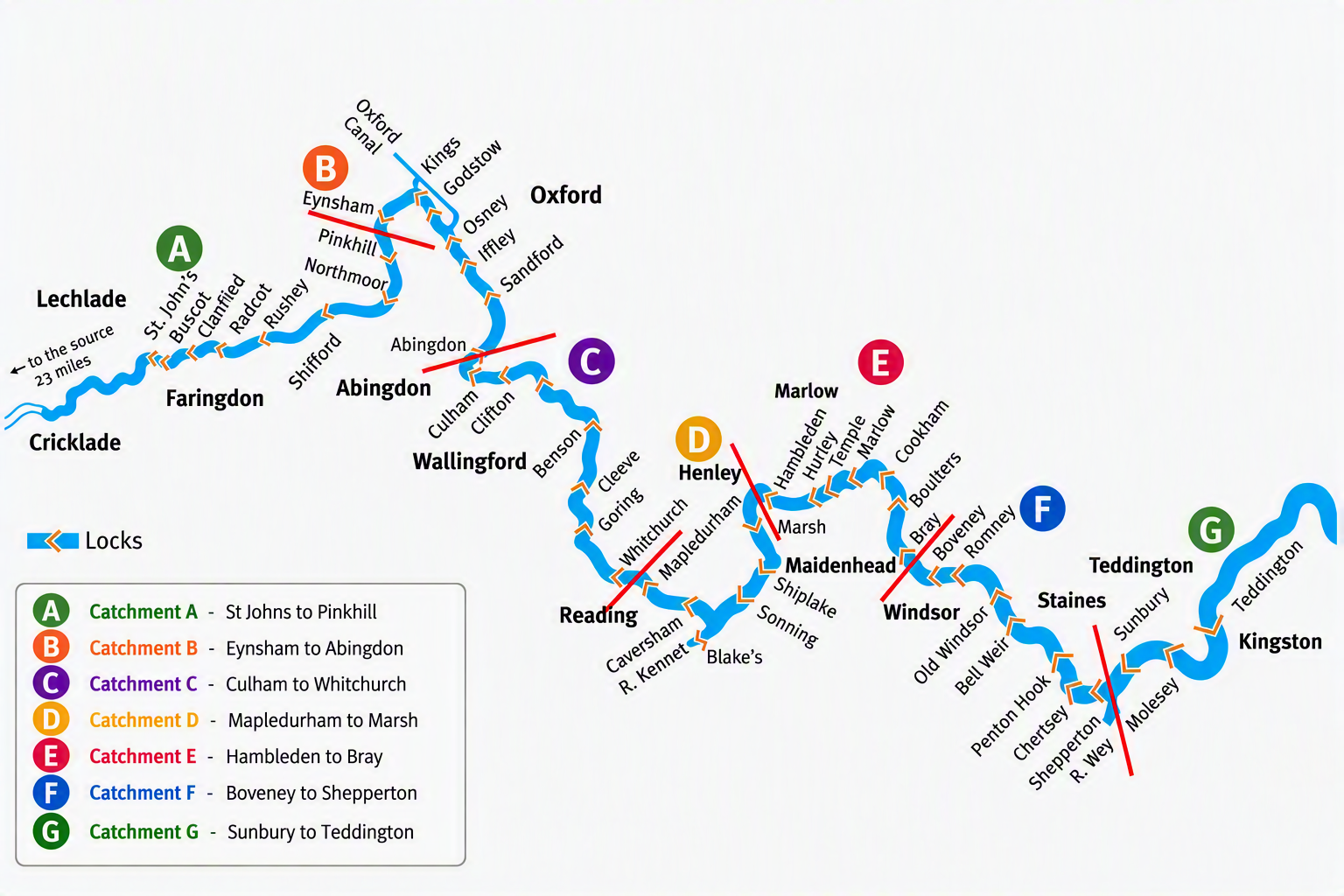
The information across our pages is kept up to date and is the latest information we are able to share. Links to latest updates will always be posted in the news feed.
Keep up to date with the latest news and updates by registering and subscribing to follow this page.
The Environment Agency can carry out maintenance, improvement, or construction work on main rivers to manage flood risk and protect the environment. This is done using our permissive powers under the Water Resources Act 1991. You can learn more about the Water Resources Act 1991 through this link. Any work we carry out using these powers is subject to available funding and resources.
Responsibility for maintaining main rivers ultimately remains with the riparian land owner. All watercourses not designated main river are ordinary watercourses and the Lead Local Flood Authority has similar permissive powers on these. To find out more about riparian responsibilities visit the two links below:

-
Thames enquiries

-
Customer enquiries (Monday to Friday, 8am to 6pm)

Phone 03708 506 506
