
Somerset Flooding
The latest updates can be found in the newsfeed at the bottom of this page.
Somerset has experienced multiple floods in recent years, affecting the whole county. There have been winter floods on the Levels and Moors, as well as flash floods in other parts of the county.
Flooding and water management in Somerset receives a high level of public interest. This page has been created to help inform and provide links to support before, during and after floods - the latest updates can be found in the newsfeed at the bottom of this page.
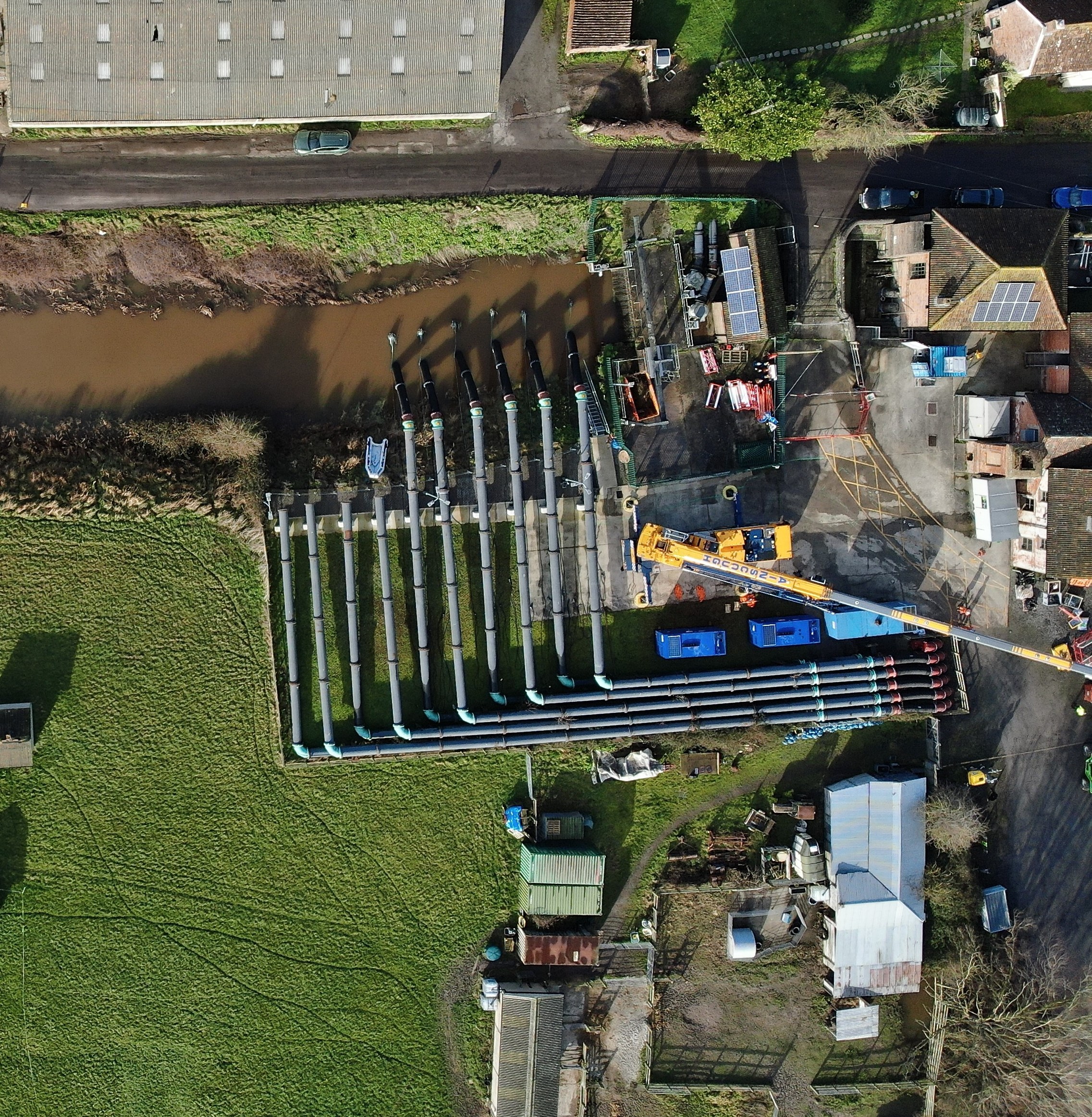 Temporary pumps at Northmoor Pumping Station, February 2026
As the climate changes, it’s more important than ever to be prepared for flooding. We know how important it is for your community to stay informed and involved, and our aim is to ensure residents are supported, listened to, and well informed about work to help protect homes, businesses, and community spaces.
Find out more
For advice and information about what to do in a flood, including recovery, see the information section on this page.
You can also find out more about how to support your community with flooding in the local area here: Wessex Flood Wardens | Engage Environment Agency
The latest updates can be found in the newsfeed at the bottom of this page.
Somerset has experienced multiple floods in recent years, affecting the whole county. There have been winter floods on the Levels and Moors, as well as flash floods in other parts of the county.
Flooding and water management in Somerset receives a high level of public interest. This page has been created to help inform and provide links to support before, during and after floods - the latest updates can be found in the newsfeed at the bottom of this page.
Temporary pumps at Northmoor Pumping Station, February 2026
As the climate changes, it’s more important than ever to be prepared for flooding. We know how important it is for your community to stay informed and involved, and our aim is to ensure residents are supported, listened to, and well informed about work to help protect homes, businesses, and community spaces.
Find out more
For advice and information about what to do in a flood, including recovery, see the information section on this page.
You can also find out more about how to support your community with flooding in the local area here: Wessex Flood Wardens | Engage Environment Agency
-
Saltmoor Pump Deployment Exercise – Upcoming Road Closure
As part of our preparations for winter, we are undertaking a pump deployment exercise at Saltmoor Pumping Station. This exercise follows our review of last winter’s floods, and is designed to improve the speed, safety and efficiency of temporary pump deployment on the Somerset Levels and Moors during severe flood events.
We expect to begin work with our contractors on site on Tuesday 20 October, with a road closure in place on West Yeo Road outside Saltmoor Pumping Station between 09:00 and 15:00 on Wednesday 21 October and Thursday 22 October.
All works are expected to be completed byContinue reading
As part of our preparations for winter, we are undertaking a pump deployment exercise at Saltmoor Pumping Station. This exercise follows our review of last winter’s floods, and is designed to improve the speed, safety and efficiency of temporary pump deployment on the Somerset Levels and Moors during severe flood events.
We expect to begin work with our contractors on site on Tuesday 20 October, with a road closure in place on West Yeo Road outside Saltmoor Pumping Station between 09:00 and 15:00 on Wednesday 21 October and Thursday 22 October.
All works are expected to be completed by the end of Friday 23 October. We are working to this planned timetable, but please be aware that timings can change due to factors outside of our control.
We will endeavour to minimise disruption to the public and appreciate the community’s support with this important exercise.
For further information, please contact WessexEnquiries@environment-agency.gov.uk.
-
Flood Recovery Update - June 2026
Thunderstorms and intense downpours on Monday 22 June led to flash flooding in a number of towns in Somerset, with businesses and homes impacted. You can find advice about flood recovery and actions to take online, including Flood Mary’s Recovery Guide and What to do after a flood - GOV.UK.
It’s never too late to report flooding, either from last week’s event or from the winter floods. Reporting can identify contributing factors, impacts and sources of flooding, and you may have important information that helps build an accurate picture of what happened. Reporting helps capture the true economic costContinue reading
Thunderstorms and intense downpours on Monday 22 June led to flash flooding in a number of towns in Somerset, with businesses and homes impacted. You can find advice about flood recovery and actions to take online, including Flood Mary’s Recovery Guide and What to do after a flood - GOV.UK.
It’s never too late to report flooding, either from last week’s event or from the winter floods. Reporting can identify contributing factors, impacts and sources of flooding, and you may have important information that helps build an accurate picture of what happened. Reporting helps capture the true economic cost of a flood, which makes the case for funding and investment stronger.
You can report flooding in Somerset on the Flood Online Reporting Tool (FORT): FORT - Home. Information submitted on FORT is an important part of the data under review from the winter floods.
On 9 June, the Government announced a £50 million investment in Somerset for flood resilience, which Somerset Council will be using to develop of 2-year programme of works to reduce flood risk, improve preparedness and strengthen long-term resilience. Please contact Somerset Council for more information.
Since the winter floods, we have completed an extensive programme of 2,300 asset inspections across Wessex. These inspections help us to understand the condition of our assets, and identify potential refurbishment or repair works. An asset may be an embankment, concrete wall, outfall, culvert, pumping station, sheet piles or other structures that help reduce flood risk in and around our rivers and coastlines. Assets needing repair are put into a programme of works, which is prioritised according to risk and available funding. We are using the information from the asset inspections to inform our asset repair programme.
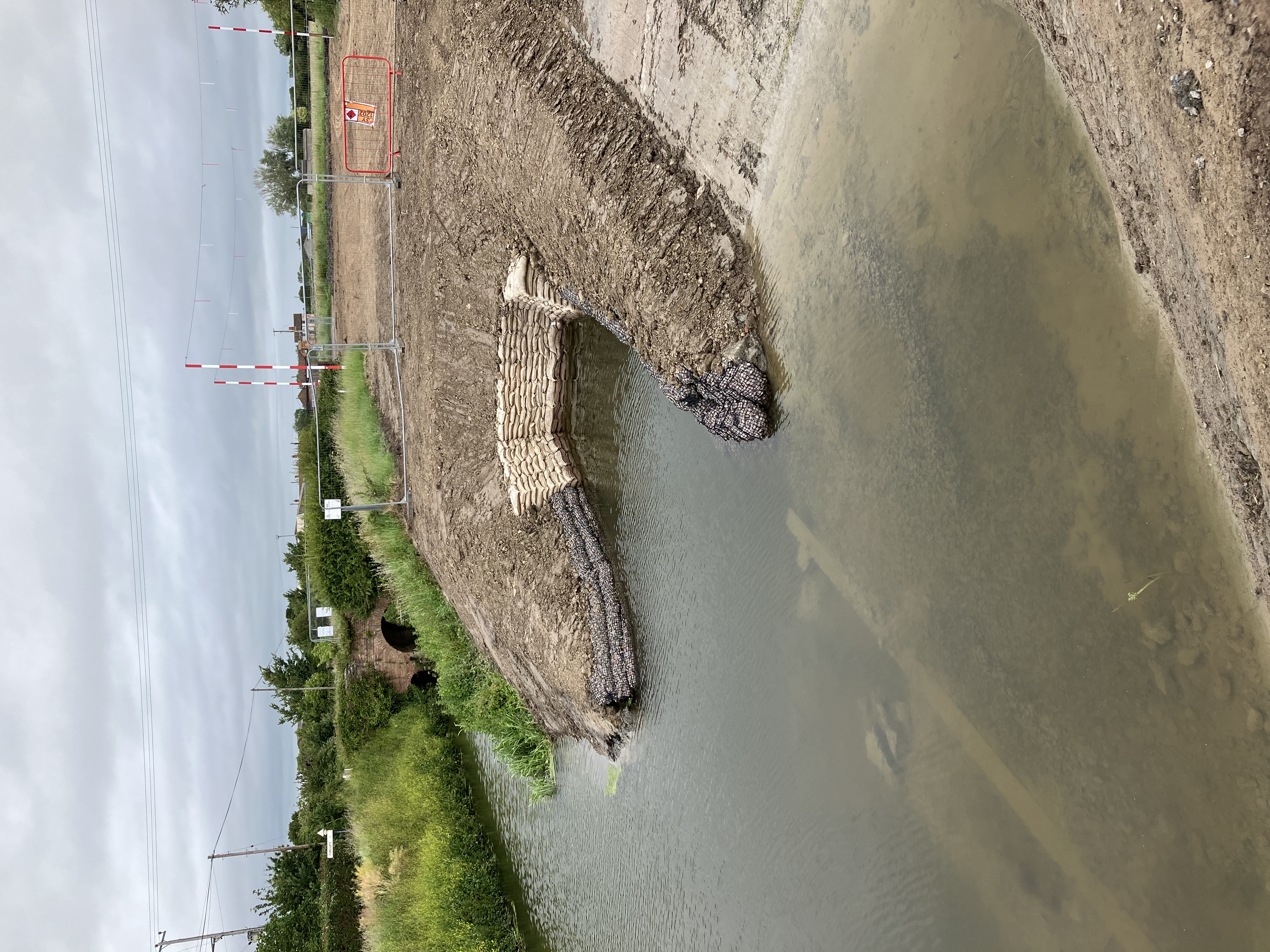 Viney's Bridge culvertWork underway includes the bypass culvert around Viney’s Bridge on the Northmoor Main Drain, which is now operational, improving flows to Northmoor Pumping Station (see picture). We have also installed new pumps at Midelney Pumping Station, as part of a £9 million upgrade programme. The new equipment is more reliable and efficient, and represents a significant investment in our pumping stations in Somerset. This programme will also see pumps at Huish Episcopi, Northmoor and Westover Pumping Stations replaced over the next two years.
Somerset Rivers Authority have committed to contributing £250,000 towards enhanced pumps at Bathpool. Currently, we deploy temporary pumps to this area, but this project will create more resilience when the River Tone is too high to allow water to drain naturally back into the river. Bathpool was the worst affected area in Somerset this winter, and Somerset Council are undertaking an investigation into the flood that occurred there, as part of their duties under Section 19 of the Flood and Water Management Act 2010.
In other areas reliant on pumping across the Somerset Levels and Moors, we are reviewing procedures to optimise the deployment of pumps when they are needed, and looking for any opportunities to upgrade pump infrastructure to enable a rapid, efficient and safe response to flooding when it occurs. Thanks to investment since 2014, pumps were deployed in record time this year, and over 180 properties were protected from flooding. However, climate change is increasing the frequency and intensity of flooding, so it is more important than ever that flood defences are operational, pumping is optimised, and communities are prepared.
We recently attended the Somerset Rivers Authority Board meeting, where we updated partners and members of the public. We will be attending the next Hestercombe LCN meeting, which was postponed due to the extreme heat this week. We will continue to update communities via this page as recovery work progresses.
-
Flood Recovery Update - May 2026
Since this winter’s floods, much has been going on in Somerset with recovery and review. The second wettest January and February on record was followed by a very dry spring; in Wessex, March and April saw 54% and 32% of the long-term average rainfall respectively. This illustrates the corresponding challenge of managing dry weather in a changing climate.
Major flood events can damage flood defence structures and equipment, and we have been undertaking an extensive programme of post-flood inspections. To date, we have inspected more than 1700 assets across Wessex to check where structures need repairs, with more inspections dueContinue reading
Since this winter’s floods, much has been going on in Somerset with recovery and review. The second wettest January and February on record was followed by a very dry spring; in Wessex, March and April saw 54% and 32% of the long-term average rainfall respectively. This illustrates the corresponding challenge of managing dry weather in a changing climate.
Major flood events can damage flood defence structures and equipment, and we have been undertaking an extensive programme of post-flood inspections. To date, we have inspected more than 1700 assets across Wessex to check where structures need repairs, with more inspections due to be completed this month. We are seeking additional funding to undertake repair work where needed. We are also nearing completion of a bypass culvert around Viney’s Bridge to improve flows to Northmoor Pumping Station.
A multi-agency flood recovery drop-in was held in Bathpool at the end of April, and information gathered at the event will inform Somerset Council’s report into the flooding that occurred there. This is known as a Section 19 investigation, and is a statutory duty under the Flood and Water Management Act when a significant number of properties in a community are flooded internally.
At present, Bathpool is the only location in Somerset where this winter’s flooding triggered a Section 19 investigation, but that doesn’t mean that other areas have been forgotten. We are working closely with partners including the Internal Drainage Board and Somerset Council to actively review information about flooding that occurred across the county. Somerset Council will be leading on a report on the Somerset Levels and Moors flooding, looking to identify learning and opportunities. The Local Resilience Forum, which is a partnership of all emergency response organisations, has also undertaken a debrief of the operational response across the county.We are evaluating how our flood defence structures and equipment performed, and reviewing the overall response to the floods. We are looking for opportunities for further improvements that would reduce flood risk and improve efficiency and safety in future floods. We are also reviewing the trigger levels for pump deployment, and examining the feasibility and challenges of making temporary pump infrastructure permanent.
We are collecting important flood data, such as flood extents, that will help us better understand and manage flood risk in the future. We are also reviewing our own incident procedures to understand if any improvements could be made.
We continue to work with partners and communities across Wessex, and we will be attending further events including the Hestercombe Local Community Network meeting and Somerset Rivers Authority board meeting in June. These meetings provide an important forum where residents can hear updates and ask questions.
-
Road Closure Update 20th March 2026
Pump demobilisation continues on the Somerset Levels and Moors as water levels continue to recede.
Road closure dates and times have been confirmed for West Yeo Road for the removal of pumps at Saltmoor Pumping Station:
Monday 23 and Tuesday 24 March, 9am – 5pm
In addition, there is likely to be a footpath closure at Huish Episcopi Pumping station, affecting footpath number L13/6 from its junction with footpath L21/50, heading in a north westerly direction for approximately 160 metres, on Monday 23 and Tuesday 24 March.Temporary pumps at Currymoor and Northmoor will remain in situ for the momentContinue reading
Pump demobilisation continues on the Somerset Levels and Moors as water levels continue to recede.
Road closure dates and times have been confirmed for West Yeo Road for the removal of pumps at Saltmoor Pumping Station:
Monday 23 and Tuesday 24 March, 9am – 5pm
In addition, there is likely to be a footpath closure at Huish Episcopi Pumping station, affecting footpath number L13/6 from its junction with footpath L21/50, heading in a north westerly direction for approximately 160 metres, on Monday 23 and Tuesday 24 March.Temporary pumps at Currymoor and Northmoor will remain in situ for the moment, with demobilisation likely in the coming weeks. We will provide updates if there are any operations that may affect access for local residents.
-
Environment Agency Briefing 13 March 2026
Following a significant pumping operation and recent drier weather, floodwater continues to recede and the situation continues to improve on the Somerset Levels and Moors. There are no longer any Flood Warnings in place in Somerset, although three Flood Alerts remain in force: Flood alerts and warnings - GOV.UK
The majority of extra pumps deployed throughout the event are no longer needed, and we are now removing pumps that are not being used. Extra pumps are still operating at Huish Episcopi pumping station, but at the majority of pumping stations across the moors, water levels in the drains are nowContinue reading
Following a significant pumping operation and recent drier weather, floodwater continues to recede and the situation continues to improve on the Somerset Levels and Moors. There are no longer any Flood Warnings in place in Somerset, although three Flood Alerts remain in force: Flood alerts and warnings - GOV.UK
The majority of extra pumps deployed throughout the event are no longer needed, and we are now removing pumps that are not being used. Extra pumps are still operating at Huish Episcopi pumping station, but at the majority of pumping stations across the moors, water levels in the drains are now at normal winter levels, and there is no longer enough water for extra pumps to run.
Standing water will remain on many of the fields until it works its way through the network of rhynes to the pumping stations, or in many cases where there is no gravity drainage, until the water soaks back into the ground.
We will begin demobilising pumps at Westonzoyland, Westover, Midelney and Dunball in the coming days, and the pumps at Elson’s Clyce will be removed on Tuesday 17 March. The extra pumps at Saltmoor are expected to be removed week commencing 23 March.
The following roads will be closed for pump removal:
Confirmed - Tuesday 17 March, 9am – 5pm: Huntworth Lane, near the Thatchers Arms, for the removal of pumps at Elson’s Clyce.
There will be a road closure at West Yeo Road for the removal of pumps at Saltmoor Pumping Station the following week. We will issue a further update to confirm road closure dates, but this is likely to be Monday 23 and Tuesday 24 March.
The forecast is for showers today and drier weather tomorrow, with no significant rainfall totals expected.
Following this winter’s floods, many members of the public have questions, and we are attending a number of public meetings where we will be speaking about recent flood events. This includes Somerset Council Local Community Network meetings with Parish and Town Council representatives, and the Somerset Rivers Authority board meeting on 20 March, with a segment set aside for public questions.
There will be a multi-agency drop-in for residents affected by flooding in Bathpool in Taunton, on Thursday 30 April from 3pm - 6.30pm at Brittons Ash Community Hall.
If you have queries that you’d like to ask the local team, email WessexEnquiries@environment-agency.gov.uk.
Staff remain on duty 24 hours a day, monitoring assets and operations, forecasts and water levels.
-
Environment Agency Briefing 27 February 2026
Current situation
2 Flood Warnings remain in place at Currymoor and Haymoor; and Yeo and Parrett Moors, low lying properties around Muchelney. We have removed the A361 East Lyng to Burrowbridge Flood Warning today.
There are also 4 Flood Alerts in place across the Levels and Moors.
Cutts Road and New Road remain closed. Athelney spillway has stopped running and the A361 is open.
Drain levels in Currymoor, the Muchelney and Thorney moors upstream of Langport, and moors adjacent to the Parrett and Sowy (e.g. West Sedgemoor, Aller Moor) remain high but are reducing.
Friday will remain largely dry beforeContinue reading
Current situation
2 Flood Warnings remain in place at Currymoor and Haymoor; and Yeo and Parrett Moors, low lying properties around Muchelney. We have removed the A361 East Lyng to Burrowbridge Flood Warning today.
There are also 4 Flood Alerts in place across the Levels and Moors.
Cutts Road and New Road remain closed. Athelney spillway has stopped running and the A361 is open.
Drain levels in Currymoor, the Muchelney and Thorney moors upstream of Langport, and moors adjacent to the Parrett and Sowy (e.g. West Sedgemoor, Aller Moor) remain high but are reducing.
Friday will remain largely dry before a further spell of localised heavy rain moves into the southwest overnight. The longer-term forecast remains unsettled, and our flood warning duty officers continue to monitor the situation, closely linked in with the Flood Forecasting Centre at the Met Office.
Water levels across the Levels and Moors are falling. Station pumps continue to operate supported by temporary pump installations. Temporary pumps at Hook bridge are pumping directly from Haymoor into the River Tone to reduce levels in Haymoor and Currymoor. Oath lock sluice has been raised to allow free flow of the Parrett. Monksleaze Clyce remains open, diverting the River Parrett flow into the Parrett Flood Relief Channel (Sowy) before discharging through the King’s Sedgemoor Drain. Temporary pumps remain in place at Dunball to operate during high tide when water cannot gravitate into the River Parrett through Dunball Sluice. Pumping at all stations continues. Some temporary pumps have been switched off due to insufficient water to operate
We will begin demobilising temporary pumps from the Bridgwater Docks and at Fordgate over the next few days as the overall situation continues to improve.
Keeping you informed
To broaden our engagement, we have set up a webpage dedicated to the Somerset 2026 flooding. The latest situation updates will be posted here along with previous multi agency briefings, practical information and useful contacts. The page also provides links to more general information about flooding on the Levels and Moors, our response to Storm Chandra and details on investment since 2014.
We continue to provide updates via our local Facebook Page find us at 'Environment Agency - South and South West
-
Multi-agency briefing 20 February 2026
Local Resilience Forum partners including the Environment Agency and Somerset Council have been publishing regular briefings since the flooding began. These are hosted on the Somerset Council website. For the latest briefing follow this link:
Major incident and flood response update: 20 February 2026Local Resilience Forum partners including the Environment Agency and Somerset Council have been publishing regular briefings since the flooding began. These are hosted on the Somerset Council website. For the latest briefing follow this link:
Major incident and flood response update: 20 February 2026
-
Contact Floodline for advice or email for local enquiries

Phone 0345 988 1188 Email wessexenquiries@environment-agency.gov.uk -
Incident hotline
Phone 0800 80 70 60 -
Welfare needs, report flooding from ordinary watercourse
SCPhone 0300 123 2224 -
24/7 helpline for mental health support
MSPhone 0800 138 1692 or 01823 276892