
January and February 2026 Floods
Somerset's Second Wettest January and February on Record
Somerset had the second wettest January and February on record, with more than double the average rainfall. Only the winter of 2013/14 was worse, in all the records that stretch back to 1871. A third of January's rain fell during Storm Chandra, which saw around 1.2 million cubic metres of water per hour moving though the Parrett and Tone catchments. Most of this water spilled into the floodplain of the Levels and Moors, where at the peak of the event, around 30 square miles of low-lying agricultural land was flooded.
Somerset Council declared a major incident on 27 January, with the support of the Environment Agency and Local Resilience Partners, to enable multi-agency coordination and focus resources on the flooding. The major incident was stood down on 18 February, after 22 days, although our response and recovery work is ongoing. You can read more via this link: Somerset flooding incident moves into recovery phase
During the floods, 2860 properties were protected by flood defences maintained and operated by risk management authorities, and the deployment of pumps prevented around 180 homes and businesses from flooding. We received reports of approximately 90 properties that flooded across the whole of Somerset, around 20 of which were in the low-lying Levels and Moors.
Preparation and Initial Response
Before the flooding and ahead of Storm Chandra's arrival, we reduced water levels to create maximum capacity for incoming rain. The flooding would have been much worse if we hadn’t - Currymoor had been pumped down completely before refilling in less than four days.
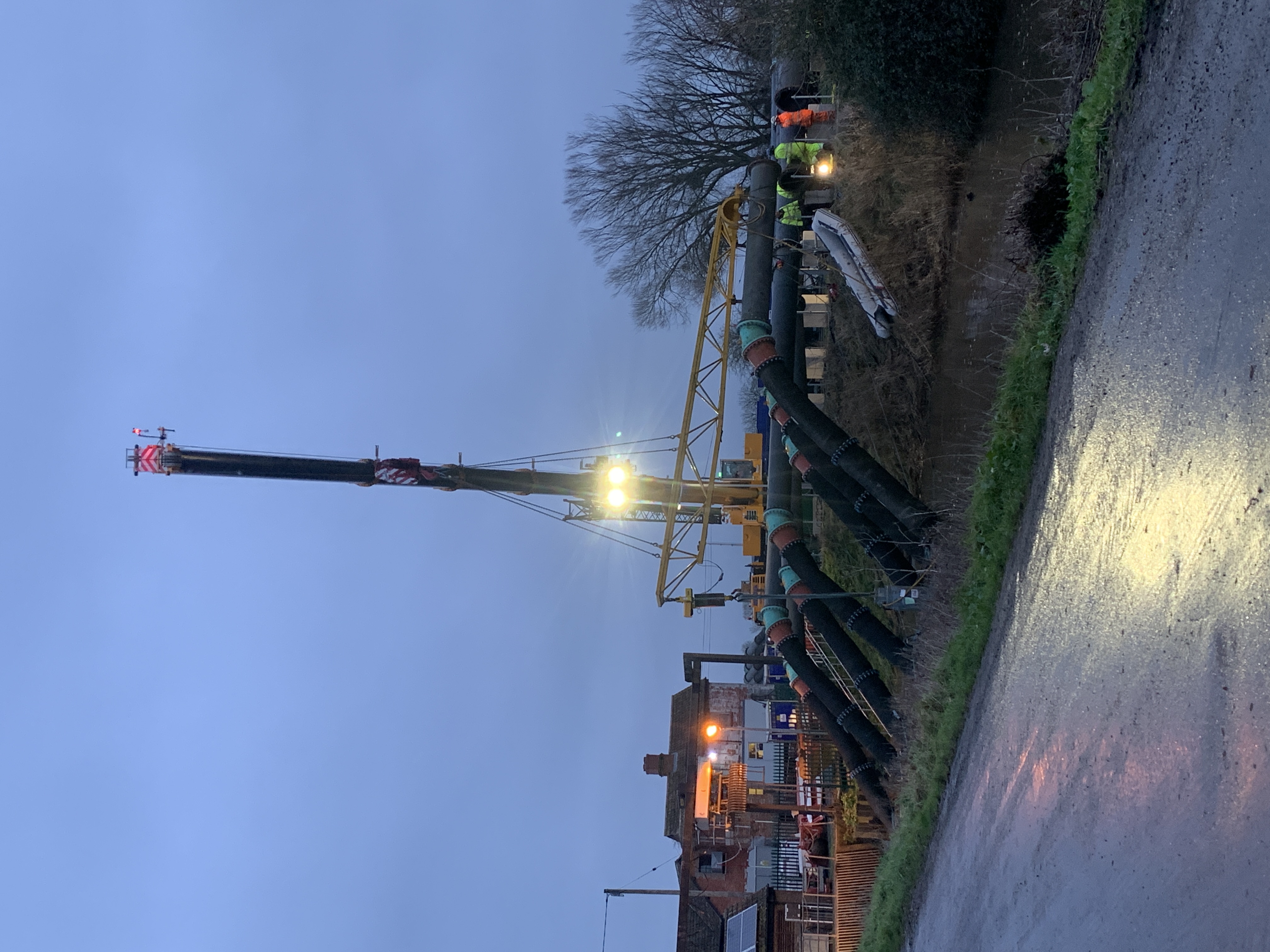 Pumps being installed overnight at Northmoor Pumping Station
We followed the guidance in the trigger points plan when considering whether to deploy extra pumps, and made the decision to bring in pumps early. Pump deployment was prioritised at locations where they would have the greatest impact on reducing flood risk. Extra pumps were installed first at Northmoor and Saltmoor pumping stations, which are rarely inhibited by river levels, as the tidal River Parrett usually has room to receive pumped water at these locations.
When temporary pumps are deployed, there are a lot of things that need to be in place before the pumps start running. We mobilised local equipment, and other equipment was brought in from around the country. Road closures were organised and staff begin the complicated process of installation.
Athelney spillway began running on Sunday 25 January, 2026. This is the spillway that overtops when Currymoor is full, and impacts the A361. The pump deployment was already well underway, with a 180-tonne crane arriving on site at Northmoor Pumping station the following morning.
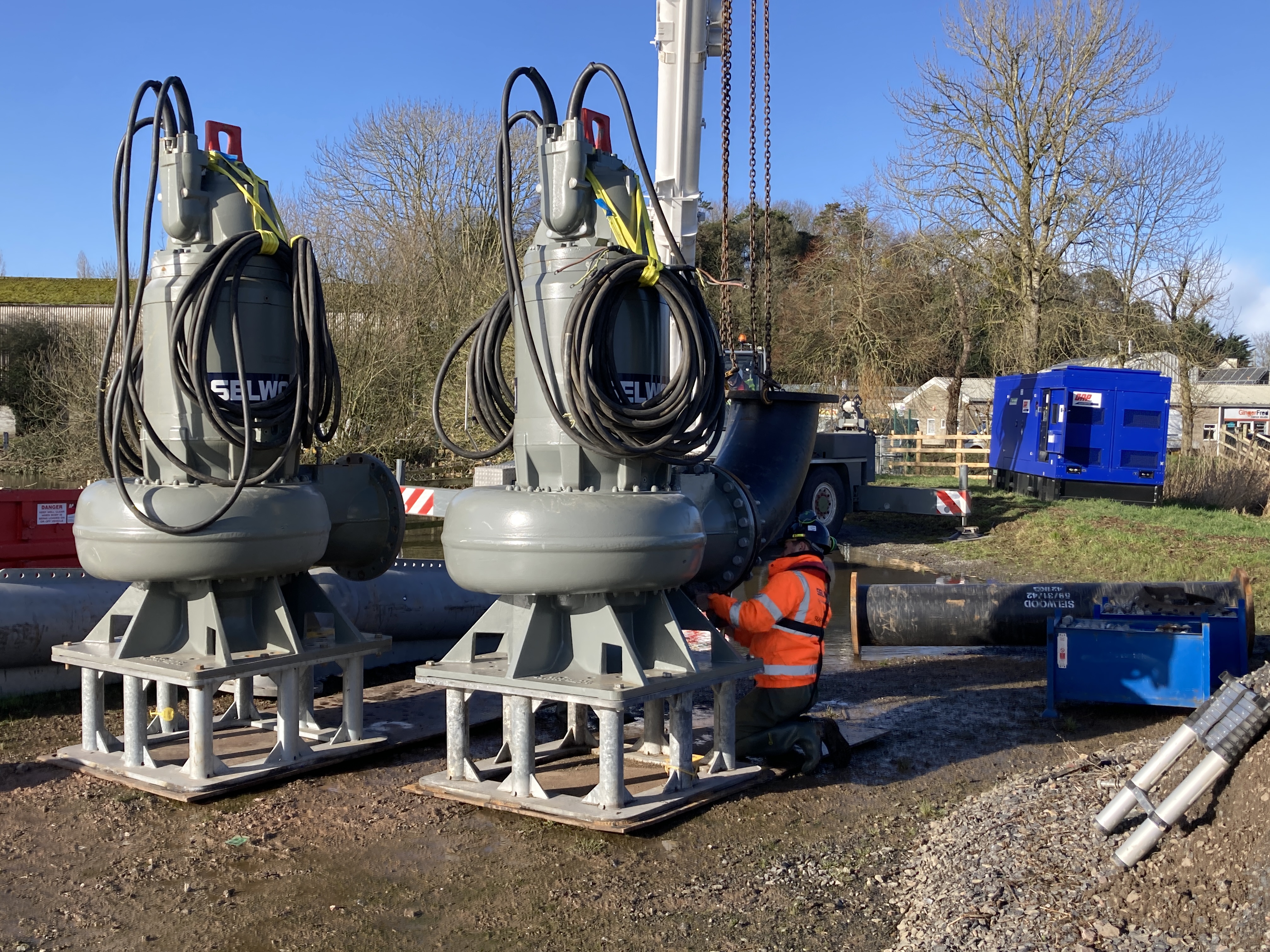 Submersible pumps being prepared for installation
It takes several days for water to move from Athelney to the pumping stations through the network of ditches and rhynes. Extra pumps at Northmoor were operational on 28 January and at Saltmoor on 29 January, ahead of levels in the drains rising significantly, so these pumps were in place when they were needed.
Significant improvements have been made to pumping stations over the past 12 years, including upgrades to permanent pumps, and modifications to make additional pump installation quicker and more efficient. These improvements mean that we were able to install extra pumps in record time this year.
An Ongoing Response to Prolonged Flooding
Throughout the weeks of the incident, our staff were on duty 24/7, maximising pumping whenever conditions allowed, issuing flood warnings, and working round the clock installing pumps and checking flood assets. Together with partner organisations, we held community drop-in sessions, distributed regular briefings and responded to a very high volume of enquiries.
We deployed pumps to 19 locations on the Somerset Levels and Moors, including 28 ultra-high volume pumps and a large number of high volume pumps. Most of these pumps were deployed to existing pumping stations to bolster their capacity, and speed the evacuation of water from the Moors.
Unlike faster responding catchments, flooding on the Somerset Levels can last a long time. Once the Moors have filled with floodwater, it will remain in many places until it can be pumped off, and pumping can only take place when there is room in the river to receive the water. For several weeks following Storm Chandra, river levels were too high to run any pumps at stations upstream of Burrowbridge. When river levels dropped, we were able to run pumps at more stations, and more temporary pumps were able to be installed at upstream stations.
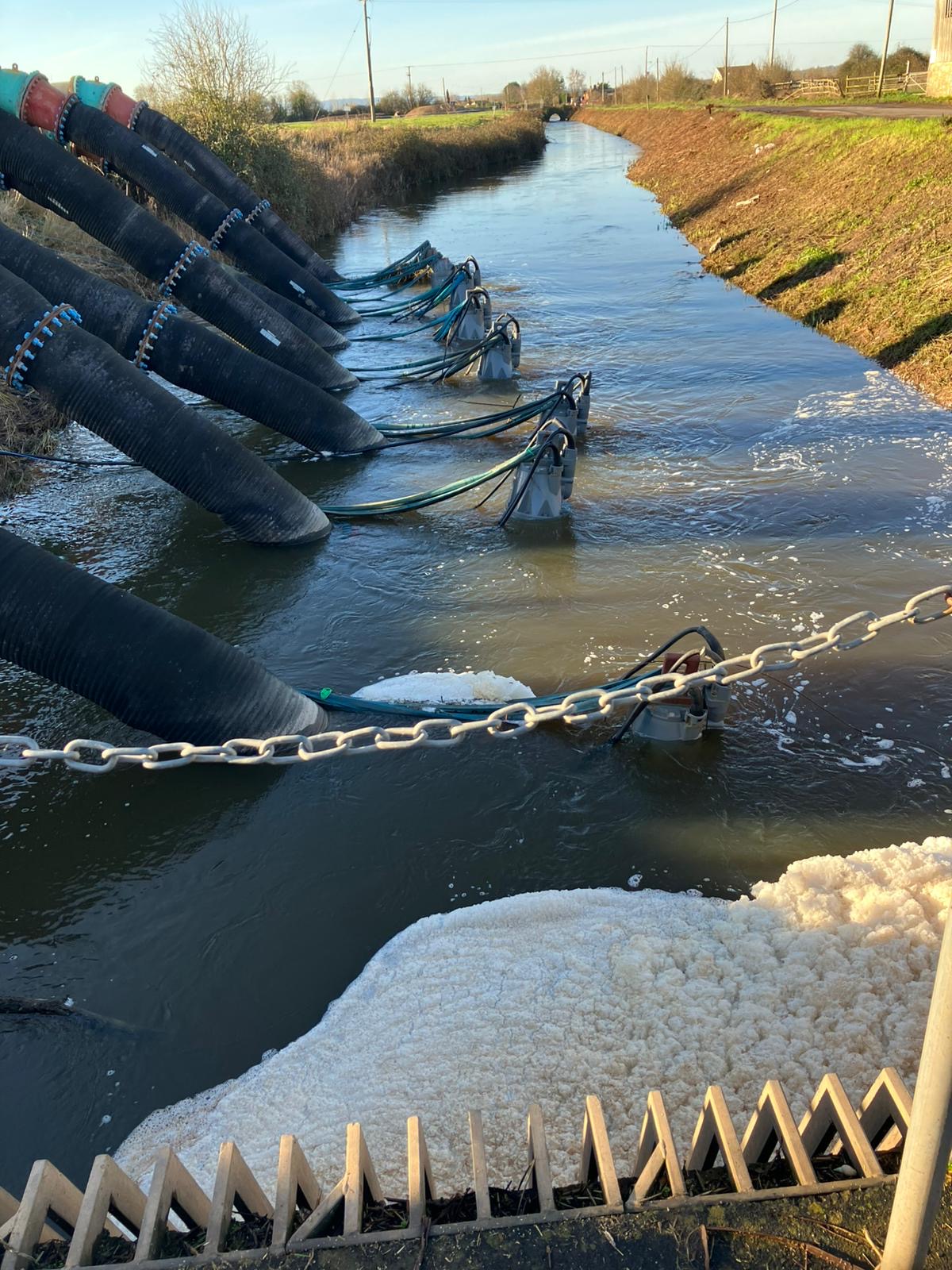 Pumps in the drain at NorthmoorTemporary pump installations ran whenever there was enough water for them to do so. Many of these pumps are submersible, and there has to be enough water in the drains in order for them to operate. The channels can only convey a certain amount of water, and many of our installations at the pumping stations were of a greater capacity than the drain network could provide. Sometimes pumping had to be paused while water made its way through the network of rhynes. In order to improve flows to the pumping station, we created a bypass channel around a privately owned bridge on the Northmoor Main Drain, removed channel restrictions, and reprofiled river banks.
We also installed temporary pumps on the Park Brook near Moorland, which is a Viewed Rhyne managed by the Internal Drainage Board.
We used the Bridgwater Canal as a flood relief channel. This is owned and managed by the Canal and River Trust, and we worked with them so that the channel could be used safely and effectively, as the canal has very little gradient and was not built to carry high flows. It was used by pumping water in at Fordgate and pumping the same volume of water out at Bridgwater docks, which was discharged into the River Parrett over the old locks.
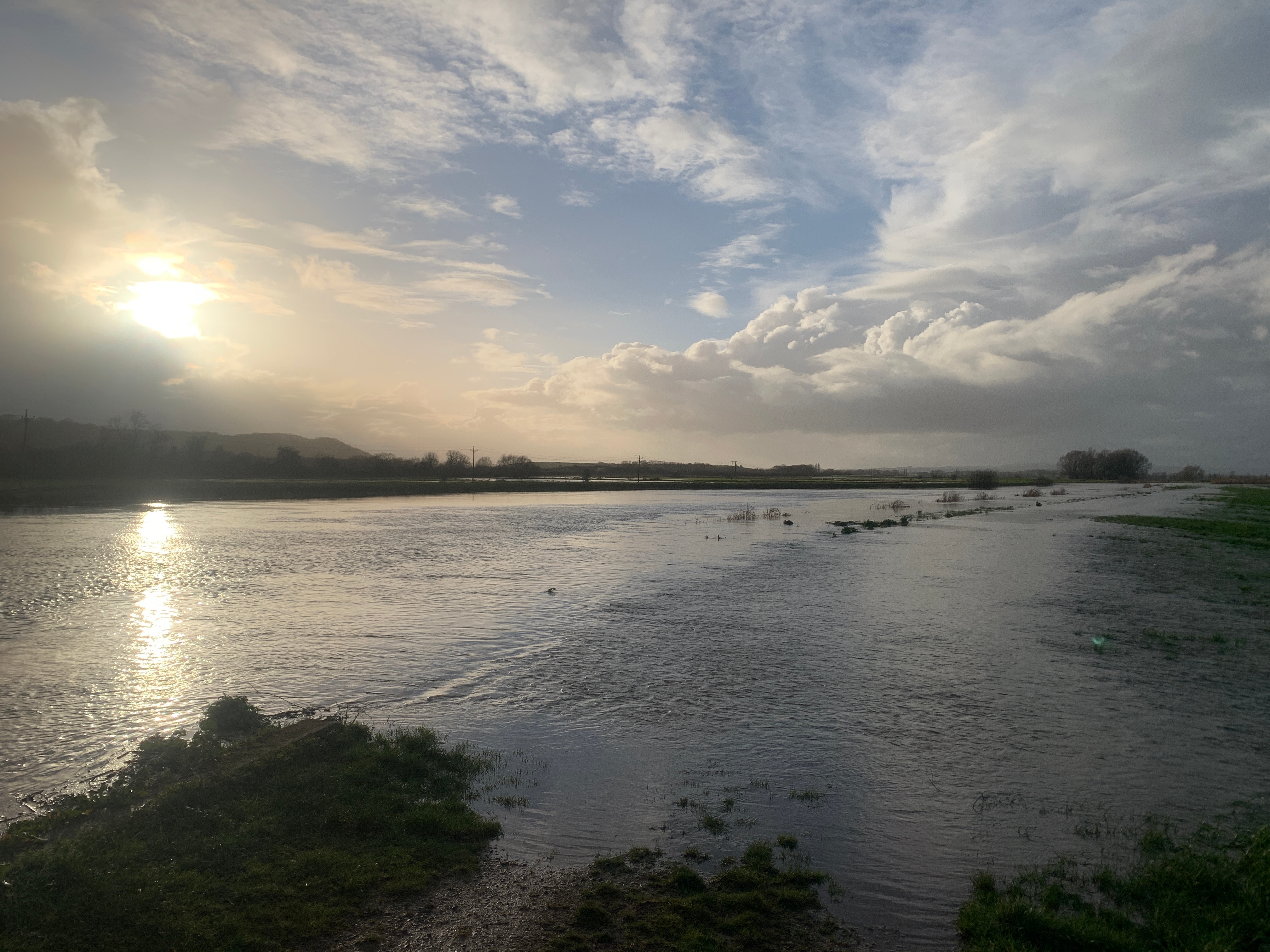 Water flowing from the Parrett to the Sowy over Allermoor spillwayImprovements since 2014 meant that more water could be diverted down the Parrett Flood Relief Channel (the Sowy and King's Sedgemoor Drain). Flood alleviation schemes built in Aller and Westonzoyland protected properties downstream, and we diverted extra flows by opening Monksleaze Clyce while the spillways are still running, outside of our normal operating procedures. This meant the Parrett Flood Relief Channel carried greater flows than during previous flood events.
We installed pumps at Dunball to relieve some of the pressure created by sending water down the Parrett Flood Relief system. The Dunball pumps can only run for two to three hours per tidal cycle, when the Dunball Sluice gates are closed and there is enough water in the channel. The pumps discharge a relatively small amount of water compared to the natural discharge through the gates when they are open. For most of the tidal cycle, the open gates release up to a maximum of 75 cubic metres of water per second into the Severn Estuary. When these gates have to close to prevent tidal flooding, the pumps take over, discharging 10-15 cubic metres per second during the short period of high tide.
While the Dunball pumps are not as powerful as natural processes, and have less impact on reducing flood risk to property than other pumps, they help relieve pressure on the lower Sowy and King’s Sedgemoor Drain.
Once river levels dropped, we were able to install extra pumps at upstream stations, including Westover, Midelney and Huish Episcopi. At the peak of this flood, around 30 square miles of low-lying, mainly agricultural land was flooded, which took some time to be pumped off.
Flood Recovery
Since the winter floods, recovery and review activities have been ongoing across the Somerset Levels and Moors and the wider Wessex area. Temporary pump installations were demobilised in the weeks following the flooding. We completed more than 2,300 inspections of flood risk management assets, helping to identify damage and prioritise repairs, and a programme of repair and maintenance work is underway. We completed the installation of a bypass culvert to improve flows to Northmoor Pumping Station.
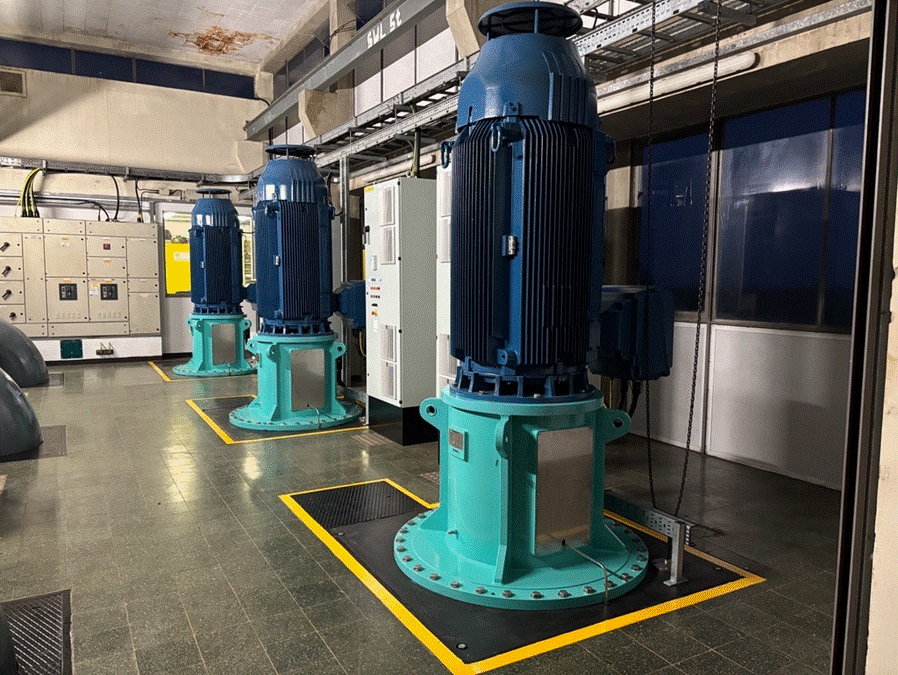 New Pumps at Huish Episcopi Pumping Station
New permanent pumps have been installed this summer at Midelney and Huish Episcopi Pumping stations as part of our pump replacement programme, with further upgrades planned at Northmoor and Westover Pumping Stations next year. This is part of an £11 million project that has been enabled by England’s £5.2bn (2021–2027) Flood and Coastal Erosion Risk Management investment programme, better protecting communities.
The original pumps and control equipment were approaching 50 years old, and this critical upgrade will improve reliability and efficiency. Pumping capacity will be maintained, with reduced maintenance requirements, helping the network withstand more extreme weather events. The new electric pumps are more energy efficient, reducing carbon emissions in support of net-zero commitments, while also providing a more fish-friendly solution.
We have also secured funding for improvement works at Northmoor, Saltmoor, Currymoor and Huish Episcopi to further enhance the health, safety and wellbeing of employees and contractors while on site, helping to create safer and more effective working environments, with work on the ground likely to commence next year.
Working closely with partners, including Somerset Council and the Internal Drainage Boards, we have been reviewing the winter flooding and our operational response. This will include a review of the trigger point plan.
Much of the focus of our review has been on identifying opportunities to improve the speed and efficiency of temporary pump deployment during severe flood events, and a pump deployment exercise is planned for this autumn to test these arrangements.
We have also continued to support affected communities. This included holding a flood recovery drop-in event in Bathpool with partner organisations to provide advice and gather information to support Somerset Council's flood investigation (see Flood investigations), as well as attending community meetings and Local Community Network events to listen to residents' experiences and answer questions. We have responded to a significant volume of correspondence relating to the floods and continued to work with partners to review all available information and lessons learned from the event.
Somerset Council is conducting a review of the flooding that occurred on the Somerset Levels and Moors. While the most significant cluster of properties flooded was in Bathpool, triggering an investigation under the Flood and Water Management Act, around 20 properties were affected across 30 square miles of flooded land, as well as roads and infrastructure. Somerset Council’s review will look at these impacts and the multi-agency response to the floods.
We are leading a permanent pump installation project at Bathpool, with additional funding from Somerset Rivers Authority: SRA Enhanced Programme 2026-27 - Somerset Rivers Authority
In June, the Department for Environment, Food, and Rural Affairs (Defra) announced that Somerset Council would be allocated £50m for flood resilience. We are fully engaged with partners and communities to develop a wide-ranging programme of works to reduce flood risk and increase flood resilience across the county, ranging from large engineering projects to community-based support: Council outlines next steps in allocating £50 million of flood resilience funding
Recovery, repair and review work continues as we seek to strengthen our preparedness and response for future flood events, and ensure we are ready for the winter ahead.