
Bassetlaw District Flooding Engagement
Bassetlaw has experienced repeated flooding in recent years, and we understand how important it is to keep our communities informed and involved.
To support this, we’ve been holding drop-in sessions at libraries in Retford and Worksop, giving residents a chance to speak directly with us, ask questions, and share concerns. We will continue running these sessions — but we want to make them as helpful and relevant as possible.
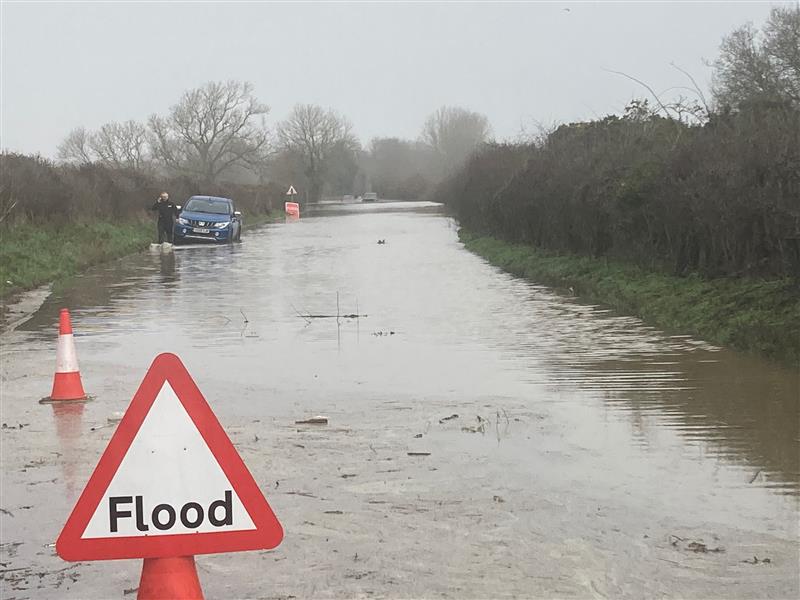
Flooding in Bassetlaw District - Storm Babet, October 2023.
Get involved
Want to stay informed? Register with EHQ to interact with the tools on this page. For useful details, refer to the information section on the right.
You can subscribe to follow this project to receive regular updates about flood-related developments in Bassetlaw straight to your email inbox. We will be sending out a quarterly newsletter to all participants who sign up!
Use the 'Drop-In Feedback' tab below to share any feedback or specific questions you’d like us to cover at upcoming sessions. Your input helps shape how we support you and your community.
Check the 'News Feed' tab below for regular updates on what's happening in Bassetlaw. We'll post project updates, maintenance works, and information about library drop-in sessions. We'll also share any drop-in feedback here that we feel may be helpful or of interest to everyone.
Please note: News Feed items do not trigger notifications, so be sure to check back regularly to stay informed!
Sign up for Flood Alerts and Warnings

For an accessible description of what the icons mean and what you should do if they are issued, visit our website at:
GOV.UK - Flood Alerts and what they mean

Scan or click the QR code to sign up for warnings
-
Retford Drop In Session
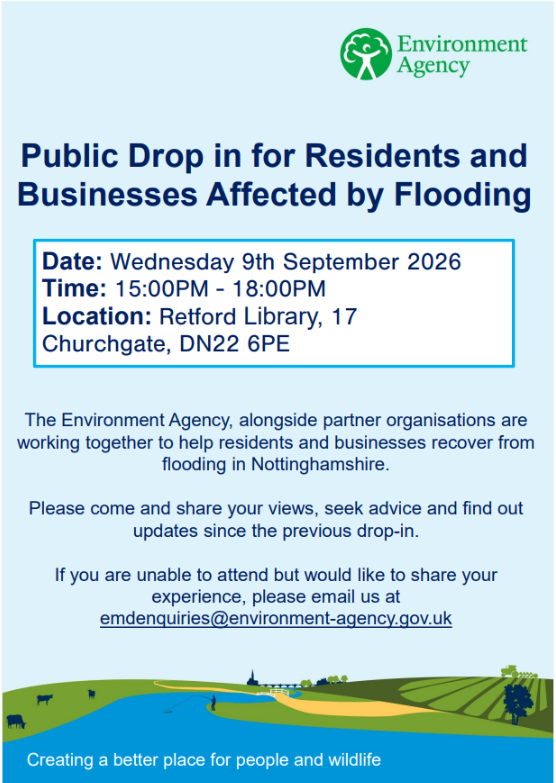
Our next drop in session for Retford is on Wednesday 9th September from 3-6PM @ Retford Library. Please come along and find out updates on the Retford Beck Scheme.
-
River Ryton De-Silt
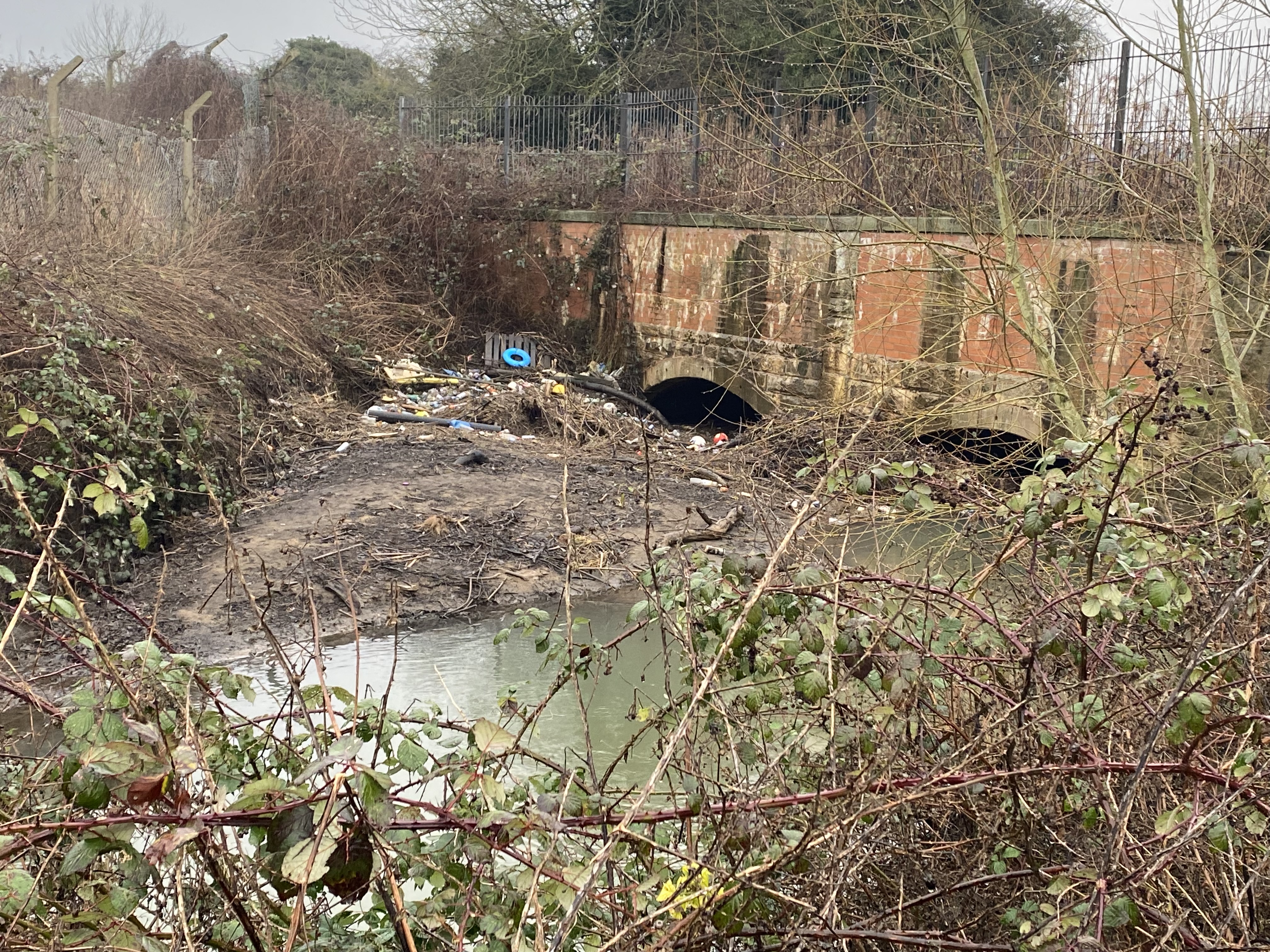
📢 De-silting work taking place this week in Worksop
Residents may notice de-silting activities taking place this week between High Hoe Road and the Canal & River Trust Aqueduct in Worksop.
De-silting is one of a number of measures we consider when managing flood risk. We undertake this work where evidence shows that silt build-up could increase the risk of flooding to nearby properties, provided it won't increase flooding further downstream and can be carried out without impacting protected species.
De-silting involves removing accumulated silt, mud and other sediment from the bed of a watercourse. Over time, this build-up can reduce the channel's capacity to carry water, which may contribute to an increased flood risk in some locations.
While de-silting isn't a standalone solution, it can make a valuable contribution as part of a broader programme of flood risk management works and often needs to be repeated over time to remain effective.
If you have any queries, please email EMDenquiries@environment-agency.gov.uk.
Thank you for your patience while these works are completed.
-
Worksop Community Drop In Event
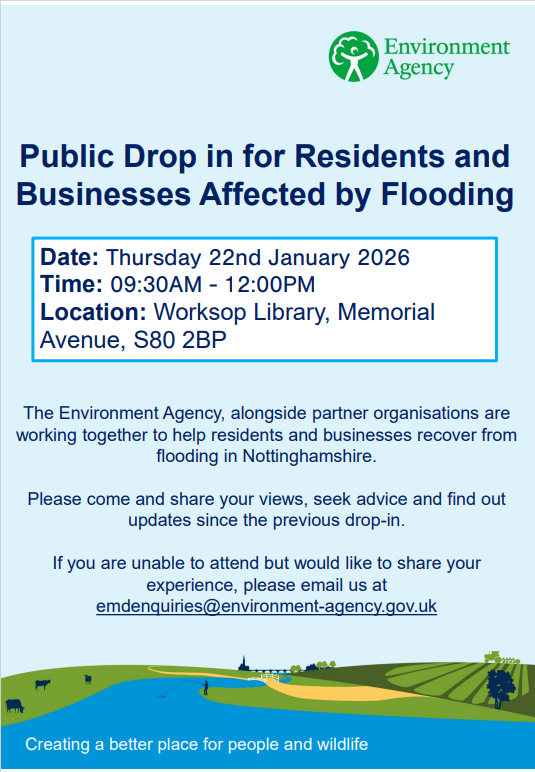
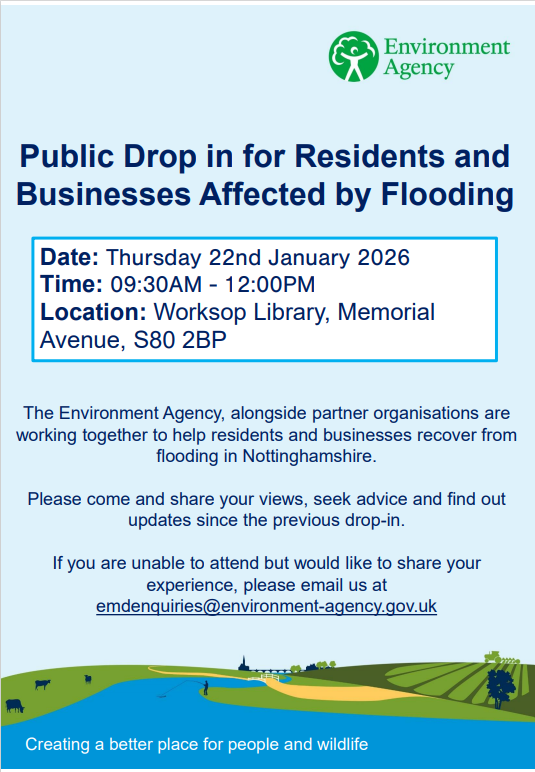
Our next Worksop Community Drop In Event will be taking place on the 22/01/2026 at the Worksop Library. Please see the above flyer for more information and if you have any questions you would like to ask in advance, please utilise the 'Drop In Feedback' feature on this page. We look forward to seeing you there.
-
The Canch - Incident Response

During Storm Claudia, the Askham Field Team worked diligently to manage water levels and protect Worksop town centre from flooding. To increase the flow of the River Ryton through Kings Park, the penstock at the Canch was opened, allowing greater water discharge and reducing pressure upstream. This proactive measure ensured that excess water was diverted safely away from vulnerable areas, minimising the risk of damage and maintaining public safety during the weather event.
-
Retford Community Drop-In Session

We're putting on another regular community drop-in session at the Retford Library on Tuesday 25th November from 09:30-12:00 - and we'd love for you to attend and bring any questions, queries, or information you may have. We'll be updating on project progress and what we've been able to continue undertaking since the last drop-in.
Please also use the 'Drop-In Feedback' feature on this page to ask us what you're concerned about before you arrive so that we're able to arrive prepared to answer any questions you may have. We appreciate and want your input!
-
Carr Dyke Options Explained In Detail
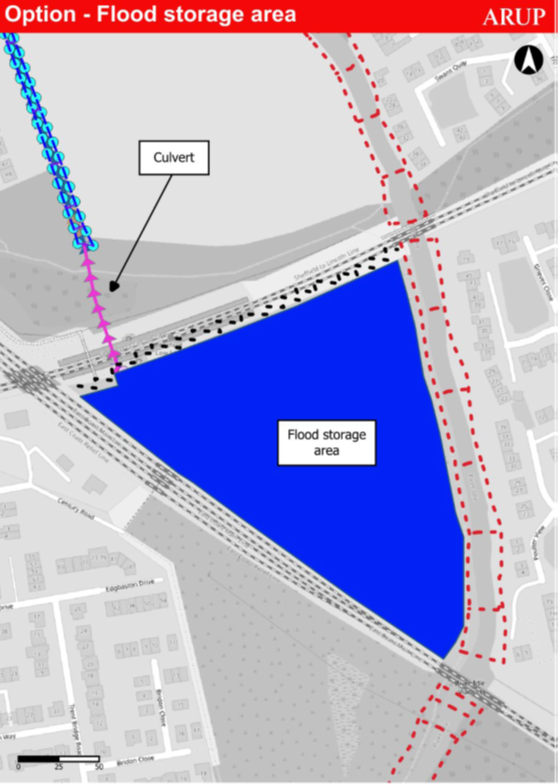
Following our in-person drop-in discussion with the Darrel Road community and those affected by the Carr Dyke, we've helped explain further the options we've explored. Take a look at the PDF below.
-
Field team have completed their weed cut!
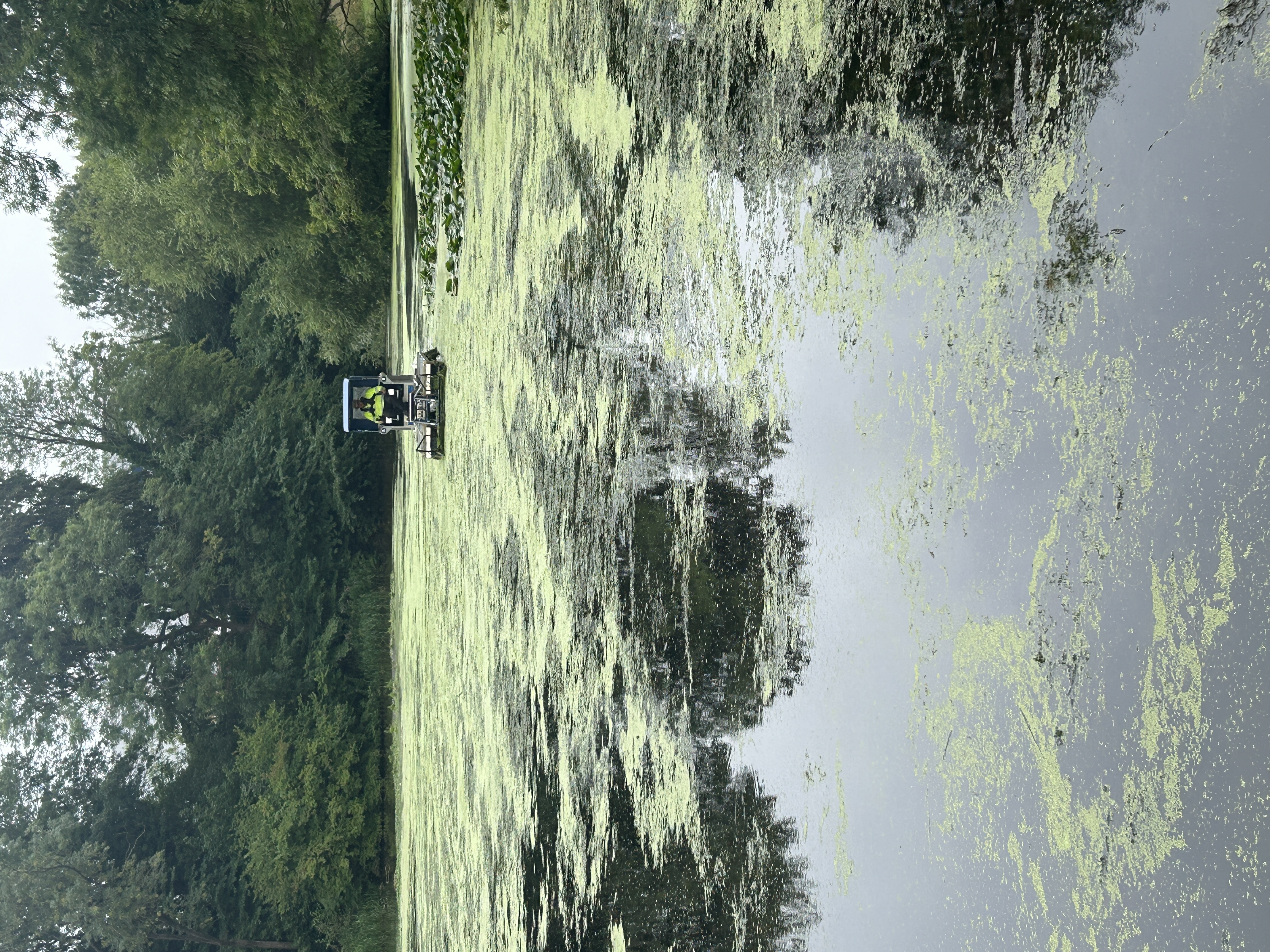
The Askham field team has now completed their weed cut along the River Maun in Mansfield, ensuring the channel remains clear and functional. This work is vital as the Maun feeds into rivers within the Bassetlaw district, meaning any blockages or excessive vegetation could impact wider water flow and flood risk downstream. The Environment Agency carries out in-channel weed cutting to improve conveyance, reduce the risk of flooding, and support a balanced aquatic ecosystem. By managing vegetation, they help maintain healthy river conditions for both wildlife and local communities.
-
Grass Cutting is underway in your area
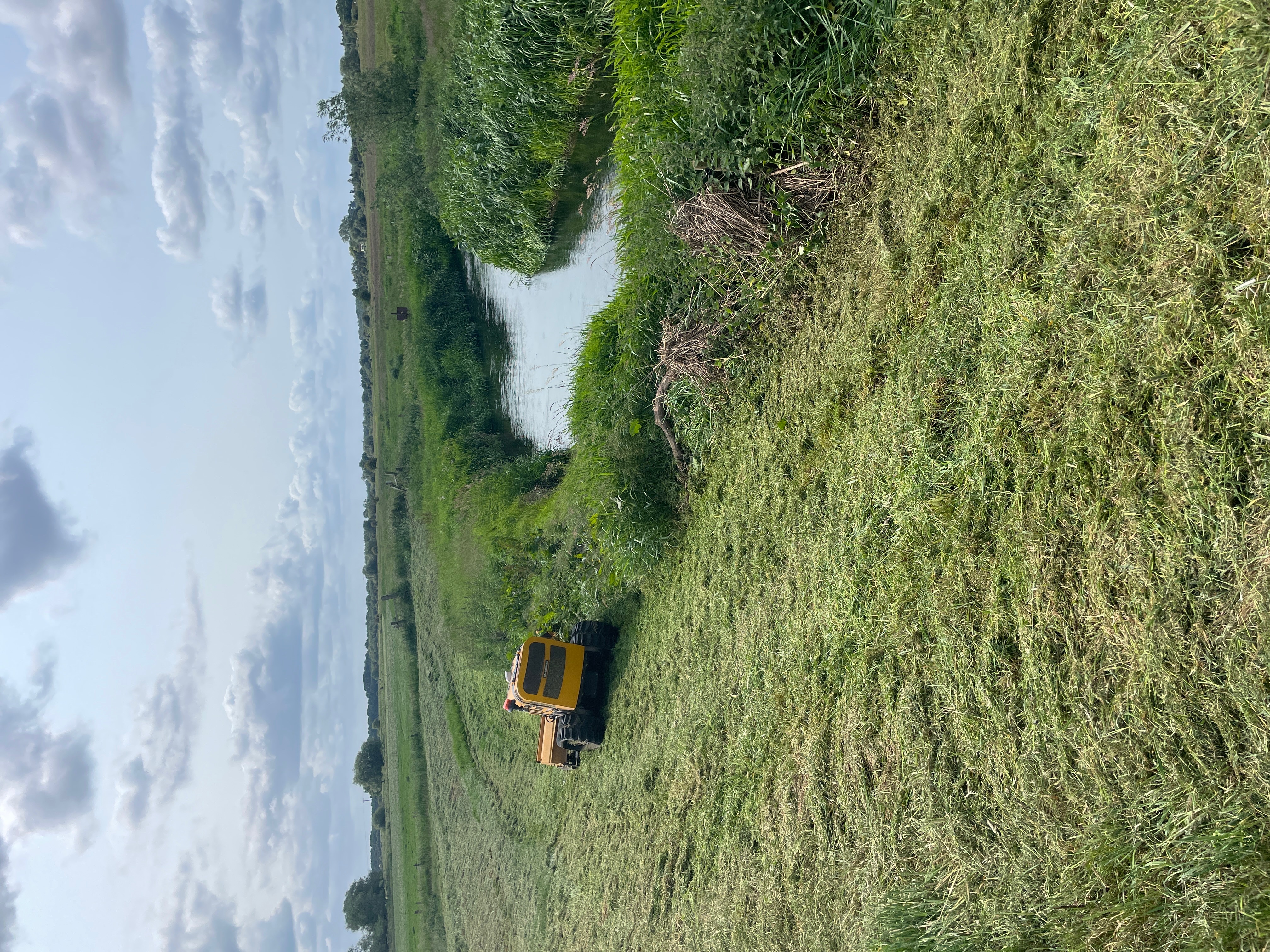
Grass cutting is in full force along the River Idle, you may see some of out field team out and about. Grass cutting is carried out with driven machinery, by hand or by remote controlled mowers, where slopes are steep or unsuitable for larger machines.
It is essential that flood defence embankments are kept in good condition, so they are mown regularly throughout the grass growing season.
Research has shown that the regular close mowing (5-10cm) of grass improves the strength of the root network and erosion resistance. Grass helps protect the earth embankment underneath from external erosion caused by rainfall, wind, currents, wave action, human and animal movement, and traffic.
Regular cutting also prevents broad leafed plants and woody vegetation from getting established. This vegetation could damage the embankment by root penetration, overturning, encouraging burrowing animals, discouraging adequate grass growth and concentrating flows, which then cause scour.
-
Weed Boat Weed Cutting has begun!

Our amphibious weed boats are out along the River Idle at Gamston cutting weeds within the river channel.
Aquatic weed control is important for maintaining watercourses. If weed is left to grow unchecked, it can restrict the river channel. Detached weed can also collect around bridge structures and flood defence assets, potentially causing blockages and a flood risk. Weed cutting in the channel increases the conveyance of the water, allowing water to move quicker downstream
Upon removal, the cut weed is left to dewater, or to flow down to a weed screen for removal. This allows for any aquatic insects, invertebrates and eels to safely return back to the river. The cut weeds float downstream towards our debris screen assets, where we remove them from the screens.
-
The Canch De-Silt
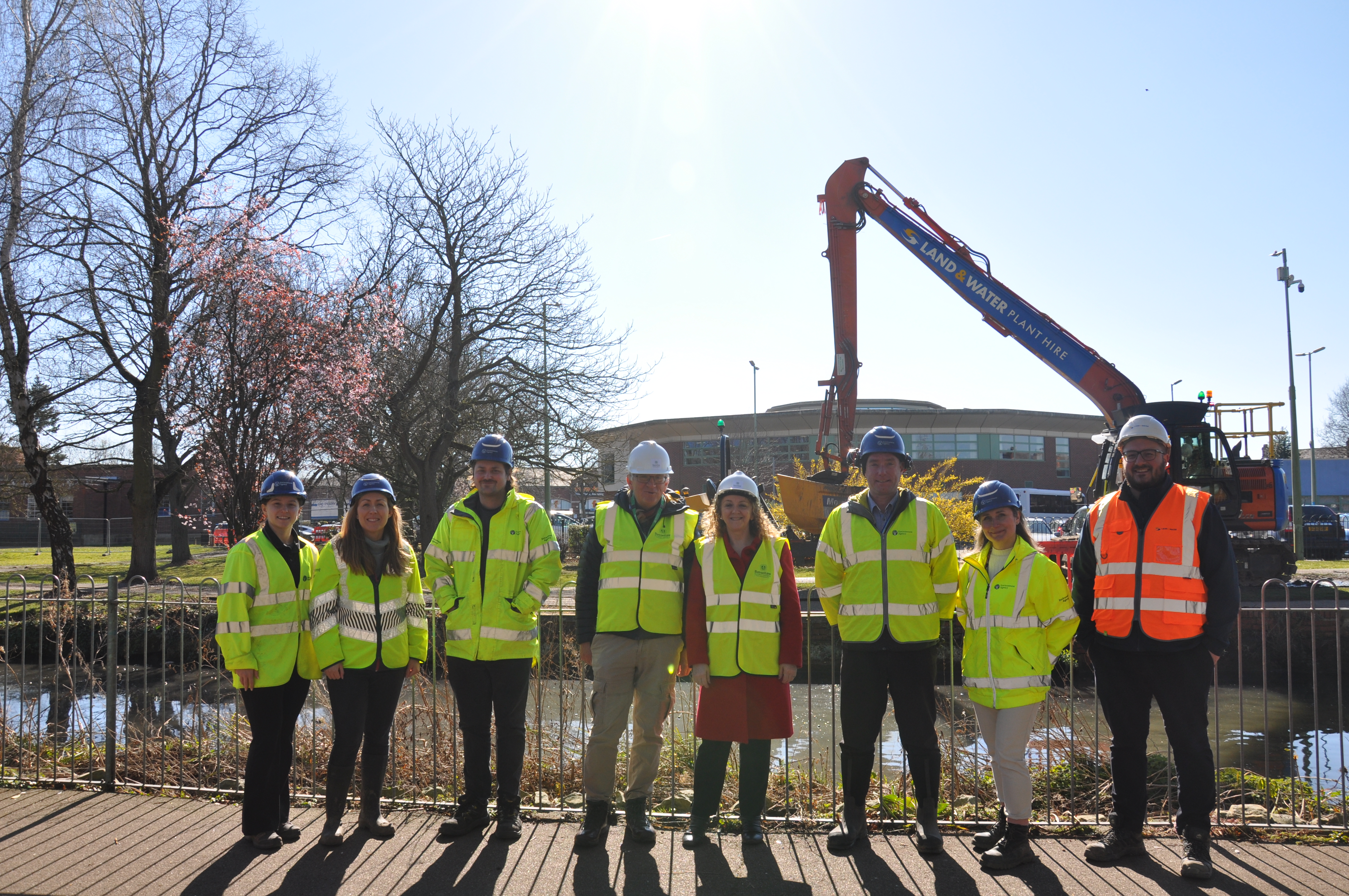
The Environment Agency has completed a de-silt of The Canch at Memorial Avenue Gardens, Worksop. Works were undertaken by external contractors, Land & Water, on behalf of the Environment Agency.
Desilting involves removing silt from structures or sections of river bed. This can ensure the structures operate effectively and it can, in some cases, improve conveyance through the river system and increase channel capacity.
We carry out desilting in locations where we know it will make a difference. We need to be sure that desilting will not increase flooding downstream, and that desilting is compatible with restrictions around protected species.
Before we undertake desilting activities we make sure the work will not have any negative impacts on the environment, water quality or flood risk elsewhere in the catchment.


-
County Council

Phone 0300 500 80 80 Email flood.team@nottscc.gov.uk -
County Council

Phone 01909 533533 Email customer.services@bassetlaw.gov.uk


