Yaverland Coastal Defence Scheme

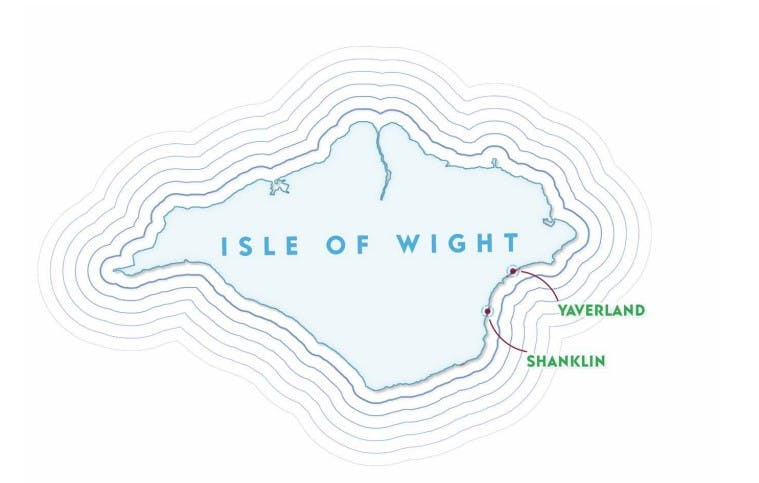
The Environment Agency are working in partnership with the Isle of Wight Council to explore a sustainable future for the coastal frontage between Yaverland and Sandown on the south-east coast of the Isle of Wight.

With current coastal defences reaching the end of their useful life, plans are progressing to upgrade 1.2km of coastal defences to reduce the impact of flooding and coastal erosion for the next 50 years.

We are currently working on the detailed design for the scheme. We will continue engaging with the community during this phase to answer your questions, hear your ideas and share your feedback.

How To Get Involved

Register for updates

Stay up to date with the Yaverland Coastal Defence Scheme using the 'Subscribe' button. This will add you to our mailing list for notifications when we release any significant updates or announce events. You can also come back to visit this page at any time and check the 'Newsfeed' section below which will be regularly updated with news and project progress.

Register with Engagement HQ by clicking the 'Register' button in the side information bar. This will enable you to interact with our page by sharing your ideas and asking a question in the sections below.

Sign up to our Newsletter

Want to receive updates on this project or other coastal defence projects across the Isle of Wight?

Email us at IOW_FDschemes@environment-agency.gov.uk and let us know which projects you're interested in, and we'll add you to our mailing list.


Sign up to our Coastal Community Group!

We're looking to work with local residents and organisations to help shape the future of sea defences as part of the Sandown Bay Area Place Plan.

If you're interested in joining or presenting to the Sandown Bay Coastal Community Group - supporting the Shanklin and Yaverland Coastal Defence Schemes, please get in touch.

Email us at IOW_FDschemes@environment-agency.gov.uk and let us know which project(s) you're interested in.


To help you understand the work we have done so far:

Have a look at our 'Project Timeline' which sets out our journey from 2020 to today, including the key milestones we have reached!

Click on our 'Exhibition Material' to find the information posters displayed at previous public events.

Read our 'Project Newsletters' to find out what we have been working on.

View our 'Consultations' section to read our responses to your feedback and questions.

The Environment Agency are working in partnership with the Isle of Wight Council to explore a sustainable future for the coastal frontage between Yaverland and Sandown on the south-east coast of the Isle of Wight.

With current coastal defences reaching the end of their useful life, plans are progressing to upgrade 1.2km of coastal defences to reduce the impact of flooding and coastal erosion for the next 50 years.

We are currently working on the detailed design for the scheme. We will continue engaging with the community during this phase to answer your questions, hear your ideas and share your feedback.

How To Get Involved

Register for updates

Stay up to date with the Yaverland Coastal Defence Scheme using the 'Subscribe' button. This will add you to our mailing list for notifications when we release any significant updates or announce events. You can also come back to visit this page at any time and check the 'Newsfeed' section below which will be regularly updated with news and project progress.

Register with Engagement HQ by clicking the 'Register' button in the side information bar. This will enable you to interact with our page by sharing your ideas and asking a question in the sections below.

Sign up to our Newsletter

Want to receive updates on this project or other coastal defence projects across the Isle of Wight?

Email us at IOW_FDschemes@environment-agency.gov.uk and let us know which projects you're interested in, and we'll add you to our mailing list.


Sign up to our Coastal Community Group!

We're looking to work with local residents and organisations to help shape the future of sea defences as part of the Sandown Bay Area Place Plan.

If you're interested in joining or presenting to the Sandown Bay Coastal Community Group - supporting the Shanklin and Yaverland Coastal Defence Schemes, please get in touch.

Email us at IOW_FDschemes@environment-agency.gov.uk and let us know which project(s) you're interested in.


To help you understand the work we have done so far:

Have a look at our 'Project Timeline' which sets out our journey from 2020 to today, including the key milestones we have reached!

Click on our 'Exhibition Material' to find the information posters displayed at previous public events.

Read our 'Project Newsletters' to find out what we have been working on.

View our 'Consultations' section to read our responses to your feedback and questions.

  • Updated flood risk assessment

    Flood modelling uses predicted river flows, rainfall, and coastal levels combined with topographic data and flow equations to generate flood risk information (such as depth, velocity, flood levels, and hazards). Our team of specialists updated the coastal flood modelling for Yaverland to ensure it uses the latest information and software available.

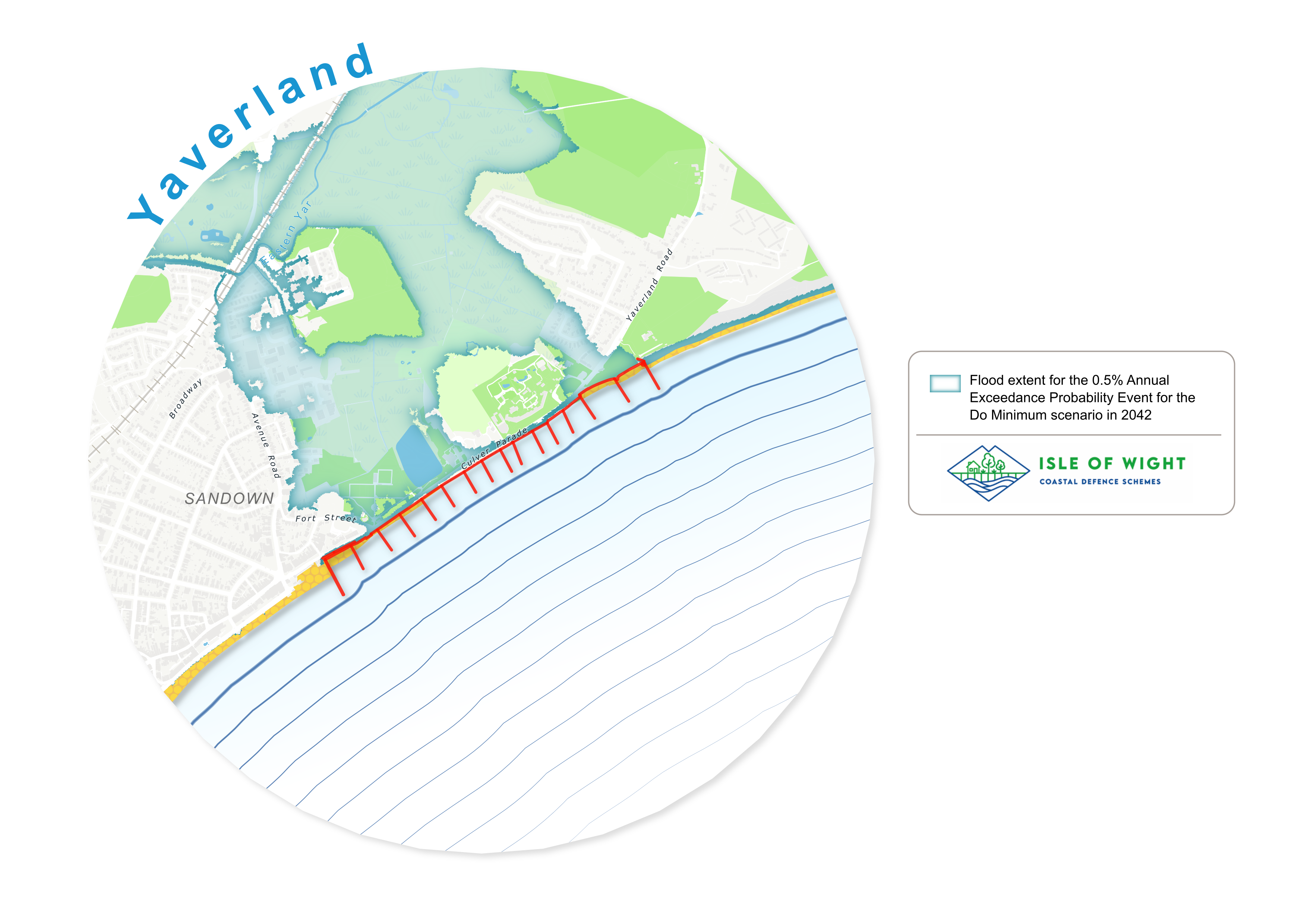
    The main coastal threat to Yaverland is failure of the sea defences due to their current poor condition. Our latest modelling predicts that failure of the coastal defences would adversely impact 138 residential properties and 136 businesses. The below map shows the anticipated flood extent in the event of

    Flood modelling uses predicted river flows, rainfall, and coastal levels combined with topographic data and flow equations to generate flood risk information (such as depth, velocity, flood levels, and hazards). Our team of specialists updated the coastal flood modelling for Yaverland to ensure it uses the latest information and software available.

    The main coastal threat to Yaverland is failure of the sea defences due to their current poor condition. Our latest modelling predicts that failure of the coastal defences would adversely impact 138 residential properties and 136 businesses. The below map shows the anticipated flood extent in the event of defences failing.

    Map to show the flood extent for the 0.5% Annual Exceedance Probability Event for the Do Minimum scenario in 2042.

    Preventing this scenario can be achieved through either Option 3, Option 4 or Option 5*. Increasing the height of the coastal defences does not provide any additional erosion protection over Option 3, it only provides a greater level of protection against flooding associated with waves overtopping the seawall.

    Modelling results tell us that the risk of flooding from wave overtopping is low given the existing height of the defences and raised floor levels of properties. Modelling suggests that 11 residential and 16 non-residential properties at Yaverland would remain at risk of internal flooding from overtopping after completion of Option 3.


    *Option 3 - Keep the existing defence level
    *Option 4 - Raise the level of the defence in stages into the future
    *Option 5 - Raise the defence level now

  • Summary of Short List Consultation Responses

    We received 45 responses in total. Of the 45 responses, 35 people gave their permission for us to publish their response.

    Summary of key findings from the consultation responses:

    • No one favoured the do nothing or do minimal option (short list Option 1 and Option 2). Respondents told us that better protection from coastal erosion and flooding is a priority.
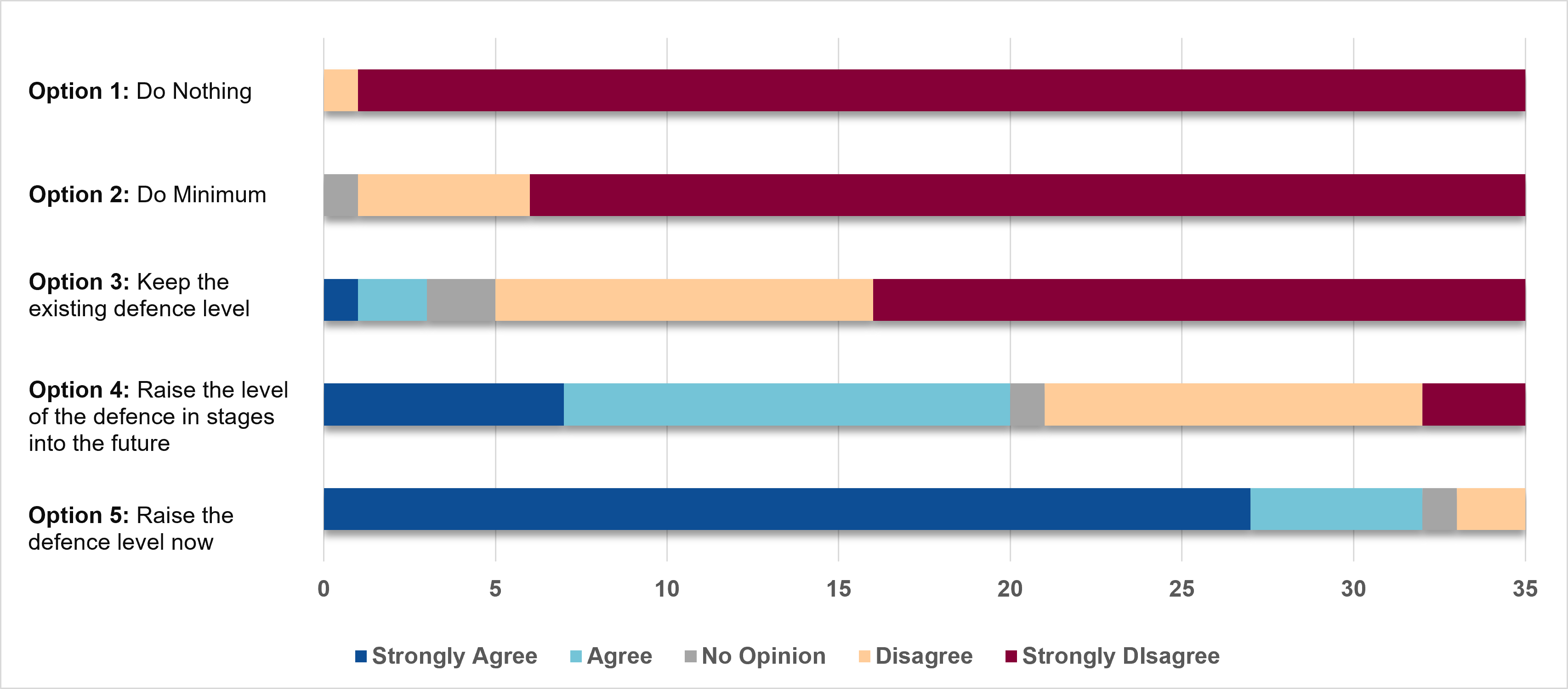
    • Option 5 was the most favourable option to raise the defences now to address future sea level rise. A total of 32 of the 35 respondents agreed or strongly agreed with taking option 5 forward. Respondents told us that there

    We received 45 responses in total. Of the 45 responses, 35 people gave their permission for us to publish their response.

    Summary of key findings from the consultation responses:

    • No one favoured the do nothing or do minimal option (short list Option 1 and Option 2). Respondents told us that better protection from coastal erosion and flooding is a priority.
    • Option 5 was the most favourable option to raise the defences now to address future sea level rise. A total of 32 of the 35 respondents agreed or strongly agreed with taking option 5 forward. Respondents told us that there is an interest locally in raising the height of the coastal defences to reduce the risk to Yaverland and Sandown from rising sea level both now and in the future.

    A bar chart to show which short list option people prefer

    The full report can be found here

  • Short List of Options

    The Environment Agency and Isle of Wight Council are working together to manage coastal erosion and flood risk from the sea. Climate change is bringing more frequent and severe floods and storm events. The coastal defences in Yaverland include the sea wall and groynes. The beach also provides an important role by protecting the coastline behind it. The sea wall and groynes are in a poor condition and are reaching the end of their useful life. Without intervention the risk and severity of flooding and coastal erosion will continue to increase.

    We have been looking at what we can do

    The Environment Agency and Isle of Wight Council are working together to manage coastal erosion and flood risk from the sea. Climate change is bringing more frequent and severe floods and storm events. The coastal defences in Yaverland include the sea wall and groynes. The beach also provides an important role by protecting the coastline behind it. The sea wall and groynes are in a poor condition and are reaching the end of their useful life. Without intervention the risk and severity of flooding and coastal erosion will continue to increase.

    We have been looking at what we can do to manage coastal erosion and flood risk from the sea in Yaverland. We’ve narrowed a number of options down to a short list of 5. They need further investigation to decide which, if any, we should take forward. We want to carry out a more detailed consultation, to hear your views on the options we have been investigating and your feedback will help us to determine a preferred option . We would also like your general feedback to help make sure we have considered all possible options before developing a design. The proposals will not eliminate the risk of coastal erosion and flooding, only lessen it.Our online consultation is running from Monday 23 October 2023 to Friday 1 December 2023.

    The short list of options being considered:

    Option 1: Do Nothing

    Option 2: Do Minimum

    Option 3: Keep the existing defence level

    Option 4: Raise the level of the defence in stages into the future

    Option 5: Raise the defence level now

    We produced the following information for our public exhibitions to help explain what the scheme is about, what we have been doing so far and how we arrived at our short list of options:

    You should review these documents before completing the consultation.

    If you require these documents in a different format please don't hesitate to contact us: IOW_FDschemes@environment-agency.gov.uk

    It is not a statutory requirement to consult on options for a coastal defence scheme. We would however like to understand the views and opinions of the end user, and recognise that this is good practice. The Environment Agency are running this consultation, and will do so in accordance with the guidance set out in the Government’s Consultation Principles.

    If you have any queries or complaints about the way this consultation has been carried out, please email consultation.enquiries@environment-agency.gov.uk

    Why your views matter

    From a survey we ran over the summer of 2022, you told us that it is a local priority to reduce flood and coastal erosion risk both now and in the future between Yaverland and Sandown. We encourage you to submit your response to the consultation online, which will enable us to manage your comments more effectively. It will also help us to gather and summarise responses quickly, accurately and cost effectively. However, paper copies can be requested or are available at Sandown Library.

    We, the Environment Agency, will keep your details until the scheme is complete. We will publish a summary of responses on Citizen Space within 12 weeks of this consultation closing. We will not publish any personal data. We will not respond individually to responses. In line with the Freedom of Information Act 2000, we may be required to publish your response to this consultation, but will not include any personal information. If you have requested your response to be kept confidential, we may still be required to provide a summary of it. For more information see our Personal Information Charter. We are running this consultation in accordance with the guidance set out in the government's consultation principles.

    If you have any questions or complaints about the way this consultation has been carried out, please contact consultation.enquiries@environment-agency.gov.uk


    Public Exhibitions November 2023

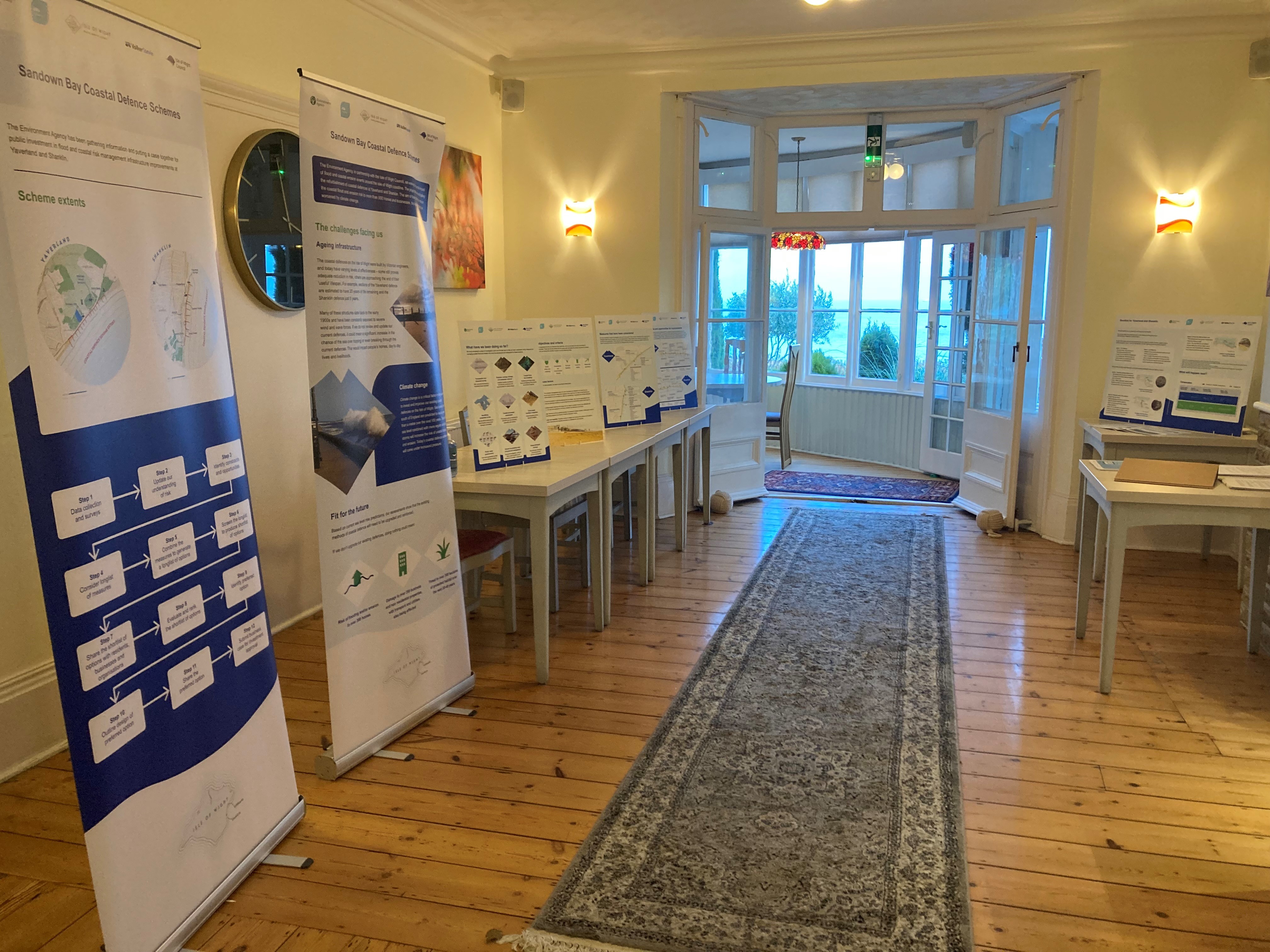
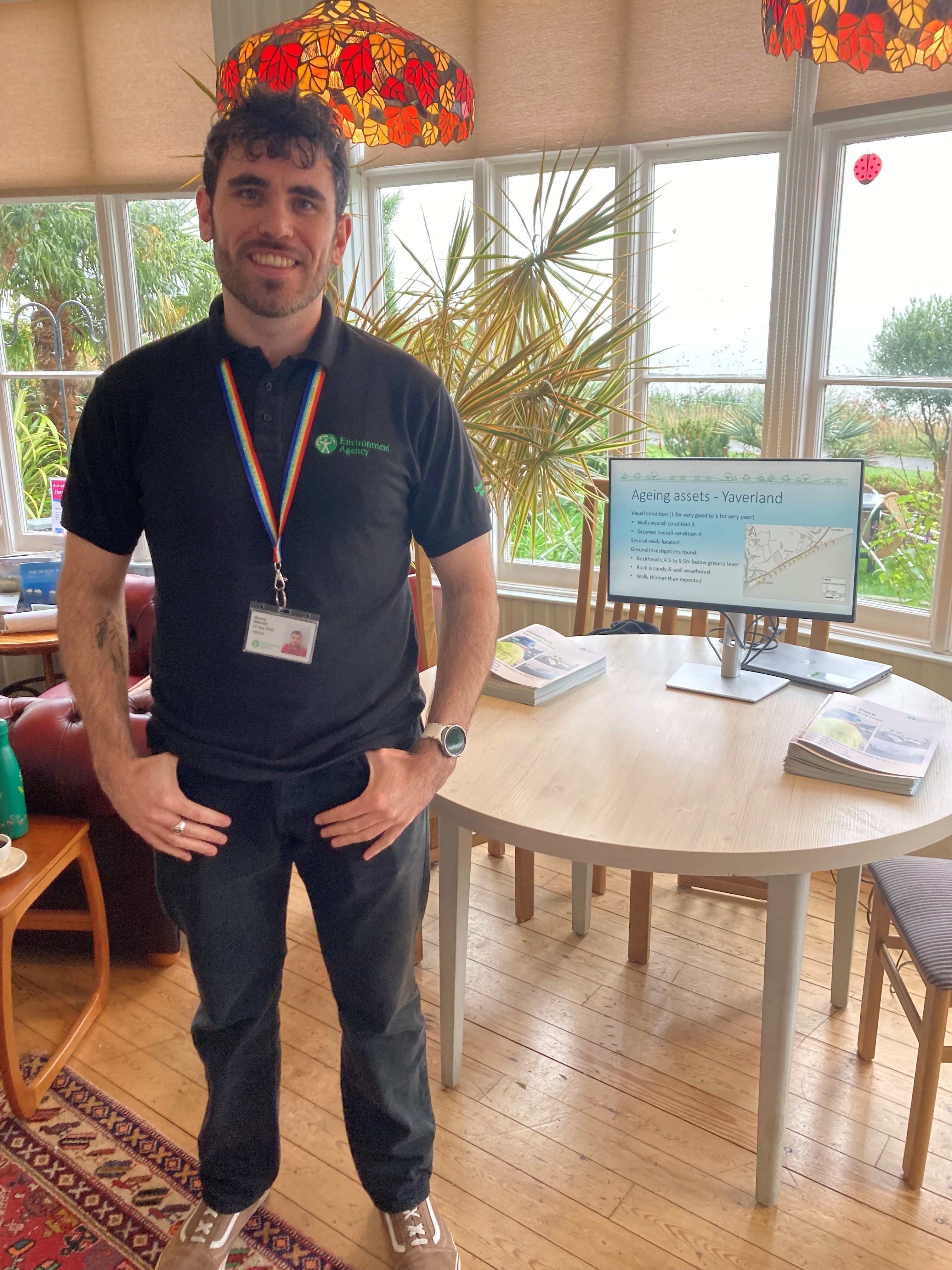
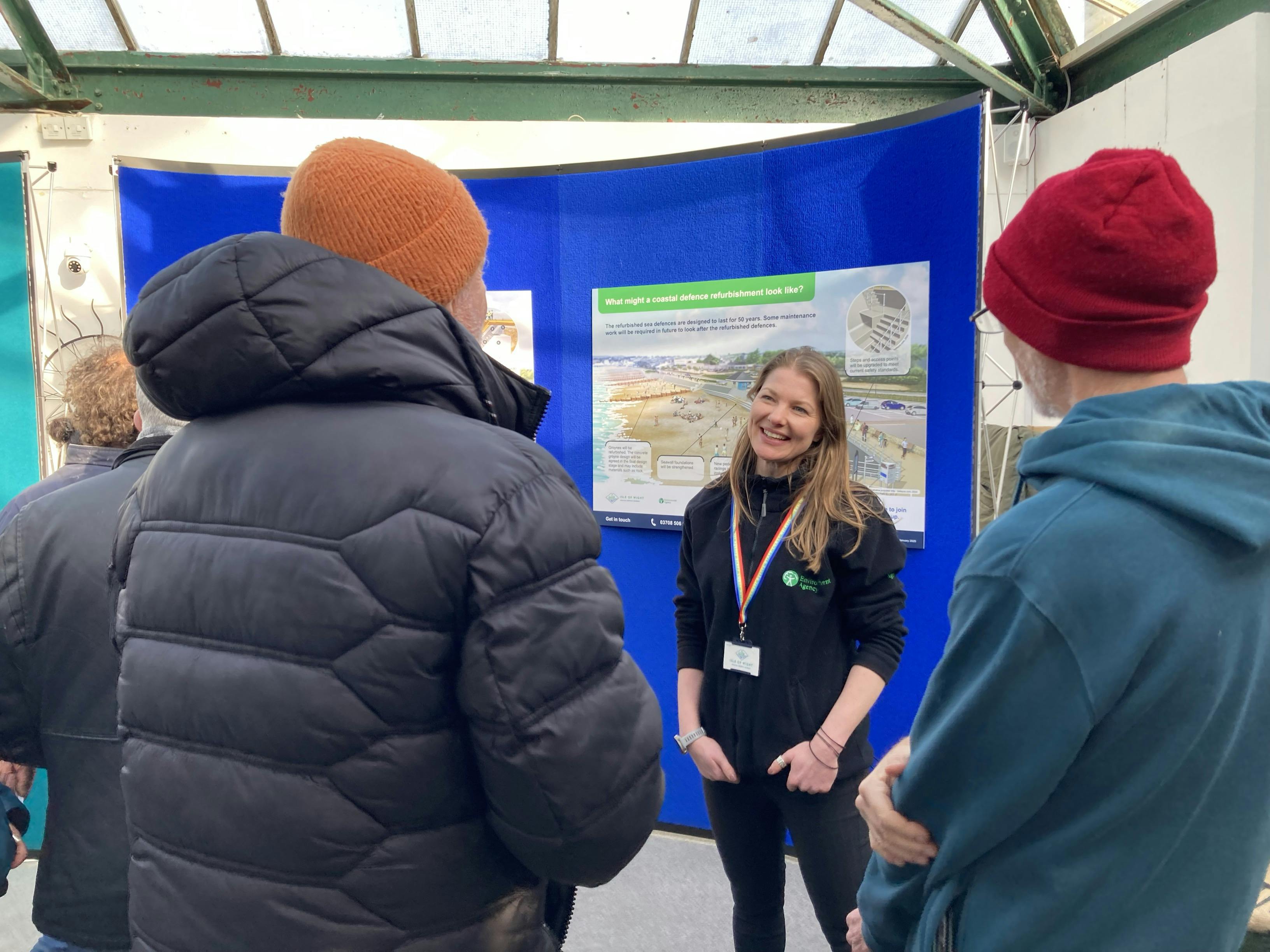
    We had a great turnout at our public exhibitions to showcase the short list of options for refurbishing the coastal defences. We were delighted to host nearly 100 visitors at The Clifton Hotel in Shanklin. Everyone who attended welcomed the opportunity to escape the wet weather, have a warm drink, and chat to the project team and other visitors to the exhibition. We also enjoyed Dinosaur Isle’s Blast from the Past event, where over 650 visitors passed through the doors. We want to thank everyone who took the time to come along.

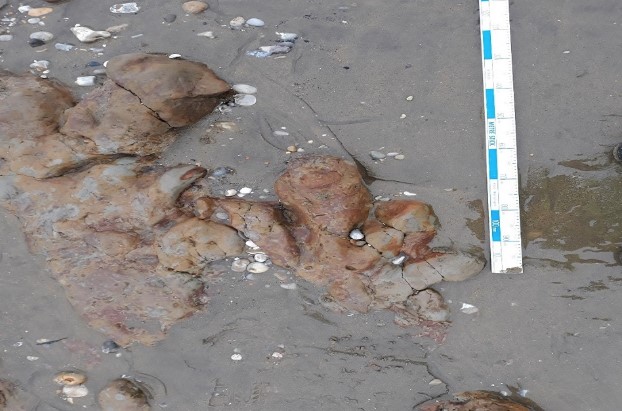
  • Dinosaur Footprint Discovery!

    supporting image

    To celebrate Earth Science Week, (9th - 15th October 2022), members of the project team took part in a guided walk of Yaverland sea wall with members of the local community. We were treated to a fascinating introduction by Dinosaur Isle to the geology of the area. The area of foreshore in front of Yaverland car park is part of the Yaverland Regionally Important Geological/Geomorphological Site (RIGS) due to its geology. It is identified as a site containing dinosaur footprints and it was discussed that upcoming ground investigation works could potentially reveal more undocumented footprints or other fossil remains.

    In

    To celebrate Earth Science Week, (9th - 15th October 2022), members of the project team took part in a guided walk of Yaverland sea wall with members of the local community. We were treated to a fascinating introduction by Dinosaur Isle to the geology of the area. The area of foreshore in front of Yaverland car park is part of the Yaverland Regionally Important Geological/Geomorphological Site (RIGS) due to its geology. It is identified as a site containing dinosaur footprints and it was discussed that upcoming ground investigation works could potentially reveal more undocumented footprints or other fossil remains.

    In January 2023, the below ground explorations required careful monitoring by palaeontologists from the Dinosaur Isle Museum. As a result, additional dinosaur footprints were discovered on the beach in a trench in front of the centre of the Yaverland Car Park. The new footprints make it clear that the land on which the dinosaurs walked is likely to stretch the whole length of Yaverland beach. A palaeontologist will be on hand to keep a watchful eye over future construction work. More information on the discovery can be found here

  • Public Questionnaires

    June 2022 - Public Realm Questionnaire

    Our public realm questionnaire ran from June to August 2022, giving you an opportunity to share what you most value about the coastal frontage at Culver Parade, Yaverland. This was also an opportunity for you to express any concerns or share ideas for improvement that we can consider when developing our short list of potential options to refurbish the coastal defences.

    We sought views on how the Yaverland coastal frontage and nearby leisure/tourism offering is used, what is most valued about it, and the perceptions amongst stakeholders of flood and coastal erosion risks both

    June 2022 - Public Realm Questionnaire

    Our public realm questionnaire ran from June to August 2022, giving you an opportunity to share what you most value about the coastal frontage at Culver Parade, Yaverland. This was also an opportunity for you to express any concerns or share ideas for improvement that we can consider when developing our short list of potential options to refurbish the coastal defences.

    We sought views on how the Yaverland coastal frontage and nearby leisure/tourism offering is used, what is most valued about it, and the perceptions amongst stakeholders of flood and coastal erosion risks both now and in the future. This helps to inform how we engage with stakeholders going forward, and capture any concerns, ideas and opportunities in the shortlist of options that we present to the public in Summer 2023.

    A copy of the response summary report can be found here if you would like to find out more about the responses received and our response to them.

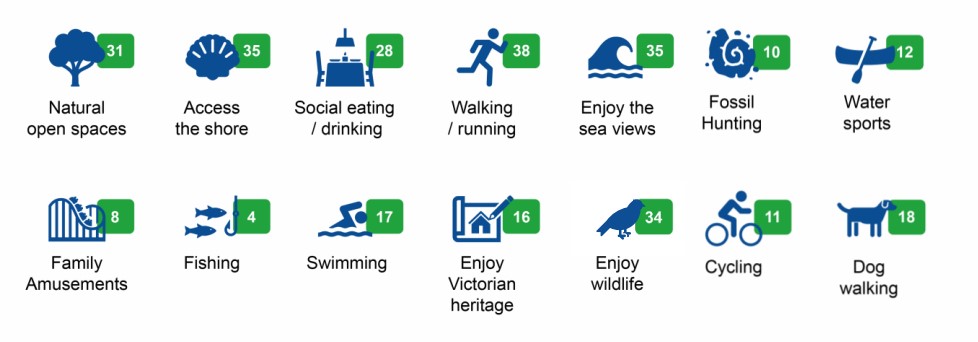
    How do you use the Culver Parade Leisure Area?

    We observed that ‘walking/running’ and ‘access to the shore/sea’ were selected as the most popular usage of the Yaverland coastal frontage and look forward to continuing our discussions around accessibility and inclusion.

    Image shows which activities are most commonly enjoyed along Culver Parade, with walking/running and enjoying the sea views/access the shore being the most popular.

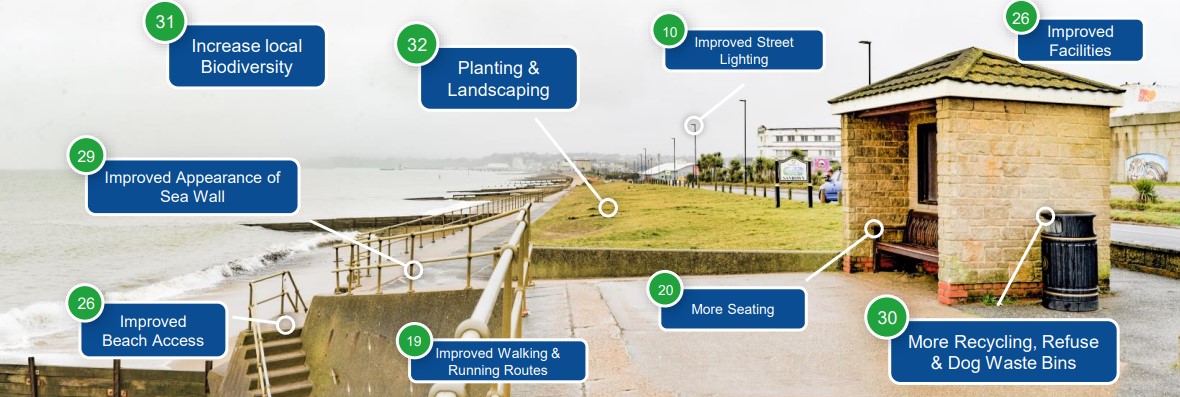
    What public realm improvements do people most want to see?

    Public realm improvements included planting and landscaping, more recycling, refuse and dog waste bins, improved appearance of sea wall and increase local biodiversity.

    Individuals who wish to follow up their responses, or points made within this document, in more detail are welcome to contact us at IOW_FDschemes@environment-agency.gov.uk.


  • Surveying and Investigations

    supporting image

    To support the option development process, we need to collect data to better understand the current risk from coastal flooding and erosion from the sea. This is called the 'Surveying and Investigations' phase of the project. This will help us to make decisions about how best to manage the risk now and in the future.

    Ground Level and Ground Penetrating Radar (GPR) Surveys - June 2022

    Our contractors will be completing survey work using GPS equipment to obtain accurate land level measurements. They'll also be using ground penetrating radar to survey beneath the surface of the existing sea wall.

    Ground

    To support the option development process, we need to collect data to better understand the current risk from coastal flooding and erosion from the sea. This is called the 'Surveying and Investigations' phase of the project. This will help us to make decisions about how best to manage the risk now and in the future.

    Ground Level and Ground Penetrating Radar (GPR) Surveys - June 2022

    Our contractors will be completing survey work using GPS equipment to obtain accurate land level measurements. They'll also be using ground penetrating radar to survey beneath the surface of the existing sea wall.

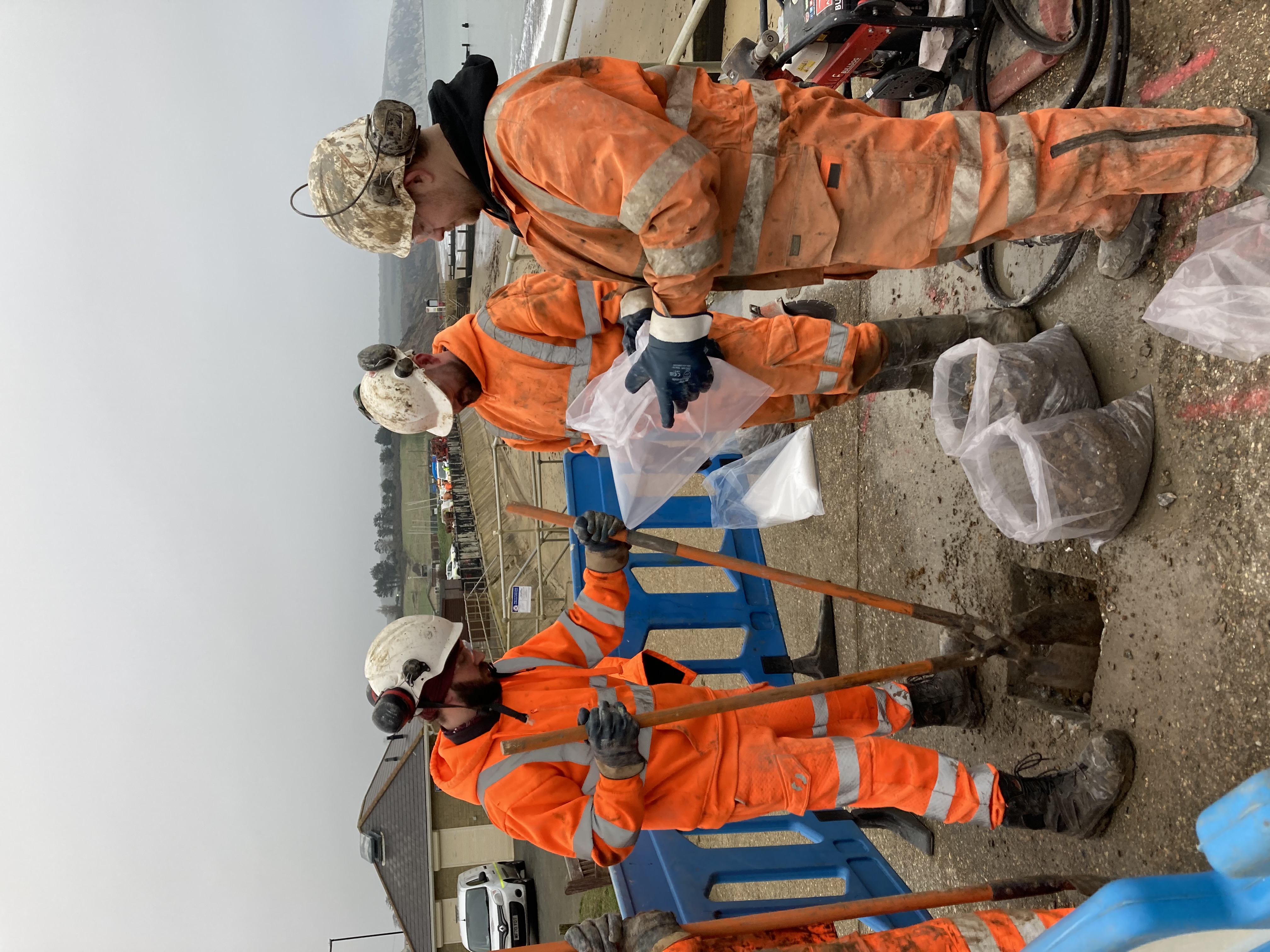
    Ground investigation work - January 2023

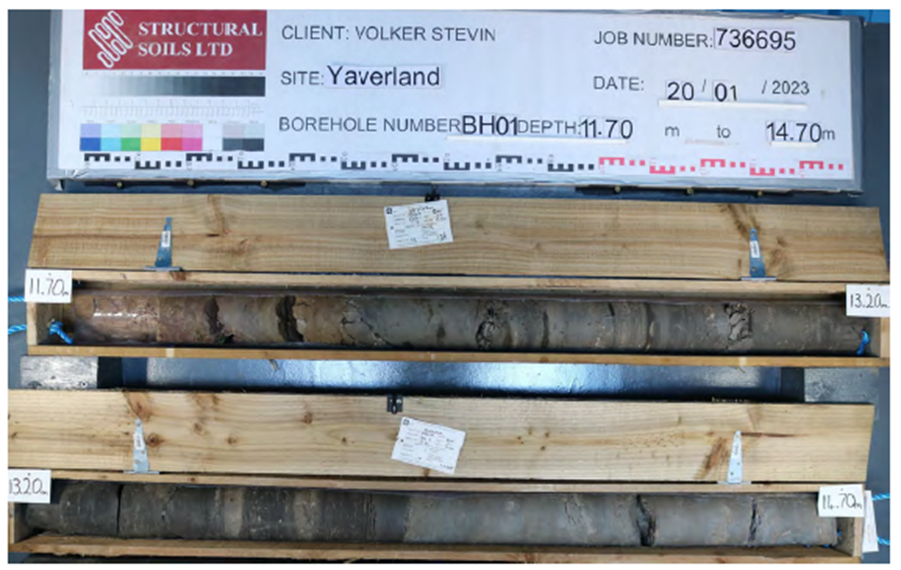
    Ground investigation work starts on Monday 16 January 2023. Specialist equipment will be used to drill boreholes through the sea wall and retrieve concrete cores which are sent to the laboratory for analysis. Machine excavated trenches located at intervals along the sea wall and next to the groynes will also be required. The results from the investigations will give the project team information about the composition of the ground and existing foundations where the coastal defence refurbishment is being proposed. It will increase our understanding of the existing structures and help us plan refurbishment work. Further details can be found here

    Map to show the locations of drilling and investigations as well as the site compound and machinery storage in Yaverland.


    Findings of the ground investigative work

    • A total of nine concrete cores were extracted at strategic locations along the concrete sea wall. The cores showed that the Wessex Formation is present as bedrock across the whole site. At the western end of the site, the Wessex Formation is reported to alternate between a Clay and a Mudstone of various degrees of weathering. The Wessex Formation is notably multicoloured, in places mottled brown and purple, reddish brown, greenish grey and bluish grey. Its strength varies with the degree of weathering from a soft Clay to a very weak Mudstone, with bands of sand and Sandstone which is highly erodible. The presence of a stepped revetment around Yaverland car park demonstrates that erosion risk through scour at the toe of the sea wall has been a concern in the past. The soft erodible bedrock will need to be a consideration as the team draw up the design.
    • The sea walls are much thinner than modern engineering standards. This tells us that works to the foundations will be needed as part of the refurbishment work.
    • Borehole cores extracted from the ground have been donated to the British Geological Society. Their data sets provided useful information for our projects, and we hope our contribution will help others in the future.

    The below image shows two of the borehole cores extracted from the ground and stored in their wooden containers:

    Image of borehole extracted from Yaverland Site


    Coastal processes assessment

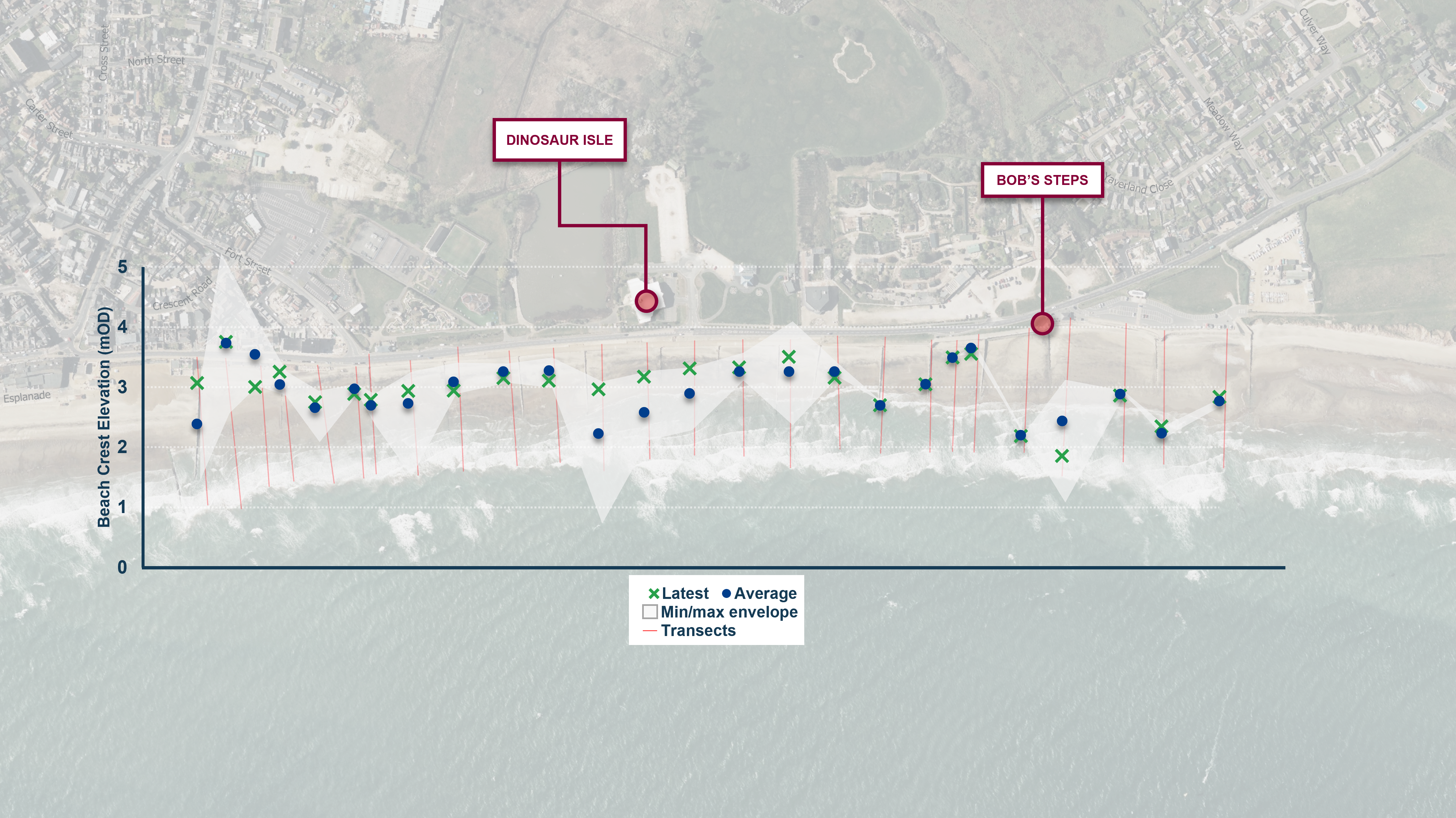
    We completed a coastal processes assessment to get an understanding of the sediment movement across the beach.

    Graph to show sediment movement across the Yaverland site (plotting averages and latest figures).

    • The historic trends in beach profile from 2004 to 2020 were reviewed. The min/max envelope in the image above shows the beach level overall remains relatively stable across the survey period.
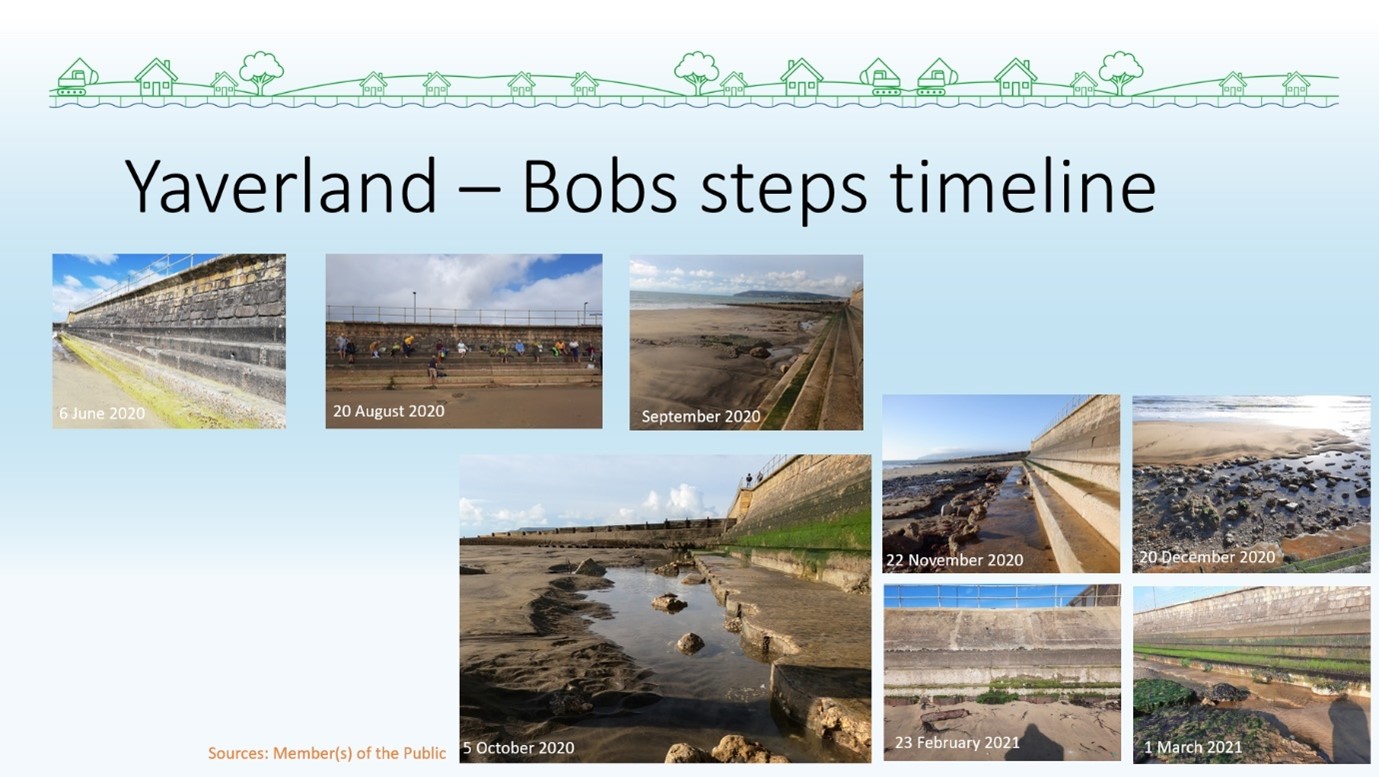
    • Short term fluctuations are observed and indicate seasonal changes. Photographic records taken by Swim the Wight provide supporting evidence of this:

    Image showing varying beach levels at Bobs Steps in Yaverland.

    • The overall stable condition is attributed to the constant nourishment of sediment received from the south-north net sediment transport rate of 25,000m3/year on average.
    • Satellite imagery captured evidence of North-South longshore sediment transport in 2005, 2014, and 2015. This is opposite to the predominant direction.
    • Accumulation of sediment on the northern side of most of the groynes in Yaverland indicates the groynes are functioning well.
    • Past storm events have caused beach levels to lower by up to 1metre in front of the sea walls.
    • One of the major physical impacts of a rise in sea level includes erosion of beaches. Our coastal processes assessment shows that beach levels are expected to lower by 0.5m by 2040 and up to 3m by 2125. It is expected that the toe of the sea wall will have sufficient beach cover to protect it from erosion for the next 50 years. After this point, works to prevent scour at the toe of the sea wall may be needed.
Page last updated: 20 Apr 2026, 11:00 AM