Thames Area assets

In the Thames area we have a wide range of assets, including locks, weirs, flood defences, boat moorings and monitoring stations for air and water quality. Flood defences can include embankments, walls, flood gates and flood diversion channels. Our assets help to protect people, property, and the environment from flooding, drought and pollution.


We regularly receive enquiries about our work. This page will highlight the assets that we we receive the highest level of interest for. You will find asset information, frequently asked questions, and latest news. If you are interested in an asset not given here, please email our enquiries team.


To ensure you keep up to date about our most recent work for these sites, register with us and then subscribe to follow this page. Links to do this are in the information bar.


The Environment Agency can carry out maintenance, improvement, or construction work on main rivers to manage flood risk and protect the environment. This is done using our permissive powers under the Water Resources Act 1991. You can learn more about the Water Resources Act 1991 through this link. Any work we carry out using these powers is subject to available funding and resources.

Responsibility for maintaining main rivers ultimately remains with the riparian land owner. All watercourses not designated main river are ordinary watercourses and the Lead Local Flood Authority has similar permissive powers on these. To find out more about riparian responsibilities visit the two links below:

In the Thames area we have a wide range of assets, including locks, weirs, flood defences, boat moorings and monitoring stations for air and water quality. Flood defences can include embankments, walls, flood gates and flood diversion channels. Our assets help to protect people, property, and the environment from flooding, drought and pollution.


We regularly receive enquiries about our work. This page will highlight the assets that we we receive the highest level of interest for. You will find asset information, frequently asked questions, and latest news. If you are interested in an asset not given here, please email our enquiries team.


To ensure you keep up to date about our most recent work for these sites, register with us and then subscribe to follow this page. Links to do this are in the information bar.


The Environment Agency can carry out maintenance, improvement, or construction work on main rivers to manage flood risk and protect the environment. This is done using our permissive powers under the Water Resources Act 1991. You can learn more about the Water Resources Act 1991 through this link. Any work we carry out using these powers is subject to available funding and resources.

Responsibility for maintaining main rivers ultimately remains with the riparian land owner. All watercourses not designated main river are ordinary watercourses and the Lead Local Flood Authority has similar permissive powers on these. To find out more about riparian responsibilities visit the two links below:

  • Temple Footbridge

    supporting image

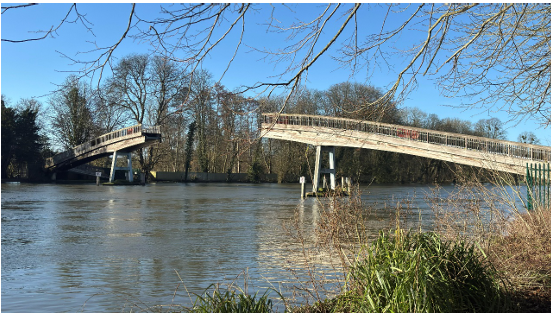
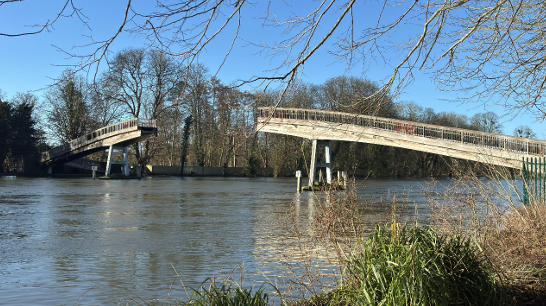
    Temple footbridge, which crosses the River Thames upstream of Temple lock near Marlow, was created in 1989 using community funding. It is constructed from tropical hardwood and had an approximate design life of 30 years.

    Keeping the public safe is one of our highest priorities and we (Environment Agency) closed Temple Footbridge on 15 May 2023 due to numerous structural and safety concerns. We know the bridge is important to both local people and visitors using the Thames Path, and we are treating this matter as a priority.

    Recent update

    We have received the outline designs of potential bridge replacement options and are now in the process of working with our construction partners to assess the likely costs of each option. These will be shared at a public engagement event which we aim to host in June 2026. Further details will be shared here once they are available.

    We are also in contact with private landowners with a view to improving the current footpath diversion. Any alternative footpath diversion routes will be updated here as well as at Temple bridge closed- Thames Path on diversion May 2023 onwards - National Trails

    For more information please visit this section

    Temple footbridge, which crosses the River Thames upstream of Temple lock near Marlow, was created in 1989 using community funding. It is constructed from tropical hardwood and had an approximate design life of 30 years.

    Keeping the public safe is one of our highest priorities and we (Environment Agency) closed Temple Footbridge on 15 May 2023 due to numerous structural and safety concerns. We know the bridge is important to both local people and visitors using the Thames Path, and we are treating this matter as a priority.

    Recent update

    We have received the outline designs of potential bridge replacement options and are now in the process of working with our construction partners to assess the likely costs of each option. These will be shared at a public engagement event which we aim to host in June 2026. Further details will be shared here once they are available.

    We are also in contact with private landowners with a view to improving the current footpath diversion. Any alternative footpath diversion routes will be updated here as well as at Temple bridge closed- Thames Path on diversion May 2023 onwards - National Trails

    For more information please visit this section

  • Penton Hook Island Closure update

    supporting image

    Thank you to everyone who attended our public engagement on 20 March 2026. We are extremely grateful for the feedback provided by members of the public during this event and also through the online feedback survey regarding access across the islands and also the memorials situated on both islands.

    Penton Hook Island remains closed to the public. Trees on both islands pose a high risk of injury to people from falling branches, collapsing trees and trip hazards.

    Next steps

    We have started working with a specialist contractor to develop this project further. They will be carrying out an updated tree survey over the next few weeks and evaluate the method that any tree clearance work can be carried out safely. Any tree clearance work will not take place before the end of bird nesting season (March – September).

    We are in the process of securing some grant in aid funding to be allocated towards this project. Once the full cost of the project has been assessed, which will be based on the current status of the trees and the chosen method of clearance work, we will provide a further update on how any funding gaps can be resolved.

    Once our contractor is able to define their detailed method of tree clearance work, we will use all the valuable feedback provided regarding memorials to minimise any impact. We will update this page with more information on this once it is available. For more information please visit this section.

    Thank you to everyone who attended our public engagement on 20 March 2026. We are extremely grateful for the feedback provided by members of the public during this event and also through the online feedback survey regarding access across the islands and also the memorials situated on both islands.

    Penton Hook Island remains closed to the public. Trees on both islands pose a high risk of injury to people from falling branches, collapsing trees and trip hazards.

    Next steps

    We have started working with a specialist contractor to develop this project further. They will be carrying out an updated tree survey over the next few weeks and evaluate the method that any tree clearance work can be carried out safely. Any tree clearance work will not take place before the end of bird nesting season (March – September).

    We are in the process of securing some grant in aid funding to be allocated towards this project. Once the full cost of the project has been assessed, which will be based on the current status of the trees and the chosen method of clearance work, we will provide a further update on how any funding gaps can be resolved.

    Once our contractor is able to define their detailed method of tree clearance work, we will use all the valuable feedback provided regarding memorials to minimise any impact. We will update this page with more information on this once it is available. For more information please visit this section.

  • Benson Weir replacement - walkway opening 1 April 2026

    supporting image

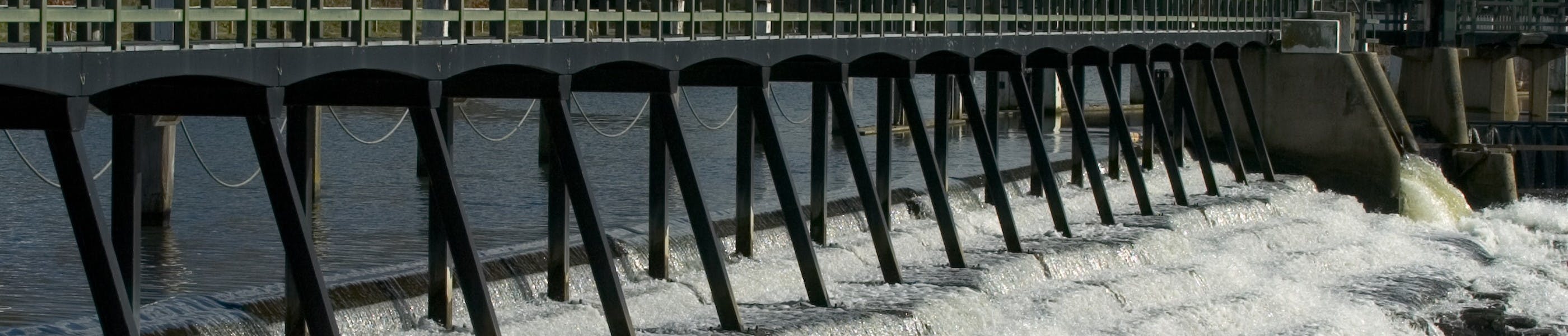
    The footpath over Benson Weir unfortunately needed to be closed in November 2022 due to increasing safety concerns resulting from the accelerated weakening of the overall structure. It has been affected in recent years by the impact of floating objects against the deteriorated steelwork.

    Our project team developed a business case during 2023 to secure the funding to progress the design and construction work. Technical designs for the new weir were completed in January 2024, and construction started in June 2024.

    Creating the new weir

    This significant project needed to be delivered over a 2-year period due to its scale

    The footpath over Benson Weir unfortunately needed to be closed in November 2022 due to increasing safety concerns resulting from the accelerated weakening of the overall structure. It has been affected in recent years by the impact of floating objects against the deteriorated steelwork.

    Our project team developed a business case during 2023 to secure the funding to progress the design and construction work. Technical designs for the new weir were completed in January 2024, and construction started in June 2024.

    Creating the new weir

    This significant project needed to be delivered over a 2-year period due to its scale and complexity. Periods of high flows during the construction work increased the complexity and duration of this project as our contractor used floating pontoons to position all of their cranes and equipment.

    We prioritised the replacement of the weir gates to enable our operational staff to be able to continue managing River Thames flows throughout the project. Our contractor then focused on the creation of a new structure that allows many fish and eel species to pass easily though the weir structure. This fish / eel pass will help to improve the overall biodiversity of the non-tidal Thames and is something that we aim to achieve with every major weir refurbishment.

    We have also improved the weir guarding system that reduces the likelihood of objects hitting the new weir during periods of increased river flow.

    Our contractor has substantially completed the weir replacement works, and the weir walkway will re-open at 9am on 1 April 2026. The improved walkway over the weir has an increased width of 1.5m, compared to the previous 0.9m. This will allow more Thames Path users to walk over the weir freely and also allows for our operational staff to adjust the weir gates when needed without obstructing walkers.

    For more detail please visit this section. or email enquiries_thm@environment-agency.gov.uk


  • Temple Footbridge

    supporting image

    Temple footbridge was constructed in 1989 from tropical hardwood, with an approximate design life of 30 years, and crosses the River Thames upstream of Temple lock near Marlow.

    Keeping the public safe is one of our highest priorities and we (Environment Agency) closed Temple Footbridge on 15 May 2023 due to numerous structural and safety concerns. We know the bridge is important to both local people and visitors using the Thames Path, and we are treating this matter as a priority.

    Recent update

    The central section of the bridge that was removed in November 2025 has now been assessed at

    Temple footbridge was constructed in 1989 from tropical hardwood, with an approximate design life of 30 years, and crosses the River Thames upstream of Temple lock near Marlow.

    Keeping the public safe is one of our highest priorities and we (Environment Agency) closed Temple Footbridge on 15 May 2023 due to numerous structural and safety concerns. We know the bridge is important to both local people and visitors using the Thames Path, and we are treating this matter as a priority.

    Recent update

    The central section of the bridge that was removed in November 2025 has now been assessed at its offsite location. Unfortunately, its condition is beyond economical repair and will require replacement.

    The side spans were inspected during February 2026 and were found to be in very poor condition. All structural elements including the main supporting beams, deck boards, and parapets show signs of extensive deterioration resulting in a significant loss of structural integrity.

    The advanced degradation of the structural beams, along with the complexities of the bridge’s location over the River Thames, mean that refurbishment of the side spans has been deemed non-viable and therefore are also beyond economical repair.

    For more information please visit this section

  • Ten Foot Bridge

    supporting image

    Ten Foot bridge crosses the River Thames between Rushey and Shifford locks near Buckland village in Faringdon.

    Keeping the public safe is one of our highest priorities and therefore following a structural inspection regrettably closed the bridge in March 2024 due to numerous structural and safety concerns.

    Following the initial bridge inspection, a follow-up specialist survey of the bridge has been completed to fully understand the structural issues associated with the bridge.

    For more information visit this section

    Ten Foot bridge crosses the River Thames between Rushey and Shifford locks near Buckland village in Faringdon.

    Keeping the public safe is one of our highest priorities and therefore following a structural inspection regrettably closed the bridge in March 2024 due to numerous structural and safety concerns.

    Following the initial bridge inspection, a follow-up specialist survey of the bridge has been completed to fully understand the structural issues associated with the bridge.

    For more information visit this section

  • Marsh Head Horsebridge

    supporting image

    Marsh Head Horsebridge is situated near Marsh Lock, Henley, Oxfordshire. It is one of two footbridges of similar construction in this location. The bridges carry a public right of way from Henley past Marsh Lock and are part of the Thames Path National Trail.

    A bridge was first constructed at the site in 1796, and the current bridge was last subject to a major refurbishment in 1996.

    Keeping the public safe is one of our highest priorities and therefore following a structural inspection, we regrettably closed Marsh Head Horsebridge in May 2022 due to numerous structural and

    safety concerns.

    The

    Marsh Head Horsebridge is situated near Marsh Lock, Henley, Oxfordshire. It is one of two footbridges of similar construction in this location. The bridges carry a public right of way from Henley past Marsh Lock and are part of the Thames Path National Trail.

    A bridge was first constructed at the site in 1796, and the current bridge was last subject to a major refurbishment in 1996.

    Keeping the public safe is one of our highest priorities and therefore following a structural inspection, we regrettably closed Marsh Head Horsebridge in May 2022 due to numerous structural and

    safety concerns.

    The refurbishment of this bridge is being treated as a priority as we know how important it is to both local people and visitors using the Thames Path.

    Recent Updates

    To learn more about the closure of Marsh Head Horsebridge Visit this section

  • Abingdon Weir Walkway

    supporting image

    The weir walkway at Abingdon was re-opened on 30 September 2025.

    Following further inspections and an assessment of the structure, procedures were put in place to identify the trigger points for the closure of the weir during high flows. When the hand radial gates are due to be operated, and the trigger point is reached the walkway will need to be closed until flows decrease.

    The agreed trigger level has now been reached so the walkway unfortunately needs to be closed and the hand radial gates are in operation.

    Once the flows have receded and the hand radial section of

    The weir walkway at Abingdon was re-opened on 30 September 2025.

    Following further inspections and an assessment of the structure, procedures were put in place to identify the trigger points for the closure of the weir during high flows. When the hand radial gates are due to be operated, and the trigger point is reached the walkway will need to be closed until flows decrease.

    The agreed trigger level has now been reached so the walkway unfortunately needs to be closed and the hand radial gates are in operation.

    Once the flows have receded and the hand radial section of the weir is no longer required to operate there will be another inspection to assess if the structure has deteriorated. If there is no visible change then the weir walkway can be reopened to the public.

    The walkway supporting structure continues to need refurbishment in order to achieve its full design strength. It therefore remains at risk from impact damage during high flows.

    We appreciate our customers' patience while we progress this important work and remain grateful to everyone for continuing to use the footpath diversions when the weir walkway is temporarily closed.

    To learn more visit this section

  • Bridge 142 - River Thames Egham

    supporting image

    Following a tree strike in 2023 an inspection of this 90 year old bridge highlighted significant safety risks caused by cracks within the cast iron structure and one of the bridge supports.

    Keeping the public safe is one of our highest priorities and we therefore closed Bridge 142 in February 2024.

    We have closed a section of the Thames path, just south of the Runnymede Bridge/ M25 bridge between the Runnymede Hotel and north of Staines. There is an alternative safe route in place.

    The Environment Agency is sympathetic to the concerns raised by the Thames Path organisation and the

    Following a tree strike in 2023 an inspection of this 90 year old bridge highlighted significant safety risks caused by cracks within the cast iron structure and one of the bridge supports.

    Keeping the public safe is one of our highest priorities and we therefore closed Bridge 142 in February 2024.

    We have closed a section of the Thames path, just south of the Runnymede Bridge/ M25 bridge between the Runnymede Hotel and north of Staines. There is an alternative safe route in place.

    The Environment Agency is sympathetic to the concerns raised by the Thames Path organisation and the local community and we apologise for the ongoing disruption. We are committed to keeping everyone updated on our progress.

    To learn more visit this section


Page last updated: 01 May 2026, 12:47 PM