• Phase One: Grand Sluice

    Preparatory works for the Grand Sluice Refurbishment have now begun.

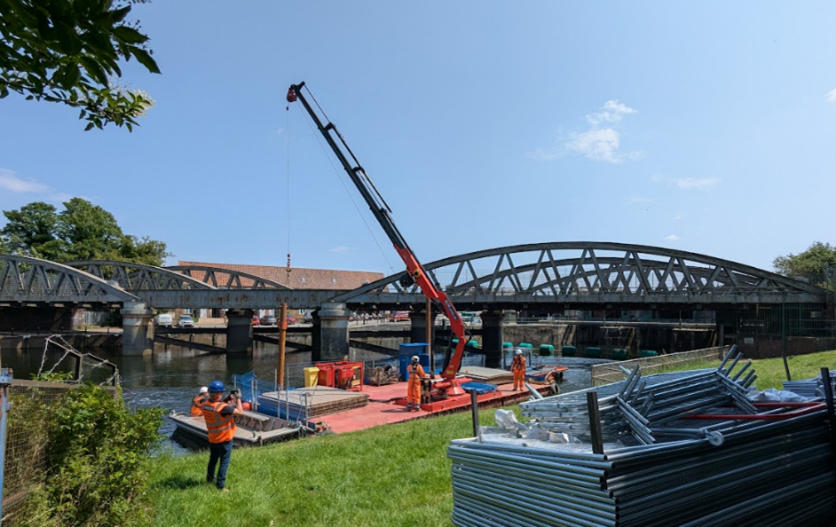
    Our contractors, Jackson Civil Engineering Ltd., are on site and have set up a compound behind the Boston Rowing Club. This will be used as their working area. A barge is also in position on the water to transport materials from the compound to Grand Sluice and is equipped with a crane that will be used during the works.

    This summer’s work will involve installing stop log grooves in each of the three channels, preparing Grand Sluice for the main refurbishment works, which are scheduled to begin in summer 2026.

    Preparatory works for the Grand Sluice Refurbishment have now begun.

    Our contractors, Jackson Civil Engineering Ltd., are on site and have set up a compound behind the Boston Rowing Club. This will be used as their working area. A barge is also in position on the water to transport materials from the compound to Grand Sluice and is equipped with a crane that will be used during the works.

    This summer’s work will involve installing stop log grooves in each of the three channels, preparing Grand Sluice for the main refurbishment works, which are scheduled to begin in summer 2026.

    In May, the project team hosted drop in events within the community. These were held at both Fenside Community Centre and the Boston Market.

    Over 50 people attended to learn more about the preparatory works that will be taking place this summer. These events provided an opportunity for people to ask questions and express any concerns, leading to many productive discussions.

    Below, you can find answers to some of the most frequently asked questions from these events.

    Grand Sluice FAQ's

    Will these works include road closures?

    Although there are no planned road closures, there will be short durations when our contractors will need to operate traffic marshals during the delivery of materials. These will be scheduled to cause as little disruption as possible.

    Is aquatic weed flushing being considered?

    Yes. The project team are now finalising designs for tilting gate flaps, which are planned to be installed on the new vertical lift gates. These new gates will be installed as part of the main works due to start in 2026. The aim of the tilting flaps is to improve the efficiency of aquatic weed flushing without losing as much water from the system as weed flushing does now.

    We don't plan to open the sluice gates to flush weeds during our contractor's normal working hours (08:00 - 18:00) this summer. Instead, we'll coordinate with the Canal and Rivers Trust to do this in the evenings or during weekends when necessary.


    A barge equipped with a crane that will be used during the Grand Sluice refurbishment preparatory works.


  • Phase One: Embankments

    The project team has worked hard to develop the Full Business Case for the Phase One Embankment works. This has now been submitted for approval. Once approved this will confirm the funding for the project and will allow the team to begin delivering works on the ground.

    The project team has worked hard to develop the Full Business Case for the Phase One Embankment works. This has now been submitted for approval. Once approved this will confirm the funding for the project and will allow the team to begin delivering works on the ground.

  • Sustainable Recovery Pilot project

    Throughout May the project team have been continuing face-to-face farm and landowner meetings within the project area with contractors, Arup. These meetings have helped to deepen the team's understanding of past flooding impacts, people's aspirations for the area, and how some of the proposed measures could work within the landscape.

    After gaining first hand insights into the area, Arup have been assessing the short list of potential measures against specific criteria. Their analysis aims to help us understand which measures may be technically viable, determine how well these could work together to form a master plan for the area, and

    Throughout May the project team have been continuing face-to-face farm and landowner meetings within the project area with contractors, Arup. These meetings have helped to deepen the team's understanding of past flooding impacts, people's aspirations for the area, and how some of the proposed measures could work within the landscape.

    After gaining first hand insights into the area, Arup have been assessing the short list of potential measures against specific criteria. Their analysis aims to help us understand which measures may be technically viable, determine how well these could work together to form a master plan for the area, and if they contribute towards achieving the project's goals.

    We have recently sent a draft of this report to our project partners to gain their feedback. Next, we will share this information with our Stakeholder Steering Group, which includes farmers and landowners for further discussion.

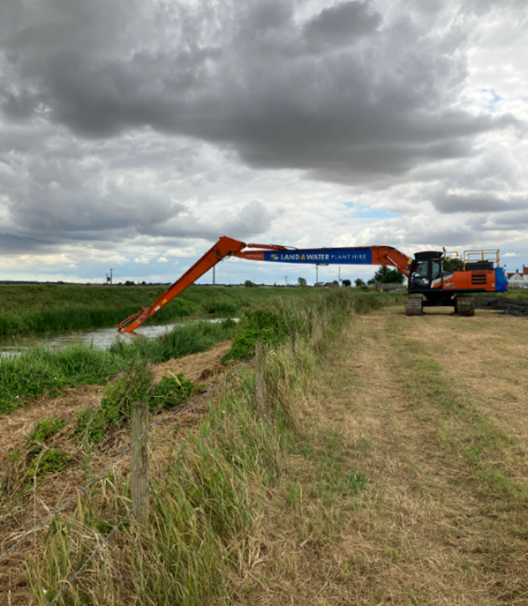
    Channel desilting work has taken place on the Lower Barlings Eau, between Short Ferry Bridge and the pumping station inlet. This is to allow water pumped from the River Trent and into the River Witham to move up the channel to the Short Ferry Pumping Station. From there it is pumped via a pipe into the River Ancholme to alleviate low water levels.

    The Sustainable Recovery Pilot project is a Fens 2100+ pilot project. Fens 2100+ is developing a Fens-wide approach to managing flood risk in a way that balances the needs of people, the environment and agriculture, both now and in the future.


    Channel desilting work on the Lower Barlings Eau.