
Sustainable Recovery Pilot project
Throughout May the project team have been continuing face-to-face farm and landowner meetings within the project area with contractors, Arup. These meetings have helped to deepen the team's understanding of past flooding impacts, people's aspirations for the area, and how some of the proposed measures could work within the landscape.
After gaining first hand insights into the area, Arup have been assessing the short list of potential measures against specific criteria. Their analysis aims to help us understand which measures may be technically viable, determine how well these could work together to form a master plan for the area, and if they contribute towards achieving the project's goals.
We have recently sent a draft of this report to our project partners to gain their feedback. Next, we will share this information with our Stakeholder Steering Group, which includes farmers and landowners for further discussion.
Channel desilting work has taken place on the Lower Barlings Eau, between Short Ferry Bridge and the pumping station inlet. This is to allow water pumped from the River Trent and into the River Witham to move up the channel to the Short Ferry Pumping Station. From there it is pumped via a pipe into the River Ancholme to alleviate low water levels.
The Sustainable Recovery Pilot project is a Fens 2100+ pilot project. Fens 2100+ is developing a Fens-wide approach to managing flood risk in a way that balances the needs of people, the environment and agriculture, both now and in the future.
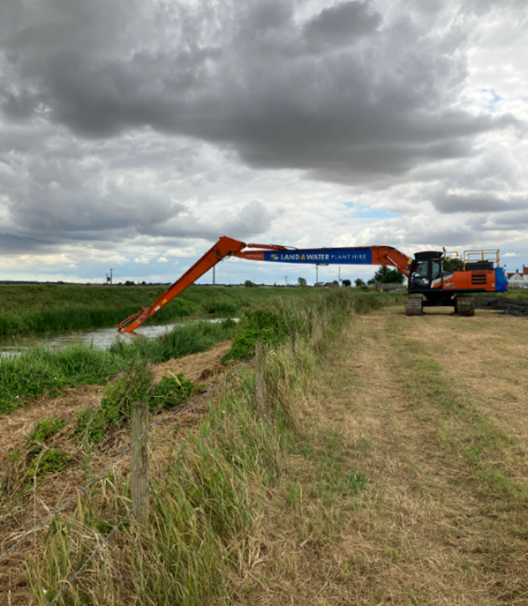 Channel desilting work on the Lower Barlings Eau.
Thank you for your contribution!
Help us reach out to more people in the community
Share this with family and friends