Dry Weather Information - Drought 2026

Drought in England: latest position
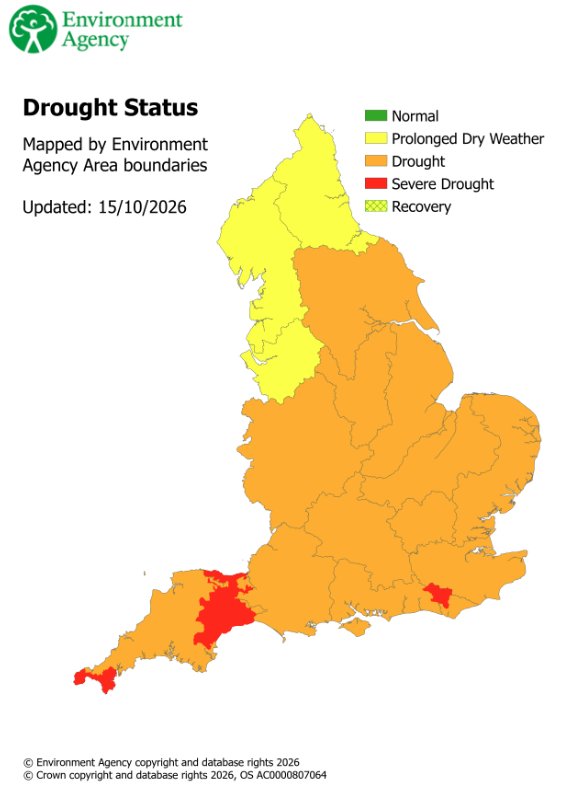
15 October 2026: Severe drought has been declared in parts of the South West and South East.

The Environment Agency is working with government, water companies and other partners to protect water supplies and the environment.

On this page

  • Latest drought situation
  • What the Environment Agency is doing
  • Information for farmers, abstractors, anglers and fisheries
  • Water situation and drought reports
  • Frequently asked questions
  • What you can do to save water

I am a...

Farmer or abstractor: View all advice for farmers and abstractors
Angler or fishery owner: View all advice for anglers and fisheries


Understanding the dry weather situation

Climate change is bringing more extreme and unpredictable weather patterns to England. The Environment Agency is coordinating the national response to dry weather and drought conditions, working to protect water supplies for homes, businesses, farmers and the environment.

What we're doing

  • Convening the National Drought Group
  • Monitoring water companies' implementation of their drought plans
  • Monitoring rivers, reservoirs and groundwater
  • Processing drought permit applications where appropriate
  • Checking abstraction compliance
  • Supporting farmers and abstractors
  • Protecting fish, wildlife and habitats
  • Planning for long-term water security
  • Conducting scientific research to improve drought understanding

This balanced approach ensures we safeguard both water resources and the natural environment while supporting the needs of people and businesses across England.

See also the Let's Save Water campaign to learn how to protect our precious water.


House of Lords Environment and Climate Change Committee - Inquiry on Drought Preparedness

The Environment Agency gave evidence in February. The full report can be read here.


Our scientific researchSmall green plants growing in dry, cracked soil.

The Environment Agency's Chief Scientist's Group works with leading scientists from universities, research institutes, and consultancies to improve understanding of drought, its impacts, and how to build resilience. Our research helps us develop better forecasting capabilities and targeted interventions to protect the environment during dry periods.

Learn more about our drought research.


Drought in England: latest position

15 October 2026: Severe drought has been declared in parts of the South West and South East.

The Environment Agency is working with government, water companies and other partners to protect water supplies and the environment.

On this page

  • Latest drought situation
  • What the Environment Agency is doing
  • Information for farmers, abstractors, anglers and fisheries
  • Water situation and drought reports
  • Frequently asked questions
  • What you can do to save water

I am a...

Farmer or abstractor: View all advice for farmers and abstractors
Angler or fishery owner: View all advice for anglers and fisheries


Understanding the dry weather situation

Climate change is bringing more extreme and unpredictable weather patterns to England. The Environment Agency is coordinating the national response to dry weather and drought conditions, working to protect water supplies for homes, businesses, farmers and the environment.

What we're doing

  • Convening the National Drought Group
  • Monitoring water companies' implementation of their drought plans
  • Monitoring rivers, reservoirs and groundwater
  • Processing drought permit applications where appropriate
  • Checking abstraction compliance
  • Supporting farmers and abstractors
  • Protecting fish, wildlife and habitats
  • Planning for long-term water security
  • Conducting scientific research to improve drought understanding

This balanced approach ensures we safeguard both water resources and the natural environment while supporting the needs of people and businesses across England.

See also the Let's Save Water campaign to learn how to protect our precious water.


House of Lords Environment and Climate Change Committee - Inquiry on Drought Preparedness

The Environment Agency gave evidence in February. The full report can be read here.


Our scientific researchSmall green plants growing in dry, cracked soil.

The Environment Agency's Chief Scientist's Group works with leading scientists from universities, research institutes, and consultancies to improve understanding of drought, its impacts, and how to build resilience. Our research helps us develop better forecasting capabilities and targeted interventions to protect the environment during dry periods.

Learn more about our drought research.


  • 2 November 2026: Severe Drought Update

    Weather whiplash saw a return to wetter conditions last week but while Storms Austen and Boelo provided some short-term hydrological benefit, they have not materially changed the drought outlook.

    England still needs at least 120% of average rainfall for the next six months to be considered out of drought by spring. Anything less risks the drought continuing into next year – with Devon & Cornwall and East Anglia (traditionally the driest part of England) most at risk.

    Water companies in the areas of severe drought have been told they need to accelerate their contingency planning, alongside the current daily monitoring

    Weather whiplash saw a return to wetter conditions last week but while Storms Austen and Boelo provided some short-term hydrological benefit, they have not materially changed the drought outlook.

    England still needs at least 120% of average rainfall for the next six months to be considered out of drought by spring. Anything less risks the drought continuing into next year – with Devon & Cornwall and East Anglia (traditionally the driest part of England) most at risk.

    Water companies in the areas of severe drought have been told they need to accelerate their contingency planning, alongside the current daily monitoring of reservoir and river levels.

    Last week, North West England moved out of prolonged dry weather and into recovery. But 82% of the country remains in drought, with the public again asked to use water wisely, because the recent rainfall is nowhere near enough to reverse the impacts of repeated heatwaves and an extremely dry spring and summer.

    Environment Agency Chief Executive, Philip Duffy, said: “The recent rain is welcome, but the drought isn’t over. A few wet days cannot reverse months of hot, dry weather. Our rivers, reservoirs and groundwater need sustained rainfall to recover, and the effects on nature can last much longer. Everyone can help. Using a little less water, from taking shorter showers to turning off the tap while brushing your teeth, makes a difference. Saving water now will help our environment and water supplies recover.”

  • 15 October 2026: Severe Drought Update

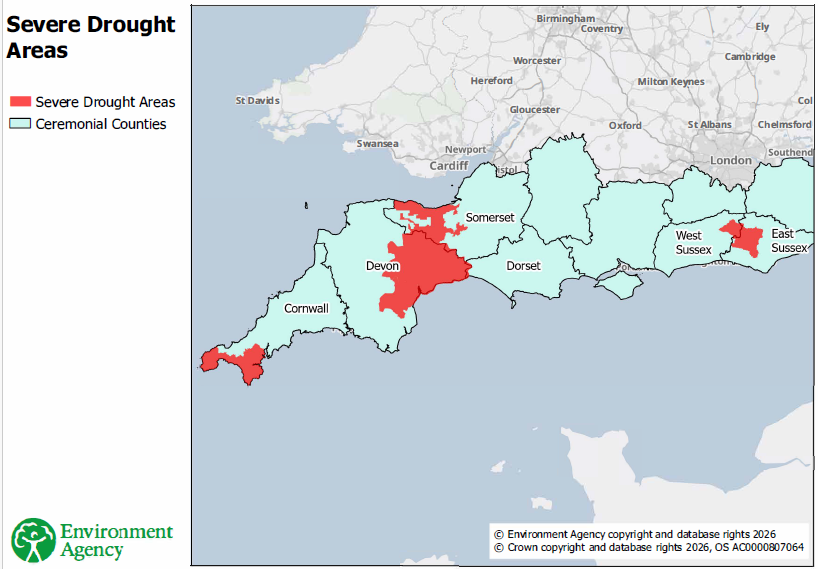
    The Government has declared severe drought in parts of Cornwall, Devon, Dorset, Somerset, East Sussex and West Sussex.

    The South East and South West have experienced their driest April to September in over a century, impacting reservoir levels in that area.

    While customer water supplies will be uninterrupted, declaring a severe drought ensures proactive steps are taken to safeguard water before any disruption occurs.

    The Government’s plans include:

    • Ministers instructing water companies to conduct daily monitoring of reservoir and river levels and tougher water quality monitoring;
    • The Environment Agency to increase compliance checks on businesses that withdraw water from natural sources to ensure they are only taking permitted quantities of water; and
    • Local Resilience Forums stood up to enable quick and effective development of support if required.

    Alongside these steps, the Water Minister Emma Hardy has instructed the Environment Agency to prioritise protecting public water supplies in areas affected by severe drought, where there is an unavoidable trade-off between environmental rules and water supplies. This means allowing water companies to keep more water in depleted reservoirs. Read the severe drought announcement
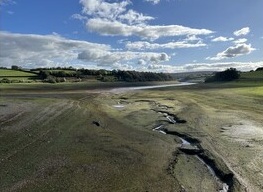


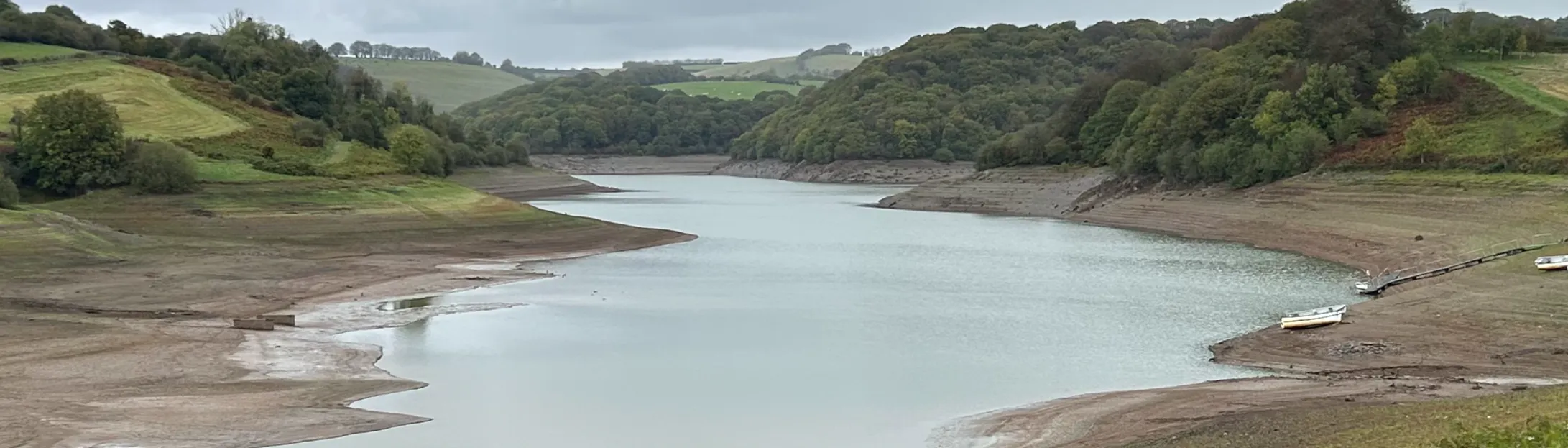
    Wimbleball Reservoir 14 Oct 2026Map showing the areas in Severe Drought - 15 October 2026


    The Government has declared severe drought in parts of Cornwall, Devon, Dorset, Somerset, East Sussex and West Sussex.

    The South East and South West have experienced their driest April to September in over a century, impacting reservoir levels in that area.

    While customer water supplies will be uninterrupted, declaring a severe drought ensures proactive steps are taken to safeguard water before any disruption occurs.

    The Government’s plans include:

    • Ministers instructing water companies to conduct daily monitoring of reservoir and river levels and tougher water quality monitoring;
    • The Environment Agency to increase compliance checks on businesses that withdraw water from natural sources to ensure they are only taking permitted quantities of water; and
    • Local Resilience Forums stood up to enable quick and effective development of support if required.

    Alongside these steps, the Water Minister Emma Hardy has instructed the Environment Agency to prioritise protecting public water supplies in areas affected by severe drought, where there is an unavoidable trade-off between environmental rules and water supplies. This means allowing water companies to keep more water in depleted reservoirs. Read the severe drought announcement


    Wimbleball Reservoir 14 Oct 2026Map showing the areas in Severe Drought - 15 October 2026


  • 13 October 2026: Drought Update

    England’s drought situation has continued to worsen after September became the sixth month of 2026 with below-average rainfall. Reservoir storage across England is significantly lower than would normally be expected for this time of year, with national storage levels less than half full in many locations. Some of the most concerning examples are Ardingly Reservoir in West Sussex and Wimbleball Reservoir in the south west.

    Yorkshire moved into drought status on 9 October due to persistent low river flows, groundwater levels and reservoir storage in the area, despite recent rainfall. The region now joins much of central, southern and eastern

    England’s drought situation has continued to worsen after September became the sixth month of 2026 with below-average rainfall. Reservoir storage across England is significantly lower than would normally be expected for this time of year, with national storage levels less than half full in many locations. Some of the most concerning examples are Ardingly Reservoir in West Sussex and Wimbleball Reservoir in the south west.

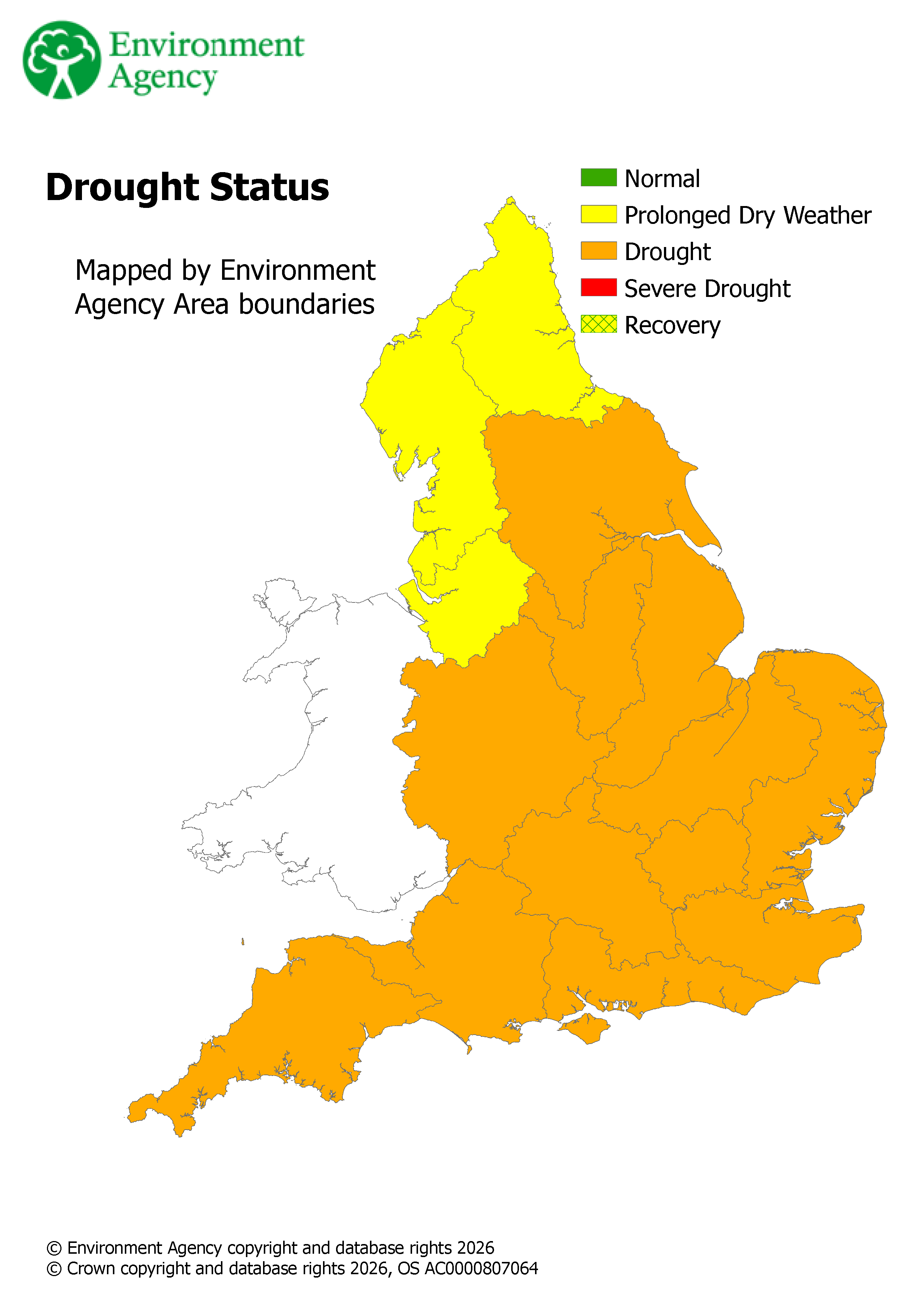
    Yorkshire moved into drought status on 9 October due to persistent low river flows, groundwater levels and reservoir storage in the area, despite recent rainfall. The region now joins much of central, southern and eastern England in drought status – a total of around 50 million people and 80% of England.

    In response, the Environment Agency and government are maintaining close oversight of water companies to ensure they follow their drought plans and take action to safeguard supplies. Measures include enhanced monitoring, scrutiny of water company performance, processing drought permit applications and consideration of further demand-management measures, including non-essential use restrictions where required.

    Environment Agency officials stressed that recent rainfall is insufficient to reverse the impacts of a very dry spring and summer. Yorkshire experienced its fifth driest April-to-September period on record, and the agency warned that recovery will take time even if wetter weather arrives. The declaration highlights growing concerns about climate resilience, with droughts now occurring more frequently; 2026 marks the third drought in the last five years. The National Drought Group continues to meet weekly, while both the government and Environment Agency are encouraging businesses and the public to reduce demand and use water efficiently to support recovery.


    Drought Status 13 October 26


  • 16 Sept 2026: Drought Update

    Water bosses updated the National Drought Group on their leakage reduction plus autumn and winter preparedness plans, as research shows above-average rainfall needed to end drought by April 2027. Drought is only over when rivers, groundwaters and reservoirs are back to normal levels – and the latter two continue to recede, as expected. New research has shown we need 120% of typical rainfall over the next seven months for all areas to be considered out of drought. Read more here

    Read our updated article on how EA manages abstraction here

  • 3 Sept 2026: Drought Update

    After hearing discussion at the National Drought Group, the Secretary of State visited Havant Thickett to see the new reservoir being developed to strengthen water resilience amid the ongoing drought. Read more here

    We're featuring examples of the Environment Agency's work on social media, for example on Instagram recently we highlighted how our Hydrometry and Telemetry teams are on the ground year-round, providing the expertise behind critical decisions for communities, farmers and nature. Teams have been closely monitoring river levels at Wansford Gauge to determine how much water can be taken from the river during recent dry conditions.

  • 31 August 2026: Drought Update

    New factsheet: Managing ponds, lakes and fisheries during drought information is available in the FAQs.

    By mid August, 71% of England was now in drought, with the remainder under prolonged dry weather. This follows England’s driest July since records began in 1836, with only 5% of average August rainfall recorded so far and further hot, dry weather forecast.

    Drought conditions are continuing to place pressure on water resources, agriculture, public water supplies and the environment. Rivers, reservoirs and groundwater levels are declining, while rising river temperatures and low flows are increasing risks to fish, wildlife and water-dependent habitats. Farmers are

    New factsheet: Managing ponds, lakes and fisheries during drought information is available in the FAQs.

    By mid August, 71% of England was now in drought, with the remainder under prolonged dry weather. This follows England’s driest July since records began in 1836, with only 5% of average August rainfall recorded so far and further hot, dry weather forecast.

    Drought conditions are continuing to place pressure on water resources, agriculture, public water supplies and the environment. Rivers, reservoirs and groundwater levels are declining, while rising river temperatures and low flows are increasing risks to fish, wildlife and water-dependent habitats. Farmers are reporting reduced crop yields, livestock producers are using winter feed earlier than normal, and restrictions on agricultural abstraction are increasing in some areas. Find out more about what's happening here.

Page last updated: 02 Nov 2026, 12:14 PM