
Surfleet Reservoir Community Engagement
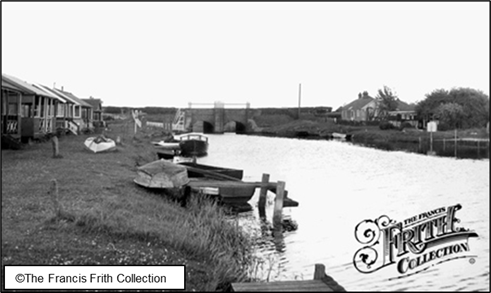 Surfleet Reservoir is located on River Glen northeast of Spalding, Lincolnshire. The Environment Agency operate and maintain Surfleet Sluice to manage flood risk and maintain water levels for Navigation.
The River Glen is a tributary of the River Welland which, prior to the 18th century, was tidal in nature with the river level rising and falling naturally with the high and low tide. In 1739, a sluice was built near where the Glen flows into the Welland with the aim of stopping that tidal process. By constructing a sluice, the flow of water could be controlled, and in addition, a reservoir was created inland. The reservoir historically stored water which was used to flush silt through the sluice into the tidal river. This is the area now called Surfleet Reservoir. With the creation of a picturesque setting, over time chalets were put in place as holiday homes (see above image). Subsequently, most of these have become permanent residential homes.
Climate change is high on the agenda today, none more so than for the fenland and coastal areas of South Holland. It is vital to understand that this risk is reality right now, evident in the extreme weather the county has seen over the last decade. More intense rainfall is happening more frequently: Lincolnshire's current average monthly rainfall total is around 60mm.
As well as the risk of extreme weather, we are also seeing the impacts of rising sea levels. The mean sea level around the UK has risen by approximately 1.5 mm per year since the start of the 20th century and this amount is now increasing exponentially. In the last 15 years alone, the rate of sea level rise has increased and now exceeds 3 mm per year. Looking more locally along the east coast, over the last 50 years the recorded rise at Immingham is approximately 100mm and 150mm at Cromer.
But what does this mean for our flood risk structures and Surfleet? Increasing extreme rainfall means that our rivers are seeing more frequent, higher water levels. The drainage systems of the www.gov.uk/environment-agency fens were not designed for this extreme weather and are increasingly likely to be overwhelmed or damaged. For tidal defences, the threat is from over-topping by the sea.
Tide lock is already occurring at Surfleet Sluice more frequently. During Winter 2023/2024 the sluice was tide locked on many high tides. Our changing climate means both river flows and sea levels are rising. The chance of high flows and high tides coinciding increases. Therefore, the likelihood of property flooding significantly increases too. Whilst we continue to operate the sluice to mitigate that risk, this cannot be the long-term solution. To maintain the current level of protection would require a multimillion-pound project to replace the sluice and raise all embankments in the area, only to do so again in 50 years. This is a challenging, sensitive, and emotive issue for those living in Surfleet Reservoir, and one we will be working with local partners and the community on to understand the long-term plan for the area.
-
Surfleet Sluice: gates maintenance
What is happening?
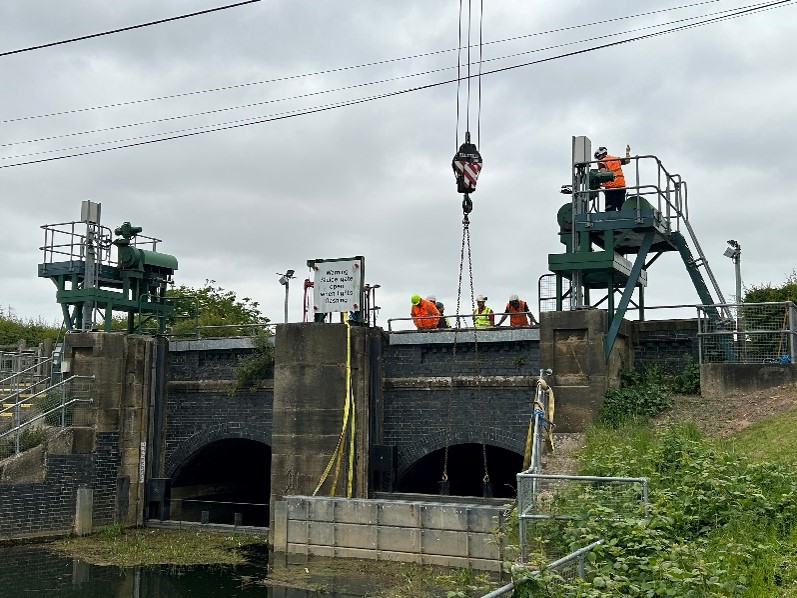
Surfleet Sluice is a structure we own and operate to reduce flood risk to people and property. We carry out regular inspections and maintenance of the sluice to ensure it remains resilient and operates effectively.
What's coming up?
Our contractors, Jacksons, plan to be on site from Monday 27 July 2026. They will be removing a guillotine gate at a time, to carry out maintenance. The work is expected to be completed within three weeks. Dam boards will be put in place of the removed guillotine gate to retain the River Glen levels.
How might I be affected?
You will see our contractors working in and around Surfleet Sluice. There will be a works compound in the carpark, located south side of the bridge. There will be a 'Stop, Go' system to manage road traffic over the bridge. There may be some intermittent noise.
Throughout the maintenance work, we will be monitoring the river levels and weather forecasts to plan the works accordingly.
Our contractors normal working hours are between 08:00 to 17:30. However, in some instances due to the nature of tides or to minimise disruptions, they may need to work outside of these hours.
Where can I go for more information?
Where can I go for more information?
If you have any questions or wish to be added to our mailing list for updates, please email: LNequiries@environment-agency.gov.uk
For information on flood risk in your area please visit www.gov.uk/flood.
If you need to report an incident, please use our incident hotline: 0800 80 70 60. You can find more information about reporting an environmental incident at: https://www.gov.uk/report-an-environmental-incident
-
Interactive Signage Launches at Surfleet Sluice

We are launching interactive signage at Surfleet Sluice in collaboration with Hello Lamp Post. The new signage will provide information about Surfleet Sluice and how we manage water levels. This tool will also help us to reduce our carbon footprint and make it easier for people to sign up for flood warnings.
To chat visit:https://api.hlpst.app/qr/agent/2071/?db=uk
This doesn't replace our existing routes of communication. You can still reach us by email at LNenquiries@environment-agency.gov.uk.
Always report environmental incidents to 0800 80 70 60.
-
62 People attended Flood Awareness Day at Surfleet Sluice

We worked with expert Mary Long-Dhonau OBE to run a flood awareness drop in at Surfleet Sluice car park on Tuesday July 29.
We were there from 11am to 6pm and saw 62 attendees over the course of the day. Attendees learned about flood products, tried out our interactive signage and received advice about flood resilience. There will be more events of its kind in future.
For more information and advice about flood risk management at Surfleet, contact LNenquiries@environment-agency.gov.uk.
Always report environmental incidents to 0800 80 70 60.
