
FAQs
How is flood risk managed here?
Tidal river systems are by their nature difficult and complex to manage. Surfleet sluice was constructed to prevent regular inundation of the surrounding arable land during high tides. This is still how it operates today, which is explained further in the next section.
In normal weather conditions, we use the sluice to regulate the water level of the river. In summer, the level is maintained for navigation and abstraction, and in the winter the level is lowered to allow for the increased likelihood of heavy rain.
There are two high tides a day. If tide levels are particularly high, the sluice automatically closes to stop tidal flows going upriver. In an average month, this happens approximately fifteen times or on a quarter of the high tides. On these occasions, the tide level is higher than the level at which properties start to flood. These are also called ‘tide lock’ periods. This is the period of time when the sluice gates are closed (due to the high tide) and River Glen stops discharging out into the tidal Welland. This can be for very short periods or up to several hours, depending on tide and river levels. We monitor the river levels daily and operate the sluice automatically, adjusting levels on River Glen as and when needed.
In times of heavy or prolonged rainfall, the river level in the Glen is dropped to store this increased water when the sluice is tide locked. During this tide lock period, it is expected that river levels will start to rise within the reservoir as the sluice cannot discharge. This can increase the likelihood of flooding to the properties in the reservoir. However, the consequences of flooding from the tidal Welland would be worse than flooding experienced from River Glen.
Due to the location of the properties in Surfleet Reservoir, there is not much height difference between the normal water level and the level when properties can flood. We do everything we can to reduce the chance of water getting into homes within the reservoir, but we can never rule out the possibility of the properties being flooded
How does Surfleet Sluice work?
On one side of the road bridge, looking towards the sea, there are two sets of mitre gates or 'pointing doors'. These use gravity to allow the river to flow into the sea at low tide. The sea is stopped from getting into the river and flooding homes at high tide because gravity forces the doors to close. One set of pointing doors is also used to allow boats through, maintaining navigation for boat users.
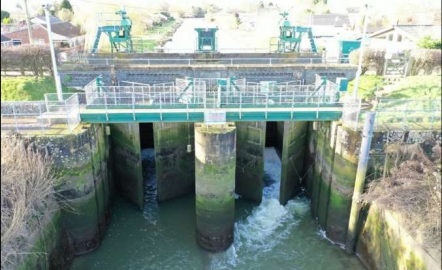 Mitre Gates
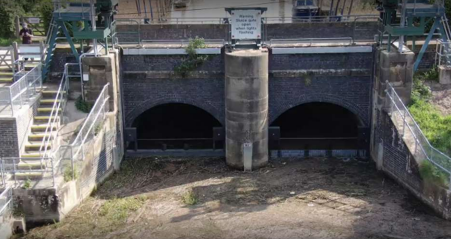 Sluice Gates
On the other side, there are two vertical sluice gates. These are opened at low tide, while also keeping enough water in the reservoir for boat users. If a lot of water is expected to come down River Glen, this water level is reduced as much as possible to minimise the impact on any homes within the reservoir.
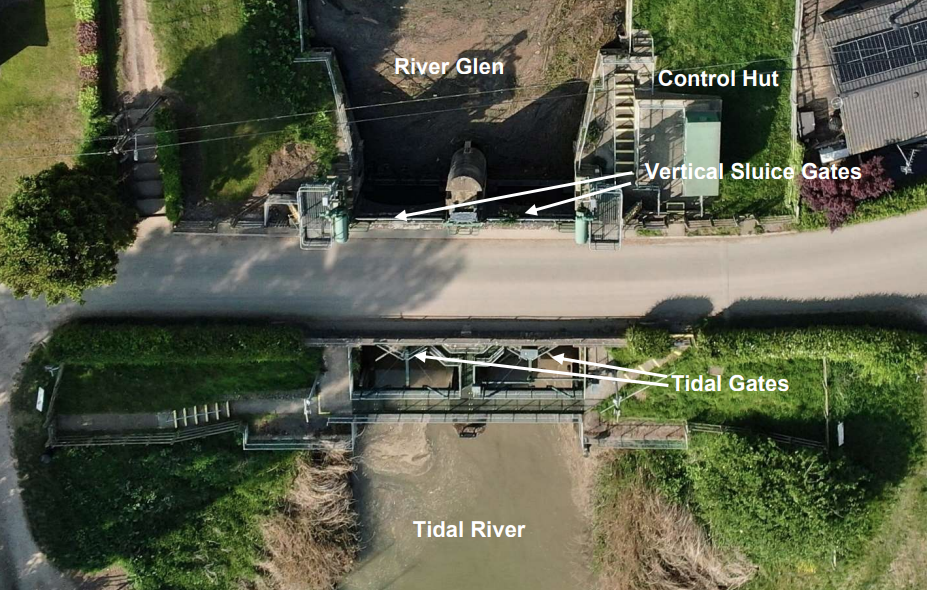 Aerial View
How do we maintain the sluice and river?
River Glen is a designated ‘main river’ as opposed to an ‘ordinary watercourse’. This means that the Environment Agency has discretionary powers to carry out maintenance works on it to reduce flood risk to people and property. It is important to note however, that this is not a legal requirement, and we must prioritise our resources to make sure we maintain the highest risk rivers and structures first. The types of work we carry out on River Glen every year can include grass cutting, removing obstructions in the channel, and carrying out weed control.
Surfleet Sluice is a structure we own and operate for the same flood risk reason. We carry out regular inspections and maintenance of the sluice to ensure it remains resilient and operates effectively. For example, we recently upgraded the IT system and control room to improve automatic operation of the sluice. Structures that are located in marine systems are a challenge for maintenance as they suffer more ‘wear and tear’. As such we carry out Detailed Asset Inspection every 10-15 years, which then allows us to programme in any required major refurbishment works.
A question we often get asked about is the management of invasive ‘carpets’ of weed during hot summer periods. Whilst this may appear extensive and unsightly, the weed does not pose a flood risk. Where possible, we will carefully operate the sluice to ‘flush’ the weed from the river at low tides, but this is to aid navigation rather than manage flood risk. It is also important to note the challenge of dry weather and drought. Flushing weed during these times would drop the river levels even further, causing a significant risk to wildlife and abstraction.