Exmouth - Pollution Incident Response

Following a number of sewage pollution incidents since 2023, we have been investigating the events, monitoring to understand the impact on the environment and ensuring South West Water (SWW) implement a sewerage system fit for the future. Find out more about our actions regarding water quality in Exmouth.


We have included some useful links for you in our 'information bar'. This is the grey section on the right hand side if you are viewing this page on a large screen, or at the bottom of the page if you are viewing on a mobile.

Check the water quality before you swim

Most bathing water sites have high water quality, most of the time. But water quality is affected by natural factors like weather and tides. That's where our Pollution Risk Forecasts (PRFs) come in. PRFs give you predictions of natural variations in water quality.

Watch the video below to learn more about pollution risk forecasts.


Exmouth's current pollution status and annual bathing water classification is shown the image below, or click the link in the information bar to visit Exmouth's Bathing Water Profile on our Swimfo website, where you can view Exmouth's past water sampling results.

Other useful sources of information include South West Water's own website, Waterfit Live, which shows real-time data about their storm overflows. Additionally, Surfers Against Sewage have their Safer Seas and Rivers Service, which collates real-time water quality and beach safety information for the whole of the UK.


Tell us about urgent environmental incidents by calling our incident hotline on 0800 80 70 60, available 24/7.

Our officers continue to attend and investigate any incidents that take place.


How you can get involved

Register and Subscribe

Please register, using the link in the information bar, to use the tools on this page.

You can also subscribe to add this page to the projects you follow, and to be added to our mailing list.

Registering your details, and subscribing to this page, are two separate actions. Complete both to make the most of this page.


Citizen Science

Citizen science is ‘the collection of data and information by communities for scientific purposes’. You can help provide invaluable data and evidence about our water environment.  If you're not already involved, you could make a big difference by joining us. Find out more here.

We want to understand how Exmouth's bathing water is used and how that changes through the year. If you are headed to the beach today, please could you take a minute to complete the short survey below, called 'Who is in the sea today?'

We would love it if you could do this every time you visit Exmouth beach!


We want to hear from you

Its really important to us that you are receiving the information you need in a way that is useful to you. We know we can't always give you the answers you are seeking, but we want to share what information we can, and make it as easy as possible for you to access and understand this information.

Please complete our 'Let's Talk' survey below to let us know how this page is working for you, and if there is a better way for us to share information with you. Completing the survey should only take 5 minutes.

Following a number of sewage pollution incidents since 2023, we have been investigating the events, monitoring to understand the impact on the environment and ensuring South West Water (SWW) implement a sewerage system fit for the future. Find out more about our actions regarding water quality in Exmouth.


We have included some useful links for you in our 'information bar'. This is the grey section on the right hand side if you are viewing this page on a large screen, or at the bottom of the page if you are viewing on a mobile.

Check the water quality before you swim

Most bathing water sites have high water quality, most of the time. But water quality is affected by natural factors like weather and tides. That's where our Pollution Risk Forecasts (PRFs) come in. PRFs give you predictions of natural variations in water quality.

Watch the video below to learn more about pollution risk forecasts.


Exmouth's current pollution status and annual bathing water classification is shown the image below, or click the link in the information bar to visit Exmouth's Bathing Water Profile on our Swimfo website, where you can view Exmouth's past water sampling results.

Other useful sources of information include South West Water's own website, Waterfit Live, which shows real-time data about their storm overflows. Additionally, Surfers Against Sewage have their Safer Seas and Rivers Service, which collates real-time water quality and beach safety information for the whole of the UK.


Tell us about urgent environmental incidents by calling our incident hotline on 0800 80 70 60, available 24/7.

Our officers continue to attend and investigate any incidents that take place.


How you can get involved

Register and Subscribe

Please register, using the link in the information bar, to use the tools on this page.

You can also subscribe to add this page to the projects you follow, and to be added to our mailing list.

Registering your details, and subscribing to this page, are two separate actions. Complete both to make the most of this page.


Citizen Science

Citizen science is ‘the collection of data and information by communities for scientific purposes’. You can help provide invaluable data and evidence about our water environment.  If you're not already involved, you could make a big difference by joining us. Find out more here.

We want to understand how Exmouth's bathing water is used and how that changes through the year. If you are headed to the beach today, please could you take a minute to complete the short survey below, called 'Who is in the sea today?'

We would love it if you could do this every time you visit Exmouth beach!


We want to hear from you

Its really important to us that you are receiving the information you need in a way that is useful to you. We know we can't always give you the answers you are seeking, but we want to share what information we can, and make it as easy as possible for you to access and understand this information.

Please complete our 'Let's Talk' survey below to let us know how this page is working for you, and if there is a better way for us to share information with you. Completing the survey should only take 5 minutes.

  • Bathing Water Results 2025

    supporting image

    Last week, the Department for Environment, Food and Rural Affairs (Defra) published its annual bathing water classifications for 2025.

    These classifications are drawn from monitoring data from the Environment Agency and cover 451 English bathing waters. However, there were two bathing waters unassessed due to access issues bringing the total to 449.

    Each bathing water will be classified into one of the following categories:

    • Excellent
    • Good
    • Sufficient
    • Poor


    Across England this year, 93% (417) have been classes as ‘Excellent’, ‘Good’ or ‘Sufficient’, compared to 92% in 2024, while 32 sites have been classified as ‘Poor’.

    The Devon, Cornwall and Isles of Scilly (DCIS) region includes 154 designated Bathing Waters; this year 98% of them received an ‘Excellent’ or ‘Good’ classification.

    Classification 2025 Bathing waters (DCIS)

    Excellent

    129

    Good

    20

    Sufficient

    2

    Poor

    3

    In Your Area:

    Ladram Bay 

    Excellent

    Budleigh Salterton 

    Good

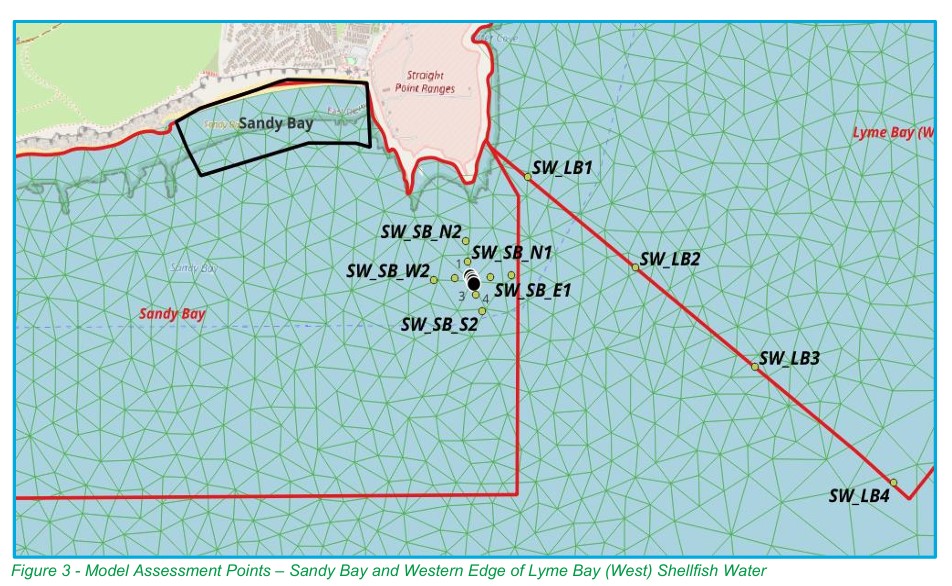
    Sandy Bay 

    Good

    Exmouth 

    Excellent 

    Exmouth and Ladram Bay have remained at Excellent.

    Under the Bathing Water Regulations 2013, some of the samples may have been disregarded if advice against bathing was issued at the time the sample was taken.

    This is because a warning against swimming has been issued in advance and the conditions are not considered to be reflective of the actual water quality most people bathe in. Both Exmouth and Ladram Bay are eligible to have their samples disregarded. You can read more about this here: Bathing water classifications and short-term pollution – Creating a better place

    Sandy Bay has moved from Sufficient to Good

    Previous investigations found that pollution causes were 50% misconnections and 50% urban run-off. Most misconnections have now been resolved, as a result of extensive monitoring, sampling and tracing work completed by both the Environment Agency and South West Water (SWW).

    We are part of an action group, alongside SWW technicians and beach owners to share and compare data and collaborate on improvements. Although improvements have been made in the catchment, there is still work to do. Current data suggests pollution sources to be 10% agricultural, 10% sewage, 70% urban run-off and 10% unknown. We will inspect all businesses and water company assets in the catchment and our misconnections surveys are ongoing.

    Budleigh Salterton – Move from Excellent to Good

    We have linked increased levels of both E.coli and Intestinal enterococci in samples to the Knowle Brook. This has led to a marginal deterioration in class from Excellent to Good.

    We are working to identify the sources of these Faecal Indicator Organisms. We have added an additional sampling point on the Knowle which will aid our investigation. We may also run an agricultural campaign in 2026. We will review Budleigh Salterton East site data against the current statutory sampling site to test for significant difference in salinity and bacteria results.

    The Otter catchment has been a priority for our Agricultural Regulatory teams since 2021, with the majority of farms in the catchment being inspected since that time. We have worked with Natural England and farmers on Catchment Sensitive Farming programmes to encourage better farming practices and improve water quality in the surrounding areas.

    We inspect all water company assets in the catchment yearly and SWW have undertaken a programme of infiltration reduction work, started in 2024. It is hoped this will reduce the number of short duration spills from combined sewer overflows and will continue through the town in 2025.

  • Environmental Performance Assessment report 2024

    supporting image

    Each year we release details of water company performance. 2024 data can be found here: Environmental performance assessment (EPA) star ratings 2011 to 2024 - GOV.UK (www.gov.uk).

    South West Water has again been rated a 2-star company, meaning it requires improvement. It has never risen above a 2-star rating since the EPA began. In 2024 it was responsible for 189 pollution incidents, just 5 less than the previous year. Four of these were classed as serious pollution incidents.

    The beauty of the Devon and Cornwall coastline brings both visitors and stress to the water and sewage network. That is a big challenge for South West Water and improvement is within its reach. It needs to get better at building for the future rather than responding to failure.

    We inspected 335 South West Water sites and assets last year and we are committed to doubling the number of site and asset inspections by April 2026 as part of our overall goal of 10,000 inspections.

    To ramp up our regulation we are nationally investing in 500 additional staff including environment officers, data analysts, enforcement specialists and technical experts, as well as team leaders and managers. We have developed new digital systems and significantly increased the number of water company inspections - in 2024/25 we delivered over 4600 water company inspections across the country and we are on track to deliver 10,000 in 2025/26.

  • We've received South West Water's permit variation applications

    supporting image

    We have received the permit variation applications from South West Water, but our initial review of the documents shows there is a lot of information we still need to receive from them. Once we have this information, we will duly make the applications. It now depends how long it takes SWW to send us the additional information.

    Duly making is the formal sign off to say we have everything we need to start processing the application.

    We must open our consultation within 30 working days of the duly making date. As soon as we know that we can duly make the permit applications, we will let you know when the consultation will start and how you can take part.

  • Advice against bathing on 15 August 2025

    supporting image

    Update 1st September

    We continue to monitor the Littleham Brook and over the past two weeks we have on occasions detected low levels of ammonia which are being diluted before the stream meets the beach.

    Our officers have been regularly on site to verify data from the monitoring equipment.

    South West Water are trying to identify who is misusing the drainage system which involves inspecting potentially hundreds of domestic and commercial property connections.

    It is likely that there is more than one source to this intermittent misuse.

    Our meters share real time information with our staff, and we will continue to closely monitor the situation. Please check Swimfo (link in the information bar) for advice on current bathing water quality.


    Update: 19 August 2025

    Our monitoring has shown that since we removed our advice against bathing on Saturday morning, water quality in the Littleham Brook has remained normal and stable.


    We continuously monitor streams which feed into Exmouth beach, and pollution alarms ensure we can respond as soon as possible when pollution is happening.

    We have not been able to find the source of the pollution last Thursday, and will continue to investigate any further alarms for pollution. Exmouth is a priority beach for us which is why we have increased monitoring and Officers assigned to this important area.


    15 August 2025

    At 10:12 this morning we issued advice against bathing at Exmouth beach following elevated ammonia readings in the Littleham Brook.

    Overnight, our three water quality monitoring meters picked up elevated ammonia readings, with two separate spikes of pollution. An Environment Officer attended site last night after the first ammonia spike.

    This morning, the ammonia levels are lower but are still present in the water. As the Littleham Brook discharges onto the beach at Exmouth we issued the advice against bathing on a precautionary basis while the water quality impacts are investigated further.

    We are continuing to investigate what could be causing this pollution. South West Water are supporting this action by checking their assets, including for any potential misconnections to their sewerage network in the area.

    This a developing situation and we will keep you updated as we receive further information. Please check Swimfo (link in the information bar) for advice on current bathing water quality. Our meters share real time information with our staff, and we will continue to closely monitor the situation.

  • Our latest investigation update - March 2025

    supporting image

    Whilst we are taking into consideration all incidents and non-compliances that have taken place at Exmouth in 2023 and 2024, there will be circumstances (such as insufficient evidence) where we cannot pursue all non-compliances as part of our investigation.

    We will do our best to answer requests for information. However, where those requests relate to the continuing investigation, there may be reasons that justify us withholding certain information.

    Since the end of 2023, we now require all storm overflows to be fitted with event duration monitors.

  • A new sampling point near Beach Gardens - March 2025
    supporting image

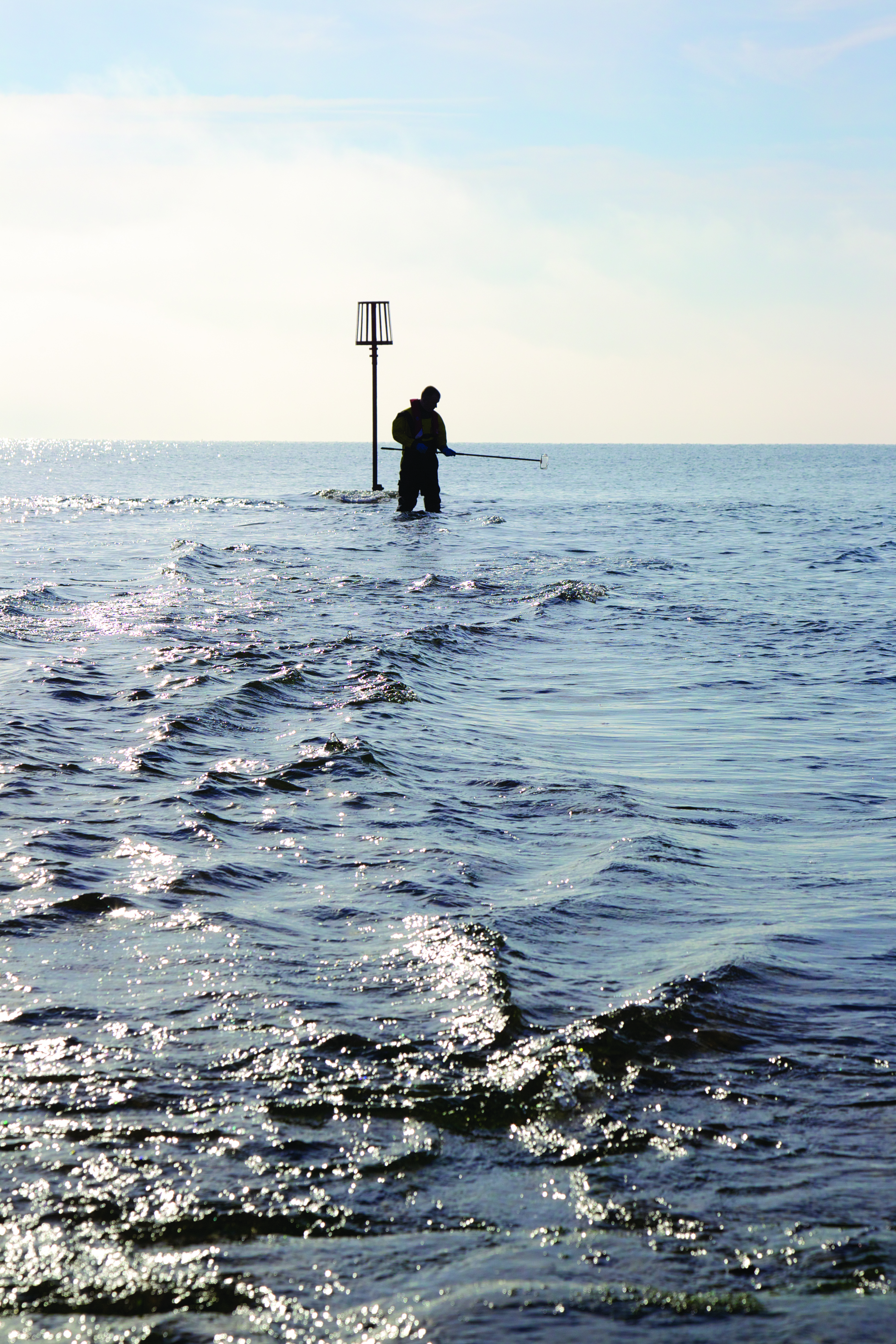
    We are introducing an extra sampling point to get more data on how the River Exe influences Exmouth.

    The extra sampling point, at SY0014080372 near Beach Gardens, is solely for investigative purposes to improve our understanding of how the River Exe affects Exmouth bathing water. Additional monitoring will also take place at three locations along Littleham Stream.

    Data collected from the Beach Gardens sampling point and additional monitoring will not affect official bathing water classifications and is unrelated to South West Water’s work to repair the burst rising main.

    The existing sampling point will remain the same and data collected between May and September – bathing water season – will help inform the beach’s annual classification which will be announced later this year.

Page last updated: 04 Dec 2025, 11:14 AM