Clear Waters

Last year, in collaboration with Ofwat, we published interactive WINEP maps showing for the first time where investment is being made to improve the water environment. You can access the map here - Price Review 2024 Water Industry National Environment Programme (WINEP) App

Clear Waters builds on this work. It is a partnership between regulators, consumer organisations, environmental groups, local government and the water sector, working together to provide customers and stakeholders across England and Wales with clear, accessible and easy-to-understand information about environmental investment and the improvements it will deliver.

Through Clear Waters, people will be able to see not only where investment is being made, but also what that investment is expected to achieve for rivers, lakes, coastal waters and local communities. By bringing information together in one place, Clear Waters will help people understand how environmental improvements are being delivered and track progress over time, supporting greater transparency and accountability.

You can read more about Clear Waters here - Clear Waters: Working together for environmental transparency - Ofwat


Have your say

Water companies are spending record amounts between 2025-30 to improve services for customers and deliver better outcomes for the environment.

Through the Clear Waters partnership, regulators, environmental organisations, consumer representatives, local government and water companies have developed a draft action plan to explore how information about water company environmental investment can be made clearer and easier to access.

We are now seeking views on the proposed actions. Feedback will help partners identify priorities for further development and inform future decisions on next steps. The proposals are being published for engagement and do not represent agreed policy or commitments to implementation.

To take part:

  1. Read the draft Clear Waters Action Plan in English or Welsh.
  2. Complete the short survey.
  3. Submit your response by 6 November 2026
  • WCL Wild Summit

    Clear Waters partners ran a short 45 minute workshop at the Wildlife and Countryside Link's Wild Summit on 9 September 2026. We welcomed around 70 attendees representing groups with an interest in the environment.

    We asked participants to help us develop our thinking on three themes included in the draft action plan:

    1. Enhance existing geospacial mapping/development of a delivery dashboard
    2. Water data portal
    3. Cross-sector communications approach

    Headline takeaways

    1. Enhance existing geospatial mapping/delivery dashboard - stakeholders want an easy to use tool that helps them understand what is happening locally, what action is being taken and expected outcomes.
    2. Water data portal

    Clear Waters partners ran a short 45 minute workshop at the Wildlife and Countryside Link's Wild Summit on 9 September 2026. We welcomed around 70 attendees representing groups with an interest in the environment.

    We asked participants to help us develop our thinking on three themes included in the draft action plan:

    1. Enhance existing geospacial mapping/development of a delivery dashboard
    2. Water data portal
    3. Cross-sector communications approach

    Headline takeaways

    1. Enhance existing geospatial mapping/delivery dashboard - stakeholders want an easy to use tool that helps them understand what is happening locally, what action is being taken and expected outcomes.
    2. Water data portal - strongly supported a shared data platform but stressed that trust, governance and accessibility are more critical than technology.
    3. Cross-sector communications approach - trust emerged as the dominant issue throughout this discussion. Stakeholders repeatedly identified communications as a trust-building challenge rather than simply an information-sharing exercise.

    Across all three concepts, stakeholders consistently highlighted four priorities:

    1. Trust before technology – governance, independence and transparency are prerequisites for success.
    2. Make complex information understandable – data and evidence need to be translated into accessible stories and insights.
    3. Focus on local relevance and outcomes – people care most about impacts in their communities and catchments.
    4. Create a more joined-up system – stakeholders want integrated data, communications and collaboration across sectors rather than separate initiatives.


    Key learnings

    1. Enhance existing geospatial mapping / delivery dashboard

    Stakeholders want a tool that helps them understand what is happening locally, what action is being taken and expected outcomes.

    Key learnings:

    • Transparency and accountability are the primary value drivers. Stakeholders want to see what actions are planned, who is responsible, when delivery will happen and what outcomes are expected.
    • Usability is as important as functionality. Existing tools are seen as too technical and intimidating for some users, suggesting future development should focus on simplicity and storytelling. Attendees noted a feedback loop in the system is needed to enable users to engage with data owners and query the data.
    • Place-based information matters. Stakeholders asked for local information that connects directly to communities, rivers, outfalls and local environmental issues.
    • Trust depends on completeness. Users expect information on all pollution sources including agriculture, highways and industry. Participants were also keen for more public health data. There was a suggestion that data should look at historic record, current performance and future plans.
    • Citizen science is viewed as a major opportunity, but concerns remain about data quality, assurance and governance.
    • Fragmentation remains a major obstacle. Existing data sits across multiple systems and organisations, making integration and long-term maintenance challenging.
    • Overall learning: Success may depend less on adding more data and more on creating a trusted, user-friendly way of showing local environmental action, progress and outcomes.


    2. Water data portal

    Stakeholders strongly supported a shared data platform but stressed that trust, governance and accessibility more critical than technology.

    Key learnings:

    • Independence matters. It was suggested that any portal should be independently hosted or governed rather than owned by a single organisation (and not water sector). Groups also discussed the potential for partnership approach to managing the data.
    • Collaboration. Stakeholders suggested an upload function for citizen science and other data
    • Users want one route to information, not necessarily one database. The concept of a "portal of portals" resonated, allowing access to multiple trusted sources through a common interface.
    • Different users need different experiences. Technical specialists need APIs and detailed datasets, while the public needs intuitive explanations and meaningful metrics.
    • Outcome-focused data is preferred over input-focused reporting. Stakeholders want information about environmental improvements and impacts rather than just expenditure or activity.
    • Data quality and transparency are critical. Concerns were raised about missing, disputed or poor-quality data, highlighting the need for confidence indicators and clear governance arrangements.
    • Integration is highly valued. Stakeholders want water information connected to planning, nature recovery, land use and wider environmental decision-making.

    Overall learning: Stakeholders see significant value in a water data portal, but only if it is trusted, independently governed, integrated across sectors and designed around user needs rather than organisational structures.


    3. Cross-Sector Communications Approach

    Trust emerged as the dominant issue throughout this discussion. Stakeholders repeatedly identified communications as a trust-building challenge rather than simply an information-sharing exercise.

    Key learnings:

    • Who delivers the message is often more important than the message itself. Participants stressed the importance of trusted messengers such as NGOs, community organisations and independent voices.
    • Communications need to become more local and human. Real stories, lived experience and visible community impacts resonated much more strongly than technical information or corporate messaging.
    • The public wants solutions, not just problems. Excessively negative messaging risks creating disengagement and fatigue. Stakeholders want communications that show progress and enable action.
    • Visual storytelling is essential. Participants repeatedly highlighted the need to explain complex environmental systems through images, stories and relatable examples.
    • A shared narrative is needed. There was support for communications focused on common goals such as healthy rivers and clean water, rather than sector-by-sector challenges.
    • Long-term engagement mechanisms are important. Stakeholders highlighted schools, community groups and local events as ways to build lasting understanding and involvement.

    Overall learning: Effective communications should move beyond awareness raising towards rebuilding trust through independent voices, local storytelling, visual content and practical opportunities for action.


    Next steps

    Insight gathered during the discussion at the Wild Summit will help shape discussions on the developing action plan. We plan further targeted stakeholder engagement in the autumn and plan to publish a summary of our findings alongside planned next steps in the new year.


  • Big Data Mash Up

    supporting image

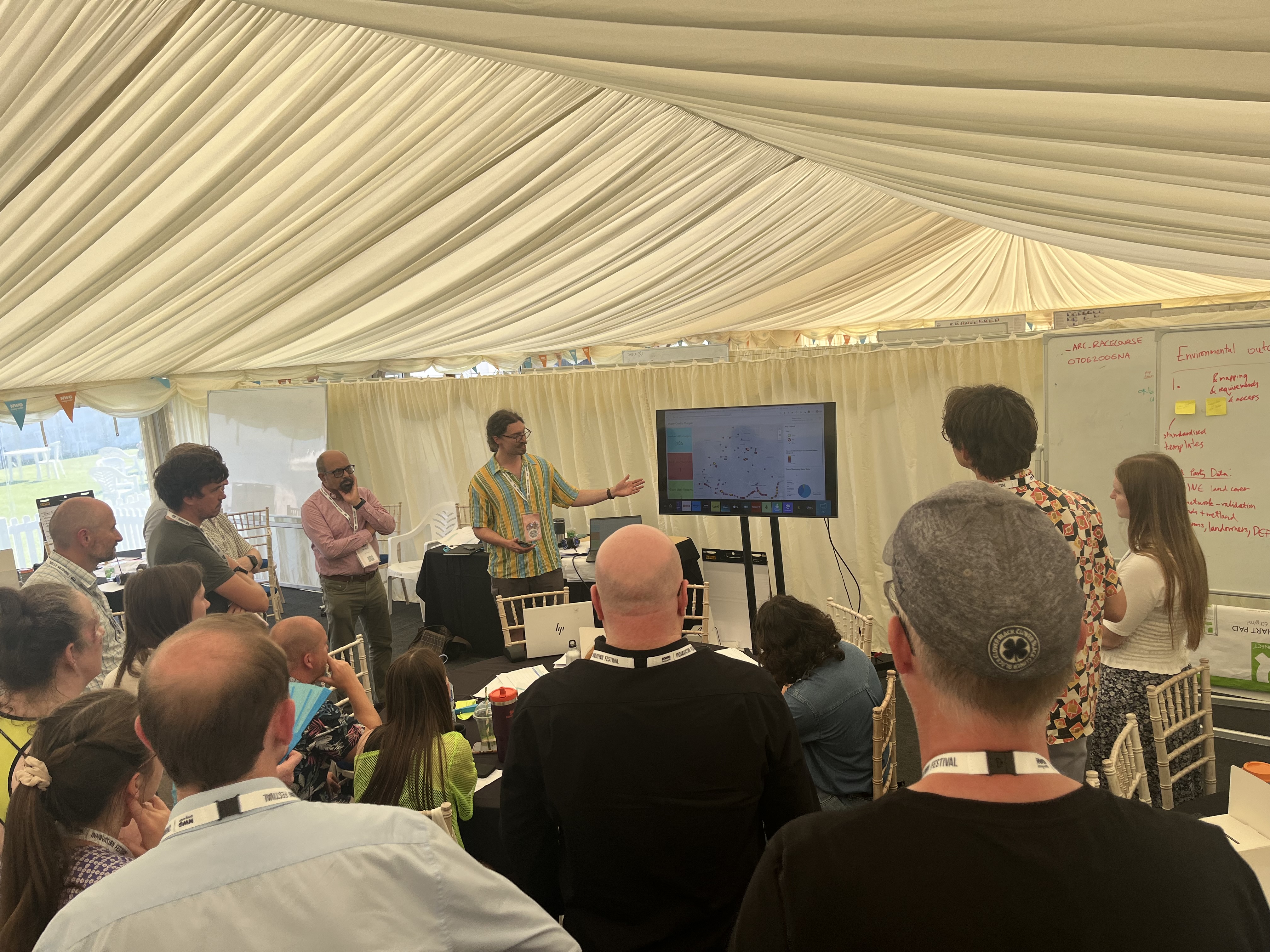
    Clear Waters 'Big Water Data Mash Up' – Northumbrian Water Innovation Festival

    On 08 July, the Environment Agency supported the Clear Waters Big Water Data Mash Up daily dash at Northumbrian Water's Innovation Festival.

    Around 45 participants attended the session, bringing together representatives from across the water sector, regulators, NGOs, academia and technology organisations to explore how water data can be made more accessible, useful and impactful.

    A key focus of the workshop was exploring how citizen science data could be used alongside information collected by regulators and water companies. The aim was to understand how these different sources of

    Clear Waters 'Big Water Data Mash Up' – Northumbrian Water Innovation Festival

    On 08 July, the Environment Agency supported the Clear Waters Big Water Data Mash Up daily dash at Northumbrian Water's Innovation Festival.

    Around 45 participants attended the session, bringing together representatives from across the water sector, regulators, NGOs, academia and technology organisations to explore how water data can be made more accessible, useful and impactful.

    A key focus of the workshop was exploring how citizen science data could be used alongside information collected by regulators and water companies. The aim was to understand how these different sources of evidence can work together to provide a clearer picture of the health of the water environment and the improvements being delivered through water industry investment.

    Discussions generated a wide range of ideas, including:

    • Improving access to and discoverability of water and environmental data.
    • Making data more meaningful for different user groups through tailored visualisation and communication approaches.
    • Increasing opportunities for citizen science and community-generated data to complement existing monitoring.
    • Creating clearer links between data, decision-making and environmental outcomes.
    • Exploring the role of AI and digital tools in helping users interpret complex water data.

    Participants also discussed barriers to data use, opportunities for greater collaboration across organisations, and considered how solutions developed could be tailored to different stakeholder audiences.

    Trust in the evidence was a key theme throughout the workshop. Participants used the Environment Agency's Citizen Science Technical Advisory Framework (Citizen Science - Working together! | Engage Environment Agency) to explore how different types of citizen science can support different projects and objectives. The framework helps people choose the most suitable approach for collecting information and provides a clear way to understand how the data can be used. Discussions highlighted how this can help build confidence in the evidence and increase trust in environmental decision-making.

    An Environment Agency representative reflected on the day: “We found the session extremely insightful, and a valuable opportunity to work in collaboration with Ofwat and the wider water sector. Exploring greater transparency for environmental outcomes from different stakeholder perspectives helped us gain a better understanding of specific user requirements”.

    Next steps are being developed through the Clear Waters project team, including prioritisation of ideas generated during the session and identifying opportunities for further collaboration and refinement of solutions.

Page last updated: 16 Oct 2026, 08:23 AM