Big Data Mash Up
Clear Waters 'Big Water Data Mash Up' – Northumbrian Water Innovation Festival
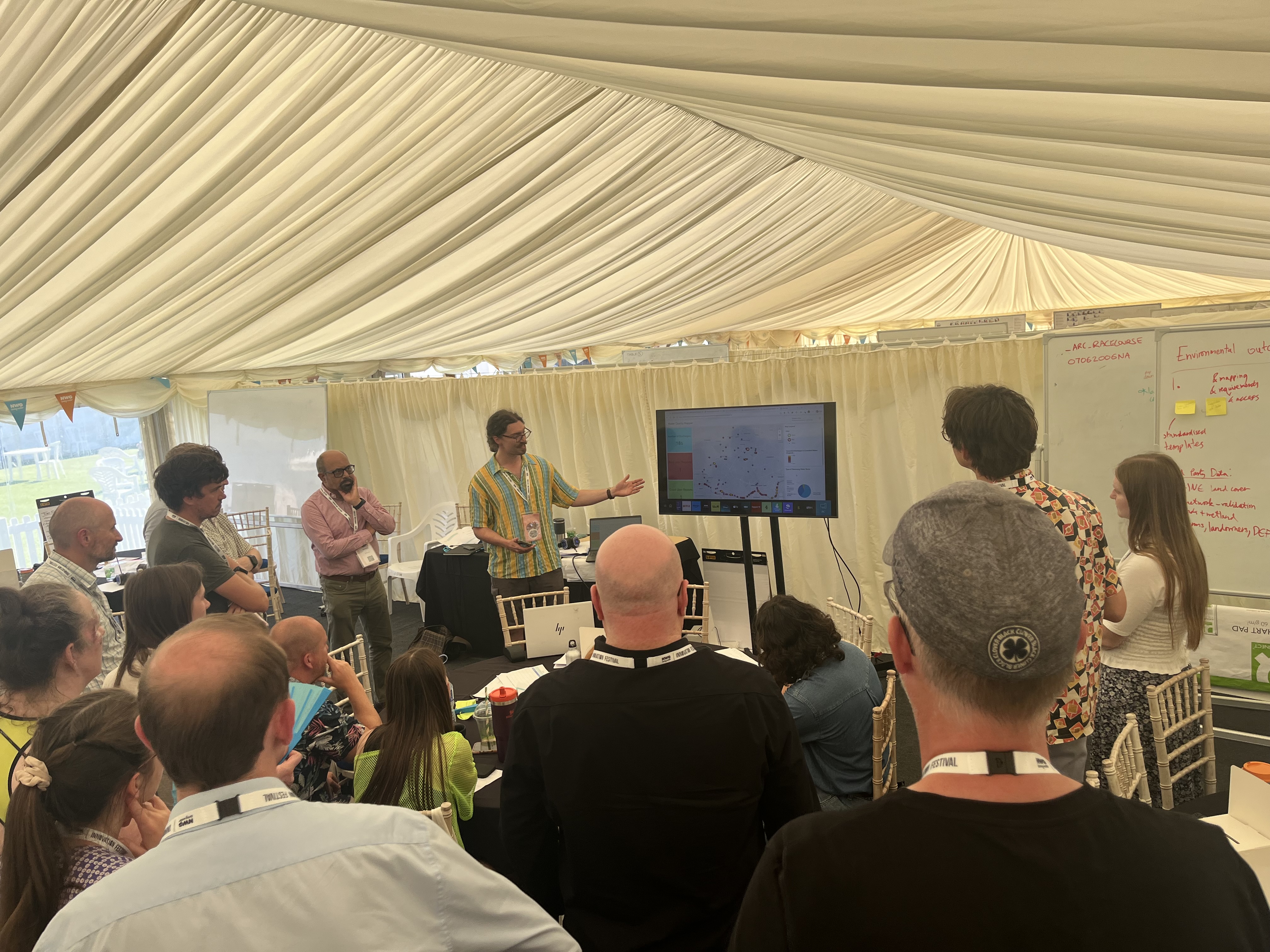
On 08 July, the Environment Agency supported the Clear Waters Big Water Data Mash Up daily dash at Northumbrian Water's Innovation Festival.
Around 45 participants attended the session, bringing together representatives from across the water sector, regulators, NGOs, academia and technology organisations to explore how water data can be made more accessible, useful and impactful.
A key focus of the workshop was exploring how citizen science data could be used alongside information collected by regulators and water companies. The aim was to understand how these different sources of evidence can work together to provide a clearer picture of the health of the water environment and the improvements being delivered through water industry investment.
Discussions generated a wide range of ideas, including:
- Improving access to and discoverability of water and environmental data.
- Making data more meaningful for different user groups through tailored visualisation and communication approaches.
- Increasing opportunities for citizen science and community-generated data to complement existing monitoring.
- Creating clearer links between data, decision-making and environmental outcomes.
- Exploring the role of AI and digital tools in helping users interpret complex water data.
Participants also discussed barriers to data use, opportunities for greater collaboration across organisations, and considered how solutions developed could be tailored to different stakeholder audiences.
Trust in the evidence was a key theme throughout the workshop. Participants used the Environment Agency's Citizen Science Technical Advisory Framework (Citizen Science - Working together! | Engage Environment Agency) to explore how different types of citizen science can support different projects and objectives. The framework helps people choose the most suitable approach for collecting information and provides a clear way to understand how the data can be used. Discussions highlighted how this can help build confidence in the evidence and increase trust in environmental decision-making.
An Environment Agency representative reflected on the day: “We found the session extremely insightful, and a valuable opportunity to work in collaboration with Ofwat and the wider water sector. Exploring greater transparency for environmental outcomes from different stakeholder perspectives helped us gain a better understanding of specific user requirements”.
Next steps are being developed through the Clear Waters project team, including prioritisation of ideas generated during the session and identifying opportunities for further collaboration and refinement of solutions.
