
West Midlands Regulated Industry
We regularly receive enquiries about our work and this page contains information about our regulation of sites that we have received the most interest about. On the right-hand side of this page you will find information on high interest sites within the West Midlands area. This includes frequently asked questions and answers regarding our work, inspection updates and latest news. If you are interested in a site that is not listed here, please email our customer and enquires team Enquiries_Westmids@environment-agency.gov.uk. (This page will be subject to change, reflecting the level of interest in the sites that we regulate).
Permitted Sites
In the West Midlands (WMD) area, we regulate a large number of permitted sites, including factories, mines, landfills and agricultural producers. The Environment Agency’s role is to assess compliance with the permits and to take appropriate regulatory action if our officers identify any breaches. The Environment Agency expects the operator of any permitted site to use appropriate measures to control potential amenity impacts.
The Environment Agency regulate in accordance with its Enforcement and Sanctions policy and by reference to the Regulators’ Code. You can find further information about how Environment Agency officers assess environmental permit compliance here Waste operations and installations: assessing and scoring environmental permit compliance.
Waste crime and illegal waste sites
Waste crime is a scourge on our communities and we are committed to tackling it.
The Environment Agency is actively combating waste crime in England, focusing on illegal dumping, burning, shipping, and other illicit activities. We use various methods to prevent waste crime, including investigations, enforcement actions, and collaboration with other agencies such as the police.
There are often several activities involved in waste crime which breach different areas of law all at the same time. As such it’s difficult for one organisation to deal with illegal waste activities alone. That’s why the Environment Agency works together with our partners to proactively agree and carry out joint actions to tackle this issue.
In 2024/5, the Environment Agency successfully stopped activity at 743 illegal waste sites, of which 143 were high risk. Our enforcement officers also prevented nearly 34,000 tonnes of waste from being illegally exported.
Tackling waste crime often involves complex, lengthy investigations to build cases that stand up in court. We understand the frustration this can cause for local communities.
We urge anyone who suspects waste crime to contact our 24/7 incident hotline on 0800 807060 or report it anonymously to Crimestoppers on 0800 555 111.

-
Multi-Agency Operation against Waste Crime - 19 March 2026
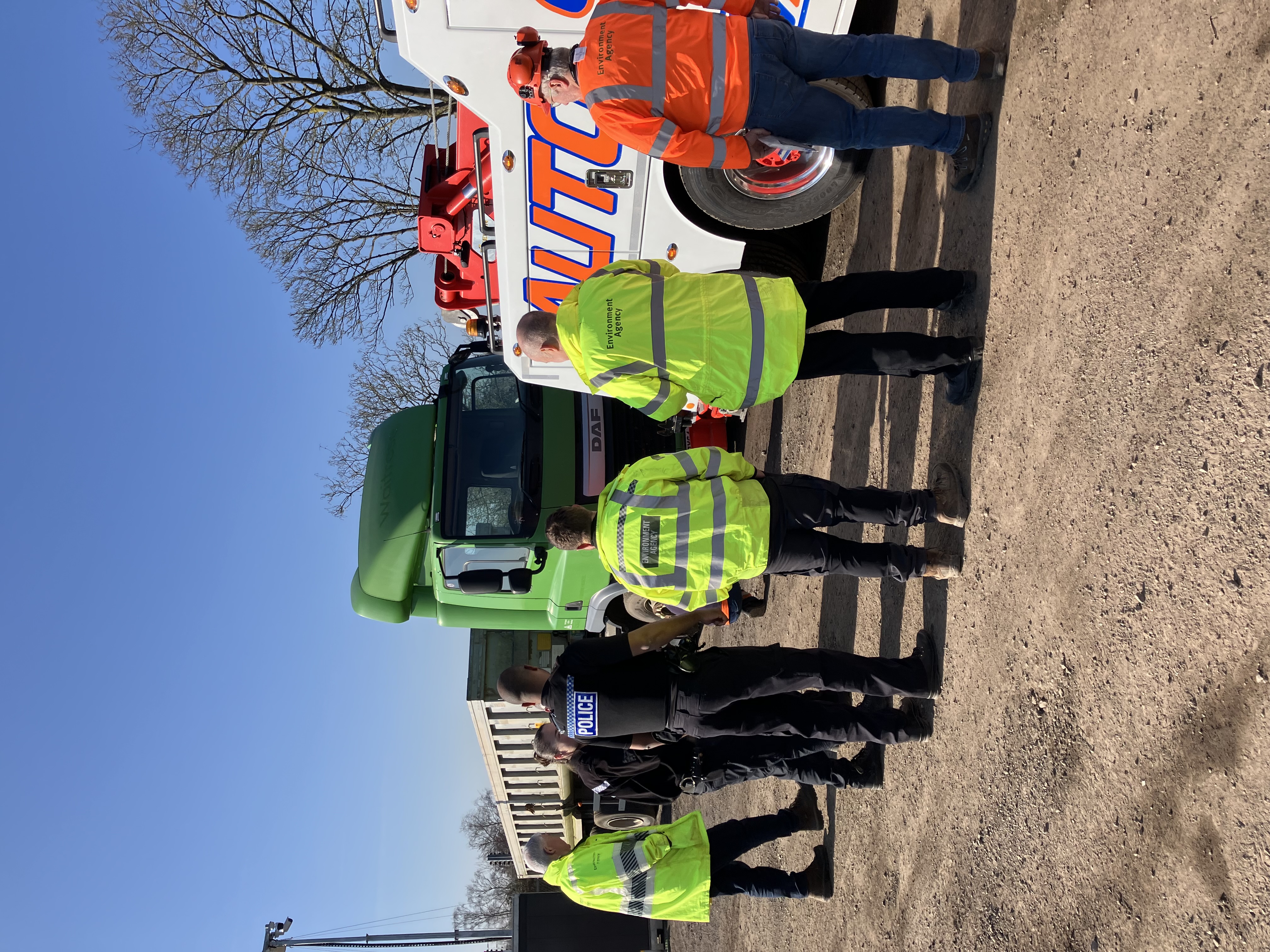
On Thursday 19 March the Environment Agency led an operation at Throckmorton Industrial Park, Worcestershire working alongside officers from West Mercia Police’s Evesham Rural Safer Neighbourhood team and the Driver Vehicle Standards Agency (DVSA). The activity forms part of a wider national initiative to tackle environmental crime and disrupt illegal waste operations.
During the enforcement action, the Environment Agency seized an HGV and a JCB bucket loader suspected of being used in unlawful waste activity.
An officer from the Environment Agency emphasised the importance of joint working, and that by “Working with local councils and the police force in Worcestershire, we will stay one step ahead of waste criminals and protect the communities, businesses and environment that they blight.”
Dave Wise, Safer Neighbourhood Inspector for West Mercia Police, said: This operation shows what can be achieved through a coordinated partnership approach. “The Environment Agency has significant powers to disrupt illegal waste activity, including, in the appropriate circumstances, the seizure of vehicles and machinery suspected to be used in offending. “Our role is to support and enable that action where it will have the greatest impact. “By combining intelligence, enforcement and a visible policing presence, we are not just responding to offending but making it harder for those involved to operate.”
Anyone who suspects illegal waste activity is asked to report it to the Environment Agency’s 24-hour hotline - 0800 80 70 60 - or anonymously contact Crimestoppers on 0800 555 111.
-
A Successful Hazardous Waste and Waste Carrier Audit Day of Action in Birmingham
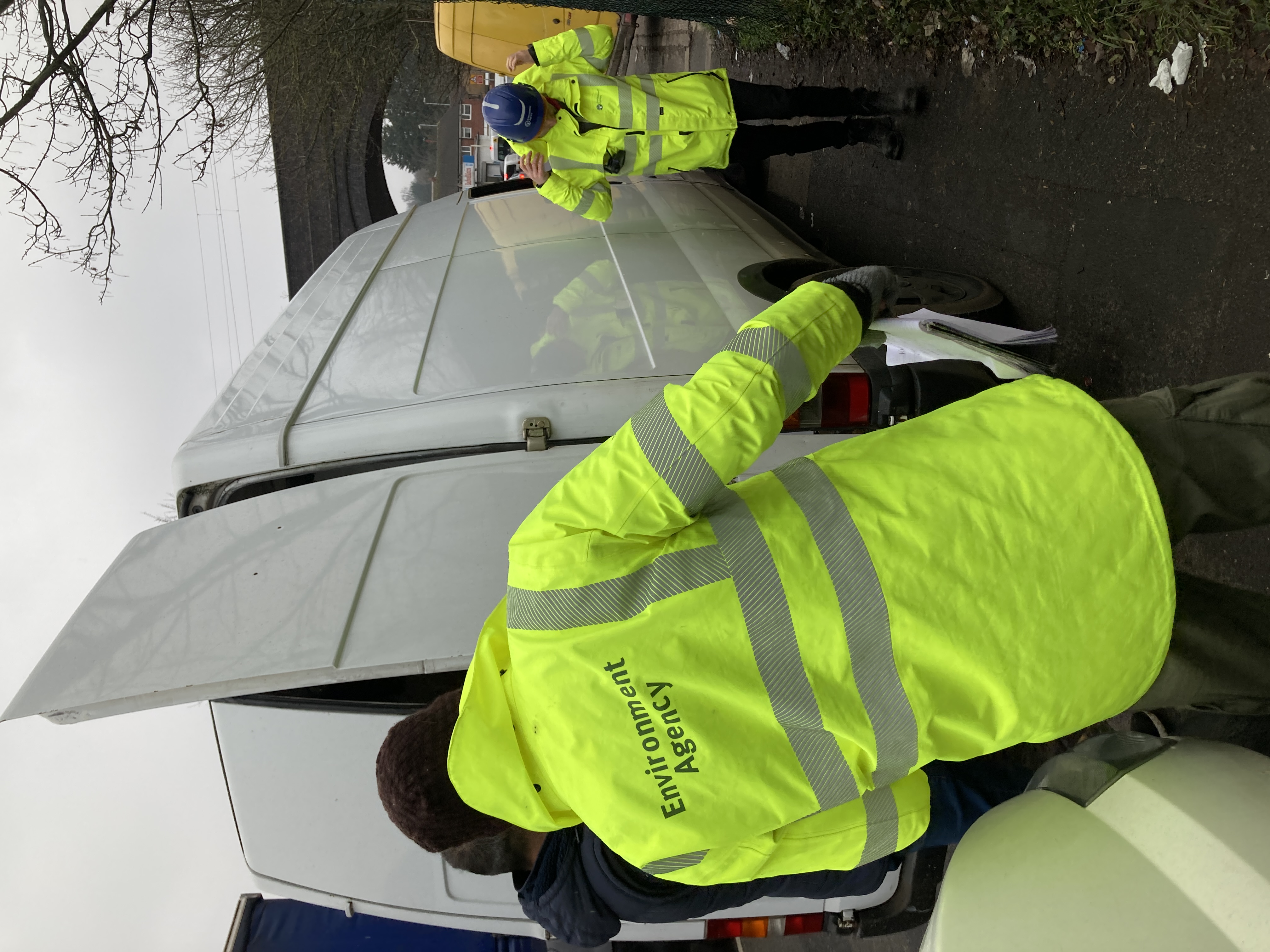
Our Waste team recently carried out a focused Hazardous Waste Audit and Waste Carrier’s Audit Day of Action across two permitted sites in Birmingham. We focused on waste carriers transporting waste without the required authorisations or documentation describing the material they were carrying. Both locations are well known for receiving high volumes of scrap metal from individual waste carriers which make them key areas for targeted compliance checks.
At each site, two officers concentrated on identifying potentially hazardous waste that has been incorrectly identified. Everyone has a duty of care to describe and transfer waste legally, so we verify compliance by assessing waste and consignment paperwork. This included inspecting waste on site, analysing the returns and Hazardous Waste Intelligence Data and reviewing waste transfer and consignment notes to verify compliance. Meanwhile, the other two officers directly engaged with the carriers queuing to deposit waste onto site. They asked a set of questions on the waste carriers license and Duty of Care requirements, helping to identify any potential non-compliance before waste entered the site.
We identified that both permitted sites were misdescribing waste on site. It was also found that six operators were transporting waste without a valid licence. Ten additional carriers held valid licences however their responses during questioning indicated areas where further guidance would be beneficial. These carriers will receive follow-up audits to support a better understanding of Duty of Care requirements.
This day of action demonstrates the value of proactive and collaborative enforcement in the improvement of waste management standards. By combining on site inspections and direct engagement with carriers our teams continue to support safer, more compliant waste management practices across the region.
-
Day of Action - 8 January 2026
On 8 January 2025, the Environment Agency worked in partnership with West Mercia Police, DVSA, HMRC and the National Vehicle Crime Intelligence Service (NaVCIS) in a coordinated, multi-agency operation carried out across several sites to target and disrupt criminal activity across Herefordshire, Shropshire and Worcestershire.
Almost £100,000 in cash was seized alongside counterfeit electrical items across the locations. The police made multiple arrests.
Marc Lidderth, West Midlands Area Director at the Environment Agency, said: “The results of this day of action are a great example of utilising different agencies’ enforcement powers to reach a successful outcome and disrupt criminal activity. Working in partnership enhances our ability to protect communities and the environment.
“These results will aid our joint investigations into illegal waste crime activity at sites in Worcestershire, and any future enforcement action we may take.
“In 2024/5, the Environment Agency successfully stopped activity at 743 illegal waste sites. 84 of these were in the West Midlands region.
“If you have any information regarding illegal waste dumping incidents, we encourage you to report it to the Environment Agency incident hotline to help in our fight against waste criminals.”
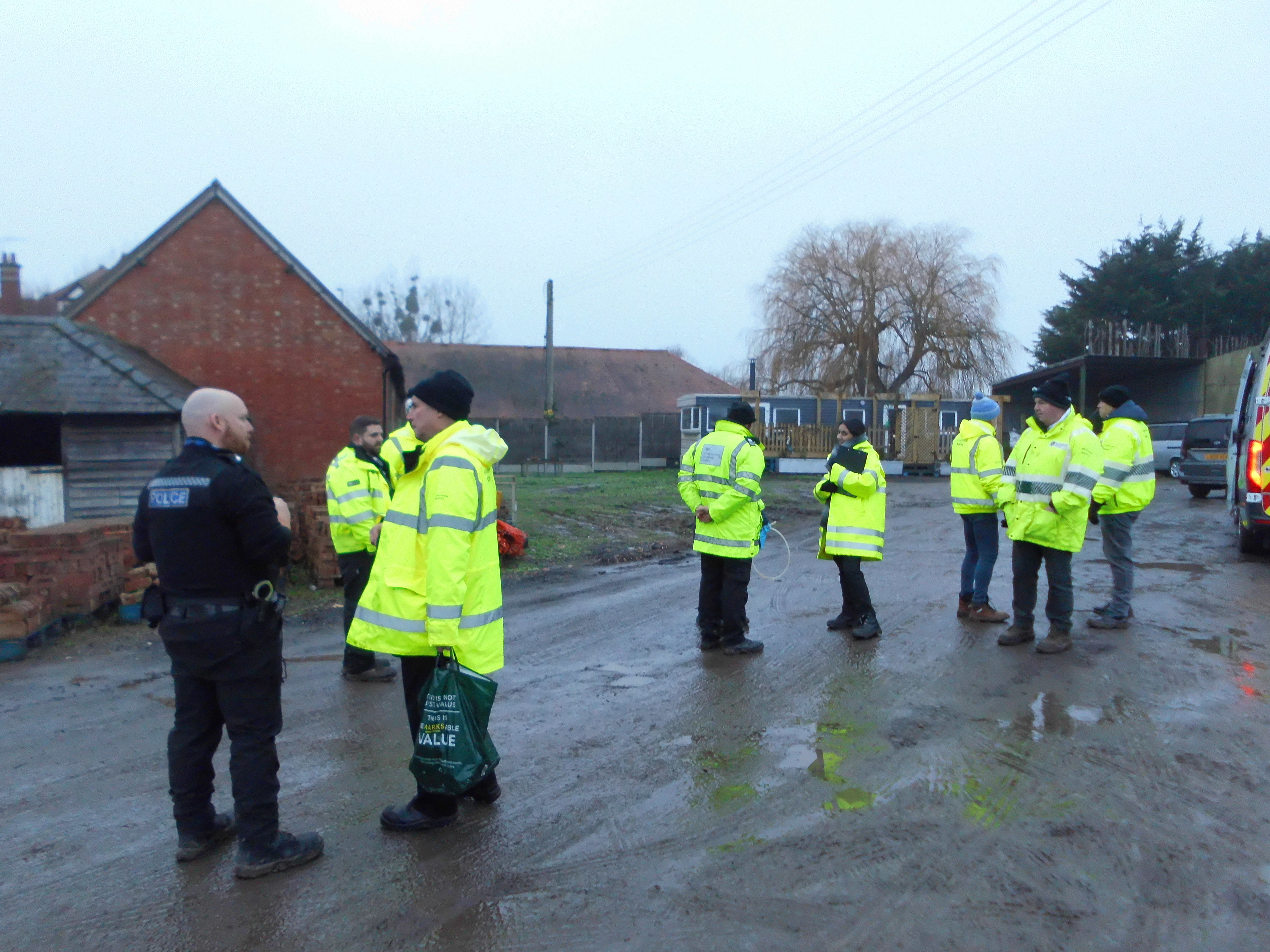 Officers at Day of Action - 8 January 2026
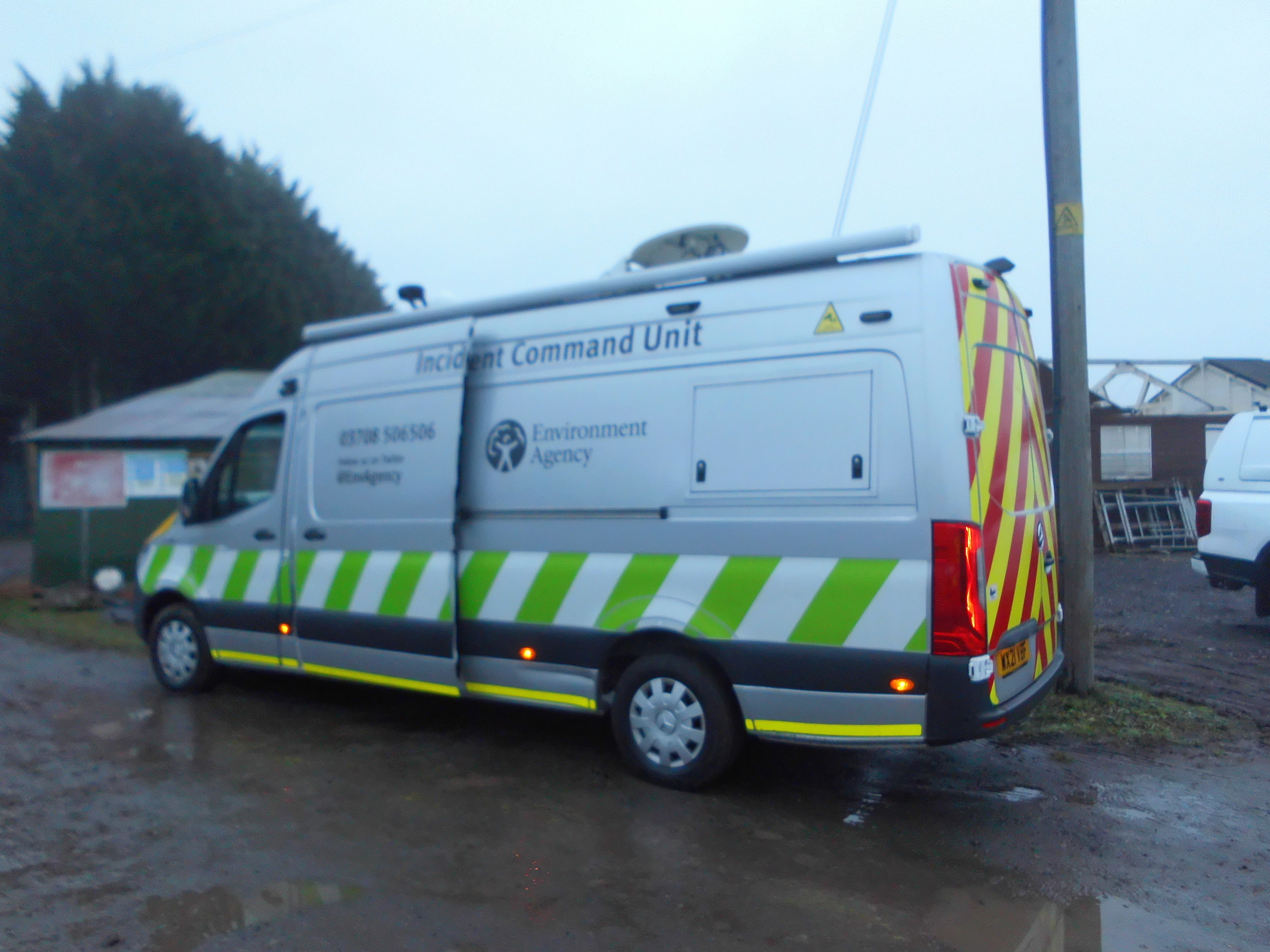 Incident Command Unit - Day of action
-
Joint waste crime initiative - October 2025
On 17 October, the Environment Agency joined officers from the Sandwell Priority Crime Team, Sandwell Council, West Midlands Fire Service, Immigration, and the National Vehicle Crime Intelligence Service in Smethwick for a coordinated operation focused on tackling vehicle-related crime.
We’d received reports that the site was being used as an illegal waste transfer station and that there were illegal exports of waste electrical equipment on site. Our officers inspected the containers and found a large amount of scrap material, such as car parts, engines and scrap bicycles. There were also multiple scrap fridges/freezers found on site.
We carried out a thorough inspection of the buildings, actively looking for any signs of any illegal activity. Our aim was to identify the presence of waste material, document any supporting evidence and evaluate any waste operations in order to assess their compliance. We also looked for any potential offences which may fall under the jurisdiction of other government agencies or the police.
Alan Kerr, Environmental Crime Team Leader said:
“This operation shows the benefits of joint agency working in protecting the most vulnerable. Our officers were on site following reports that this was an illegal waste transfer station along with suspected illegal export of waste electrical equipment. The Environment Agency will continue to work tirelessly with partners, targeting those who are suspected to be involved in waste crime and those who pollute the environment.”
If you know or suspect illegal waste activity, report it anonymously to Crimestoppers: Crimestoppers or call 0800 555 111.
 Officers on site - 17 October 2025
 Image of car parts on site
Contact us
For any enquiries please email our Customer and Engagement Team - Enquiries_Westmids@environment-agency.gov.uk
Stay up to date with the latest on X, Follow @EnvAgencyMids
For more information visit the Environment Agency Waste Hub