
Odour Response in Calne
Odour Update 12 June 2026: Lower Compton Landfill Site, Calne
We recognise the ongoing impact that odour is having on residents, and we are continuing to prioritise work to address these concerns as quickly as possible.
This week we have been out on site again to ensure Hills are delivering the actions that we have required of them to bring the site back into compliance with its environmental permit. This includes the accelerated permanent capping works.
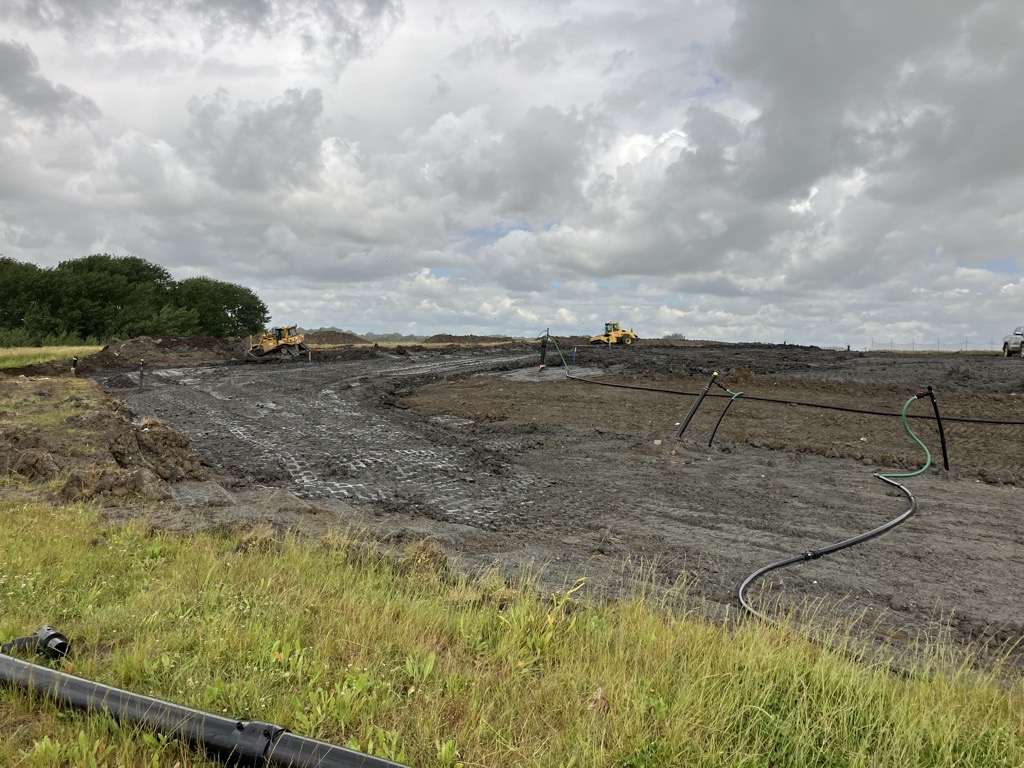 Permanent capping works progressing at the Lower Compton Hills site, June 2026
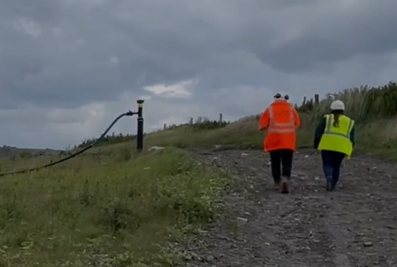 Environment Agency and Wiltshire Council staff on site at Lower Compton Landfill, June 2026
We have also been out on site with the Wiltshire Council Environmental Health team who are monitoring odour for statutory nuisance and public health. By sharing data and working together we are ensuring that the odour is being investigated. While we work side by side, we have distinct roles:
- The Environment Agency assesses off-site odour to ensure compliance with environmental permit conditions
- Wiltshire Council assesses statutory nuisance impacts. You can find out more about Wiltshire Council’s role in monitoring for odour here: www.wiltshire.gov.uk/env-health-pollution
How we monitor
Our regulatory team assesses compliance in several ways, including site inspections, audits, off-site odour assessments, and reviewing operator reports and monitoring data.
We carry out monitoring in the community to substantiate odour reports and assess whether odour is occurring off-site, as required by the permit. Our presence in the community is focused on identifying and evidencing off-site odour so action can be taken where required.
The main way we assess compliance is through “sniff testing”, using trained officers to detect and assess odours. This is required by permit conditions and remains the most effective method, as the human nose can detect the full range of gases responsible for odour at very low levels. It is important to be clear that this type of monitoring is for regulatory compliance purposes and not to directly assess health impacts.
We also use a Mobile Monitoring Facility (MMF) to measure ambient air quality. This supports our assessment from sniff testing. The MMFs monitor for methane, hydrogen sulphide, and particulates.
We understand that residents have concerns about potential health effects, and we take these concerns seriously. While our role is to assess compliance with environmental permit conditions, particularly whether odour is affecting areas beyond the site, the data we collect is shared with the UK Health Security Agency (UKHSA).
UKHSA are the independent public health experts responsible for assessing any potential impacts on health. They review the monitoring data and determine whether there are any risks to the community.
It is important to recognise that odour and health impacts are assessed in different ways. Odour can be strong and disruptive at levels that are still very low in terms of measurable gas concentrations, meaning something can be clearly noticeable and unpleasant without necessarily being harmful to health.
Our approach reflects this. We use sniff testing to assess odour impact and compliance with permit conditions, and we use monitoring data to support this and to inform UKHSA’s independent health assessment
Our aim is to ensure that odour is reduced to a level where it is no longer causing unacceptable impact beyond the site boundary. The actions being taken, particularly capping and improved gas control, are expected to reduce odour, although this may take time to fully resolve. Once the capping works are complete, we will carry out additional odour monitoring to assess how conditions have improved.
We recognise that people want access to monitoring data. This will be published once UKHSA has completed its independent public health assessment, and we will continue to keep the community informed as work progresses.

Thank you for your contribution!
Help us reach out to more people in the community
Share this with family and friends