
Wessex Regulated Industry Sites
In the Wessex (WSX) area, we regulate a large number of permitted sites, including factories, mines, landfills and agricultural producers. We regularly receive enquiries about our work - this page will highlight the sites that we we receive the highest level of interest for. You will find site information, frequently asked questions and answers regarding our work, inspection updates and latest news. If you are interested in a site not given here, please email our customer and enquires team.
Regulation of Waste Sites
This page also sets out how we respond to odour reports and how we use our regulatory powers to ensure operators bring waste sites back into compliance where permit conditions are not being met.
You can find the latest updates on our response to odour from Lower Compton Landfill, Calne and Northacre MBT facility, Westbury in our newsfeed.
You can find out more about our role as a regulator here.
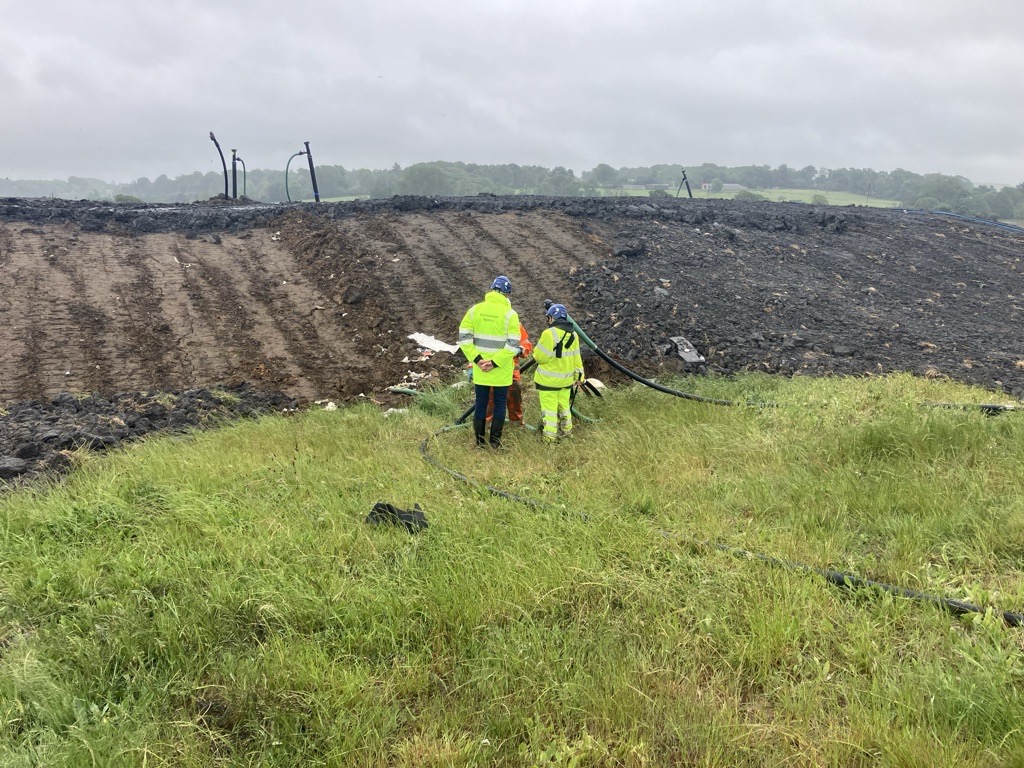 Environment Agency Staff inspecting the progress of permanent capping works at the Lower Compton Hills waste site - June 2026
Construction Projects
There are two major construction projects in Wessex :
Hinkley Point C
To find out more about this project, please visit our dedicated Gov.uk website at: Hinkley Point: nuclear regulation - GOV.UK
For questions relating to this project, please email our nuclear team directly at: nuclear@environment-agency.gov.uk
- Gravity – Agratas, Battery Gigacentre, Bridgwater
More information on this site is available in our information bar on this page.
Get involved
If you experience any issues relating to any of these sites, or sites not listed on this page, please call our pollution hotline on 0800 80 70 60. Use this link to find out more about how to report an environmental issue.
-
Westbury update 02 October 2026
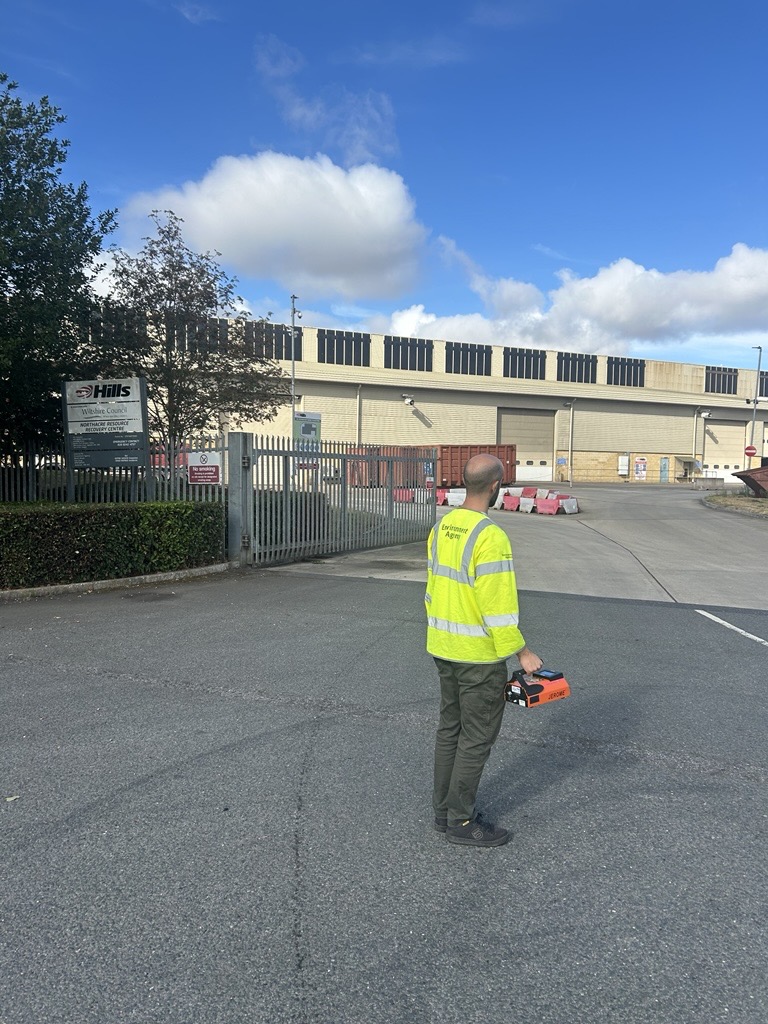
Environment Agency officers, Wiltshire Council and Parish and local councillors attended the Northacre Resource Recovery Centre liaison committee meeting on Tuesday 29 September chaired by Hills Waste Solutions Limited. At the meeting plans were announced to change operations at the site to a Waste Transfer Station.
Hills Waste Solutions Ltd have also confirmed that odour neutralization units have now been installed inside the waste treatment building. However, these are not yet fully operational. We will assess the effectiveness of this measure over the coming weeks. We will continue to review any further odour complaints in conjunction with the findings from our odour monitoring to determine whether this additional measure is delivering the anticipated improvement.
As part of our odour monitoring, we have been using a handheld hydrogen sulphide analyser. This has not detected any hydrogen sulphide in the local area.
-
Calne monitoring update 24 September 2026
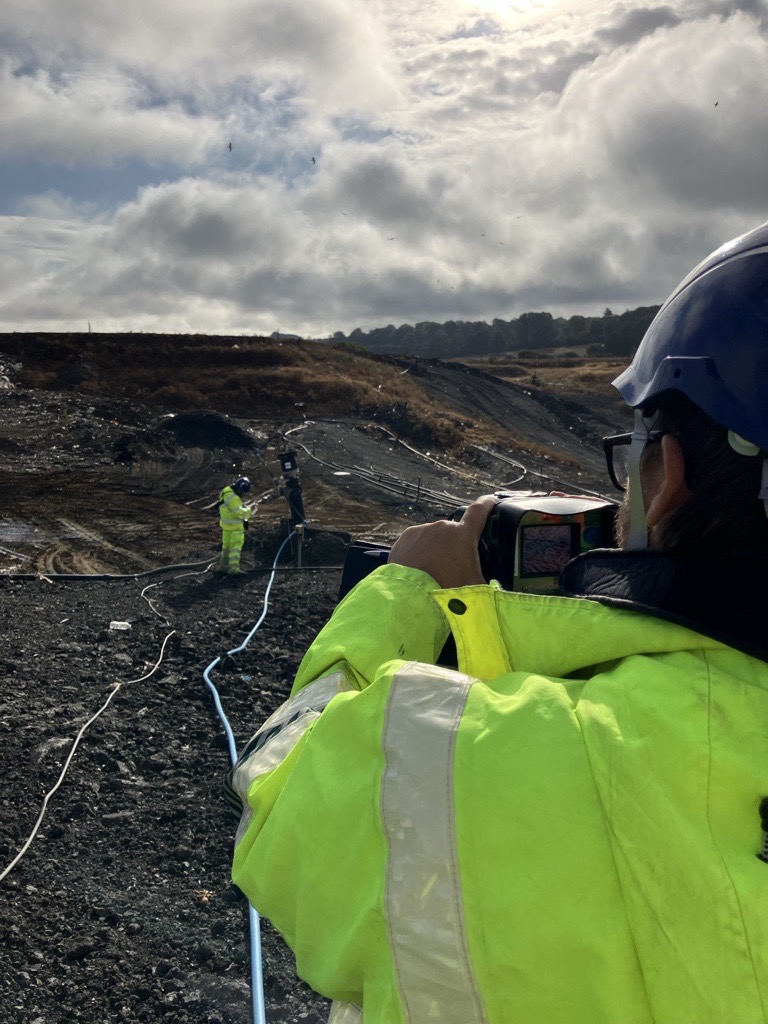
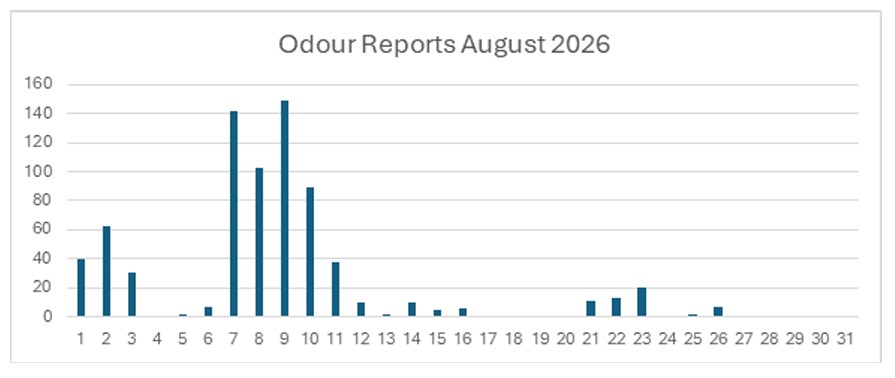
Between 3 and 26 August the Environment Agency carried out daily odour monitoring to understand whether the engineering work completed in July has been effective.
Through the first three weeks of August, we continued to see high numbers of reports, and officers found landfill gas odour in residential areas. Although this was rated as very faint to faint intensity it was offensive and pervasive in calm, cool conditions.
Assessment of site monitoring data over the same period has identified periods of low/no suction pressure at the gas engine compound, and corresponding downtime. The cause has been identified as filter blockages in the gas lines. Infinis, the company responsible for the gas engines and maintenance of the gas field, are working to establish the root cause. After this issue was identified, preventative maintenance checks were increased, and normal operation was re-established on 21 August.
We believe the supply interruptions are likely to have increased fugitive emissions from Lower Compton landfill, so we extended our enhanced monitoring period to account for this. Odour reports have since reduced and have stayed low through September (14 reports received to date). In part, this will be due to the change in wind direction; we will carry out monitoring in less favourable conditions to assess the effectiveness of the controls on site.
We continue to monitor progress on site. Our surveys have found the recent permanent capping work is effectively minimising emissions from the western half off cell 26D. Point source emissions have been noted around temporary infrastructure in the eastern half of the cell; although this is to be expected, we are requiring Hills to review their monitoring and remediation methods to ensure these are minimised.
Our Air Quality monitoring team have now produced a second report using data gathered up to 6 August by our mobile monitoring facility in Calne. The full report and summary depending on how you view this update can be found by scrolling down ( if accessing from a mobile device) or to the right if viewing via website. The two documents are entitled : UKSA Lower Compton Landfill PHRA Summary and UKHSA Full PHRA for Lower Compton Landfill.
The latest UKHSA risk assessment concludes there are no exceedances of relevant health guidance values. Although peak concentrations of hydrogen sulphide have reduced since March 2026, the data shows periods where the concentration is above the WHO guideline value for odour annoyance, indicating further work may be needed to achieve permit compliance
-
Calne: Odour Monitoring Update 5 Aug 26
This week we began our enhanced odour monitoring programme to assess the effectiveness of the permanent capping works and other measures implemented by Hills to reduce odour from the Lower Compton Landfill site.
As part of this programme, we have been out monitoring odour in the community at all hours, day and night, both in residential communities and near to and within the site boundary. Officers have often attended shortly after odour reports are received from residents to corroborate reports.
Our primary monitoring method is odour assessment, or "sniff testing", undertaken by our trained officers using their noses and recognised FIDOR principals (Frequency, Intensity, Duration, Offensiveness, and Receptor sensitivity). These officers are qualified to detect and assess the presence, character and intensity of odours, providing key evidence to determine whether permit conditions are being met.
We are working closely alongside Wiltshire Council Environmental Health Officers, who monitor odour from a statutory nuisance perspective.
Alongside this, we may also use “Jerome” hydrogen sulphide analysers to support our findings by measuring levels of hydrogen sulphide. Our Mobile Monitoring Facility (MMF) also remains in place and continues to measure ambient air quality in the area.
The Environmental Permit requires the site not to cause odour to escape at a level likely to cause pollution, as perceived by an authorised officer, unless the operator has used appropriate measures to prevent or minimise odour. Officer observations therefore play a vital role in our assessment, particularly as people can detect odour produced by a range of odour producing compounds and can often detect odours at levels below the detection limits of monitoring equipment.
We will provide an update on our enhanced monitoring in the next community briefing.
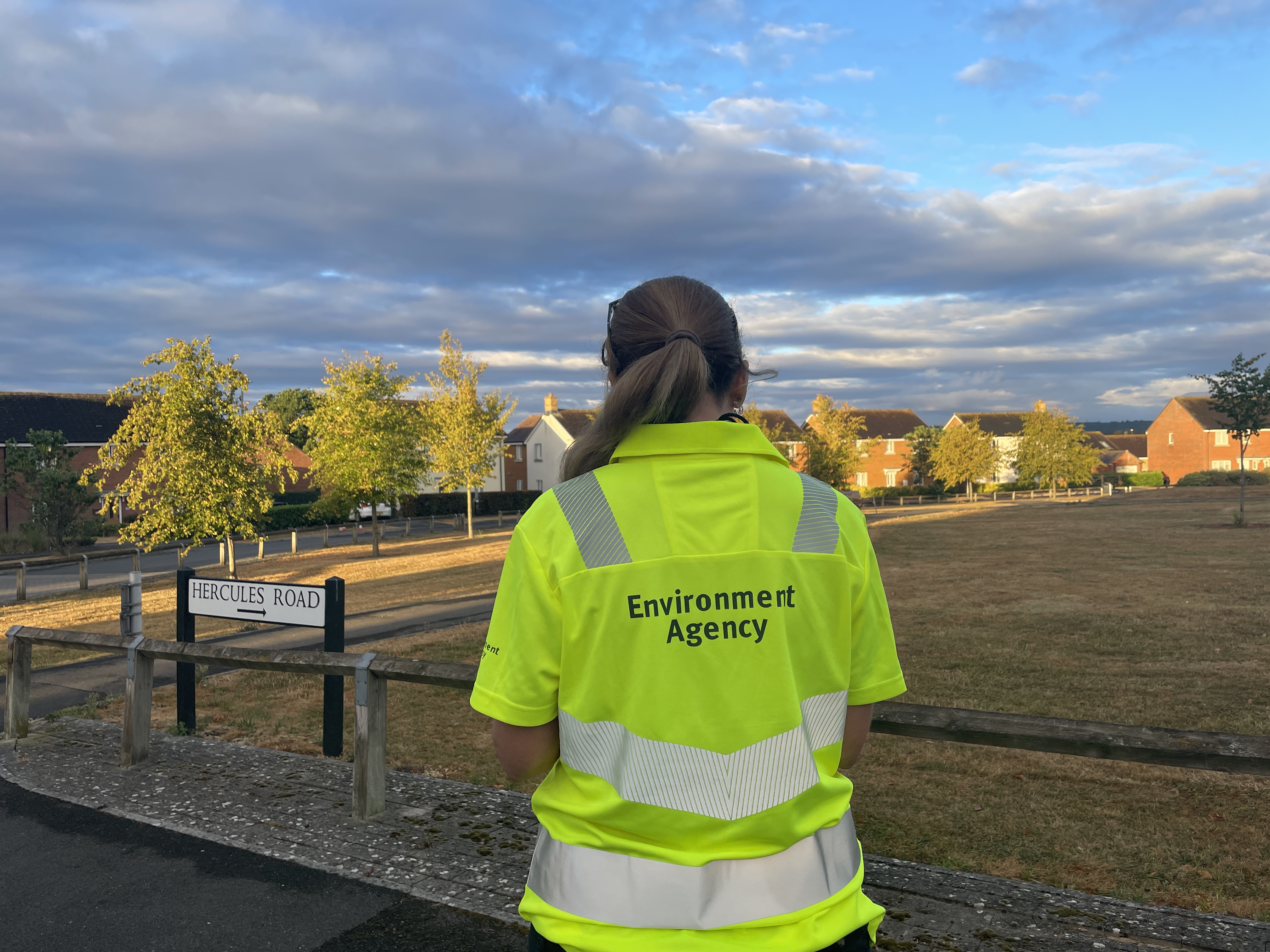 An Environment Agency officer monitors for odour in Calne - Aug 26

-
 Environment Agency Prepared Q&A
- What action has the Environment Agency taken at the Hills Lower Compton Landfill Site?
- Is there an option to close down the site?
- Why has the Environment Agency been carrying out air monitoring in Calne?
- What have we been measuring?
- How do we assess odour from the site?
- How do you decide if there has been a permit breach?
- How are residents' reports used?
- How is the Environment Agency working with partners?
- Why was the primary school used as the monitoring location, and will you be adding further monitors in the community?
- Can residents trust the data?
- Why was data analysed for October 2025 to April 2026? Why did the monitoring report take so long?
- What happens now the report has been published? What does the report mean for Compton Bassett waste site?
-
UKHSA Prepared Q&A
-
Wiltshire Council Prepared Q&A
- What advice can you give to residents?
- What is statutory nuisance and how does Wiltshire Council investigate odour complaints?
- What is Wiltshire Council's approach to the investigation and enforcement of odour complaints associated with sites operating under an environmental permit?
- What is Hills Waste Solutions doing about it?
- Are the recent fires at the Lower Compton Waste Transfer facility connected to this?
- What is the impact of the Northacre MBT closure on Hills' operations at the Lower Compton waste transfer site and landfill?
-
 Environment Agency Northacre Briefing 1.pdf (76.8 KB) (pdf)
-
Environment Agency Northacre Briefing 2.pdf (122 KB) (pdf)
-
Environment Agency Northacre Briefing 3.pdf (204 KB) (pdf)
-
Environment Agency Northacre Briefing 4.pdf (105 KB) (pdf)
-
Environment Agency Northacre Briefing 5.pdf (146 KB) (pdf)
-
Environment Agency Briefing 6 WESTBURY INCINERATOR .pdf (162 KB) (pdf)
-
Environment Agency Briefing 7 WESTBURY INCINERATOR.pdf (93.8 KB) (pdf)
-
Environment Agency Northacre Briefing 8.pdf (164 KB) (pdf)
-
 In this short animation, we explain how weather conditions and local topography influence the way odours travel from landfill sites.
-

Phone 03708 506 506 Email WessexEnquiries@environment-agency.gov.uk