
Understanding England's Water Environment
Exploring the health of our waters
England's rivers, lakes, estuaries, coastal waters and groundwater support wildlife, provide drinking water, help grow food and create places for people to enjoy.
To protect these waters, one of the key things we do at the Environment Agency is to monitor the condition of England's water environment, and assesses how healthy it is. The Water Environment (Water Framework Directive) Regulations, shape our approach.
Why are we publishing this information?
The latest classifications provide a detailed picture of the condition of England's waters. They show where waters are in good condition, where challenges remain, and where action is needed to improve them.
We are required by law to publish this information, we understand that this data is complex, and we want it to be as accessible and useful as possible. We believe everyone should be able to understand the condition of their local water environment and the evidence that helps shape decisions about improvement. That's why we've created explanatory content and detailed FAQs to help people explore and understand the results.
Understanding the results
Water environment classifications can be complex. They involve hundreds of different measurements covering water quality, wildlife, habitats, water quantity and chemicals.
A headline result only tells part of the story. To understand what the classifications mean, how they are calculated and how they are used, we've created a series of short explainers covering the most common questions. Click here to explore the explainers.
Access the data
You can access the results from 6 August via our data services platform. It is important to know that the results will not be posted to our catchment data explorer until late December this year, to support consultation on the draft updated River Basin Management plans. The results that are currently on the CDE relate to the 2019 results.
- To access the data from 2025, please use the data services platform.
Frequently asked questions
Click here to access some key FAQs.
-
 England's rivers, lakes, estuaries, coastal waters and groundwater support wildlife, provide drinking water, help grow food and create places for people to enjoy.
To protect these waters, one of the key things we do at the Environment Agency is to monitor the condition of England's water environment, and assesses how healthy it is. The Water Environment (Water Framework Directive) Regulations, shape our approach.
England's rivers, lakes, estuaries, coastal waters and groundwater support wildlife, provide drinking water, help grow food and create places for people to enjoy.
To protect these waters, one of the key things we do at the Environment Agency is to monitor the condition of England's water environment, and assesses how healthy it is. The Water Environment (Water Framework Directive) Regulations, shape our approach.
-
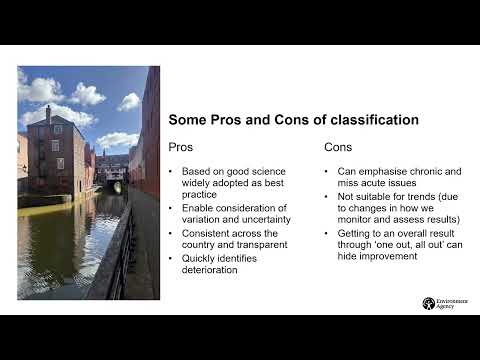
 The Environment Agency's Chief Scientist Robert Bradburne talks about the latest data release on England's water environment. Watch this video to hear about how we will be using the Water Framework Directive classifications data, what it means and more.