
Project Background
What's the problem?
Flood Risk In South Elmsall
South Elmsall is a town in West Yorkshire, approximately 10 kilometres South from Pontefract. It is the second largest settlement within the borough with a population of over 50,000 people. South Elmsall is situated where 'Ea Beck' is joined by 'Langthwaite Beck' and has experienced significant flooding in the past.
The watercourses in South Elmsall can be constricted and have been prone to blockage. In 2007 this was a key mechanism which caused flooding in the area, you can see the recorded flood outline from that event in the map below.
There are several culverts throughout the town, and particularly those near Langthwaite Lane and beneath the Railway line in the town centre have blocked and caused flooding in the past.
Even without the risk of blockage the watercourses can become overwhelmed during very heavy rainfall events and this also creates flood risk for the town.
You can see in the map below the flood zones in South Elmsall and the recorded flood outline from the 2007 flood event. To check your own flood risk from different sources select 'Check your flood risk' in the Useful Links section of the main project page.
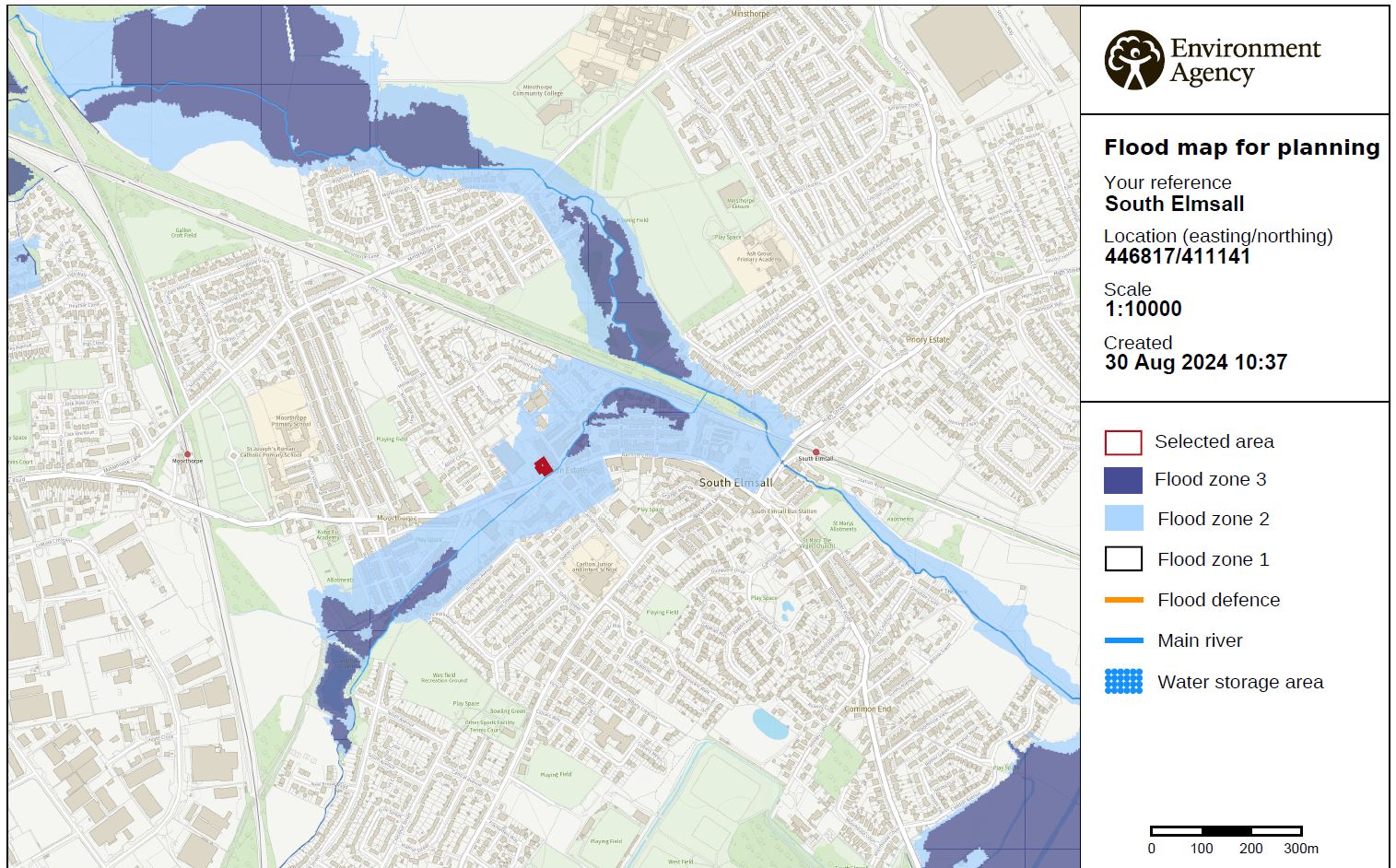 Map showing the flood zones in South Elmsall
 Map showing the recorded flood outline from the 2007 flood event in South Elmsall
How could it be addressed?
Options development
As we approach the submission of the Outline Business Case, we are refining the options which are the most viable and likely to be part of any deliverable scheme.
The interventions we are currently investigating aim to combat the most significant mechanisms contributing to flood risk in South Elmsall. These have been identified through our investigations and through discussion with the local community.
The map below shows some areas of focus for our investigations, based on the risk mechanisms which increase the chance of flooding in the town. Below that, there is some description of the possible interventions to combat those mechanisms and explanation of how these could work.
 Map showing examples of scheme options and the Main River lines
Flood Relief Culvert & Debris Screen
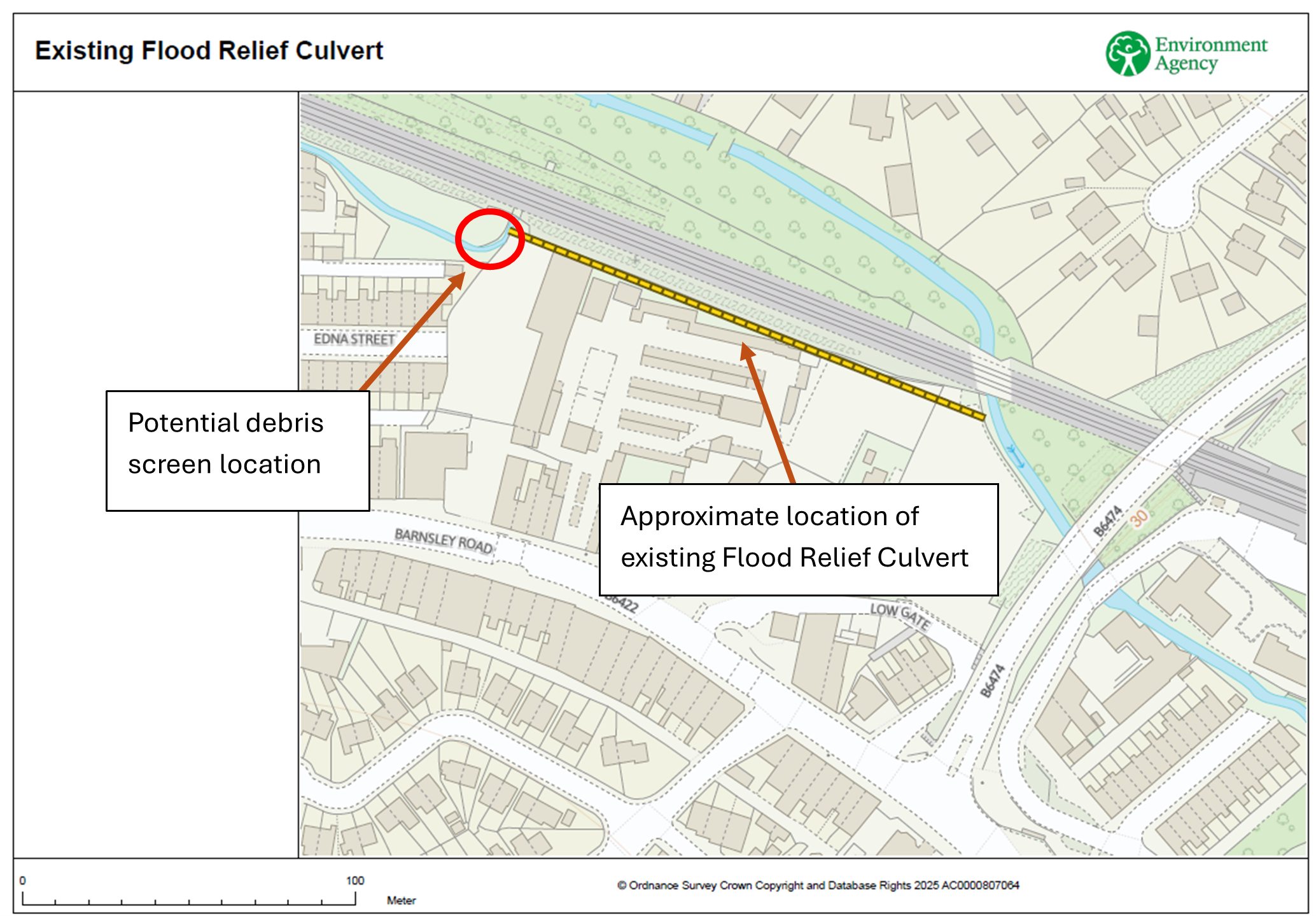
Risks - To the North West of the Railway Station in South Elmsall, Langthwaite Beck turns North East and runs beneath the railway line through a small culvert.
This culvert has been prone to blockage in the past, notably in 2007 such a blockage exacerbated the flooding experienced in the area.
From just upstream of this culvert, there has been constructed a flood relief culvert running beneath the marketplace to the South East and joining the Ea Beck when it passes back underneath the railway line.
We believe this culvert is currently blocked, so it cannot provide the extra capacity it was designed to deliver, which could increase the risk of flooding.
Potential Solutions - To prevent the likelihood of blockage to these culverts, installing a screen which could be cleared more easily and prevented debris from entering the culverts and blocking them more significantly could reduce this risk.
An example of the kind of structure this could be can be seen in the picture below.
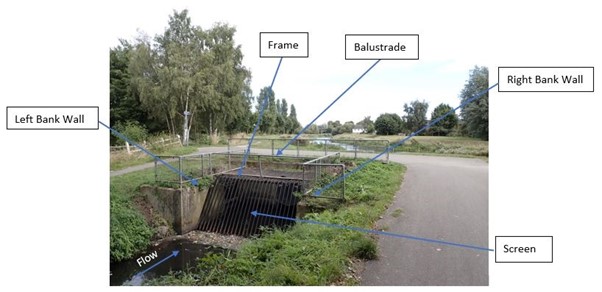 Example of a debris screen, similar to that which could be used in South Elmsall
To combat the risk of the blocked the flood relief culvert, a potential option is to increase the capacity of this culvert to allow more water to pass through during a flood event.
This could be through amendment to the existing culvert or installation of a new pipe to allow more flow when river levels are high.
Deculverting & Storage Areas
Risks - The culvert which begins at the Southern end of Langthwaite Lane, although it already has a debris screen at it's entrance, has been overwhelmed in past events.
In 2007 the water which could not pass through this culvert flowed North East along Langthwaite Lane then down Barnsley Road into the town centre.
Potential Solutions - It's important here to reduce pressure on the culvert, through reducing blockage risk and reducing the peak flow into the culvert during heavier rainfall events.
One way to do this is to store some of the water when the river is high, which would relieve some pressure on the culvert as well as downstream system.
A possible intervention here could be to open up the culvert for a stretch underneath the land to the East Langthwaite Lane, as well as installing some small storage areas on this part of the beck and on Little Langthwaite to the North.
In addition to the potential for flood risk benefit, this could also provide the opportunity to create habitat, environmental benefits and public space for the benefit of the community.
We hope that we can work with the community to decide exactly what this could look like, to make sure the public maximise the benefits of any works.
There could also be opportunities to look at natural flood management upstream on both Langthwaite Beck and Ea Beck.
Again, these could be opportunities to look for wider environmental benefits and helping the local communities connect with nature, as part of a collection of flood risk interventions.
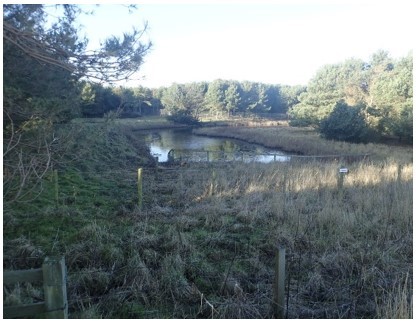 Example of a small storage area
Property Level Considerations
In some places, it may be that a viable intervention over a wider area is difficult to find due to the number of properties at risk, a lower level of risk or this risk being spread over a wider geographical area.
Where this is the case, the risk could be combatted using smaller scale, property level flood risk measures. This can take several different forms, these can relate to reducing the risk to a property itself, or speeding up the time taken to recover following a flood event.
You can find information about this concept and some of the different types of intervention on the Environment Agency webpage for Property Flood Resilience
There are also possible measures internally such as raising electrics and water resistant fittings and flooring which can make it easier to recover should the property be impacted by floodwater.
Channel Maintenance & Blockage Risks
Flood risk in South Elmsall has been exacerbated in the past by blockage to culverts and restriction of watercourses.
This is often the result of debris, litter, vegetation and sometimes larger objects causing restriction to flow and during heavy rainfall, increasing the likelihood of flood impacts.
Addressing this could also form an important part of works to reduce flood risk. This could be through improving access for maintenance, or methods to reduce the amounts of material ending up in the river channel, through human cause or natural processes and growth.
Where a watercourse runs through, or along the boundary of someone's property, they have some responsibilities as the riparian owner.
Water needs to be able to flow normally, so there may be need to remove some blockages and cut back vegetation where the channel intersects with property.
People should report to the Environment Agency cases of blockage which could cause flooding from a statutory main river, pollution, collapsed banks or potentially unpermitted work in or near the watercourse.
They can do this using the 24 hour incident hotline on 0800 80 70 60. You can visit the gov.uk webpage on reporting an environmental problem to learn about this, and for more details on owning a watercourse and the related responsibilities please visit The gov.uk page on owning a watercourse.