We use cookies to ensure our site functions properly and to store limited information about your usage. You may give or withdraw consent at any time. To find out more, read our privacy policy and cookie policy.
Manage Cookies
A cookie is information stored on your computer by a website you visit. Cookies often store your settings for a website, such as your preferred language or location. This allows the site to present you with information customized to fit your needs. As per the GDPR law, companies need to get your explicit approval to collect your data. Some of these cookies are ‘strictly necessary’ to provide the basic functions of the website and can not be turned off, while others if present, have the option of being turned off. Learn more about our Privacy and Cookie policies. These can be managed also from our cookie policy page.
Strictly necessary cookies(always on):
Necessary for enabling core functionality. The website cannot function properly without these cookies. This cannot be turned off. e.g. Sign in, Language
Analytics cookies:
Analytical cookies help us to analyse user behaviour, mainly to see if the users are able to find and act on things that they are looking for. They allow us to recognise and count the number of visitors and to see how visitors move around our website when they are using it. Tools used: Google Analytics
The Environment Agency is working to reduce flood risk to 20,000 residential homes, 1,700 businesses, 24,500 static caravans, 35,000 hectares of farmland and a bustling tourist industry.
The Lincolnshire coastal flood plain has a long history of flooding from the sea and many forms of defence are now in place including sand dunes, seawalls, rock/timber structures and beaches.
Just over 45,000 people live within the Saltfleet to Gibraltar Point Strategy area and each year a further 2.7 million people visit the area generating almost £500 million annually for the Lincolnshire coastal economy. Our flood risk management work in this area is vital for the continued success of Lincolnshire’s coastal communities, its bustling tourism industry, and its strong agricultural sector.
Get involved
Your ideas are important for the Saltfleet to Gibraltar Point Strategy to maximise the opportunities for local communities and the environment. We have developed this page to share updates and seek your ideas and feedback for our current Beach Management campaign and the next stages of the Strategy.
Our newsfeed will be updated throughout the lifespan of the strategy so you can see how your feedback has shaped our projects.
Make sure to register and subscribe so we can provide you with updates.
Video: Saltfleet to Gibraltar Point Beach management
As climate change predictions become a reality, it is crucial that we consider and plan for the effects of severe weather and sea level rise throughout our work. We regularly review our flood risk management strategies and plans to ensure we continue to provide a sustainable and affordable future for all.
By restoring beach levels lost over the year, the Environment Agency protects its engineered sea defences from the impact of waves and tides. The coastline between Mablethorpe and Skegness has benefitted from beach nourishment, the present flood risk management approach, since 1994.

The Environment Agency is working to reduce flood risk to 20,000 residential homes, 1,700 businesses, 24,500 static caravans, 35,000 hectares of farmland and a bustling tourist industry.
The Lincolnshire coastal flood plain has a long history of flooding from the sea and many forms of defence are now in place including sand dunes, seawalls, rock/timber structures and beaches.
Just over 45,000 people live within the Saltfleet to Gibraltar Point Strategy area and each year a further 2.7 million people visit the area generating almost £500 million annually for the Lincolnshire coastal economy. Our flood risk management work in this area is vital for the continued success of Lincolnshire’s coastal communities, its bustling tourism industry, and its strong agricultural sector.
Get involved
Your ideas are important for the Saltfleet to Gibraltar Point Strategy to maximise the opportunities for local communities and the environment. We have developed this page to share updates and seek your ideas and feedback for our current Beach Management campaign and the next stages of the Strategy.
Our newsfeed will be updated throughout the lifespan of the strategy so you can see how your feedback has shaped our projects.
Make sure to register and subscribe so we can provide you with updates.
Video: Saltfleet to Gibraltar Point Beach management
As climate change predictions become a reality, it is crucial that we consider and plan for the effects of severe weather and sea level rise throughout our work. We regularly review our flood risk management strategies and plans to ensure we continue to provide a sustainable and affordable future for all.
By restoring beach levels lost over the year, the Environment Agency protects its engineered sea defences from the impact of waves and tides. The coastline between Mablethorpe and Skegness has benefitted from beach nourishment, the present flood risk management approach, since 1994.
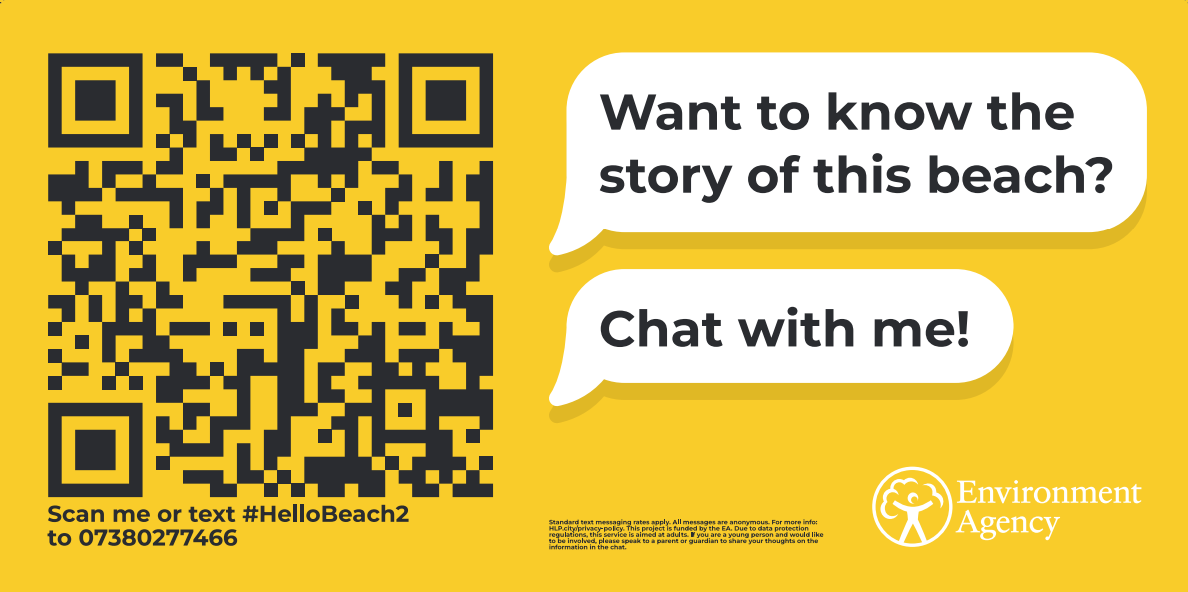
Have you spotted our interactive AI signs across the Lincolnshire Coast? Our signs now mean you can chat with us 24/7 through our AI tool platform hosted by 'Hello Lamp Post'.
We now have 41 locations along the coast between Saltfleet and Skegness.