Case studies
Reconnecting Yorkshire's rivers for salmon recovery
The Great Yorkshire Rivers partnership is helping create better conditions for salmon and other migratory fish by tackling barriers to migration and improving river connectivity.
Read the full case study below.
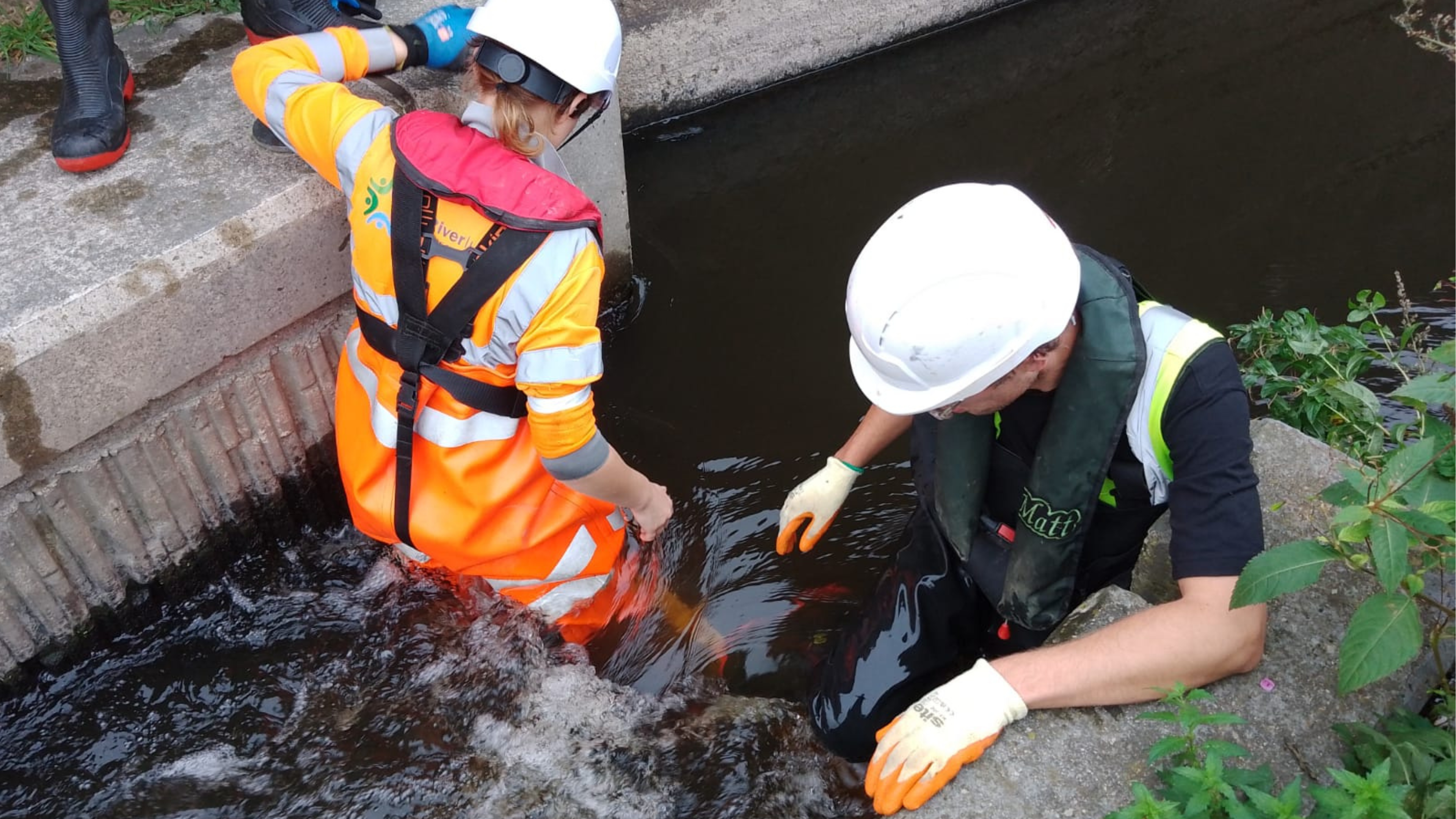
Annual fish pass maintenance. Image credit: Don Catchment Rivers Trust
ContextAtlantic salmon depend on long, connected river networks to complete their life cycle. They need access to healthy spawning grounds, suitable juvenile habitat and clear migration routes between rivers and the sea.
Across Yorkshire, many rivers have been altered over decades by weirs, dams and other man-made barriers. These obstacles can restrict fish movement, fragment habitat and reduce the ability of salmon and other migratory fish to reach the places they need to survive and reproduce.
Restoring these connections is a vital part of creating healthier, more resilient rivers and supporting the long term recovery of salmon populations.
Action - Working together to reconnect rivers
The Great Yorkshire Rivers partnership brings together the Environment Agency, Yorkshire Water, The Rivers Trust and 13 other organisations with a shared ambition to improve river connectivity and support the recovery of migratory fish across Yorkshire.
Through Yorkshire Water's 2025-30 environmental programme, investment is supporting river restoration and fish passage improvements across Yorkshire, helping reconnect habitats and improve migration routes for salmon and other migratory fish.
Partnership members are working together to identify and address barriers to fish migration, improve fish passage, restore river habitat and strengthen the health and resilience of river catchments across the region.
By combining expertise, resources and local knowledge, the partnership is helping deliver practical improvements on the ground that no single organisation could achieve alone.
Impact - Creating opportunities for recovery at scale
By improving fish passage and reconnecting rivers, the partnership is helping create more resilient river networks and opening up access to habitat that has been unavailable to migratory fish for generations.
While salmon recovery remains a long-term challenge, this work is creating the conditions needed for fish populations to rebuild and improving river health for a wide range of species.
The return of salmon to parts of the River Don catchment in recent years demonstrates the potential for recovery when barriers are removed and rivers are restored. Achieved through the efforts of multiple organisations over many years, it provides a powerful example of the long-term change that river restoration can support.
The Great Yorkshire Rivers Partnership is building on this wider momentum, helping reconnect Yorkshire's rivers and showing how long-term partnership working can support healthier rivers, thriving wildlife and more resilient catchments for future generations.
Protecting salmon where recovery starts: England's rivers
Improving flows, tackling pollution and restoring habitat for future generations of salmon.
Through England's NASCO commitments, organisations are taking practical action to address some of the key pressures affecting salmon populations.
Read the full case study below.
Context
Wild Atlantic salmon are one of England's most recognisable and valued species. But populations have declined significantly in recent decades, with many rivers now supporting far fewer salmon than they once did.
The challenges are complex. Low river flows can delay migration and leave fish vulnerable. Pollution can affect salmon at every stage of their life cycle. Historic river modifications and physical barriers can prevent fish from reaching important spawning and feeding habitat.
Protecting salmon means tackling these pressures together and focusing action where it can make the greatest difference.
Action - Turning commitment into recovery
Defra and the Environment Agency have set out a long-term programme of action through the North Atlantic Salmon Conservation Organisation (NASCO), bringing together government, regulators, water companies, land managers, catchment partnerships and angling organisations around a shared recovery effort.
The work focuses on the three pressures causing the greatest harm to salmon in freshwater environments.
In priority catchments, action is underway to improve river flows through abstraction reviews, reservoir management and water company investment. Alongside this, we are increasing farm inspections, improving oversight of wastewater treatment works and supporting investment to reduce pollution entering rivers.
We are also working to reconnect rivers and restore habitats by improving fish passage, removing barriers, delivering river restoration projects and planting trees that help keep rivers cooler and more resilient in a changing climate.
Impact - Building healthier rivers for the future
Salmon recovery will take time, but progress is already being measured and tracked through clear commitments and annual reporting.
The programme provides a shared framework for action across England's salmon rivers from 2026 to 2032, helping ensure efforts are coordinated, evidence led and focused on long term results.
While no single action can reverse salmon decline on its own, improving flows, water quality and habitat creates healthier rivers for wildlife, local communities and future generations. It is an investment in the places where salmon recovery begins and where lasting change can be achieved.