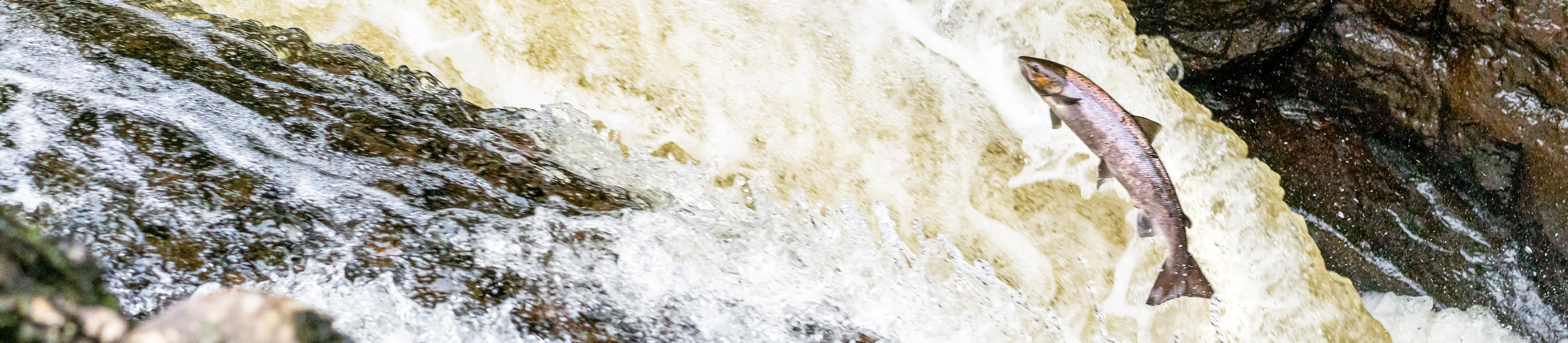
Salmon Stock Assessment
Atlantic salmon in England: understanding the challenge and the path to recovery
Atlantic salmon are one of England's most iconic species. Born in our rivers, they migrate thousands of miles across the North Atlantic before returning to the rivers where they were born to spawn.
But salmon populations continue to face significant challenges, both in rivers and at sea. The latest salmon stock assessment shows that many of England's salmon rivers are supporting fewer salmon than are needed for sustainable populations.
While recovery will take time, action is underway across England to improve rivers, reconnect habitats and support salmon populations for future generations.
At a glance
40 of 42 rivers
40 of England's 42 principal salmon rivers are currently classified as either "at risk" or "probably at risk".
Multiple pressures
Salmon face a range of pressures throughout their lifecycle, including climate change, river flows, habitat condition, barriers to migration, water quality and environmental pressures in the marine environment.
Recovery takes partnership
Recovery depends on action from government, regulators, water companies, land managers, anglers and environmental organisations.
Action is underway
Organisations across England are working together to improve river health, restore habitats, reconnect rivers and support salmon recovery.
Why are salmon important? 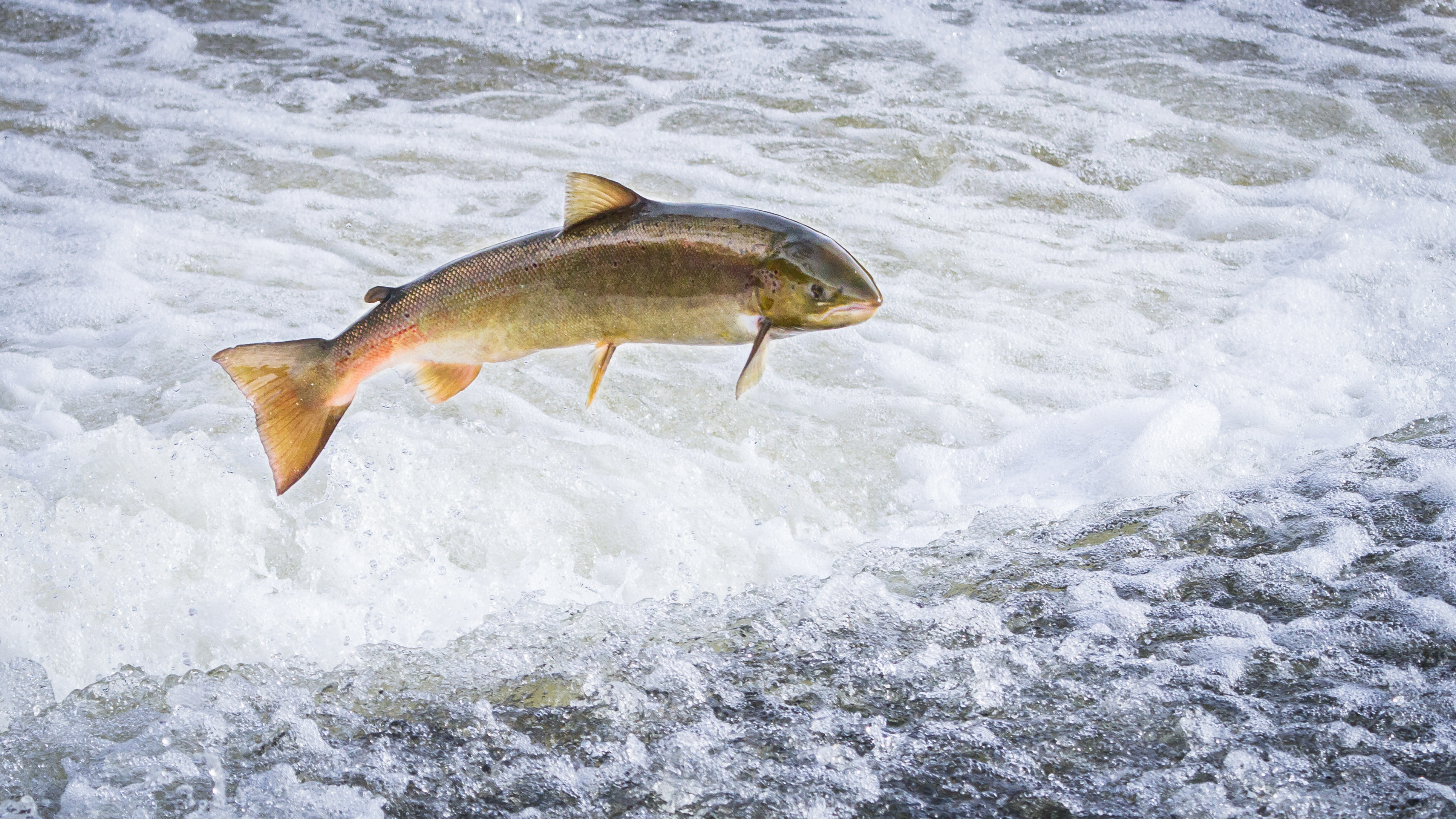
Atlantic salmon are often described as an indicator species.
Because they depend on healthy rivers, estuaries and seas throughout their lives, they help us understand the wider health of the environment.
Action to support salmon can also benefit many other species and improve river health for people and wildlife.
Recovery in action
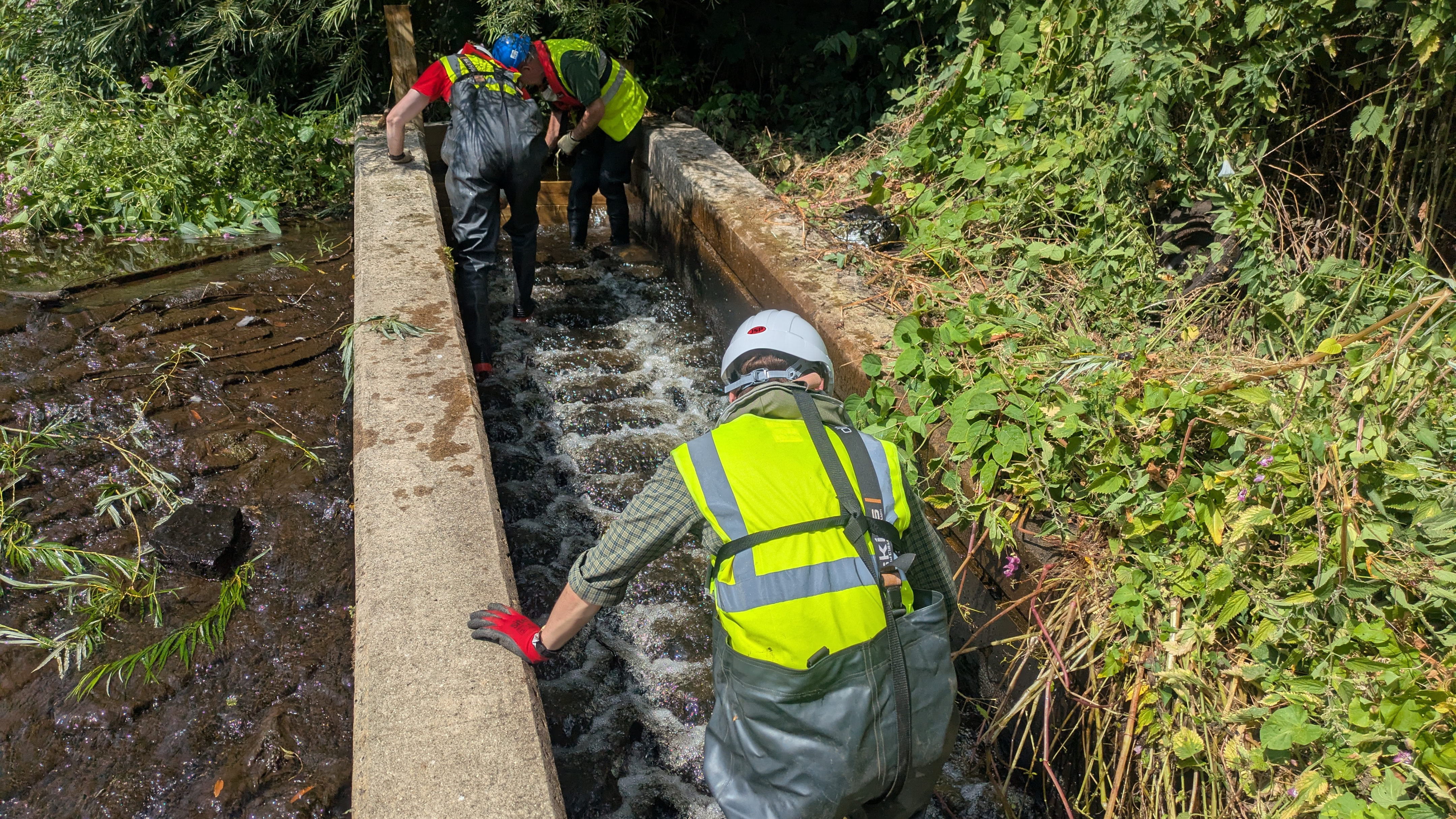
Annual fish pass maintenance. Image credit: Don Catchment Rivers Trust
Reconnecting Yorkshire's rivers for salmon recovery
Protecting salmon where recovery starts
Through England's salmon conservation commitments, organisations are working together to improve river flows, tackle pollution and restore habitat for salmon.
-
 Protecting vulnerable fish populations requires more than river restoration.
Watch how Fisheries Enforcement Officers work year round to tackle illegal fishing and protect fisheries across England.
Protecting vulnerable fish populations requires more than river restoration.
Watch how Fisheries Enforcement Officers work year round to tackle illegal fishing and protect fisheries across England.