
Why do we need a large flood scheme in Oxford and what are the benefits of the scheme?
Why do we need a large flood scheme in Oxford?
Flooding in Oxford
Oxford has a long history of flooding. Significant floods in past decades have caused property damage to homes and businesses and closed the railway and major roads, bringing the city to a standstill. Since 2000 there have been 8 floods that caused property flooding. For those that experienced the floods of 2003, 2007 or 2013/2014, the disruption will be memorable. Floodwater cut off Botley and Abingdon Roads, closed the railway line and caused devastation to many homes and businesses.
High river flows in 2020, 2021, and 2024 were a reminder of how vulnerable many homes are, with floodwater held back by temporary barriers and pumps. Recent floods have been nowhere near the scale we expect in coming years due to climate change. It is only a matter of time before Oxford again sees a major flood of a size last experienced in 1947, when over 3000 properties were flooded.
 Recent floods in and around Oxford
Climate change
With climate change, flooding in the UK will become both more frequent and more severe. In the face of this increasing flood risk, the scheme is designed to cope with major floods of a scale Oxford last experienced in 1947. We have followed the latest guidance on climate change throughout the development of the Oxford Flood Alleviation Scheme. The scheme will provide a long term, sustainable solution to manage flooding in Oxford for the next 100 years.
What are the benefits of the scheme?
Flood risk benefits
The scheme will reduce flood risk to all homes and businesses in Oxford currently at risk of flooding from the River Thames. It will also reduce the risk of flooding to the mainline railway and roads, including Botley and Abingdon Road. This lowers the financial damage caused by flooding and lessens the stress and mental impact of flooding, which can be devastating to communities.
Even if your property is not directly at risk, you will benefit from fewer flood related interruptions to essential utilities, including water, electricity, phone signal, and internet. Schools and community services in flood risk areas won’t need to close during floods. There will be less disruption to road and rail travel around the city which will help to keep Oxford open for business and support the tourist economy. Over 100 years, having the scheme in place will save over £1.8 billion in costs by reducing the impact of flooding on the city.
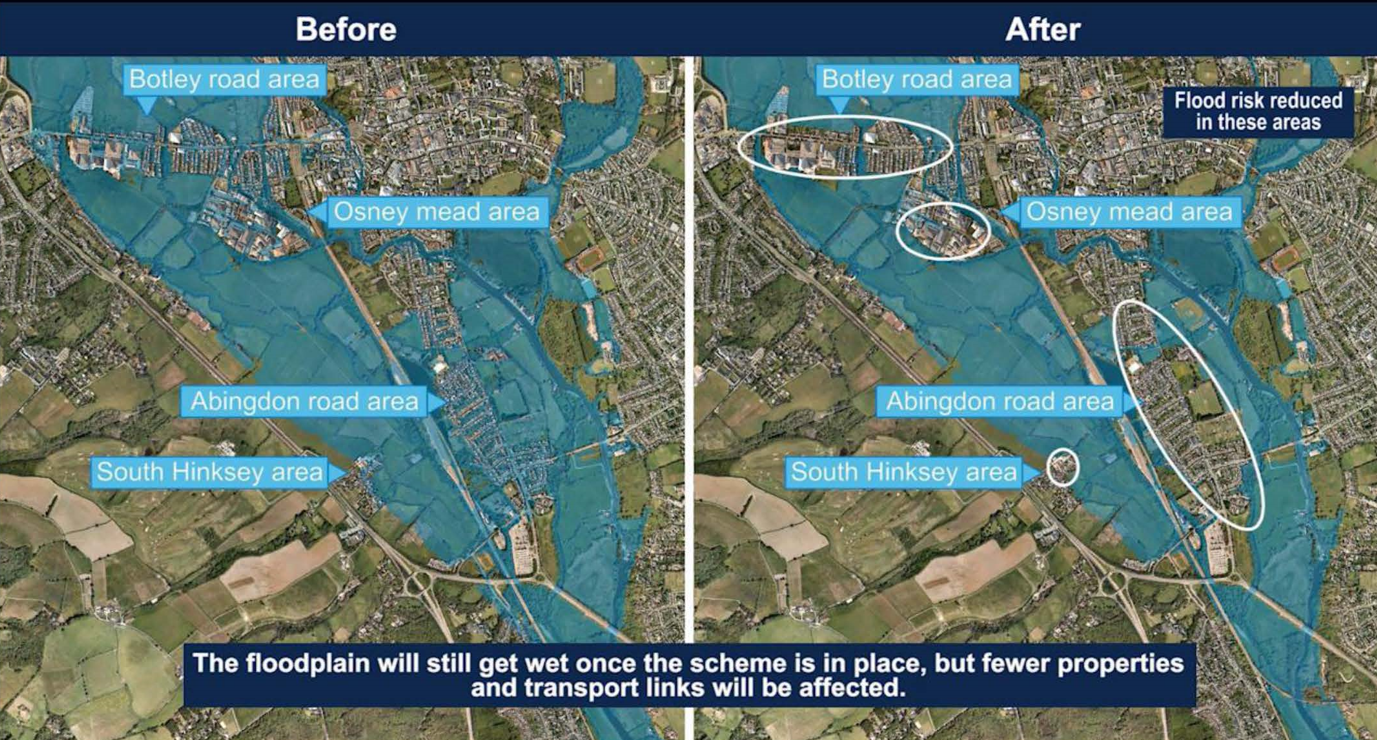
Map showing reduction in flood risk after the scheme is in place
[Please note this map is for illustration only and not to be used to understand individual flood risk].
Without the scheme in place, the impact of larger and more frequent floods in Oxford will rise over coming decades due to climate change. By reducing flood risk to businesses and vital infrastructure, the scheme will ensure flooding is not a constraint to future growth in the area. It will allow the city to continue to thrive and bring wider social benefits such as job creation and skills training. We are also planning education links for local schools and have begun work with the University of Oxford to explore potential opportunities for academic research. Our aim is that the scheme will benefit everyone that lives, works in and visits Oxford and will continue to do so for generations to come.
Environmental benefits
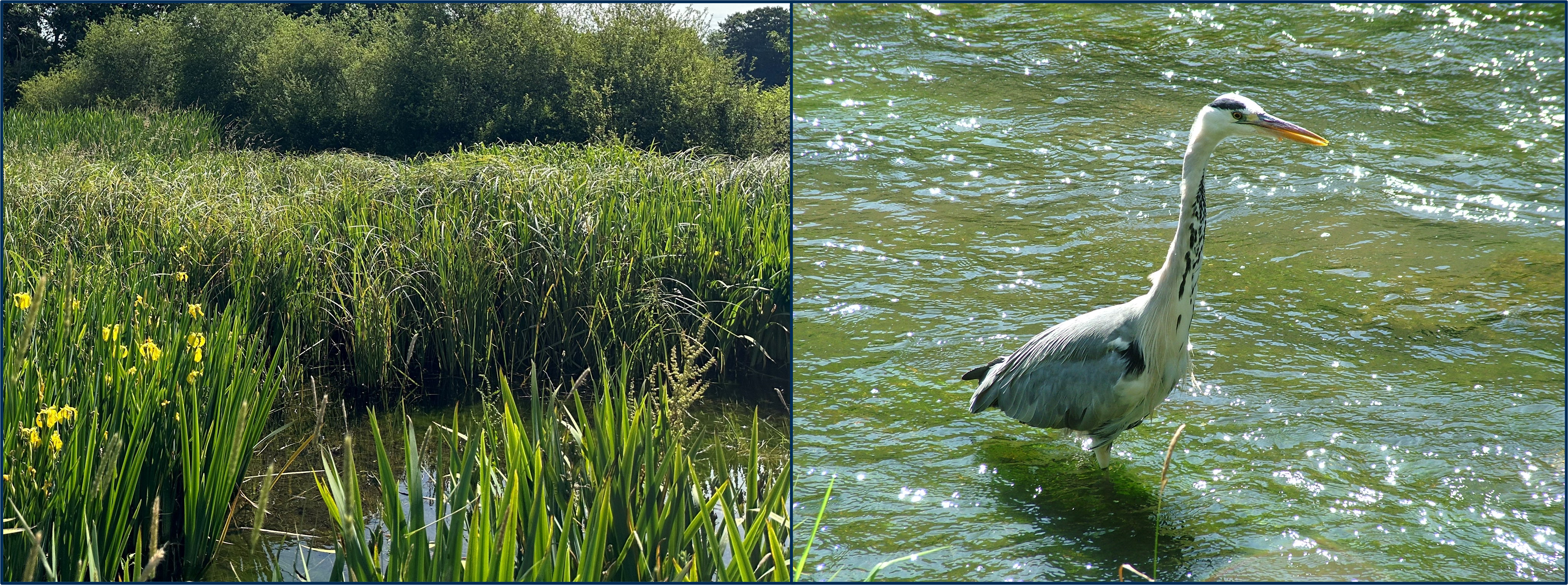
The scheme has been carefully designed to bring additional environmental benefits to the area beyond reduced flood risk. It has a nature-based design, creating a new stream and valuable new wetland habitat, which will join up with existing wildlife sites. We have an ambitious plan for the long-term management of the scheme area, which we call our Environmental Vision. This will ensure that the scheme is maintained for its lifetime, enhancing habitat, environmental and recreational benefits in the long term. Our aim is to leave a true green legacy to the area. You can read more details and answers to questions in our Environmental features and benefits section.
Enjoyment of the landscape
Our aim is that the new wetland and wildlife will further enhance enjoyment of the area. We will create a new track along much of the scheme to allow access for maintenance. A proportion of the track will be made into a permissive path that the public will be able to use for cycling and walking, increasing recreation opportunities in the area.