Operational Procedures: the processes we use to operate the Jubilee Flood Relief Channel
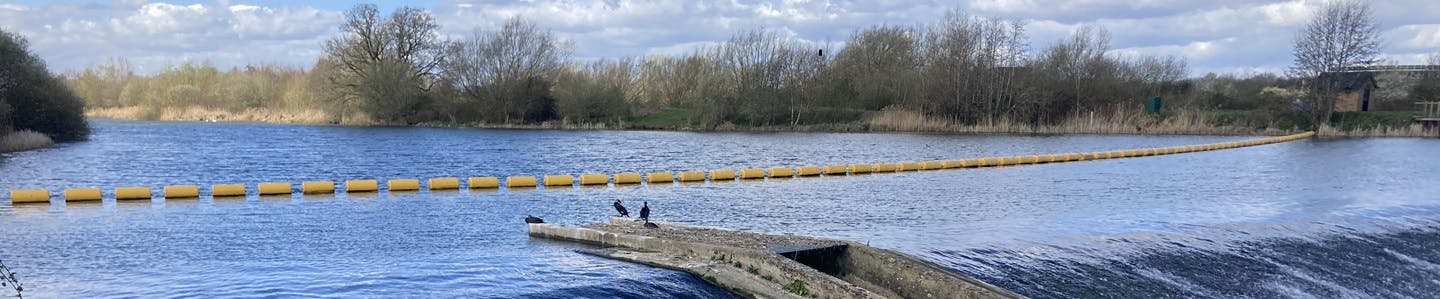
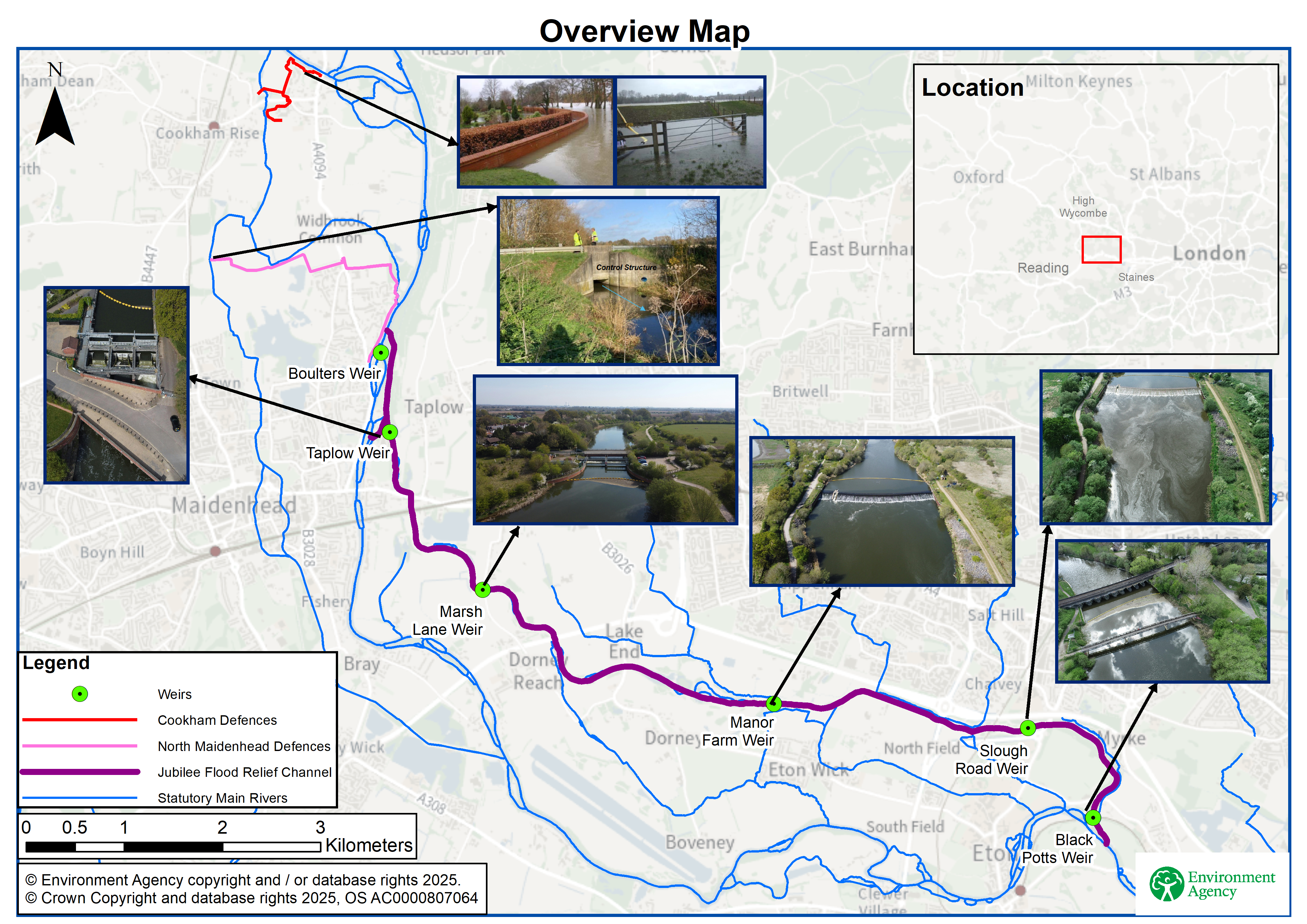
Taplow Weir is at the beginning of the Jubilee. We operate it to control the intake of flow from the River Thames. The intake is located upstream of Boulters Weir on the River Thames.
Marsh Lane Weir is downstream of Taplow Weir on the Jubilee. It has gates that operate automatically to maintain a constant water level.
There are 3 more weirs at Manor Farm, Slough Road, and Black Potts. These are all fixed crest weirs built at a defined height to maintain water levels but with no moving gates. The edge of the weir that water flows over is called the crest.
The Jubilee re-joins the River Thames downstream of Black Potts Weir.
We have duty officers monitoring weather forecasts, and levels and flows in the River Thames and other watercourses 24 hours a day, 7 days a week. They are trained to interpret weather and flood computer models and understand river catchments.
We monitor the river flow gauges on the River Thames at Windsor and Maidenhead to anticipate if the Jubilee will need to be operated.
We usually measure the height of rivers relative to a fixed point on or close to the riverbed. This is known as site datum.
There are triggers we use when deciding whether to operate the Jubilee.
the downstream water level at Boulters lock rises to 3.4 mASD (metres above site datum), River Thames level downstream at Boulters Lock - GOV.UK
Boulters Lock Weir gates are fully open.
When these triggers are met, duty officers, will consider these as well as forecast river and weather conditions to decide if we should operate the Jubilee. They also consider the flow at the Maidenhead Gauge River Thames level at Maidenhead - GOV.UK.
We then begin opening the Taplow weir gates at the start of the Jubilee. The flow in the Jubilee is initially increased by 10 cumecs from the sweetening flow.
We prioritise making gate movements for the Jubilee in daytime hours.
As the flow in the River Thames increases, we continue to open the gates at Taplow gradually by 10 cumecs at a time to divert more water along the Jubilee.
The total flow we can divert into the Jubilee (known as ‘capacity’) is 180 cumecs. How much water can be passed down the Jubilee depends on the level of water in the Thames upstream of Boulters Weir.
When flow in the Thames decreases, we reduce the amount of water flowing into the Jubilee by gradually lowering the Taplow Weir gates. The flow is reduced by 10 cumecs each time the level downstream of Boulters Lock falls to 3.25 mASD until the Jubilee is operating at the sweetening flow rate of 10 cumecs again.
- Closing the Cookham flood gates and operating mobile pumps
- Pumping water in the Myrke ditch (adjacent to Eton Road, Datchet) to enable it to continue to discharge into the River Thames
Operational Procedures: the processes we use to operate the Jubilee Flood Relief Channel
About these procedures
This is a summary of internal procedures used by our operational officers. It has been adjusted to remove any Environment Agency technical language to make it suitable for anyone.
Major structures that are part of the Jubilee Flood Relief Channel
Summary of how we operate the Jubilee
Other operational activities that are part of the Maidenhead Windsor and Eton Flood Alleviation Scheme
When we start operating the Jubilee, we put warning signs up at key locations along the channel such as the Marsh Lane and Lake End Road car parks and Slough Road Weir. These signs warn people of increased safety risks from high flows and changes to water levels. We also close footpaths at Black Potts viaduct and the M4 underpass to protect the public.
Other activities that are likely to be carried out include:
How to find out if the Jubilee is being operated
View the section at the bottom of the main information page called Jubilee Operational Status