Lower Hare Landfill - permit variation consultation open
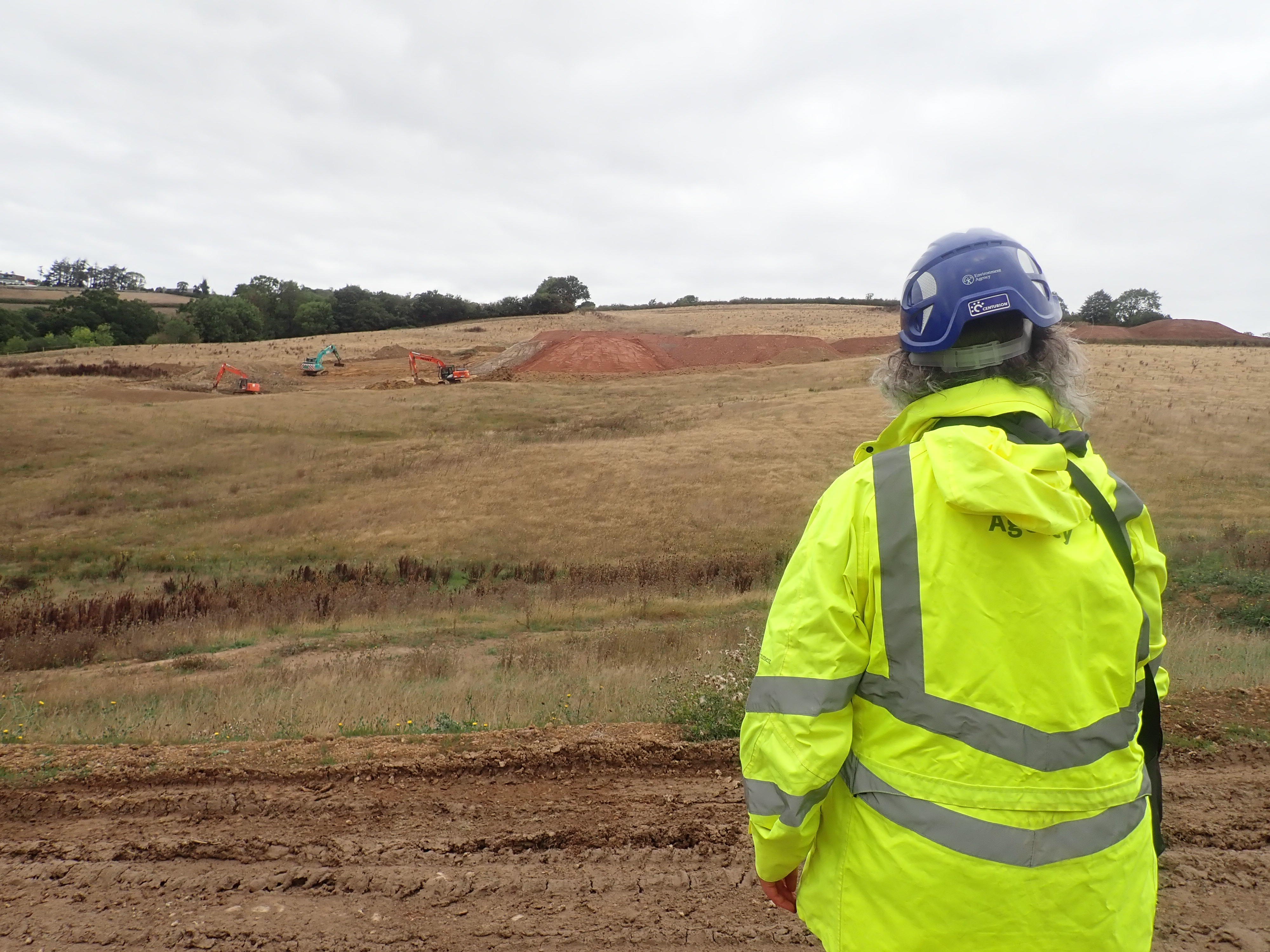
GRS Stone Supplies Ltd (GRS) want to vary their environmental permit for the Lower Hare Landfill site. This means the company has asked for our permission to make several changes to the permit. Because there is strong public interest in this site, we have opened a consultation on the proposed changes so that you can have your say.
In this article, we explain what we can and can't consider when we determine a permit application as some responsibilities fall to the local authority. We also explain what the applicant wishes to do, and we explain how you can take part in this consultation.
Introduction
On 3 April 2025, we issued GRS Stone Supplies Ltd with an environmental permit to operate an inert waste landfill site at Lower Hare Farm.
The company has been preparing the site for operation and has now applied to change some of the permit conditions.
The current permit allows the site to accept inert waste materials such as soils, stones, bricks, tiles and ceramics. These materials can come from sources including construction and demolition projects, and landscaping work in parks and gardens.
What is an environmental permit?
An environmental permit sets the conditions which GRS Stone Supplies Ltd must meet when operating the landfill site. It covers the management and operation of the site and the control and monitoring of emissions from the site.
The operator needs to explain how they will meet the current standards to protect human health and the environment. Their application describes the measures they will take, and we need to be satisfied they are appropriate to control the risks identified.
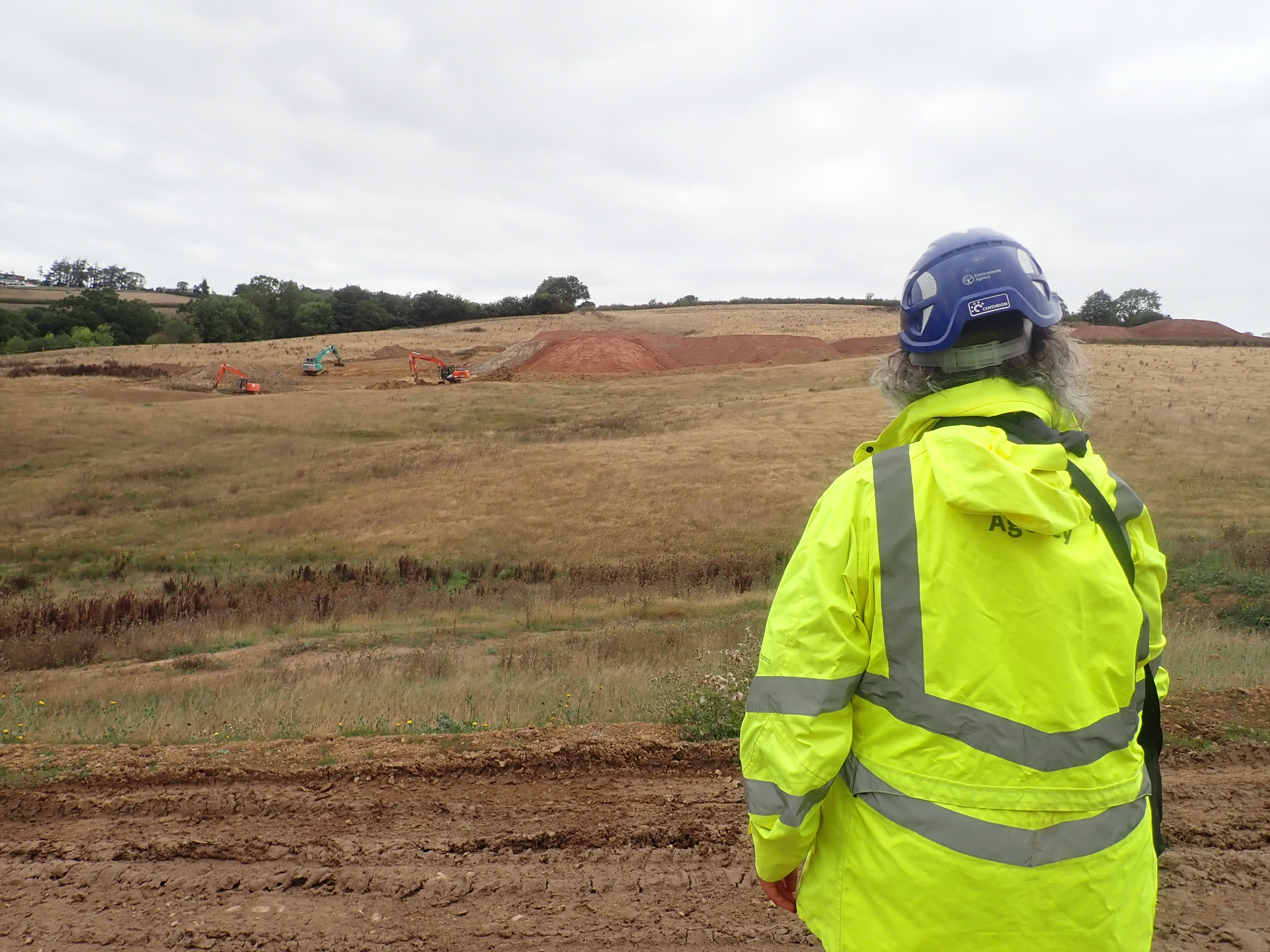
During an inspection, our regulatory officer observed GRS preparing the site.
What changes are being proposed?
Following advice from our regulatory officer, GRS has applied to vary their environmental permit. They have applied to make the following changes:
- Move surface water monitoring location SW3 further upstream, closer to monitoring location SW4. GRS have proposed moving monitoring location SW3 upstream, closer to SW4. This new location provides a more representative compliance monitoring point on the tributary that feeds into the Aller Brook. It will help them to better understand any impacts from the site and ensure their monitoring reflects water quality downstream of the area of interest.
- Remove pre-operational condition (PO1) that required a report to be submitted to us about the sources of waste. This has been completed.
- Add a new pre-operational condition covering the use of flocculants to control suspended solids. The condition would state that flocculants must not be used to manage suspended solids in surface waters unless we have agreed the type of flocculant and how it will be used. To support any request to use a flocculant, the applicant must submit a surface water risk assessment to the Environment Agency for review and agreement.
- Increase the site's annual tonnage limit from 150,000 tonnes to 250,000 tonnes. This change will support construction activities during the peak earthworks season and help keep the land restoration programme on track. GRS do not expect the proposed increase in throughput to change the level of risk from fugitive emissions or point source emissions.
- Introduce a manual turbidity monitoring method for daily suspended solids checks.
- Use real-time turbidity monitoring equipment and reduce laboratory analysis from daily to monthly. This reflects the impracticality of a five-working-day turnaround time for daily laboratory results. The real-time data would be supplemented by routine laboratory analysis.
- Update monitoring limits at location SW3 to reflect its proposed new position.
- Amend the compliance limit for nickel concentrations so it reflects background levels identified through monitoring undertaken before waste was imported to the site.
How do we assess an environmental permit variation application?
We assess all permit variation applications to make sure they meet the requirements of the Environmental Permitting Regulations. When we consider a permit variation application we review the proposed changes to the design of the site, how it will be operated, the emissions it will generate (to air, water and land) and whether it will meet the required standards.
We consult professional partners, such as the local authority, where required. We also take advice on potential health impacts from Public Health England.
We also take into consideration the competence of the operator to run the facility.
How is the Planning System different?
Planning permission must be sought from the local planning authority before any development takes place. Planning is a separate and distinct process from permitting. Planning permission can be granted by a local authority without an environmental permit being in place and vice versa.
In broad terms, the planning process is intended to ensure that the right sort of development takes place in the right place, and that it is necessary. It addresses the development's proposed land use and how suitable the location is, as well as considering flood risk, other environmental constraints and if there is a local and national need for the development. It also considers operating hours, implications for road traffic, safety and congestion and the potential visual impact in the landscape. These issues are not covered by an environmental permit.
We cannot consider if this is an appropriate location for this development as this is a planning matter and would have been considered by Devon County Council. The table below shows which we can consider, and which are matters for the planning authority to consider.
Permitting - Environment Agency | Planning - Devon County Council* |
General operation of the site | Benefit to the local economy |
Emissions to Air | Location of the site |
Pollution to surface and groundwater | Visual impact |
Noise Control | Flood Risk |
Dust Control | Other Environmental Concerns |
Pest Control | Operating Hours |
Fire Risk | Traffic Management to and from the site |
Odour Control | Issues covered by the national government policy, e.g. the waste hierarchy |
*These lists are not exhaustive.
How can you take part in the consultation on the permit application?
You can now comment on this permit variation application. The application can be viewed online on our consultation portal, Citizen Space; please see the link below.
We can only consider issues covered by the environmental permit and can only refuse a permit application based on technical information.
Please bear in mind that we are bound by the Regulator's Code and can only refuse a permit application if we have technical evidence that the activity will cause harm to the environment or human health, and the operator cannot reduce this impact through control measures.
Please follow this link to our consultation portal:
We must receive your comments by 11:59pm on 26 October 2026.
You can send us your comments using our online consultation portal, Citizen Space, or by:
Email: pscpublicresponse@environment-agency.gov.uk
Post: Environment Agency Permitting and Support Centre, Land Team, Quadrant 2, 99 Parkway
Avenue, Sheffield, S9 4WF.
If you need help accessing this consultation in another format, please contact us by:
Email: DCISEnquiries@environment-agency.gov.uk
Phone: 03708 506 506
We may charge for copying costs.
What happens next?
Once the consultation closes, we will review all the comments we receive. Our permitting officers, alongside our technical specialists, will review the permit variation application and come to a draft decision.
If we decide to refuse the permit, GRS Stone Supplies Ltd have the right to appeal this decision.
If we think we might issue the permit variation, we will consult you again on our draft variation and draft decision document, so you can comment on the conditions we include in the variation and understand how we have used your comments from this consultation.
We will write to you again to inform you when the consultation closes, and again to inform you of our decision. We will hold another consultation if any of the available documents changes significantly.
For general information about our permitting process please see Check if you need an environmental permit - GOV.UK (www.gov.uk).
For more general enquiries about our work or if you wish to be added to our mailing list for this site, please email DCISEnquiries@environment-agency.gov.uk.

Thank you for your contribution!
Help us reach out to more people in the community
Share this with family and friends