
Extra Steps
Prepare
What are the first things I should do to prepare for flooding?
Know your risk. You can check your flood risk on the gov.uk website (link opens a new window). Enter your postcode and select your address.
Main river flood risk
If you are at main river risk, sign up to our Warning Service on the gov.uk website (link opens a new window). You will receive warnings of potential flooding.
See our Extra Steps for more information on flood warnings and what to do.
Surface water flood risk
If you are at risk of surface water flooding (also known as flash flooding), sign up to met office weather alerts (link opens a new window).
Take the extra steps and find out about flood plans and becoming a volunteer flood warden.
What else can I do to prepare for flooding?
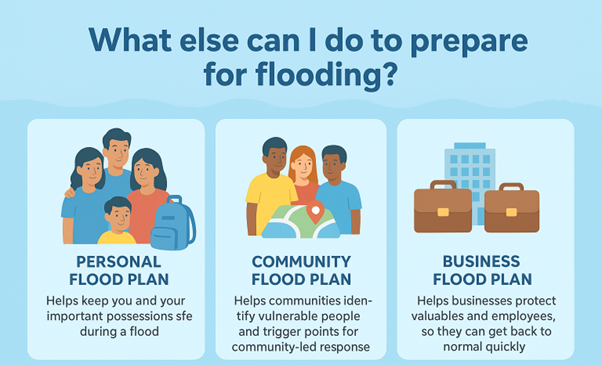
personal flood plan (link opens a new window)
community flood plan (link opens a new window)
business flood plan (link opens a new window)
How can I help my community?
Become a volunteer Flood Warden and link your community and the Environment Agency. Flood wardens inspect for blockages that can lead to flooding and raise awareness among the community.
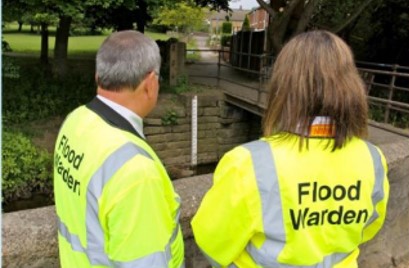
Flood wardens also help us improve our understanding of local flooding. This helps us to develop more suitable approaches to reducing flood risk.
If you are interested, and would like to know more, please contact HNLenquiries@environment-agency.gov.uk. Include where you live so we can direct you to the appropriate team.
How do local authorities prepare for flooding?
Local Resilience Forums help to coordinate responses to emergencies such as flooding. You can find more local information for London(External link) (link opens a new window) as well as contact information.
Respond
- Keep up with flood updates: Check for flooding - GOV.UK (www.gov.uk)
- Pack a bag with vital items like insurance documents and medications
- Check you know how to turn off your gas, electricity and water
- Plan how you will move your family and pets to safety
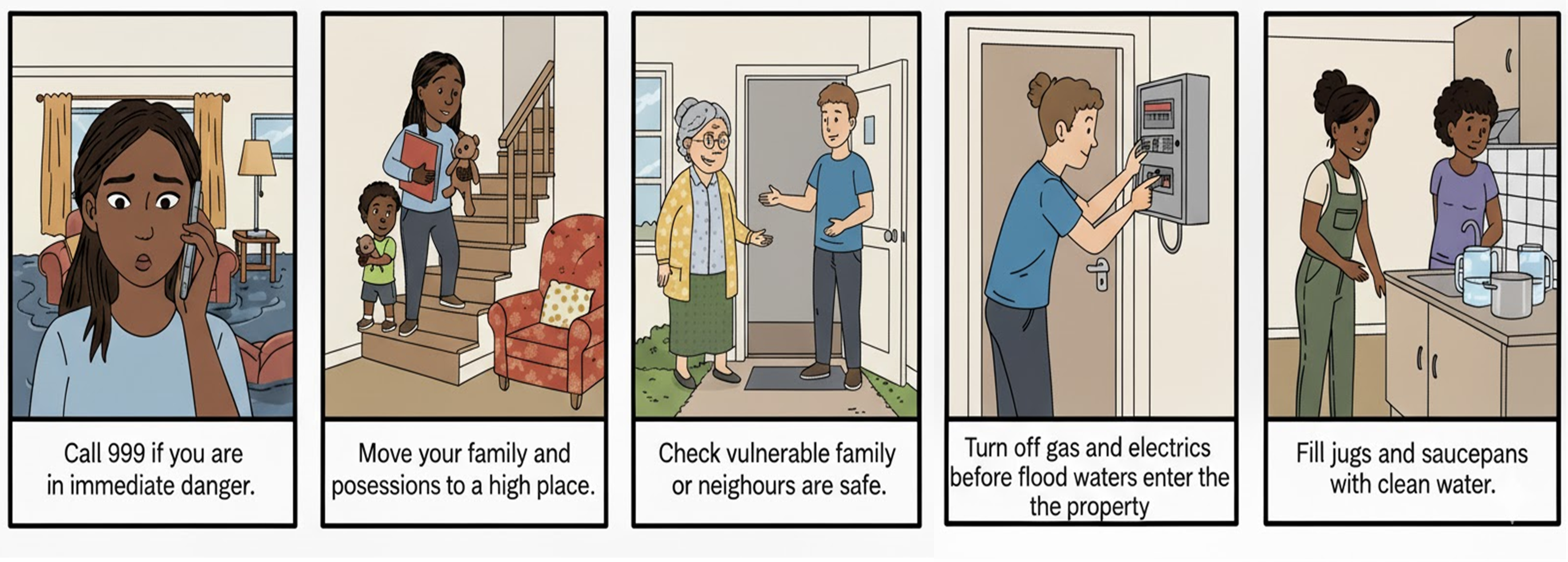
- Move family and pets to safety
- Move important items to safety
- Turn off gas, electricity and water supplies if it is safe to do so. DO NOT touch an electrical switch if you are standing in water
- If owned, use property protection products such as flood barriers and air brick covers
- Continue to monitor flood updates: Check for flooding - GOV.UK (www.gov.uk)
- Call 999 if you are in immediate danger.
- Follow emergency service advice.
- Make sure you have an emergency kit including: a torch, batteries, mobile phone and charger, important phone numbers, water, food, medicines and a first aid kit.
- Alert neighbours and offer help if safe to do so.
- Avoid walking or driving through flood water. Just 30cm of fast flowing water could move your car and even shallow moving water can knock you off your feet.
- Keep yourself and family away from flood water, it may contain hidden dangers.
- Wash your hands if you have been in contact with flood water.
What should I do if I receive a flood alert?
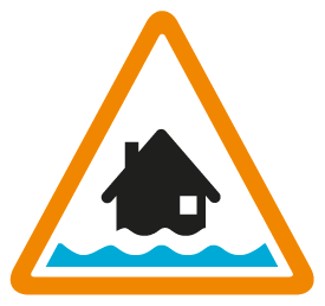 We issue Flood Alerts between 2 hours and 2 days ahead of flooding. Flood alerts show flooding is possible, and you should be prepared.
What should I do?
What should I do if I receive a flood warning?
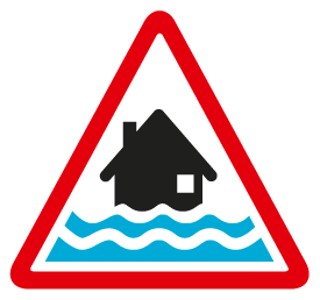 We issue Flood Warnings between 30 minutes to 1 day ahead of flooding. It means flooding is expected. Immediate action is required.
What should I do?
What should I do if I receive a severe flood warning?
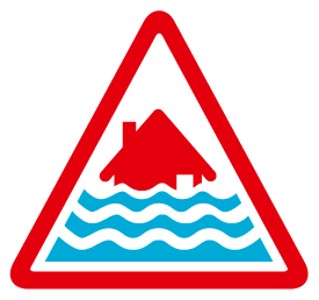
We issue Severe Flood Warnings when flooding poses a significant threat to life.
What should I do?
What are important things to remember to do?
When you have received warnings, make sure you:
Recovery
- staying safe, both physically and mentally
- practical advice on insurance, drying and cleaning your property.
What are important things to remember after a flood?
Flood recovery can take a long time and can have a big impact on your health and mental wellbeing.
Preparing a flood plan will help you recover faster by reducing flooding's impact. Making sure you have all your important documents in a safe place.
Remember: Avoid entering flood water, take breaks when cleaning, use only use suitable equipment when cleaning.
See our Extra Steps for:
Insurance
What should I do if I have insurance?
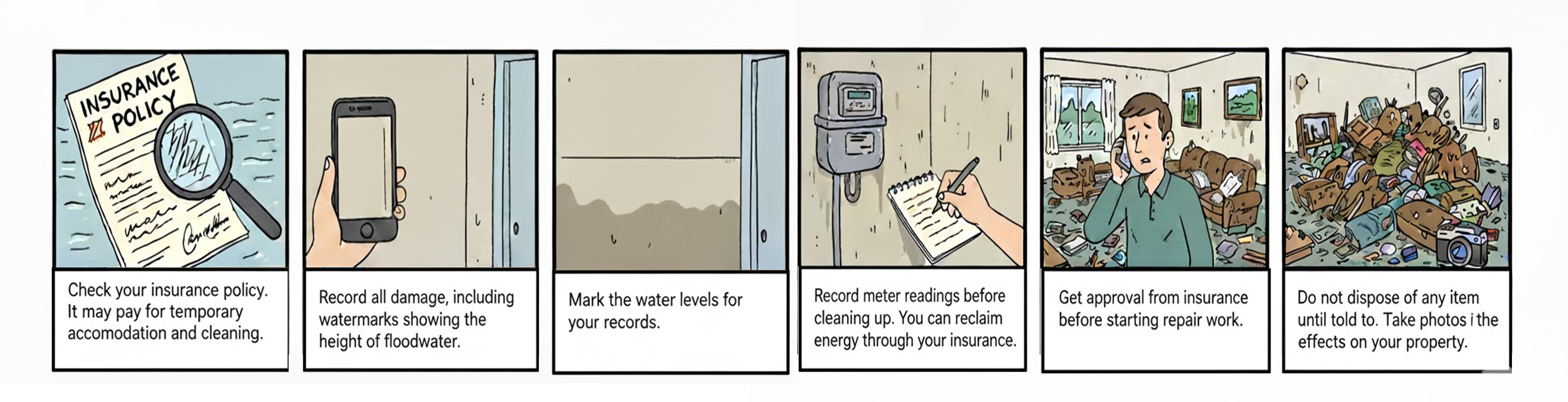
There are some important things you should do:
What should I do if I do not have insurance?
If you do not have insurance, contact your local council for information on hardship grants or charities that may be able to help you.
What should I do after a flood?
Take photos of the damage, including watermarks showing how high the floodwater reached. Record your energy meter readings before starting recovery. Energy used in recovery can be re-claimed as part of your insurance.
Where can I find more help and information about insurance?
If you are unclear, contact the National Flood Forum for support on 01299 403055, and the Association of British Insurers. Check Chapter 3 and Appendix 3 for more information.
Looking after yourself
- The National Flood Forum, experts in helping people in these situations, if you feel you need support or assistance.
- NHS talking therapies
- Local flood wardens
- Community support groups
Will flood water disappear straightaway after flooding?
Not necessarily. After a flood, water levels may rise and fall for several weeks depending on drainage and any further rainfall.
Avoid entering flood water unless absolutely necessary. Flood water can be much deeper than it appears and hide dangers, such as uncovered manholes and sharp objects.
If you must enter flood water, move slowly and carefully. Avoid fast-moving water.
Keep updated on weather reports. Call Floodline on 0345 988 1188 or visit Flood alerts and warnings - GOV.UK (check-for-flooding.service.gov.uk) for the latest flood warnings 24 hours a day.
What can I do to look after myself when getting back to normal
Do not overdo it when cleaning up. Tiredness, difficulty sleeping and anxiety are normal in these circumstances.
How do I make sure I stay safe?
Wash your hands regularly, this is the most important way of removing harmful bugs and any chemicals found in flood water. Wash with warm, soapy water, then rinse and dry thoroughly after being in contact with flood water, sewage or any item that has been in the water.
Anyone with concerns for their health should contact their GP for advice or call NHS 111.
NHS Choices is also a good source of local health service information www.nhs.uk/service-search.
Is it normal to feel low after a flood?
Yes. Flooding is stressful. It is normal to feel tired, anxious and have difficulty sleeping.
What can I do to look after myself after a flood?
Remember to ask yourself how you are feeling and reach out to friends, family or neighbours if you are feeling stressed or overwhelmed.
Healthcare professionals are aware mental health can suffer after flooding, so contact your GP practice or NHS 111. You can also speak to:
Who else should I check in on?
It is vital you speak to children about how they are feeling.
They will be experiencing the same emotions as you but probably be more confused. Talk to them about what is happening and reassure them they are safe.
What should I do if I am a motorist during a flood?
Hitting standing water, even at low speeds, can cause accidents. During or immediately after heavy rain, motorists should avoid driving through flood water whenever possible. If you must, drive slowly and test your brakes on the other side.
Cleaning and repairs
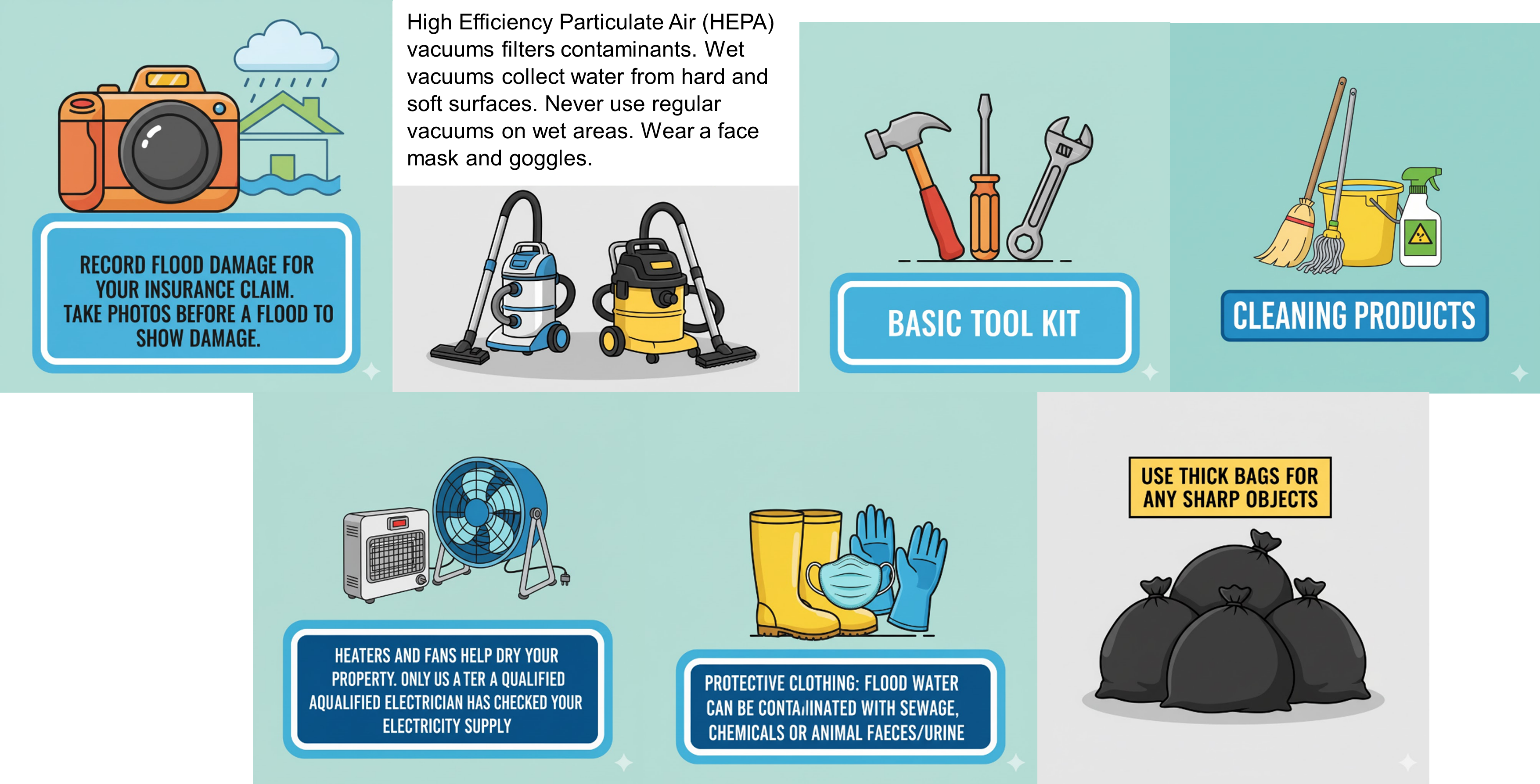
What is important to remember about cleaning after a flood?
If safe and working, a dishwasher is the most effective thing for cleaning and sanitising smaller items. Scrub service with hot soapy water and a heavy-duty detergent.
Clean and disinfect work tops, plates, cutlery and chopping boards before using with food. Discard wooden chopping boards and spoons, soft furnishings, clothes and foodstuffs if contaminated by floodwater.
Wash soft items (clothing, bedding and children’s toys) on a 60°C cycle with detergent. Wash your cleaning clothes separately from your normal clothes. Use a launderette if you suspect any drainage problems.
Specialist firms can advise if it is possible to restore precious personal items that have been damaged or contaminated.
How else can I help dry my property?
What are signs my house hasn't dried out completely?
Mould and fungal spores in the home is a sign of dampness that needs to be checked by specialist, especially after a flood.
If you believe that you have extensive fungal growth in your property and that your health might be affected, you should consult your GP.
How can I safely dispose of any sandbags or damaged furniture?
Contact your local council about disposing of used sandbags or damaged furniture. If they cannot collect these, they will know where and how to dispose of these or when they may be collected.
Should I do any repairs myself?
Appoint builders and other specialists to get repairs done. Your insurance company may list suppliers that you must use, or you can identify a suitably qualified company yourself.
How can I avoid getting ripped off paying for repairs?
How can I prepare my property better for a flood in the future?
You can find information on personal protection equipment, pumps and products that increase your property’s resilience to flooding from blue pages.