Ecology
- Great Northern Diver
- Scaup
- Slavonian Grebe
- Ruff
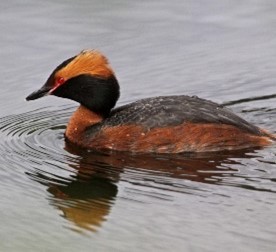 Image of a Slavonian Grebe
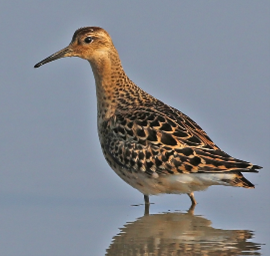 Image of a Ruff
 - UK Hab surveys
- Intertidal surveys
- Arboricultural surveys
- Hedgerow surveys
- MoRPh (Modular River Physical surveys)
- Lake naturalness assessments
- Invasive non-native species survey
The approach to ecology
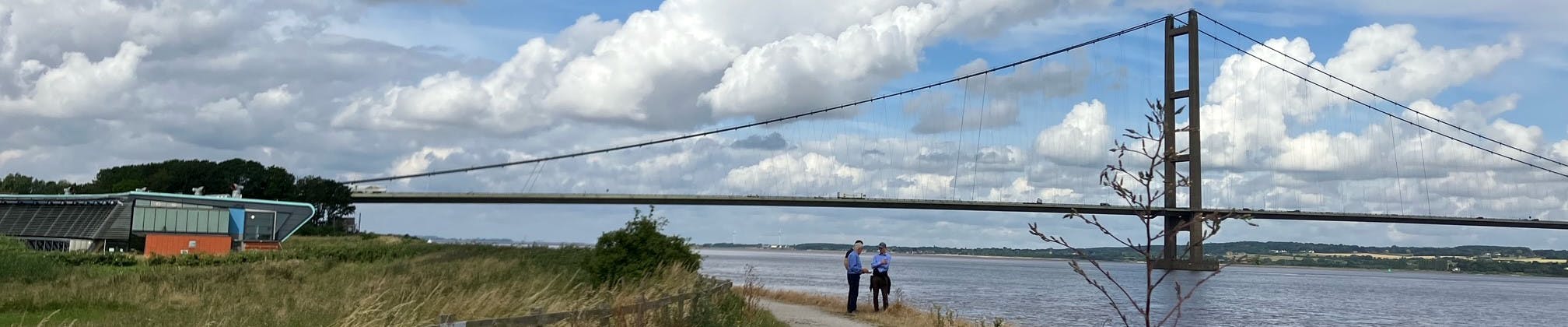
The Barton to New Holland project recognises the diverse and unique nature of the Humber Estuary. The area is nationally and internationally designated, comprising Special Area of Conservation (SAC), Special Protection Areas (SPA), Ramsar Site, Site of Special Scientific Interest (SSSI), and Far Ings National Nature Reserve.
These designations mean our approach to ecology must be thorough to ensure the detailed design is well informed and has minimal negative impact on the biodiversity and wildlife of the area. To ensure this, we have conducted a number of inspections and surveys. You will find an update on these below.
Bats
Roost inspection surveys
These are surveys for bats that involve looking for the evidence of bats in a building, structure, or tree as part of the preliminary roost assessment (PRA). This assessment was carried out in November-December 2023. Further inspections were carried out from February 2025 onwards.
Hibernation surveys
These surveys seek to identify hibernation roosts and identify potential bat species in the area. Hibernation surveys were conducted from December 2024 to March 2025 and are planned for November 2025 to March 2026.
Emergence/re-entry surveys
These surveys look for bats leaving or re-entering their roost for foraging, they help to determine whether bats are using a structure as a roosting site. For some structure, surveys were conducted from May- August 2025, for moderate structures and trees these were carried out May- September 2025.
Birds
Bird surveys have been ongoing throughout the project since January 2022 and has captured wintering birds, breeding birds, and targeted SPA and Ramsar species. Some rare finds include:
Badgers, Otters & Water Voles
Desk studies show that otters are present in the area, while no sightings were captured, further survey were conducted from May-September 2025. Water Vole surveys were carried out from April-June 2025 and July-September 2025. Several field badger signs were encountered as part of the phase 1 survey. While no badger setts were recorded, a further survey of suitable habitats was conducted in February-March 2025.
Amphibians & Invertebrates
Initial assessments in March 2025 identified ten potential sites for great crested newts. Further surveys were conducted from April-June 2025.
A feature of the Humber Estuary SSSI includes the groups of invertebrate species at various locations on the Estuary. We have undertaken consultation with invertebrate specialist with a focus on SSSI species and conducted Targeted Terrestrial Invertebrate surveys from May-September 2025.
Habitats & Invasive Non-Native Species
Various habitat surveys have been conducted, are planned, or are ongoing to assess the impact of this project on biodiversity.
From April-October 2025 the following surveys have been underway:
From April-August 2025 the National Vegetation Classification was completed.
From May-September 2025 the following surveys were conducted: