Resources for Flood Wardens
- Flood Volunteer,
- What Happens During an Emergency, and
- Community Emergency Volunteer Coordinator.
- British Standards Institute Kitemark: BSI Kitemark Certification Programs | BSI
- Trading Standards Buy With Confidence: Buy with confidence
- North Somerset: Funding opportunities | North Somerset Council
- Somerset: https://www.somersetprepared.org.uk/get-support/funding-support/.
Somerset Rivers Authority’s Community Flood Action Fund: Grants - Somerset Rivers Authority - South Gloucestershire: Community grants | BETA - South Gloucestershire Council (southglos.gov.uk)
- Wiltshire: Area Board Grants - Wiltshire Council
- Groundwater Flood Alert: Flooding is possible. Prepare by checking property flood resilience measures such as pumps.
- Groundwater Flood Warning: Flooding is expected. Property flooding and flooded or impassable roads are likely, so action should be taken immediately.
Training for Community Volunteers
Communities Prepared is a national community resilience programme that equips community emergency volunteers with the knowledge and confidence to prepare for and respond to emergencies. They have an online hub and anyone can register as a member in order to access their resources: https://www.communitiesprepared.org.uk/
There are free self-led courses on the hub that include;
They also run interactive webinars on a range of subjects: https://www.communitiesprepared.org.uk/events/
The Red Cross also offer Community Action Workshops, including on preparing for emergencies: Community educational workshops | British Red Cross
The Met Office also offer training for community volunteers: met-office-2026-online-community-resilience-training-prospectus.pdf
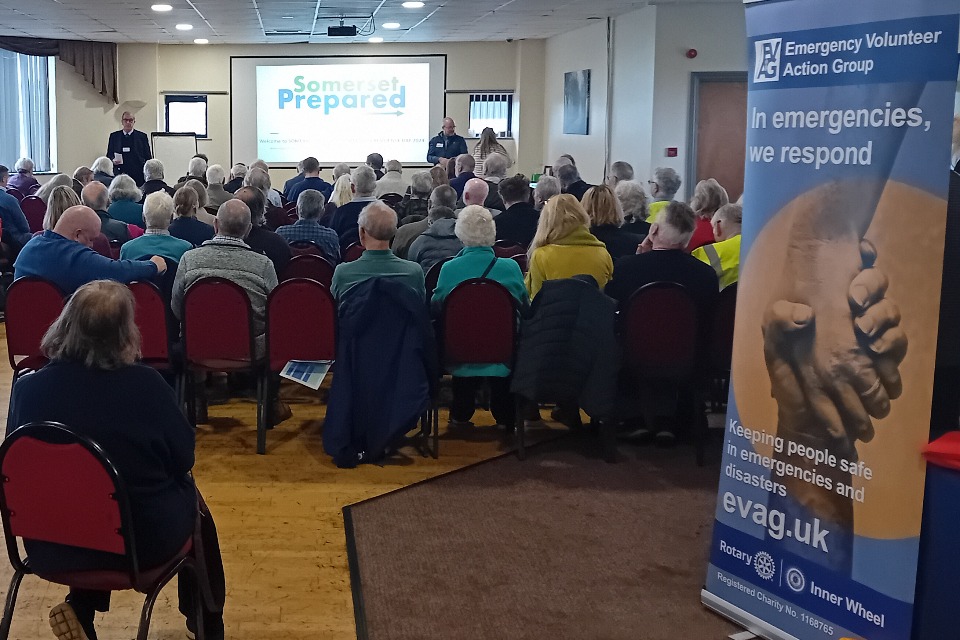 Somerset Prepared Community Resilience Day
From time to time, the Environment Agency, partner organisations and Local Resilience Forums organise workshops, resilience events and conferences. We also run regular online sessions in Wessex. Please let us know if you would like to be invited to events in your area, or if you would like to organise Flood Warden support in your community, by emailing floodwessex@environment-agency.gov.uk
Funding and Equipment for Community Resilience Groups
When looking for equipment for your Flood Warden group, make sure you choose something suitable for the task, or you could end up buying twice or have it fail and put you at risk.
Check if items like personal protective equipment are appropriately rated for your requirements, and look out for endorsements such as these:
There are different sources of funding available for resilience equipment and training, depending on where you are based. Funding application windows may not be open all year round; refer to the websites below for up to date details.
A nationwide network of local community foundations distribute grants - find your local organisation here: UK Community Foundations
For the Wessex Water area, there are grants available through their community programmes. Find out more on their website here: The Wessex Water Community Fund | Wessex Water
Other grants may be available through your local authority:
Emergency Plans
Emergency plans help communities prepare for, respond to and recover from flooding by setting out clear roles, responsibilities and actions before an incident occurs. Flood Wardens play an important role in developing these plans, drawing on local knowledge to identify people, places and infrastructure that may be at risk, as well as the best ways to communicate with residents during an emergency.
When flooding is expected, Wardens can help put the plan into action by sharing flood warnings, passing information between communities and responding agencies, supporting vulnerable residents where it is safe to do so, and helping coordinate local preparedness and response activities. They help ensure the plan gets reviewed regularly, ensuring it remains accurate, effective and ready to be used when needed.
Remember, your community flood plan is owned by you, but we are always happy to support the development of plans where we can. Find out more at: Community flood plan - GOV.UK
Flood Warnings
As flood wardens, community leaders and trusted messengers, your understanding of flood warnings is vital in helping others prepare for flooding.
Delivering accurate warnings is a balance between providing as much advance notice as possible while avoiding false alarms. Our Flood Warning Duty Officers (FWDOs) are on duty 24/7, 365 days a year, monitoring weather forecasts and levels, and issuing alerts and warnings as needed. You can help make warnings more accurate by reporting flooding and the time it occurs, and sharing feedback via wessexenquiries@environment-agency.gov.uk.
There are three levels of warning: Alert, Warning and Severe Warning. Find out more about what they mean at: Flood alerts and warnings: what they are and what to do - GOV.UK
Flood Alerts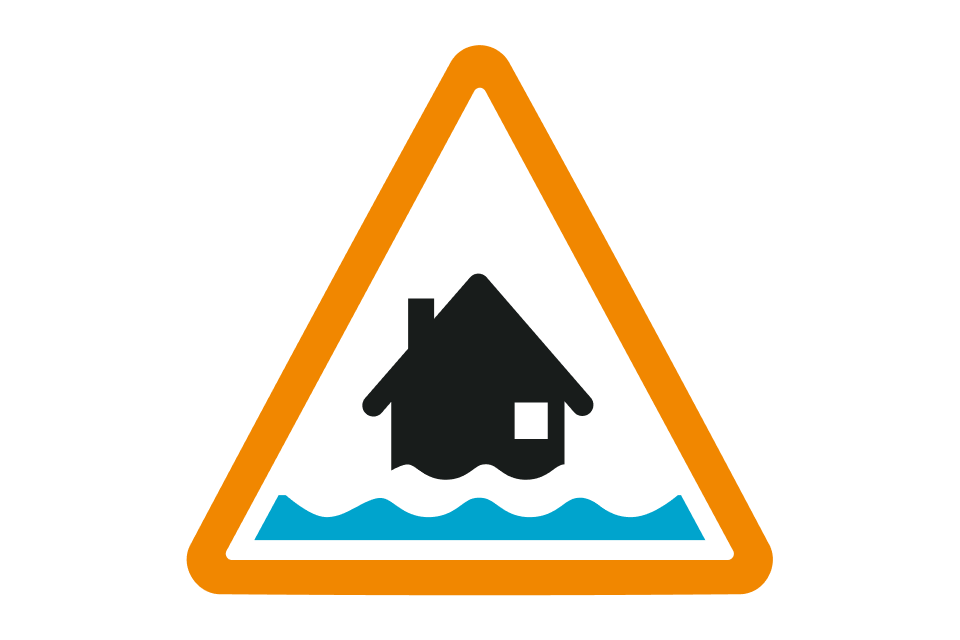
A Flood Alert means flooding is possible and you should prepare.
River flood alerts are generally forecast-led, based on expected rainfall and how river catchments are likely to respond. Coastal flood alerts are entirely forecast-led and are triggered by combinations of tide levels, waves, wind speed and wind direction.
Alerts are issued when low-level impacts are expected, such as flooding of floodplains, low-lying land, minor roads or farmland, or coastal spray and wave overtopping. We aim to provide around 2 to 12 hours' notice for river flooding and 4 to 6 hours for coastal flooding, although timings can vary as forecasts change.
We aim to issue flood alerts during waking hours (0600-2100) so customers can take necessary actions and aren’t woken up in the night for this lower level of warning.
Flood Warnings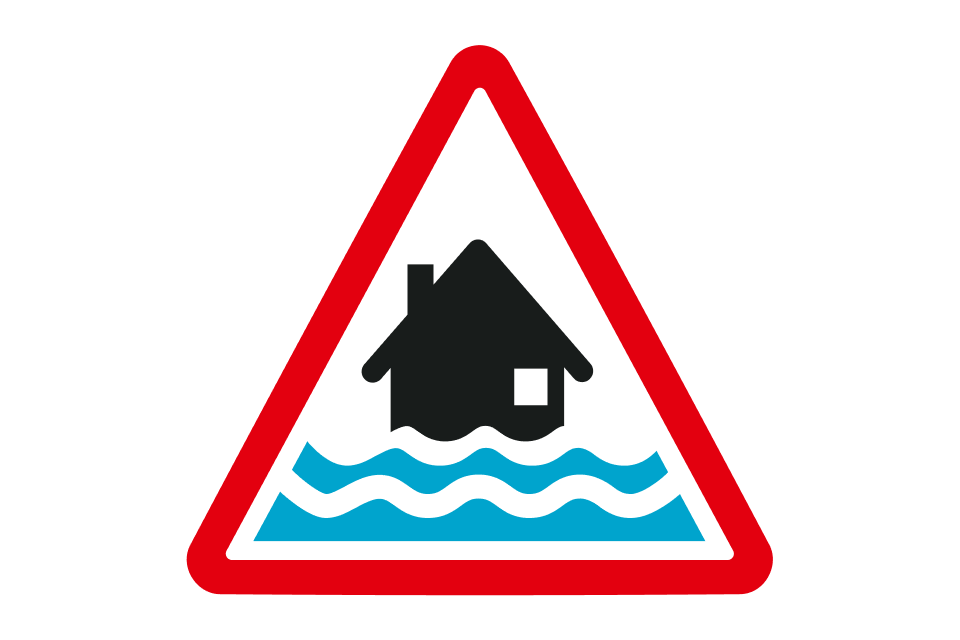
A Flood Warning means flooding is expected and you should act now.
Warnings are issued when higher impacts are anticipated, including flooding of properties and significant disruption to roads and infrastructure. River flood warning areas may cover a stretch of river or a specific community, while coastal warning areas are community-based and forecast-led.
For rivers, we aim to provide around 2 hours' lead time, although rapidly responding catchments may receive as little as 30 minutes' notice. Coastal warnings typically provide 4 to 6 hours' notice, but forecast changes can sometimes reduce this.
Severe Flood Warnings
A Severe Flood Warning means there is a danger to life and significant disruption is expected. Act now.
Severe Flood Warnings are issued for the same areas covered by Flood Warnings when conditions become exceptionally serious. They may be accompanied by a government Emergency Alert sent directly to mobile phones with safety advice.
For river flooding, decisions may be informed by on-the-ground reports of actual impacts. Coastal severe flood warnings are largely forecast-led and, because conditions can change rapidly before high tide, there may be little advance notice.
Groundwater Flood Warnings
Groundwater flooding occurs when the water table rises above ground level, often after prolonged periods of rainfall. In Wessex, communities on chalk geology, particularly in Dorset, Hampshire and Wiltshire, are most at risk.
Lead Local Flood Authorities manage groundwater flood risk, while the Environment Agency provides strategic oversight and operates groundwater warning services in some areas. Groundwater levels are monitored daily through a network of boreholes, with rises often occurring several days after heavy rainfall.
Groundwater warnings include:
You can sign up to all these flood warnings at this link: Get flood warnings by text, phone or email - GOV.UK.
Flash Flooding
Flash flooding can develop very quickly following intense rainfall, often with little warning and even in areas that do not usually flood: Flash flooding - GOV.UK
Areas at risk of flash flooding or surface water flooding may not be covered by the Environment Agency's flood warning service. Sign up for Met Office weather warnings to receive alerts about heavy rainfall and other severe weather that could lead to flash flooding: https://www.metoffice.gov.uk/weather/warnings-and-advice/weather-warnings
Support in Your Local Area
There may be local initiatives in your area providing support, guidance, training opportunities or resources for flood wardens and community flood groups. Visit your council's website, which you can find through this gov.uk site: Find your local council - GOV.UK
Keep an eye on the Newsfeed for local events and opportunities.