
Rethinking Water Citizens' Juries
- How do you connect with water in your local environment, and what needs to be changed in the future to benefit people and wildlife?
Introduction to Rethinking Water Citizens' Juries
Overview
The Environment Agency and its partners are holding five targeted Rethinking Water Citizens’ Juries to discuss the important question:
This is about involving communities in decisions about the future of their local river. Listening and working with others to understand their priorities is an essential element of helping us develop our ambition for water: to lead the way for clean and plentiful water for all.
The citizen juries’ recommendations will be presented to our board and help us prioritise our work to achieve our EA2025 goal of healthy air, land and water.
What is a citizens’ jury?
 Put simply, it’s a way to make decisions. Juries are used across the world as
a way to bringing communities together to look at issues and come up with ideas. They are formed from a randomly selected group of people who broadly represent the entire community. The people who attend juries learn about specific topics or issues, discuss them with one another, and then make recommendations about what should happen next.
Put simply, it’s a way to make decisions. Juries are used across the world as
a way to bringing communities together to look at issues and come up with ideas. They are formed from a randomly selected group of people who broadly represent the entire community. The people who attend juries learn about specific topics or issues, discuss them with one another, and then make recommendations about what should happen next.
The Rethinking Water Citizen Juries’ will be run by an independent charity, Involve Foundation, who will act as the main point of contact for jury members throughout the process.
Local and national advisory panels made up of a range of organisations from public, private and charity sector helped to shape the events and provide evidence. This helps to ensure the process is unbiased and fair.
The panels made decisions about the recruitment process and the jury profile; they also selected who gave presentations to the juries and answered questions from them.
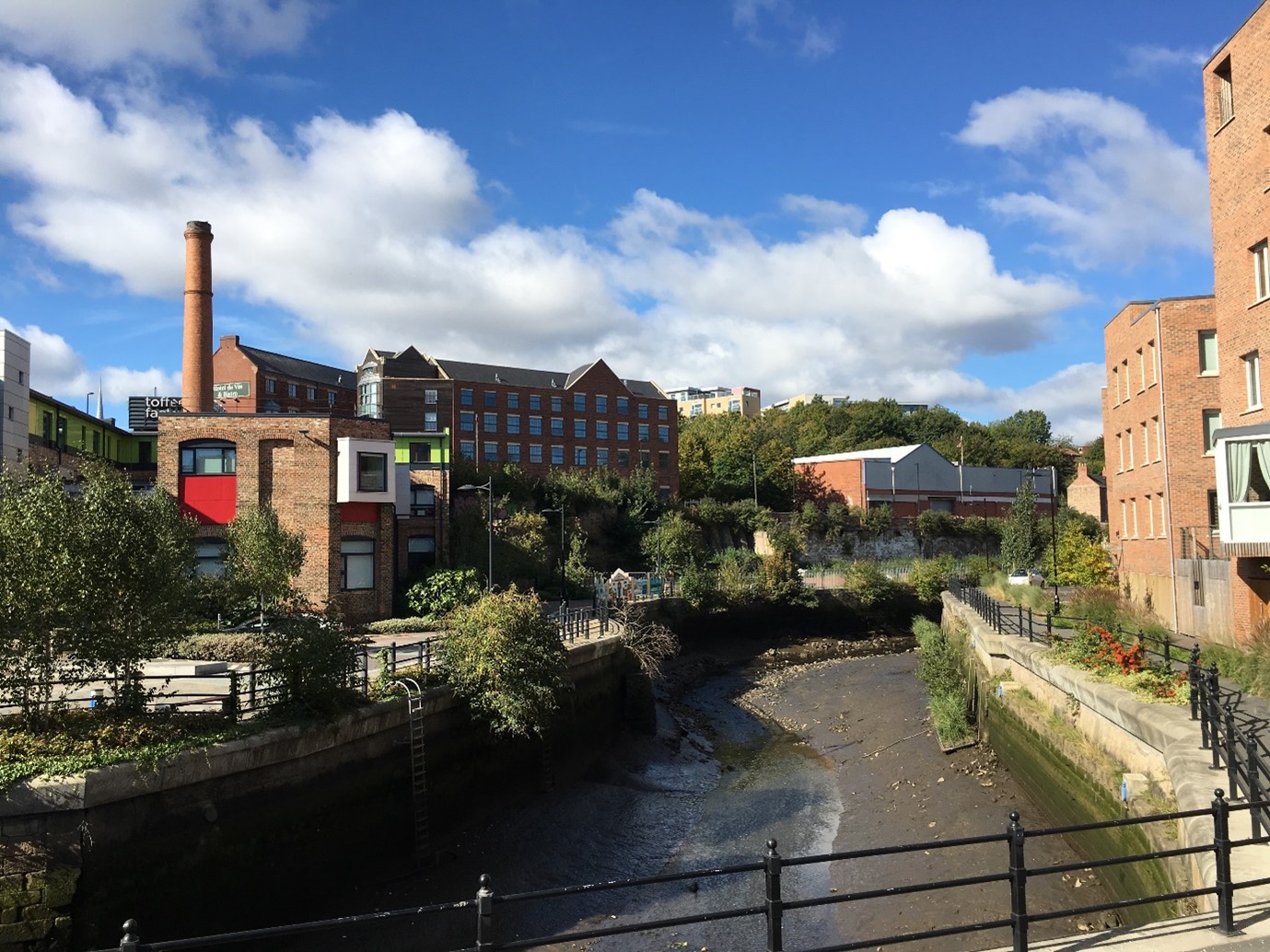
(Photo: Photo of the lower Ouseburn flowing through an urban area.)
How were the jury members selected?
The Sortition Foundation, a not-for-profit limited company used the Royal Mail postcode address file database of addresses to source and invite local individuals representing the full diversity of the area.
For data protection reasons we will not release any details of these individuals.
Where are the juries being held?
The five citizens’ juries will bring together (online) a diverse range of people who live, work or play in and around the River Ouseburn (North East), River Wharfe (Yorkshire), the Thames Valley (Chilterns), River Thames Estuary (South East) and Windermere (Lake District).
Why are we providing this information?
Although the juries were invite only, for the sake of transparency we are keen to ensure that everyone is able to see the recommendations they make and the information that led them there.
All of the presentations given to the juries are available to view on the links below once the jury has taken place, along with their recommendations.
Partners delivering the events
Involve: The Involve Foundation ('Involve') is the UK's leading public participation charity with offices in London, Edinburgh, and Belfast. They work towards creating a more vibrant democracy, with people at the heart of decision-making. Involve's mission is to develop, deliver and campaign for new ways of involving people in the decisions that affect their lives. Since the organisation was founded in 2003, they have worked with governments, parliaments, civil society organisations, academics and the public across the UK and internationally to put people at the heart of decision-making.
Involve will be leading on the design and delivery of the Rethinking Water Citizens' Juries and will act as the main point of contact for jury members throughout the process.
For more information on Involve, please visit their website at: Involve
The Sortition Foundation: The Sortition Foundation is a not-for-profit company that promotes the use of citizens' assemblies and citizens' juries in decision-making, and specialises in recruiting random and representative samples of people for these events. Our aim is to ensure that the recruitment method used for citizens' assemblies and citizens' juries is as transparent and as legitimate as possible, and that we get as close as we can to the ideal of every person in a community having an equal probability of receiving an invitation to take part, and that the final selection of the assembly participants is as fair as possible.
Membership of the National Advisor Panel
Membership includes:
- Leeds University
- Royal Society for the Protection of Birds (RSPB)
- Yorkshire Rivers Trust
- The Rivers Trust
- Northumbrian Water
- National Farmers Union
- Salmon and Trout Trust
- University of West of England
- Water Hub / University of Durham
- Ofwat
- Natural England
- Shellfish Association
- Consumer Council for Water
YouTube Evidence Videos
The juries submitted a variety of YouTube videos as background on all the information.
Managing Water in Our Environment
Chemicals in the Water Environment
Changes to Water Levels and Flows
Pollution from Agriculture and Rural Areas
Citizens' Juries
Citizens’ Jury for the Ouseburn River in Lower Tyne Ouseburn:
21 Jan -30 Jan 2021
Recommendations and
presentations: here
River Wharfe Citizens’ Jury on Rethinking Water: 25 Feb -
6 March 2021
Recommendations and
presentations: here
Thames Valley Citizens’ Jury on Rethinking Water: 18 March - 27 March
2021
Recommendations and
presentations: here
River Thames estuary Citizens’ Jury on
Rethinking Water: 3 March - 19 March 2022
Recommendations and
presentations: here
Windermere Citizens’ Debate on
Rethinking Water: 22 March - 27 March 2022
Recommendations and
presentations: here
Water Juries
- Education: for people of all ages to think about water, rivers, the Ouseburn in particular and its catchment area, and how individual behaviours, such as littering and pollution.
- Legislation and incentives: to implement appropriate and fair legislation, regulations and incentives to secure funding and drive behaviour change to enhance the natural beauty of the Ouseburn.
- Improved funding: in order to fund the improvements that are needed to infrastructure, it must be clearly identified who will bear the costs.
- Pollution management: more action to manage all forms of pollution, where the polluter should pay, as well as incentives for preventing pollution, education to change individual behaviour and a pollution hotline for the public to report incidents.
- A co-ordinated approach: for Northumbrian Water, Newcastle City Council and the Environment Agency to lead and convene a partnership, bringing together all stakeholders in the future of the Ouseburn, to ensure that everyone’s voice is heard and to create a shared understanding of issues, priorities, actions and accountabilities.
- Balance between development and wildlife: to put biodiversity at the forefront of all development plans so that developers must improve the biodiversity of the immediate area as a planning condition.
- Groundwork
- Woolsington Parish Council
- Northumbrian Water
- Newcastle Urban Green
- National Farmers Union
- Newcastle City Council
- Tyne Rivers Trust
- North East Nature Partnership and Ouseburn Farm
- University of Durham
- Take into account different types of land use and timescales (short; medium and long-term plans);
- Include natural flood management techniques upstream, downstream and on farmland;
- Manage the effects of all developments (housing/commercial/urban); and
- Include greater community involvement.
- Minimise the impact of invasive species (including eradication where possible);
- Protect wildlife from unintentional impact from agriculture, leisure and pollution on river verges; and
- Enable native species to thrive (including monitoring and reporting on water quality, and reintroducing keystone species).
- RSPB (Royal Society for the Protection of Birds)
- Ilkley Clean Water
- Yorkshire Water
- Dales to Vale Rivers network
- National Farmers Union
- Bradford Council
- Dales Rivers Trust
- support the development of housing and other infrastructure in ways that reduces water demand,
- does not negatively impact the local environment,
- protects water supply given the current and future impact of climate change,
- help people understand the link between demand, supply and quality of their water connects them to the river system.
- Incorporate the views of the Citizen Jury into the Thames River Basin Management Plan
- Work with the South Chilterns Catchment Partnership to support projects, including education
- We will take your recommendations to help develop our future water ambition. We will also advise Government on the recommendations regarding regulation, enforcement and investment especially in an area where chalk streams are a vital part of the system. This approach needs to be a collaborative, evidence led long term approach involving all stakeholders
- Rivers Trust
- Thames Water
- The Angling Trust
- Thames 21
- University of Reading
- Reading Climate Action Network
- End Sewage Pollution
- Chiltern Rangers
- Public Education: more public education to help communities understand their influence and responsibilities.
- Access for all - improving public access to the river.
- Biodiversity Net Gain - Connecting net gain with wildlife and flood prevention.
- Enforcement of Environmental Standards: taking a much stronger stance on environmental enforcement
- Natural Flood Defences: Flood defences and climate change mitigation measures (sustainable urban drainage, living walls, green roofs, rainfall capture etc) need to be front and centre in all planning and urban development considerations.
- Coordinated River Management - having a single body which represents key stakeholder groups for the whole Tidal River Thames.
- Thames Estuary Partnership
- Thames 21
- Port of London Authority
- Thames Landscape Strategy
- Natural England
- Zoological Society of London
- C&C video - Environment Agency TV
- Presentation videos:
- ACT (Actions with Communities) in Cumbria
- Cumbria Local Enterprise Partnership
- Environment Agency
- Freshwater Biological Association
- Lake District Foundation
- Lake District National Park Authority
- National Farmers Union
- National Trust
- South Cumbia Rivers Trust
- South Lakeland District Council
- United Utilities
- Empower Organisational Action - Many organisations involved; collaboration is key. Recommend one organisation urgently appointed lead body.
- Education and Enforcement about Pollutants - Education then enforcement. High profile campaign, positive incentives and enforcement of existing regulations and environmental monitoring.
- Fixed Phosphorous Targets - Specify a SMART (Specific-Measurable Achievable-Realistic-Time-specific) target for phosphate.
- Sustainable Tourism Infrastructure - All stakeholders need to work together to build a sustainable infrastructure plan with SMART targets.
- Septic Tank Improvement - Set strict local measured standards of all discharges (with special regards to phosphate outputs) of all privately owned systems.
- Incentivise all Actors to Pollute Less – Set up special status.
- Data, Science and Evidence
- Non Mains Drainage
- Wastewater Treatment (mains)
- Land Management
- Communication and Community Engagement
- Sustainable Future Finance
- Long-term Management Plan
- C&C video - Environment Agency TV
- Presentation videos:
Ouseburn River (Lower Tyne)
Citizens’ Jury for the Ouseburn River in Lower Tyne information page
Overview
The Rethinking Water Citizens’ Jury was put together by the Environment Agency and a Local Advisory Group working with the Involve Foundation. The jury, which took place at the end of January 2021, debated local issues, shared ideas and questioned environmental experts on all aspects of the water environment. This project to involve communities in decisions about the future of their local river has taken place in the North East of England.
The Ouseburn Citizens’ Jury is made up of members of the public. It was tasked with examining what a ‘thoroughly modern river’ should be and with producing recommendations that will be used to guide the future of managing water for us and our partners.
The findings, in the form of recommendations written and recorded by the jurors.
The final six recommendations from the Ouseburn Citizens’ Jury were:
The findings from the juries will inform our future water management plans. As a direct result of the project, Northumbrian Water are developing a bid to Ofwat’s Innovation Fund to help finance an innovative partnership led through education in the local area.
The Local Advisory Group for this jury was made up of a range of organisations from public, private and charity sector. They chose to present different aspirations and visions for the River as a way of exploring the key issues and potential future changes. The Ouseburn jury listened to evidence from a broad range of environmental experts to ensure a balanced view including:
Below is a list of the evidence in the form of presentations given as part of the citizen jury:
Session 1
Toni Scarr - Environment Agency – introduction
Michael Donnelly – Involve - introduction
Zahra Ravenscroft – Environment Agency
Managing water in our Environment
Rob Carr – Environment Agency – photos of the Ouseburn
Session 2
Professor Harriet Bulkeley, Durham University - The Ouseburn in a Changing World
Lesley Silvera, Groundwork - Community Activity and the River
John Littleton and Joanne Couchman, Woolsington Parish Council - Biodiversity and conservation
Session 3
Mike Madine, Northumbrian Water - A Vision for the Ouseburn
James Copeland, NFU - Farming and the River
Sarah Capes, Urban Green Newcastle - Amenity Value of the Catchment
Phil Ogg, Ouseburn Trust - Heritage of the Ouseburn
Session 4
Ian Brown, Local Nature Partnership - People working together to create a thoroughly modern river
Darren Varley, Newcastle City - A growing city and the challenges it brings
Professor Harriet Buckeley, Durham University - An integrated vision for the river and its role in a city
River Wharfe (Yorkshire)
Citizens’ Jury for the River Wharfe (Yorkshire) - Information Page
Overview
The Rethinking Water Citizens’ Jury was put together by the Environment Agency and a Local Advisory Group working with the Involve Foundation. The jury, which took place at the end of February/early March 2021, debated local issues, shared ideas and questioned environmental experts on all aspects of the water environment. This project to involve communities in decisions about the future of their local river took place in Yorkshire.
The River Wharfe Citizens’ Jury is made up of members of the public. It was tasked with examining what a ‘thoroughly modern river’ should be and with producing recommendations that will be used to guide the future of managing water for us and our partners.
The final six recommendations from the River Wharfe Citizens’ Jury are presented below (recorded video and written):
Priority One - Flooding prevention and management
We need a coordinated and strategic response to prevent and manage flooding, led by one organisation that has responsibility, accountability and oversight throughout the area. The response must:
Priority Two - Biodiversity and Wildlife
To improve wildlife and biodiversity, we recommend that the Environment Agency coordinates action to:
Priority Three - Tackling Pollution
Water quality is important for public use and for wildlife. We recommend routine testing of the water at regular intervals along the River Wharfe to check the quality of the water and publish these results at information boards along the Wharfe and online (using a traffic light system).
We recommend identifying where the major pollutants are entering the waterways, enforce actions against key polluters and review existing penalties, and making this information public.
We recommend educating people about the importance of reducing pollution to incentivise the public to manage their water use and waste.
Priority Four - Improving sewerage infrastructure
Improving sewerage infrastructure increases the water quality which will lead to health, economic and social benefits, and decreases the water quantity, and will future proof our water system.
Yorkshire Water should develop their current 25 year plan on improving sewerage infrastructure to include SMART (Specific, Measurable, Achievable, Relevant, and Time-bound) deliverables. This plan should be reviewed annually to measure their progress against targets and the outcomes should be published.
Yorkshire Water should work in partnership with the Environment Agency, local Councils, and the public to develop this strategy and these partners should hold them to account.
Priority Five - Impact of Development on Water Quality
That landowners, developers, statutory agencies and the public understand and mitigate the impact of development on the river and its catchment area. This needs to be achieved through better planning, communication, updating legislation (including on Sustainable drainage systems (SuDS)), enforcement and accountability measures, all underlined by education for politicians, professionals and the public.
Central to this is the appropriate funding of statutory agencies to enable them to adopt an evidence based approach that is monitored and constantly improved.
Priority Six - Education and Awareness Raising (about Littering)
Education and awareness raising is central to securing a river that is balanced and fit for purpose. Specifically, we need draw on success from other countries to implement a range of educational and awareness raising activities by all stakeholders to drive behavioural change similar to the drink driving and no smoking campaigns.
There needs to be the introduction of public champions, to reach everyone - from professionals to the public in a clear, understandable and compelling way. It’s about making change easier and rewarding.
Education needs to go beyond schools to creatively include community groups, artists and all media and play a major role in enforcement through a programme similar to the speed awareness course.
The findings from the juries will inform our future management plans.
The Local Advisory Group for this jury was made up of a range of organisations from public, private and charity sector. They chose to present different aspirations and visions for the River as a way of exploring the key issues and potential future changes. The River Wharfe jury listened to evidence from a broad range of environmental experts to ensure a balanced view, including:
You can find all the evidence for these discussions by watching our presentation videos (below), and the Managing Water in Our Environment video here on our Environment Agency TV channel.
Session 1 Thursday 25th February
Michael Donnelly, Involve – introduction.
Toni Scarr, Environment Agency – introduction.
Martin Christmas, Environment Agency - Overview of the River Wharfe.
Session 2 Saturday 27th February
Dan Macey, Yorkshire Water – Resilience – A Healthy River for All.
Kirsty Breaks-Holdsworth, Bradford Council - Climate Impacts - Natural flood management.
Iain McDonell, Environment Agency - Environmental Management - Channelling public money for public good.
James Copeland, National Farmers Union - Agriculture in the Wharfe Catchment and what we do.
Session 3 Saturday 27th February
Stuart Pedder, Bradford Council - Planning - Development pressures and impact on the river.
Daniel Wynn, RSPB - Wildlife of the river.
Charlotte Simons, Dales to Vale Rivers Network - Catchment management priorities on the Wharfe.
Session 4 Thursday 4th March
Stephen Axford, Dales Rivers Trust - Users of the river - Issues and desires.
Becky Malby, Ilkley Clean River - Aspirations for the river.
Susan Gledhill, Bradford Council – Pressures of human activity on the river and its impacts.
Thames Valley (South Chilterns)
Citizens’ Jury for Thames Valley (South Chilterns) - Information page
Overview
The Rethinking Water Citizens’ Jury was put together by the Environment Agency and a Local Advisory Group working with the Involve Foundation. The jury, which took place at the end of March 2021, debated local issues, shared ideas and questioned environmental experts on all aspects of the water environment. This project to involve communities in decisions about the future of their local river has taken place in the Thames Valley / South Chilterns.
The Thames Valley / South Chilterns Citizens’ Jury is made up of members of the public. It was tasked with examining how people value and connect to their local river system, and with producing recommendations that will be used to guide the future of managing water for us and our partners.
The findings, in the form of recommendations written and recorded by the jurors - Video of the recommendations from the Thames Valley
The final recommendations from the Thames Valley Citizens’ Jury were:
Recommendation 1. Tackling sewage and improving water quality
We recommend tackling sewage and improving water quality because it is at the heart of encouraging more people to value and connect to their local river system. We believe better education, regulation, enforcement and investment is essential to achieve this, especially in an area where chalk streams are a vital part of the system. This approach needs to be a collaborative evidence led long term strategy, involving all stakeholders. This includes central and local government, regulators, industry, landowners, agriculture, Non Governmental Organisations, volunteer groups and the public.
Recommendation 2. Funding and Investment
Governments must commit through legislation to an ongoing investment plan spanning well into the future that focuses on sustainable water supply and quality, identifying sources of funding and guarantee its use for this purpose. This should be controlled by an independent public body ensuring the funds are used to address specific goals and targets relating to water quality and use and holding water companies to account for the expenditure of this money.
Recommendation 3. Influencing planning and development
We recommend that the current planning system be transformed to ensure long term sustainability, and environmentally friendly use of water and other resources. The planning process in its entirety must:
What we will do with the recommendations
The findings from the juries will inform our future water management plans. As a direct result of the project we will use this mandate to:
The Local Advisory Group for this jury was made up of a range of organisations from public, private and charity sector. They chose to present different aspirations and visions for the River Thames as a way of exploring the key issues and potential future changes. The Thames Valley jury listened to evidence from a broad range of environmental experts to ensure a balanced view including:
You can find all the evidence for these discussions by watching our presentation videos (below), and the Managing Water in Our Environment video on our Environment Agency TV channel.
Presentation videos
Session 1
Toni Scarr, Environment Agency – Introduction to Rethinking Water
Michael Donnelly, Involve – Introduction to the Citizens' Jury Process
Richard Thompson and Emma Hill, Environment Agency - Introduction to Thames Valley
Session 2
Charlotte Hitchmough, Rivers Trust - Issues in the South Chilterns, a perspective from the catchment hosts
Yvette De Garis, Thames Water - The role of the Water Company and their priorities
Chris Gardner, South East Rivers Trust - A healthy river system
John Shaw, Chiltern Rangers - Communities taking direct action to improve the rivers
Chris Coode, Thames 21 - Connecting communities
Jo Clark, University of Reading Landwise Project - Land management to create a healthy river
Stuart Singleton-White, The Angling Trust - Recreation on the river
Chris Beales, Reading Climate Action Network / The Environment Agency- Enabling safe access to the river
Claire Robertson, End Sewage Pollution / Thames 21 - Wellbeing and the river
Tidal River Thames
Tidal River Thames Citizens' Jury on Rethinking Water
Overview
The Rethinking Water Citizens’ Jury was organised by the Environment Agency and a Local Advisory Group, working with the Involve Foundation; an independent charity, who acted as the main point of contact for jury members throughout the process.
The jury, which took place in March 2022, debated local issues, shared ideas and questioned environmental experts on all aspects of the water environment. This projects aim was to involve local communities in decisions about the future of the tidal Thames.
The Tidal Thames Citizens’ Jury was made up of members of the public, who were selected at random, but live near the Thames and reflected the local demography. It was tasked with examining how communities and individuals engage with the river. They discussed development and population growth and how it impacts on the river environment. Finally, they produced recommendations that will be used to guide the future of managing water for us and our partners.
The findings, in the form of recommendations written and recorded by the jurors - Video of the recommendations from the Tidal Thames
The final six recommendations from the Tidal Thames Citizens’ Jury were:
The findings from the juries will inform our future water management plans. This includes the Thames River Basin Management Plan and the Port of London Authority’s Thames Vision 2050: Safe, Smart, Sustainable and Inclusive consultation. These consultations were both live during the consultation. The recommendations are also being embraced by Your Tidal Thames Catchment Partnership.
The Local Advisory Group for this jury was made up of a range of organisations from public and charity sectors. They chose to present different aspirations and visions for the estuary as a way of exploring the key issues and potential future changes. The Tidal Thames jury listened to evidence from a broad range of environmental experts to ensure a balanced view including:
Below is a list of the evidence in the form of presentations given as part of the citizen jury:
Session 1
Michael Donnelly, Involve – introducing the jury
Toni Scarr - Environment Agency - Purpose of the jury
Amy Pryor - Thames Estuary Partnership - Geography of the Tidal Thames
Allen Summerskill - Tideway Historian - History of the Tidal Thames
Session 2
Joe Pecorelli - ZSL - Wildlife under pressure
Peter Bide - Chair of the Urban CaBA group - How Planning Impacts the Tidal Thames
Jason Debney - Thames Landscape Strategy - Bringing the Community into Planning
Richard Charman - Environment Agency - Tidal Flooding and Habitat Loss
Session 3
Michael Atkins - Port of London Authority - Thames Estuary
Nick White - Natural England - Biodiversity Net Gain
Yvette de Garis - Thames Water - Abstraction and Treatment Issues
Neil Dunlop - Environment Agency - Water Quality
Session 4
Emily McLean - Port of London Authority - Opportunities of the port to tidal river communities
Paul Hayman - Active 360 Paddleboarding School - Recreation on the River
Hannah Gutteridge - Thames Path Group - Physical accessibility alongside the River
Roas Clavane & Zara Visanji - Thames 21 - Stewardship: communities advocating for the River
Windermere Catchment (Cumbria)
Citizens’ Jury for Windermere Catchment (Cumbria) - Information page
Overview
The Rethinking Water Citizens’ Jury was put together by the Environment Agency and a Local Advisory Group working with the Involve Foundation; an independent charity, who acted as the main point of contact for panel members throughout the process.
The Panel, which took place over four days in March 2022, debated local issues, shared ideas and questioned experts on all aspects of the water environment in the Windermere catchment. This project brought together people from all walks of life, selected to be representative of local communities demography, shared information with them and asked them to produce recommendations to help shape discussions and decisions about the future management of the catchment.
Panel members were independently selected from applicants who responded to letters of invitation. These letters were sent to five thousand randomly selected addresses, from the Royal Mail database, within communities local to the lake.
The Panel were tasked with examining how communities and individuals engage with the Lake. The local advisory group asked the Panel to consider ‘How do we do more to improve water quality in the Windermere Catchment whilst sustaining our communities and the economy?’
The Windermere Panel’s Local Advisory Group was made up of a range of organisations from public, private and charity sectors as follows:
As well as advisory group organisations the Windermere Panel heard perspectives and evidence from Cumbria Tourism, Cumbria Wildlife Trust, University of Cumbria, Swim the Lakes (a local business), and Windermere Lake Recovery Community Interest Company to ensure a broad and balanced basis for their exploration of key issues, potential future challenges and changes to the lake and its surrounds. Finally, they produced recommendations that will be used to guide the future of managing water for us and our partners.
The findings, in the form of recommendations written and recorded by the panel members - Video of the recommendations from Windermere
A summary of the final six recommendations from the Windermere Citizens’ Panel were:
The findings from the juries will inform our future water management plans. This includes the North West River Basin Management Plan.
At a local level the Panel’s recommendation are already being fed into and considered by a newly formalised Love Windermere Partnership; led by the Environment Agency. Several of the Panel’s recommendations had been identified by organisation with responsibilities in the catchment as requiring collaborative focused work. The Love Windermere Partnership is developing work under the following themes:
Below is a list of the evidence in the form of presentations given as part of the citizen panel:
Session 1
Michael Donnelly, Involve - Introducing the panelToni Scarr, Environment Agency - Purpose of the panel
Jim Ratcliffe, Environment Agency - Introduction to the Windermere Catchment
Matt Staniket, Local Campaigner - Why I love about Windermere and why water quality is important to me
Dave Spiby, resident and Environment Agency employee - A lifetime in the Windermere catchment: a long term resident's point of view
Session 2
Simon Johnson, Freshwater Biological Association - Current state of Windermere's water quality
Steve Trotter, Wildlife Trust - Environmental perspective on Windermere
Gemma Proctor, Cumbria Tourism - Economic perspective on Windermere
Lois Mansfield, University of Cumbria - Social perspective on Windermere
Session 3
Jim Ratcliffe, Environment Agency - Overview of existing plans and strategies
Tim Duckmanton, Lake District National Park Authority - Overview of Park Partnership Plan
David Sykes - South Lakeland District Council - Overview of Lake Windermere Action Plan - Awaiting link
Natalie Walsh, Environment Agency - Overview of the Environment Agency's Role
Pete Kelly, Swim the Lakes Business (video presentation) - A local presentation on Windermere plans and strategies
Sessions 4
Sion Platts-Kilburn, United Utilities - Sewage system management
Kath Smith, South Cumbria Rivers Trust - Diffuse Pollution
David Hall, National Farmers Union - Land Management
Mike West, South Cumbria Rivers Trust - The impact of climate change on the Windermere catchment