The Broads SAC - Sustainable Abstraction Plan
We are working to achieve sustainable levels of water abstraction within The Broads Special Area of Conservation (SAC), which will help to protect 28 Sites of Special Scientific Interest (SSSIs).
Water abstraction in East Anglia provides essential water for public water supply, agriculture and industry, but we know that too much abstraction, known as unsustainable abstraction, has a damaging impact on river flows and groundwater levels. Having the correct river flows and groundwater levels is essential to support healthy ecology, for enhancing natural resilience to drought, and ensuring that The Broads SAC continues to support wellbeing and recreation.
We have already investigated the impact of water abstraction on four SSSIs within the Ant Valley, which is a part of The Broads SAC. Following a judicial review in 2022, we were directed to extend our investigation to include an additional 24 SSSIs in The Broads SAC. We are now investigating all water abstraction licences within the Bure, Thurne, Yare, Waveney, Tud and part of the Wensum catchments. We have contacted all licence holders to tell them about our project and to explain that their licence might need to be changed to protect the additional 24 SSSIs.
A map showing our project consultation area and location of SSSIs with The Broads SAC.What will the licence changes be?
We cannot confirm exactly which licences will need to be changed or what those changes might look like until we have completed our modelling assessments of current water abstraction activity, and any potential increases in abstraction that existing licences might allow in the future.
Our assessment will focus primarily on the effects of existing abstraction licences, both permanent and those with a time limit or expiry date. The outcome of this assessment will determine whether we need to use our statutory powers to curtail existing levels of abstraction to avoid deterioration of natural habitats within the SAC.
From April 2026, we will inform the licence holders whose current abstraction licence has been highlighted as being unsustainable. We will let them know if their licence is to be changed and we will discuss next steps, the timescales for changes and potential mitigation measures.
In line with our previous Ant Valley investigation, examples of the licence changes which could be required include:
reducing the daily or annual abstraction quantity
adding or increasing a ‘hands-off flow’ or ‘hands-off level’ restriction to your licence
adding a fish screen to your licence
revoking (cancelling) a licence
Where can I find out more?
There is more 'Information for licence holders' and other resources available on the right hand bar.
This Engagement HQ page will be regularly updated with project news and documents.
We are working to achieve sustainable levels of water abstraction within The Broads Special Area of Conservation (SAC), which will help to protect 28 Sites of Special Scientific Interest (SSSIs).
Water abstraction in East Anglia provides essential water for public water supply, agriculture and industry, but we know that too much abstraction, known as unsustainable abstraction, has a damaging impact on river flows and groundwater levels. Having the correct river flows and groundwater levels is essential to support healthy ecology, for enhancing natural resilience to drought, and ensuring that The Broads SAC continues to support wellbeing and recreation.
We have already investigated the impact of water abstraction on four SSSIs within the Ant Valley, which is a part of The Broads SAC. Following a judicial review in 2022, we were directed to extend our investigation to include an additional 24 SSSIs in The Broads SAC. We are now investigating all water abstraction licences within the Bure, Thurne, Yare, Waveney, Tud and part of the Wensum catchments. We have contacted all licence holders to tell them about our project and to explain that their licence might need to be changed to protect the additional 24 SSSIs.
A map showing our project consultation area and location of SSSIs with The Broads SAC.What will the licence changes be?
We cannot confirm exactly which licences will need to be changed or what those changes might look like until we have completed our modelling assessments of current water abstraction activity, and any potential increases in abstraction that existing licences might allow in the future.
Our assessment will focus primarily on the effects of existing abstraction licences, both permanent and those with a time limit or expiry date. The outcome of this assessment will determine whether we need to use our statutory powers to curtail existing levels of abstraction to avoid deterioration of natural habitats within the SAC.
From April 2026, we will inform the licence holders whose current abstraction licence has been highlighted as being unsustainable. We will let them know if their licence is to be changed and we will discuss next steps, the timescales for changes and potential mitigation measures.
In line with our previous Ant Valley investigation, examples of the licence changes which could be required include:
reducing the daily or annual abstraction quantity
adding or increasing a ‘hands-off flow’ or ‘hands-off level’ restriction to your licence
adding a fish screen to your licence
revoking (cancelling) a licence
Where can I find out more?
There is more 'Information for licence holders' and other resources available on the right hand bar.
This Engagement HQ page will be regularly updated with project news and documents.
-
Update meeting with Norfolk Environment, Food and Farming
On 20 July, members of the Sustainable Abstraction Projects Team met with Steve Moncaster from Norfolk Environment, Food and Farming (NEFF) as part of our regular catch-up meetings. These meetings provide an opportunity to share project updates and build a shared understanding of the work being undertaken by each organisation.
During the meeting, we reminded NEFF of the revised project timetable, including the extension of the options identification and appraisal stage until April 2027, with any licence changes becoming effective in October 2029.
We discussed the latest work on options identification; this included an update onContinue reading
On 20 July, members of the Sustainable Abstraction Projects Team met with Steve Moncaster from Norfolk Environment, Food and Farming (NEFF) as part of our regular catch-up meetings. These meetings provide an opportunity to share project updates and build a shared understanding of the work being undertaken by each organisation.
During the meeting, we reminded NEFF of the revised project timetable, including the extension of the options identification and appraisal stage until April 2027, with any licence changes becoming effective in October 2029.
We discussed the latest work on options identification; this included an update on the new Batched Abstraction Modelling (BAM) tool. BAM helps us assess how individual abstraction licences and points, and groups of licences together, may affect groundwater conditions at site-specific locations. The new BAM focuses on changes in groundwater flux which is more compatible with the key assessment criteria at site level.
We outlined a range of planed model scenarios, including targeted reductions for licences identified as having the greatest impacts, broader reductions across a wider group of licences and combinations of different approaches. These scenarios will help us ascertain the most appropriate licence change solution to achieve the environmental objectives.
NEFF shared updates on their ongoing engagement with licence holders, including early discussions around potential abstraction proposals. We discussed how we can continue to provide advice on the application process and the likely constraints, such as hands-off flow conditions, that may be applied to any new winter abstraction licences. NEFF discussed their continued work with Groundwater Science and will discuss our modelling scenarios and feedback. NEFF raised wider water resource pressure concerns, and we agreed to keep these discussions under review.
We look forward to continuing these discussions as the project moves forward.
-
Geldeston Meadows SSSI site visit
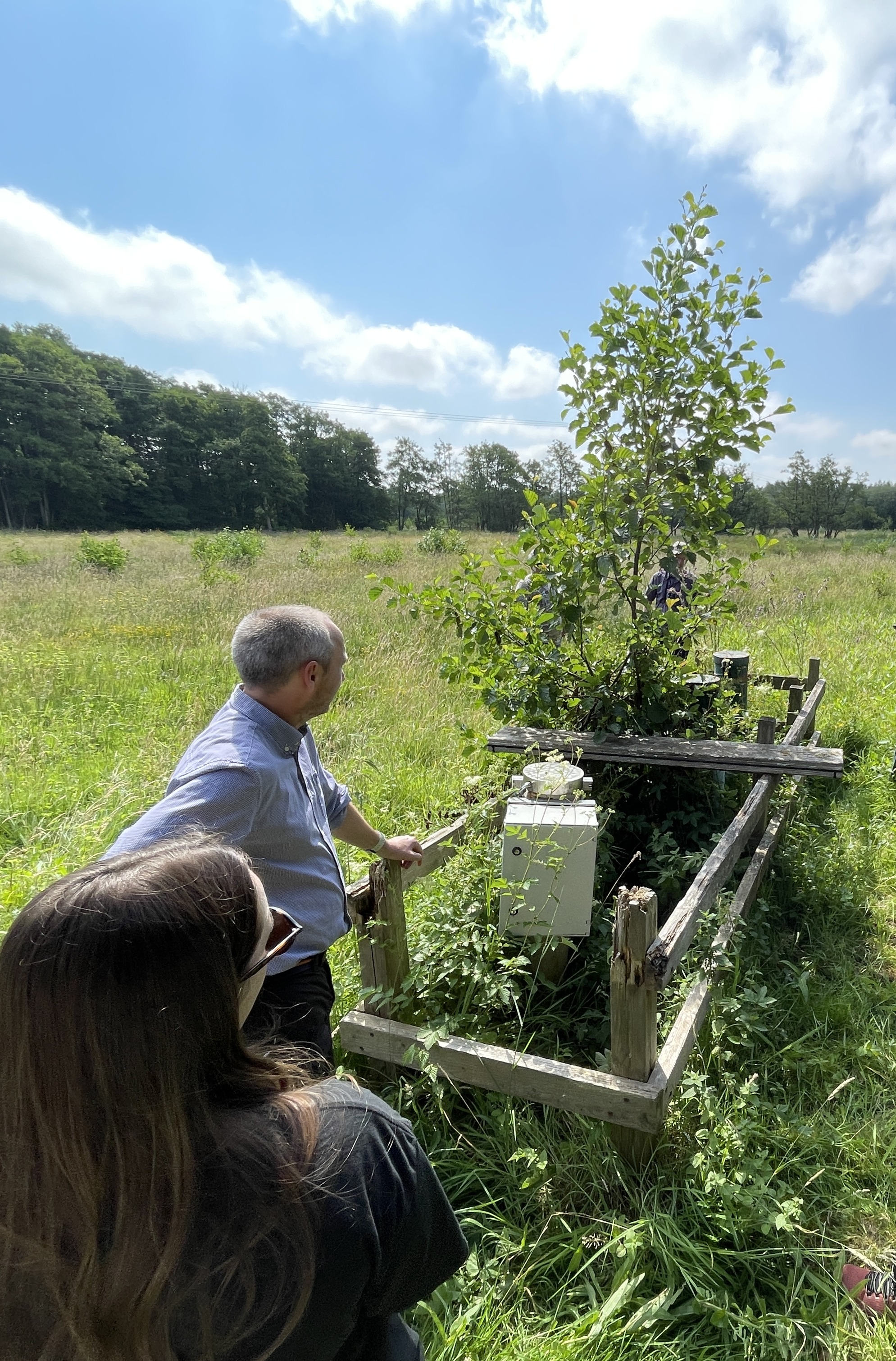
The Sustainable Abstraction Projects Team recently carried out a joint site visit to Geldeston Meadows SSSI, part of the Broads Special Area of Conservation, to strengthen our understanding of the site’s hydrology and groundwater interaction. Representatives from Essex & Suffolk Water, Natural England, JBA Consulting, Hydrology UK, and the landowner hosted us for a two‑hour walkover of the wet meadow complex. The visit focused on how water enters, moves through, and drains from the site, including the pathways for surface‑water inundation and the interaction between groundwater and the wetland habitats. Points of interest included the monitoring boreholes shown in theContinue reading
The Sustainable Abstraction Projects Team recently carried out a joint site visit to Geldeston Meadows SSSI, part of the Broads Special Area of Conservation, to strengthen our understanding of the site’s hydrology and groundwater interaction. Representatives from Essex & Suffolk Water, Natural England, JBA Consulting, Hydrology UK, and the landowner hosted us for a two‑hour walkover of the wet meadow complex. The visit focused on how water enters, moves through, and drains from the site, including the pathways for surface‑water inundation and the interaction between groundwater and the wetland habitats. Points of interest included the monitoring boreholes shown in the adjacent photo, as well as stop‑logs, sluices, and other structures influencing water retention and flow.
The team also walked the adjacent River Waveney to consider how river levels and channel features may affect surface‑water dynamics within the SSSI. The visit concluded with a follow‑up meeting at Essex & Suffolk Water’s Lound Water Treatment Works, where initial observations were discussed and next steps agreed. This collaborative fieldwork forms an important part of our ongoing work to understand hydrological pressures on designated sites and to support sustainable abstraction management across the Broads.
-
Smart Farm visit
On Friday 5 June the Sustainable Abstraction Project Team met with board members of Norfolk Environment Food and Farming (NEFF).
The aim of the day was for NEFF to share project findings, next steps, and to start a conversation about how smart farming might fit in with abstraction licensing in the future.
The day began with a session led by Managing Director Steve Moncaster, who gave an overview of the Upton Broad Smart Farm project (Cedar Farm). This project is collecting monitoring data and assessing the hydro-ecological sensitivities of the local environment, to help with water efficiency and resilience for Cedar Farm going forward.
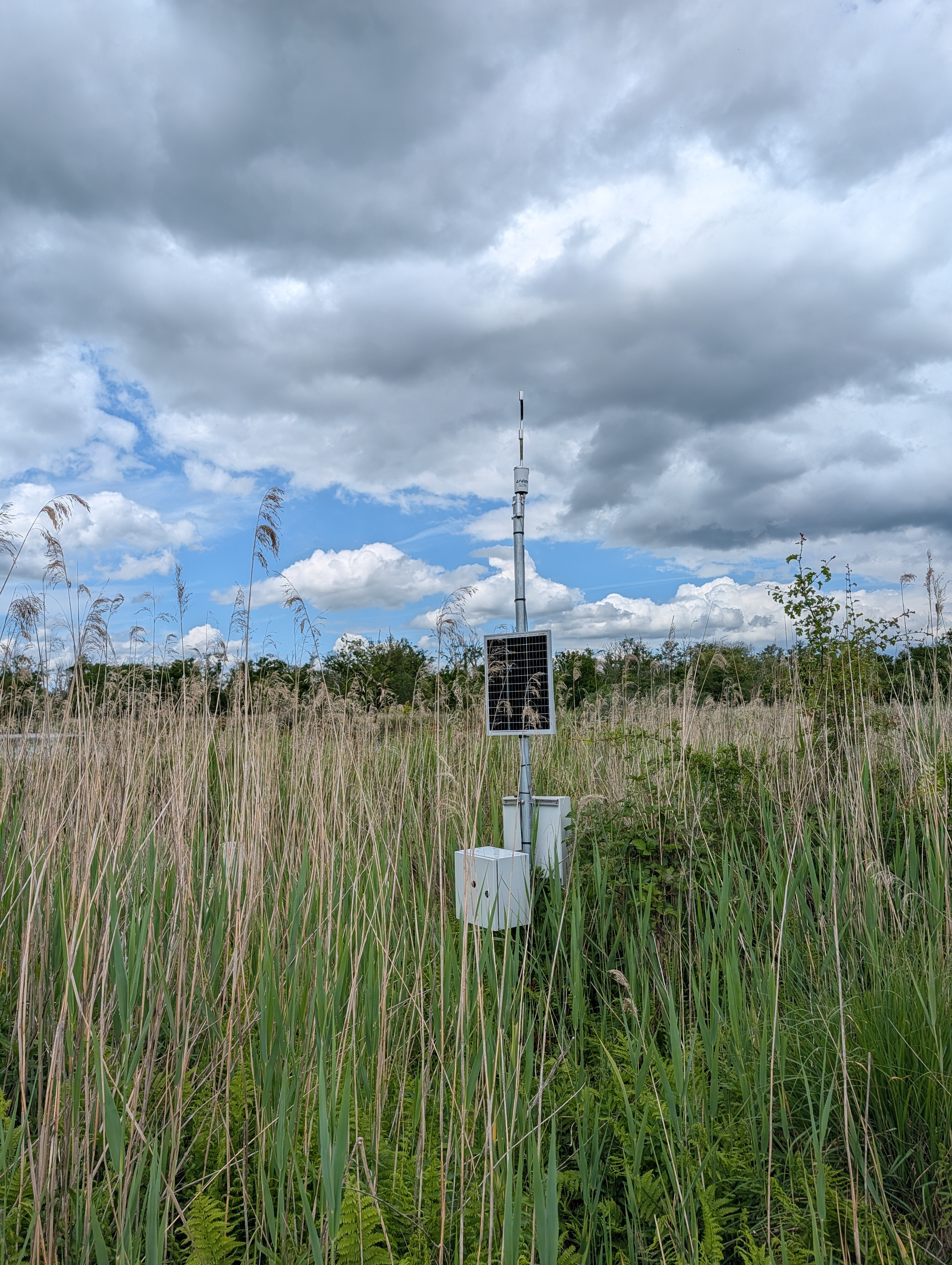
The afternoon session was led by Nick Crane, who invited us to visit Cedar Farm. We visited its reservoir, and its weather monitoring stations, followed by a stop at Upton Broad and its recent installation of water level monitoring equipment.
It was a productive day, and our team enjoyed learning more about the smart farm. Thank you to everyone involved for their invitation and efforts.
On Friday 5 June the Sustainable Abstraction Project Team met with board members of Norfolk Environment Food and Farming (NEFF).
The aim of the day was for NEFF to share project findings, next steps, and to start a conversation about how smart farming might fit in with abstraction licensing in the future.
The day began with a session led by Managing Director Steve Moncaster, who gave an overview of the Upton Broad Smart Farm project (Cedar Farm). This project is collecting monitoring data and assessing the hydro-ecological sensitivities of the local environment, to help with water efficiency and resilience for Cedar Farm going forward.
The afternoon session was led by Nick Crane, who invited us to visit Cedar Farm. We visited its reservoir, and its weather monitoring stations, followed by a stop at Upton Broad and its recent installation of water level monitoring equipment.
It was a productive day, and our team enjoyed learning more about the smart farm. Thank you to everyone involved for their invitation and efforts.
-
Modelling investigations
Our initial meetings with groundwater licence holders have now taken place, which has given those licence holders more insight into the reasoning behind potential changes, and the implications of those changes.
We continue to use the NEAC groundwater model to test options for changing licences, with the aim of finding an option that reduces abstraction enough to ensure the hydrological objectives of all Broads sites are met.
We are now at the stage of assessing how our project might impact surface water licences, using the model results to inform this. We aim to begin conversations with the holders of surface water licences in April 2026.
Our initial meetings with groundwater licence holders have now taken place, which has given those licence holders more insight into the reasoning behind potential changes, and the implications of those changes.
We continue to use the NEAC groundwater model to test options for changing licences, with the aim of finding an option that reduces abstraction enough to ensure the hydrological objectives of all Broads sites are met.
We are now at the stage of assessing how our project might impact surface water licences, using the model results to inform this. We aim to begin conversations with the holders of surface water licences in April 2026.
-
One-to-one discussions
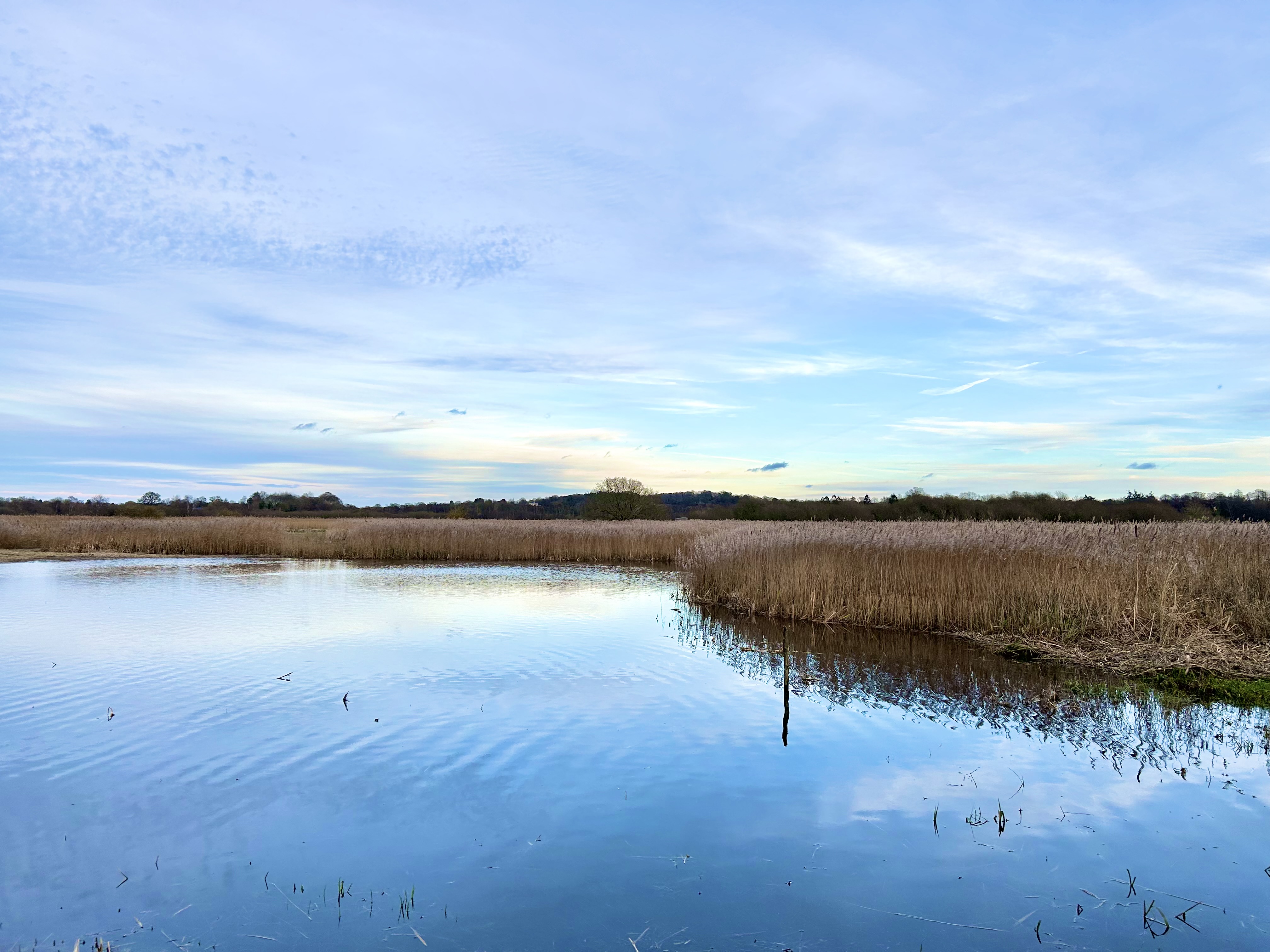
We have now begun our one-to-one meetings with groundwater abstraction licence holders who have been notified they are likely to be impacted by upcoming changes required under The Broads Sustainable Abstraction Plan.
These meetings build on the information discussed in the groundwater licence holder meetings held on 1st August and are the start of ongoing one-to-one engagement with licence holders impacted by The Broads Sustainable Abstraction Plan. These meetings provide an opportunity to discuss aspects of the plan in further detail, such as the plan stages and timeline, the modelling methodology and hydrological processes.
The meetings are tailored to each licence holder and their relevant licence(s), and we can provide information that the groundwater model has given regarding potential impact of their abstraction on the Broads sites. As we are at the early stage of the investigation, whilst we will advise on the modelling outputs against a licence we are unable to confirm for certain what changes may be required.
The next stage of the plan will involve continued engagement with licence holders over the coming months to explore abstraction licence scenarios which will achieve the required hydrological objectives.
We have now begun our one-to-one meetings with groundwater abstraction licence holders who have been notified they are likely to be impacted by upcoming changes required under The Broads Sustainable Abstraction Plan.
These meetings build on the information discussed in the groundwater licence holder meetings held on 1st August and are the start of ongoing one-to-one engagement with licence holders impacted by The Broads Sustainable Abstraction Plan. These meetings provide an opportunity to discuss aspects of the plan in further detail, such as the plan stages and timeline, the modelling methodology and hydrological processes.
The meetings are tailored to each licence holder and their relevant licence(s), and we can provide information that the groundwater model has given regarding potential impact of their abstraction on the Broads sites. As we are at the early stage of the investigation, whilst we will advise on the modelling outputs against a licence we are unable to confirm for certain what changes may be required.
The next stage of the plan will involve continued engagement with licence holders over the coming months to explore abstraction licence scenarios which will achieve the required hydrological objectives.
-
August Licence Holder Meeting
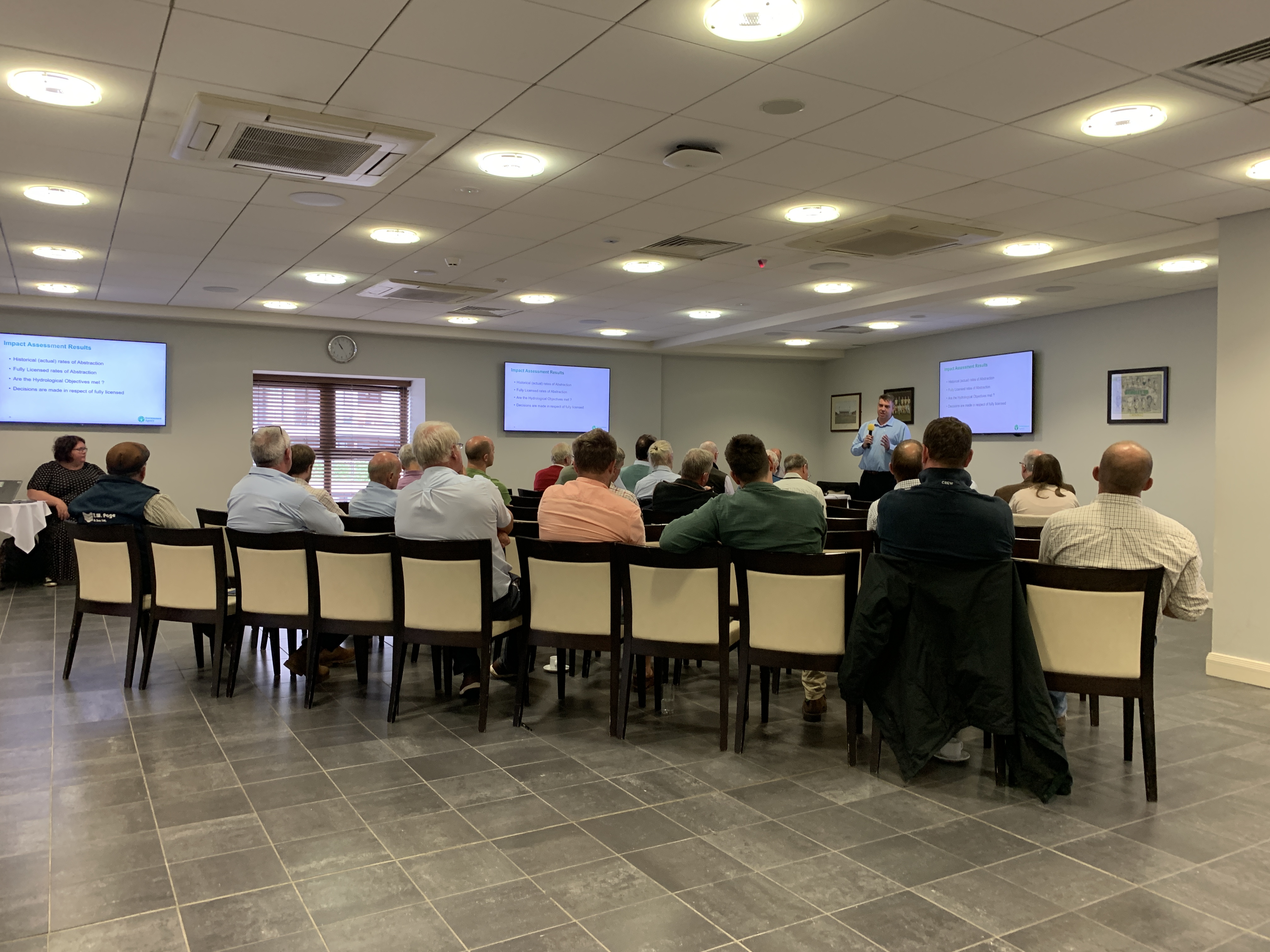
On 1 August 2025, we hosted an informative Sustainable Abstraction licence holder event at Norwich City Football Club.
The event brought together groundwater licence holders who have been notified they are likely to be impacted by upcoming changes required under The Broads Sustainable Abstraction Plan.
Licence holders heard from the Environment Agency, Natural England and Norfolk Environment, Farming and Food who delivered insightful presentations, sparking thoughtful conversations and providing valuable updates around the development of The Broads Sustainable Abstraction Plan.
It was a great opportunity for licence holders to connect with specialists to discuss the future of water management and the environment in The Broads, to ask questions, and to better understand how and when changes could impact them.
This was just the beginning. Over the coming months, the Environment Agency will be having more in-depth, one-to-one conversations with licence holders to ensure everyone is engaged in this process and has the opportunity to discuss their circumstances in detail. We’ll be contacting them soon to arrange these meetings.
On 1 August 2025, we hosted an informative Sustainable Abstraction licence holder event at Norwich City Football Club.
The event brought together groundwater licence holders who have been notified they are likely to be impacted by upcoming changes required under The Broads Sustainable Abstraction Plan.
Licence holders heard from the Environment Agency, Natural England and Norfolk Environment, Farming and Food who delivered insightful presentations, sparking thoughtful conversations and providing valuable updates around the development of The Broads Sustainable Abstraction Plan.
It was a great opportunity for licence holders to connect with specialists to discuss the future of water management and the environment in The Broads, to ask questions, and to better understand how and when changes could impact them.
This was just the beginning. Over the coming months, the Environment Agency will be having more in-depth, one-to-one conversations with licence holders to ensure everyone is engaged in this process and has the opportunity to discuss their circumstances in detail. We’ll be contacting them soon to arrange these meetings.
-
January & February 2025 Information Sessions
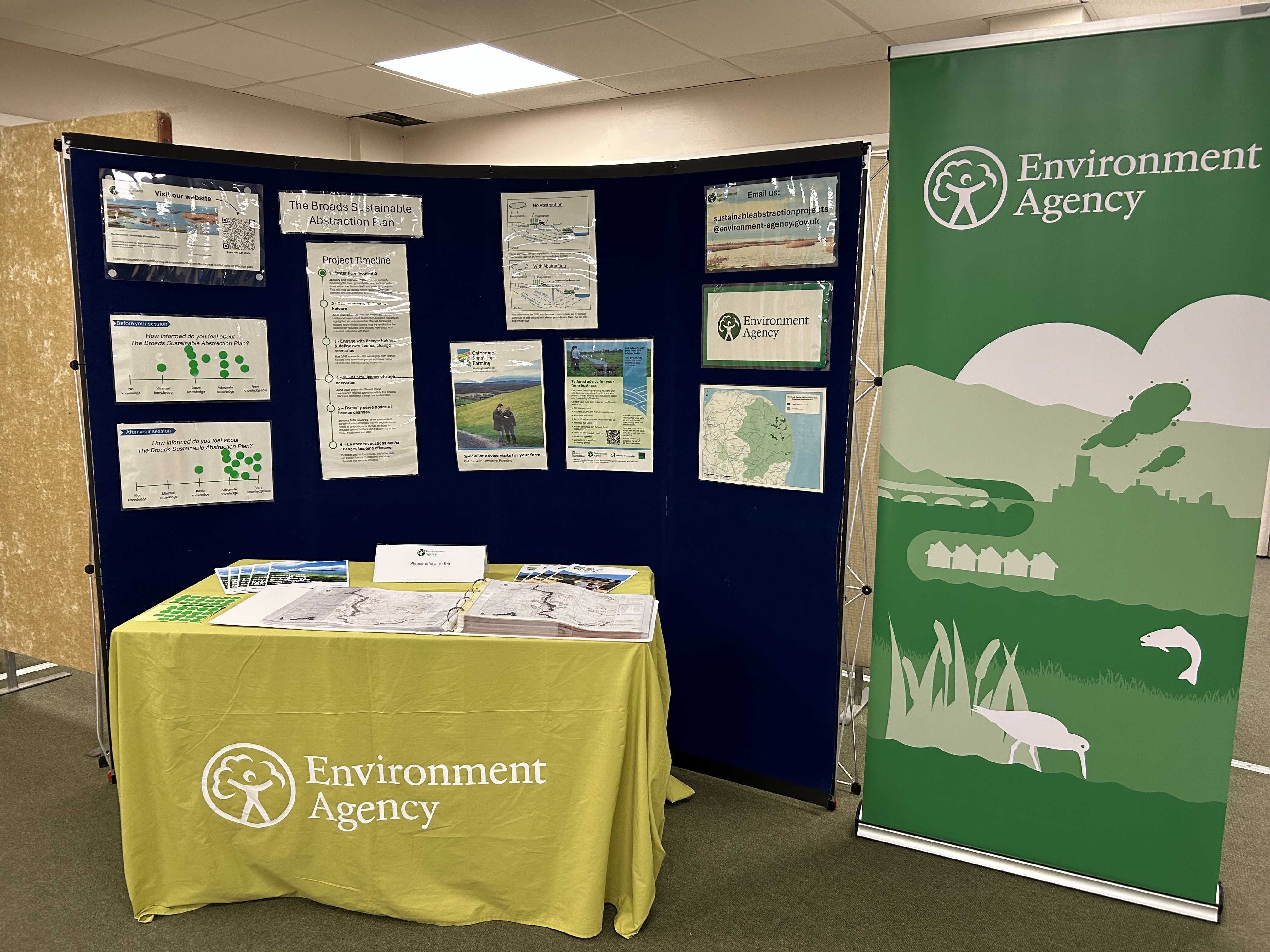
In January 2025 we held two in-person Information Days in Chedgrave and Acle. We were pleased to meet over 60 people with either abstraction licences in the project consultation area, or a keen interest in the project. We discussed the plan, current project timescales, and what it all means for existing licence holders. We also discussed what licence holders can do to prepare, and advised where further support is available. For those unable to attend in person we offered online Information Sessions, which were held in February 2025.
We are currently modelling the water flows within the Broads SACContinue reading
In January 2025 we held two in-person Information Days in Chedgrave and Acle. We were pleased to meet over 60 people with either abstraction licences in the project consultation area, or a keen interest in the project. We discussed the plan, current project timescales, and what it all means for existing licence holders. We also discussed what licence holders can do to prepare, and advised where further support is available. For those unable to attend in person we offered online Information Sessions, which were held in February 2025.
We are currently modelling the water flows within the Broads SAC and analysing outputs. This will help us identify which water abstraction licences are unsustainable and will need changing. We will contact licence holders with unsustainable licences in May 2025.
-
1 - Water flow modelling
The Broads SAC - Sustainable Abstraction Plan has finished this stageJanuary to June 2025
Preliminary modelling of the river, groundwater and surface water within the Broads SAC is complete, and the outputs have been analysed. We have now identified which water abstraction licences are unsustainable and may need changing.
-
2 - Initial discussions with at-risk licence holders
The Broads SAC - Sustainable Abstraction Plan has finished this stageJune 2025 onwards
We will inform the licence holders whose current abstraction licences have been highlighted as unsustainable.
-
3 - Engage with licence holders & define and model new licence change scenarios
The Broads SAC - Sustainable Abstraction Plan is currently at this stageUntil April 2027
We will engage with licence holders and abstractor groups, both collectively and individually, to discuss licence change scenarios, next steps and potential mitigation.
We will model different licence change scenarios within The Broads SAC and determine if these are sustainable. We aim to confirm our final, preferred option from April 2027.
-
4 -Determine on hold applications
this is an upcoming stage for The Broads SAC - Sustainable Abstraction PlanApril 2026 to March 2027
Determine applications that have been on hold awaiting the results from our groundwater modelling. Those applications that require no changes will be determined first, and all applications will be determined by March 2027.
-
5- Formally serve notice of licence changes to permanent licence holders
this is an upcoming stage for The Broads SAC - Sustainable Abstraction PlanOctober 2027
If we are unable to agree voluntary changes, we will begin to serve notice of our proposals to change permanent licences using section 52 of the Water Resources Act 1991.
-
6 - Licence changes under Section 52 become effective
this is an upcoming stage for The Broads SAC - Sustainable Abstraction PlanOctober 2029
This is the date confirmed licence changes made under Section 52 Water Resources Act 1991 will become effective.