Construction
- Minimise the impact of road construction traffic by identifying clear controls on routes for large goods vehicles, vehicle types, the number of vehicle movements generated, and hours of site operation.
- To reduce the impact of construction-related traffic on highway network operation, particularly during peak periods for construction worker arrivals and departures at the Proposed Scheme’s construction sites.
- To reduce the impact of construction-related traffic on the environment, by reducing the overall number of private vehicle movements generated by construction workers.
- To reduce demand for parking at construction sites through the promotion of initiatives such as car sharing.
- To increase opportunities for the use of alternative modes of travel to the private car for all construction workers.
How we will construct the scheme
Embankment Design
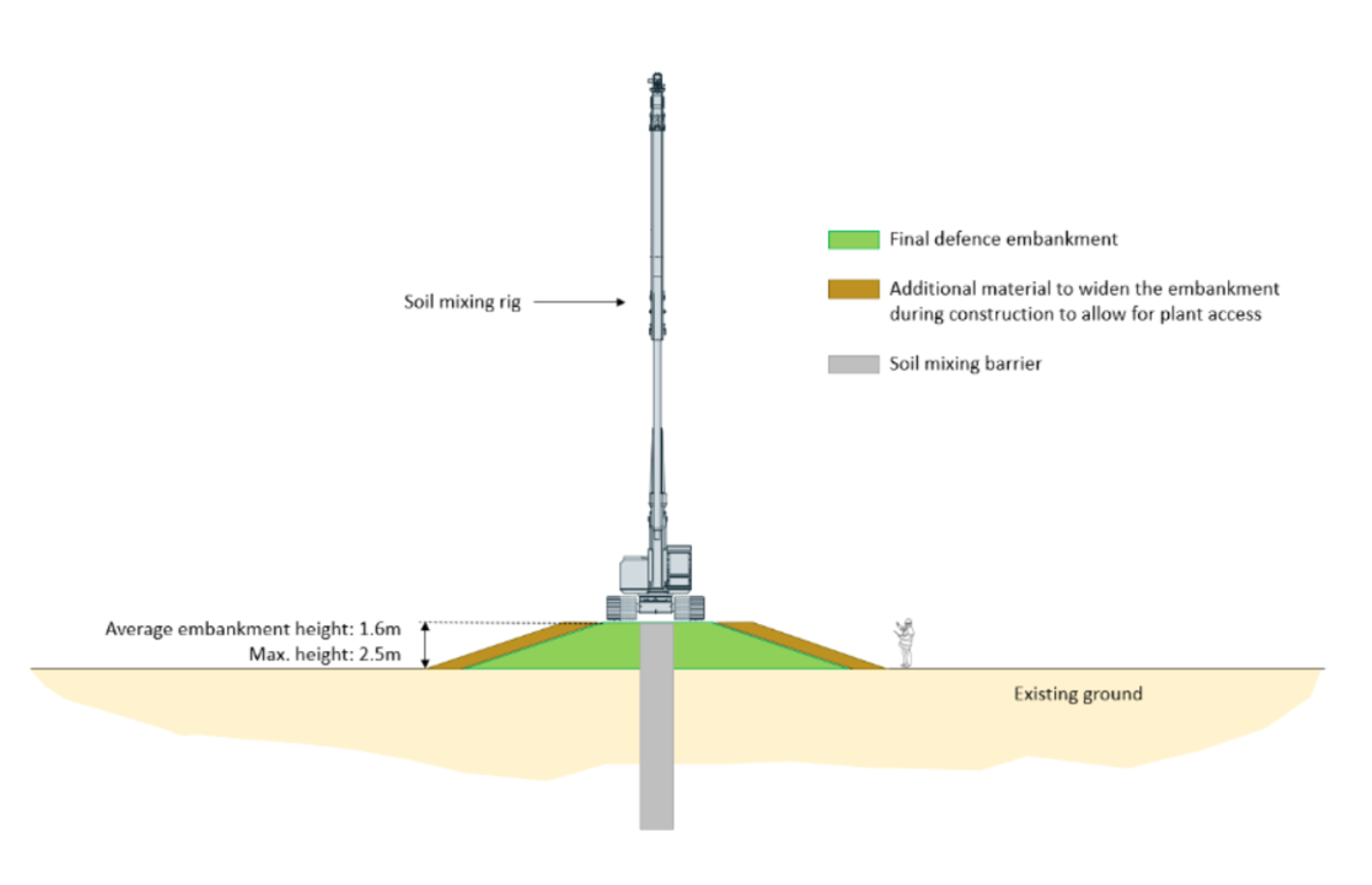
The sketch above shows how the embankment will be constructed. This includes the flood wall, soil and piling rig. Water held back by the flood embankment would slowly seep through the soil coming out on the dry side of the embankment. To stop this, we will install an impermeable 'cut off' through the embankment into the ground below. Our preferred method to create the 'cut off' will be to mix in the ground the existing soil with cement to create an impermeable wall.
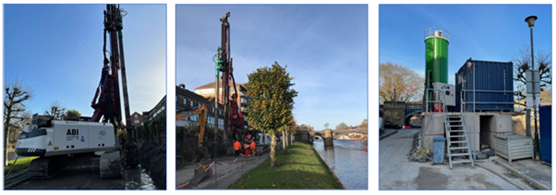 The photos show the typical equipment used for soil mixing. Similar equipment will be used in this project.
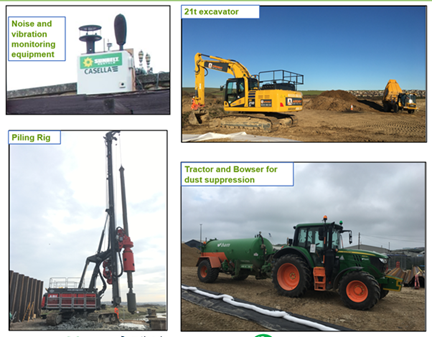
The working hours for construction of the scheme will be 08:00 to 18:00 Monday to Friday. We will be working across all areas of the construction site. While there may be times when construction is not visible, we will still be working on that area.
We will do everything we can to reduce disruption like using the most up to date technology, looking at options to reduce vehicle movements and putting up site boards and fencing to reduce visual and noise effects.
Traffic Management
We have submitted a construction traffic management plan (CTMP) as part of our planning application, this can be found on both Woking and Guildford planning portal. The document includes a description of the traffic impacts of the scheme on the transport network while under construction, including outlining the routes and access points that construction traffic will use to reach the site. We understand that the construction traffic will have an impact on the local community, the CTMP outlines the ways we will mitigate these impacts. This includes: