
Find out more
The Saltfleet to Gibraltar Point Strategy
- We carry out a survey before works begin, to calculate how much sand needs to be replaced following winter storms.
- The two 630m long steel pipelines (which is called the sinker line), which are buried in the sand during the winter, is excavated. These are positioned in key locations along the beach.
- A trailing suction hopper dredger heads out to licensed offshore and collects sand from the seabed.
- Twice a day, just before high tide reaches its peak, the dredger moves closer to the shoreline and connects to the sinker line.
- The dredger then pumps the collected sand through the pipeline directly onto the beach.
- We use bull dozers and excavators to move the sand to where it’s needed. This rebuilds the profile of the beach, replacing sand lost to erosion. Increasing the volume of sand helps protect the sea defences from wave action and reduces overtopping in extreme events.
- Mablethorpe
- Trusthorpe & Sutton on Sea
- Boygrift
- Huttoft & Moggs Eye
- Wollabank & Chapel-six-marshes
- Chapel Point
- Trunch Lane & Vickers Point
- Ingoldmells
About the strategy
Over the last 30 years, the Environment Agency has nourished the beaches in Lincolnshire between Mablethorpe and Skegness with sand to provide a wider defence which reduces the impact of wave action and tides, in combination with the existing hard and soft flood defences. This nourishment is carried out in combination with a routine maintenance programme for the hard sea defences.
This work has proved very successful in managing tidal flood risk for Lincolnshire. However, our estimates suggest it will not be sustainable to continue with this method of flood risk management in the future due to the increased levels and frequency of sand that would be associated with the effect of climate change.
Our strategy for the next 100 years is adaptable to a changing climate which will enable us to continue to provide and maintain coastal sea defences with healthy beaches for the enjoyment, wellbeing and prosperity of people visiting, working, and living in Lincolnshire.
The strategy sets out a plan to change the management regime, in combination with continued beach nourishment, to form a sustainable flood risk management approach for the next 100 years.
Moving to the new approach will be a gradual process over many years whilst further information is gathered to help with the detailed appraisal of the management options. During this transition period, the existing practice of beach nourishment will continue alongside maintenance of the sea walls and drainage outfalls, subject to funding availability.
Beach management for 2025-2027 will continue to provide great benefit for people, property, land, and the environment by managing the risk of flooding from the sea. This work will include routine maintenance and investigations.
What are the Environment Agency doing?
Each year beach nourishment works will usually start between Easter and the summer holidays. We will nourish the beach between Mablethorpe and Skegness.
A dredger will transport approximately 400,000 cubic metres of sand from licensed offshore sites and pump it onto the beach. Our contractor, Van Oord, will then move the sand into the right beach profile using bulldozers and excavators. This work will replace sand lost to erosion, reduce wave impact during storms and protect the sea defences from damage.
Before the works can start, our contractor will need to deliver machinery and equipment to the beach at Moggs Eye. This will be carried out using a direct access route to the beach at Moggs Eye, minimising disruption to the local road network.
How does beach nourishment work?
Beach nourishment is a term used to explain replacing the sand on the beach that is lost through natural processes during the previous year.
We work around the clock, 24 hours a day, 7 days a week usually between Easter and the summer holidays.
Where is the project?
The beaches will be nourished in locations between Mablethorpe and Skegness. We make every effort to avoid working during the school holidays subject to any delays. We work around the clock, 24 hours a day, 7 days a week between Easter and the summer holidays. The beach nourishment happens every year and takes approximately 6 weeks depending on the weather conditions. The beach nourishment normally takes place at: | 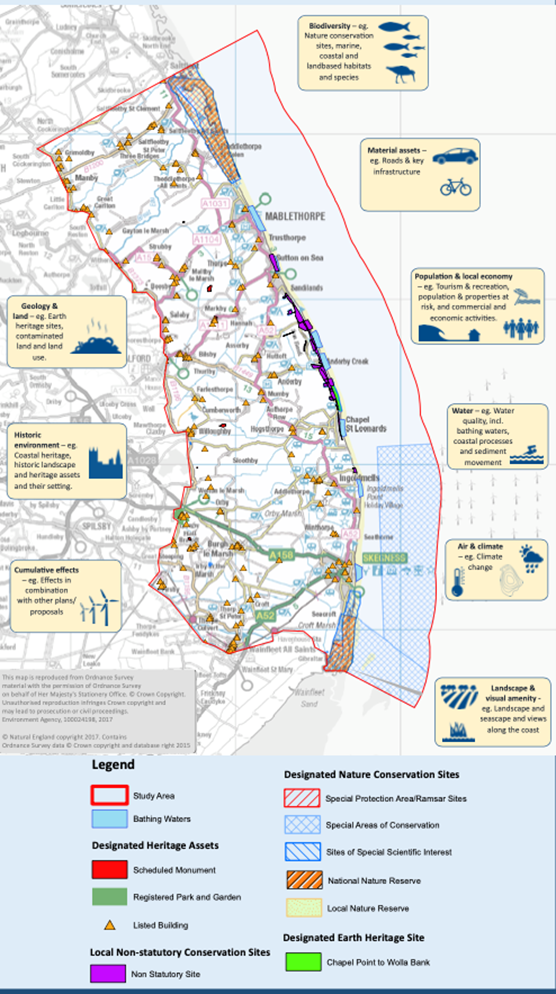 |
When will work take place?
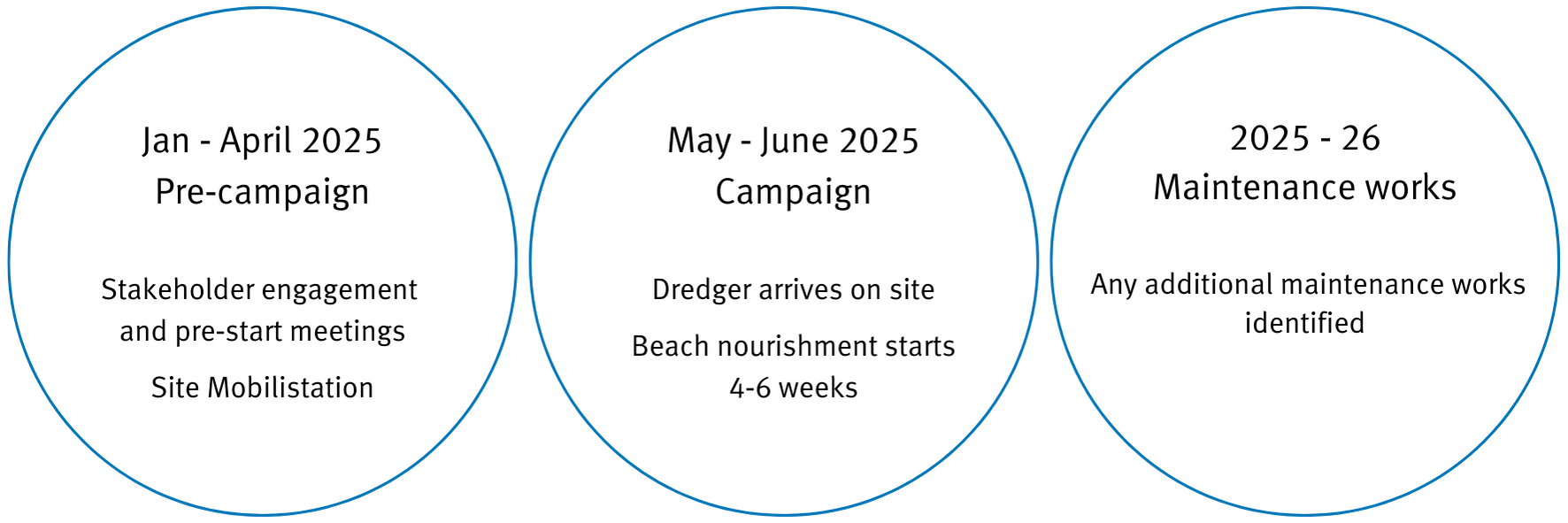
Below is a timeline of how the beach management programme progresses. Timings can vary due to weather restrictions.
Why is the project needed?
The Environment Agency is working to reduce flood risk to 20,000 residential homes. 1,700 businesses, 24,500 static caravans, 35,000 hectares of farmland and a bustling tourist industry.
The Lincolnshire coastal flood plain has a long history of flooding from the sea and many forms of defence are now in place including sand dunes, seawalls, rock/timber structures and beaches.
By restoring beach levels lost over the year, the Environment Agency protects its engineered sea defences from the impact of waves and tides. The coastline between Mablethorpe and Skegness has benefitted from beach nourishment, the present flood risk management approach, since 1994.
Without beach nourishment, there would be little sand left on the beaches. The sand plays a vital part in protecting the defences. Without this protection, there would be an increased chance of the defence becoming breached during stormy weather. A large area of land behind the defences is at or below mean high water springs sea level and such breaches would be devasting for homes, businesses and agriculture.
The sandy beaches not only help to protect and preserve the defences but also provide an ideal attraction for tourists visiting the area.
Since sand nourishment began on this stretch in the 90s, the east coast has experienced surges greater than those seen in 1953. Due to improved defences and annual sand nourishment work we have not witnessed the same impacts.
Who is involved?
Van Oord were succefully awarded a new contract for the beach management programme from Saltfleet to Gibraltar Point 2025-2027 last year. Whilst Van Oord have been working with the Environment Agency on the Lincolnshire Coast for many years this will be the first year of works under the new contract.