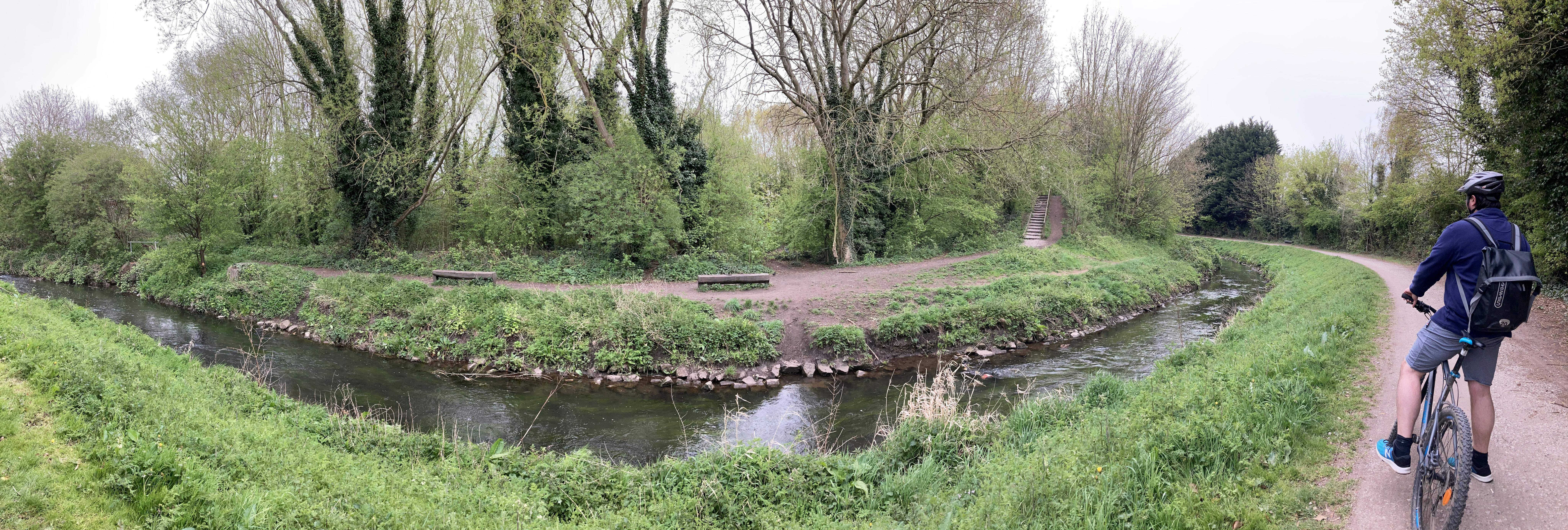
Fun Facts about the River Leen
Fun facts about the River Leen
- King fisher
- Brown trout
- White-clawed crayfish
- Brook Lamprey
How Long is the River Leen?
The River Leen is Approximately 33km long and runs from its source at Hollinwell to the River Trent near Kings Meadow Nature Reserve, where it is then culverted until it joins the River Trent upstream of The Victoria Embankment. The river’s course has been altered many times and also built over to make way for industry, development and flood defence. It once flowed past the base of Nottingham Castle.
Other smaller streams and waterbodies join into the Leen. These are called tributaries and include, for example: the Day Brook, Baker Lane Brook and Tottle Brook.
How did industry use the Leen historically?
Past industry included hosiery, corn mills, tanneries, breweries, coal mining, textile manufacturing, bleaching and dying works.
One example is the former Cusson’s site within the Basford area of Nottingham is. It manufactured soap, and the Leen itself was used for plant cooling. Also, During WWI, a plant was installed at the site to recover glycerin (used for explosives).
Also, During WWI, a plant was installed at the site to recover glycerin (used for explosives).
Other past industry included hosiery, corn mills, tanneries, coal mining, textile manufacturing, bleaching and dying works.
How many weirs are located along the Leen?
There are 27 weirs along the river Leen which is roughly 1 weir per kilometre.
A weir is a man-made barrier built across a watercourse to control the flow of water and raise the upstream water level. Reasons why they have been built include, for example: to raise levels for navigation, water abstraction, to create man-made lakes or reservoirs, power generation, etc.
Most of the weirs on the Leen can be traced back to historic uses. Many don’t serve a modern-day purpose. They can be barriers to fish, getting in the way of them being able to move freely to find mates, better habitat and food.
What wildlife lives on the River Leen
The River Leen has good biodiversity with many species making their homes in and around the river, these include...
Some of these are quite rare and require a joined-up approach make the Leen much more friendlier for them and other wildlife. Their habitats can be fragmented, meaning wildlife can be restricted to small sections which makes them more vulnerable to pollution and climate change. Joining up habitat (like dot to dot) and filling the gaps in between (like fill in the blanks) are needed to help the Leen’s wildlife thrive. This includes making the river less straight, creating more habitat oases, and putting in natural materials in the river. The more interesting areas equals more wildlife. We can then also all enjoy seeing more wildlife too.
.