The Most Frequently Asked Questions
- Storm overflow already enters the Portreath Steam and channel in flood conditions.
- The storm overflow locations are approximately 3.9km and 4.8km away.
- Increased flows during a flood and the distance of the storm overflows upstream allow significant dilution of discharges into the stream before reaching Portreath.
- Bathing water ratings make allowances for abnormal situations such as extreme rainfall as it is recognised that this is not representative of normal conditions.
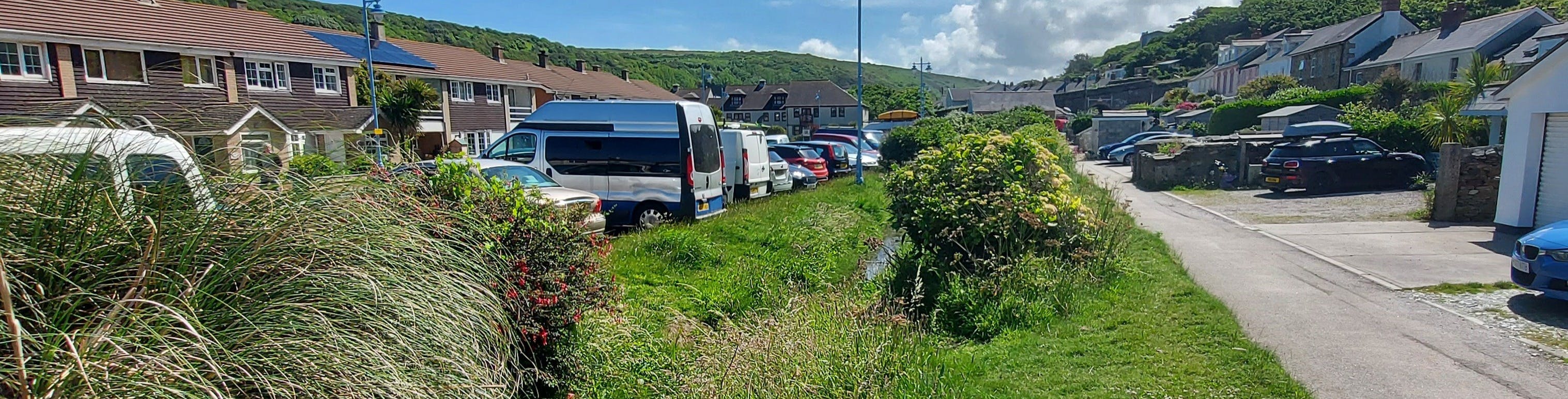
- Retention of existing embankment and vegetation where possible. A sheet pile wall is required along the channel next to the B3301 to retain the highway. However, we are keeping the wall as low as possible, and it will be sympathetically incorporated into its landscape setting.
- Replacement planting & screening to enhance biodiversity and reduce visual impact.
- Retention of all bridge crossings.
- Increased accessibility by incorporating a ramped footbridge.
- Retention of car parking spaces along B3301.
Will sewage be flowing down the channel and onto the beach?
We appreciate the importance of protecting the water quality of Portreath beach which has been recognised over many years through Blue Flag and Seaside Awards. As the Environment Agency we do not want to compromise bathing water quality, and we are working to answer the concerns raised regarding the proposed flood resilience works and water quality issues.
At present in flood conditions water from the Portreath Stream overflows at the trash screen into the channel as well as overtopping into the school playing field, down the main road and into the village before dispersing into the sea. During flood conditions it is already the case that discharges from the upstream SWW storm overflows Sunnyside and Tolskithy Lane can enter the Portreath stream and flow through Portreath via the existing channel and into the sea. There is also risk that the overtopped water from Portreath Stream will flood the SWW Bridge Pumping Station located next to the tunnel entrance.
Our proposal to reinstate the channel won’t change how often high flows occur or that storm discharge could enter the channel. However, it will manage the flood water to bypasses the village, reducing the impacts to properties, the school and pumping station.
The proposal will not change the operation of SWW Bridge Pumping Station and storm overflow, which will continue to discharge directly into the tunnel and out to sea. If maintenance is required on the tunnel, water from Portreath Stream can be directed down the channel. However, this would only be planned for dry weather conditions when water levels are low, and the storm overflows should not be discharging.
Because of the way storm overflows operate in intense rain events there is a risk that the 2 upstream overflows will discharge in flood conditions. However, it is important to note:
We fully understand that storm overflow discharge is a key concern. However, it is important to reiterate that the diluted flow is already part of the existing flood pathway that currently enters the channel during flood events as well as travelling down the main road and into the village before discharging into the sea.
The Environment Agency (EA) are working with SWW to manage and improve storm overflow performance through five-year Asset Management Plans (AMPs) and the regulation of environmental permits. For further information regarding SWW improvement plans, and information related to storm overflows please contact SWW directly via the customer service line: 03443461010 or visit the website www.southwestwater.co.uk. Information can be found regarding storm overflows by typing ‘storm overflow’ or ‘waterfit live’ in the search engine.
How will the proposals consider the character of the village?
Portreath’s landscape has been shaped by a range of natural and human influences, from its exposed Atlantic coastal setting to the extensive reshaping of the valley during 19th and early 20th century mining operations. This dynamic landscape combines dramatic, windswept coastline, a rich industrial heritage and pockets of rural tranquillity, creating a distinctive and unique sense of place.
To understand the heritage of Portreath we have carried out a desk-based assessment, looking at the Historic Environment Records held by the local authority and Historic England’s designation records, along with historic maps and photographs. Our landscape specialists have also carried out detailed investigations within the proposed area of the scheme, and we have completed engagement activities to obtain community feedback.
Our findings reveal that Portreath’s landscape has been shaped by a combination of natural processes and human activity, resulting in a distinctive and valued sense of place. To ensure we preserve the character and history of Portreath the below considerations are being included within the proposals:
As we progress the project further, we will remain committed to preserving the character of Portreath and where possible, enhancing it for future generations.
What impact does the current proposal have on the green corridor and wildlife?
We are carefully considering the environmental impacts of our proposed scheme with a team of environmental specialists focusing on biodiversity, landscape and heritage.
We have undertaken a Preliminary Ecological Appraisal, to identify the key ecological considerations for the project and the ways that we can avoid, mitigate and compensate for our impacts with enhancements. The project team are also undertaking an Environmental Impact Assessment, and we are currently seeking a screening opinion from the local planning authority, which is Cornwall Council.
Our priority, where possible is to avoid impact to the natural embankment and vegetation. Where this is not possible and harder engineered solutions are required, we are working with our landscaping team to carefully consider replanting options that provide suitable screening and habitat creation.
The proposals are being developed with input from Cornwall Council and the World Heritage Officer to ensure that the outcome is a robust, sustainable solution, with consideration to the feedback we have received to date from the community. Once they have been developed they will be shared with the community.
What considerations have been made regarding drainage and surface water run off?
Surface water run-off and drainage considerations are being developed through the next phase of the design process.
Noted areas for consideration include Tregea Hill, Tregea Terrace and surface water tracking across the foot bridge opposite the Bassett Arms pub.
We will be working with Cornwall Council, Highways and landowners to identify drainage requirements and how they interact with the proposed scheme and will continue to share this information with the community as the options are developed.
Will the proposed works require maintenance?
The Environment Agency (EA) is a category 1 responder and has operational abilities available 24/7. Significant improvements have been made to the debris screen at the entrance to the tunnel. This includes monitoring equipment that automatically notifies our response teams in the event of high flows and/or a blockage.
The EA currently complete annual vegetation maintenance along the channel. Minor debris and any blockages are cleared; grass is cut and woody vegetation is assessed and agreed. This supports the current flow of water and reduces risk of blockages.
Desilting is not included in the current maintenance schedule because it would not provide sufficient channel capacity for the level of protection required.
The current flood resilience proposals will include a maintenance programme that ensures the required flows and capacity are achieved.
As part of the design, we are currently reviewing the ongoing maintenance requirements to determine the likelihood and impact of blockages occurring. The outcome of this assessment will be incorporated within the design and maintenance proposals to reduce and mitigate any identifiable risks.
How many properties will benefit from the Portreath Flood Resilience Scheme?
The table below shows the number of properties that will be better protected by the Portreath Flood Resilience scheme. We use the term '1 in 20 year flood event' another way to describe this is a 5% chance of this type of flood event happening in any year.
Number of properties that benefit from the scheme
| Present day Annual Exceedance Probability (AEP) events with Mean High Water Springs downstream boundary | Future AEP events (Climate change uplift, Central, 2080s) | |||||||||
Property Type | 50% (1 in 2) | 5% (1 in 20) | 5% (1 in 20) | 5% (1 in 20) | 3.3% (1 in 30) | 2% (1 in 50) | 1% (1 in 100) | 0.5% (1 in 200) | 0.1% (1 in 1000) | 5% (1 in 20) | 1% (1 in 100) |
Residential | 63 | 82 | 96 | 97 | 102 | 112 | 120 | 131 | 142 | 120 | 142 |
Holiday Let | 1 | 1 | 1 | 1 | 1 | 1 | 1 | 1 | 1 | 1 | 1 |
Non-Residential | 13 | 15 | 16 | 17 | 17 | 19 | 20 | 20 | 20 | 20 | 20 |