We use cookies to ensure our site functions properly and to store limited information about your usage. You may give or withdraw consent at any time. To find out more, read our privacy policy and cookie policy.
Manage Cookies
A cookie is information stored on your computer by a website you visit. Cookies often store your settings for a website, such as your preferred language or location. This allows the site to present you with information customized to fit your needs. As per the GDPR law, companies need to get your explicit approval to collect your data. Some of these cookies are ‘strictly necessary’ to provide the basic functions of the website and can not be turned off, while others if present, have the option of being turned off. Learn more about our Privacy and Cookie policies. These can be managed also from our cookie policy page.
Strictly necessary cookies(always on):
Necessary for enabling core functionality. The website cannot function properly without these cookies. This cannot be turned off. e.g. Sign in, Language
Analytics cookies:
Analytical cookies help us to analyse user behaviour, mainly to see if the users are able to find and act on things that they are looking for. They allow us to recognise and count the number of visitors and to see how visitors move around our website when they are using it. Tools used: Google Analytics
We are publishing a one-off report covering water company pollution incidents for the nine water and sewerage companies in England covering the period 2016-2024. This report highlights persistently poor pollution incident performance at a time when there is unprecedented interest in the health of our rivers, lakes and seas. We at the Environment Agency are here to hold them to account.
Where is it published ?
You can find the full report here and a summary in our press release here.
What doesitsay ?
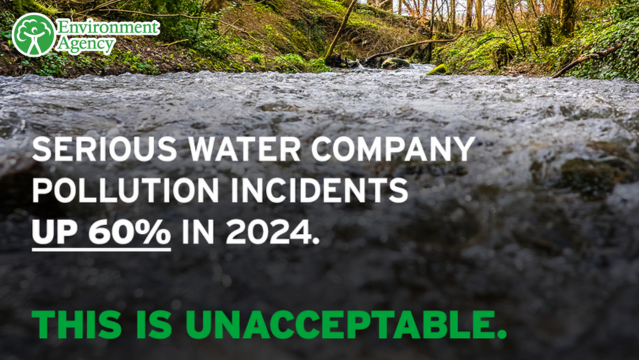
Increased monitoring of water companies and public interest has pushed incidents and their impacts into the spotlight. You would expect this would mean we’d start to see pollution incidents go down. But in fact, the 2024 figure is 47% higher than 2016.This is simply unacceptable.
The high number of serious incidents in 2024 was mainly due to the performance of three water companies with 81% of the 75 incidents being from the assets of Thames Water (33), Southern Water (15) and Yorkshire Water (13).
Whyare we putting this out?
The water company performance report and EPA usually published in July, was delayed until October 2025 this year. This report allows EA to provide an update on the environmentalperformanceof water and sewerage companies in England.
We want to see greater transparency around water company actions to reduce the severity and frequency of pollution incidents and investments into assets for long term resilience.Meaning the public,customers and regulators can better hold companies to account.
What are we doing about it?
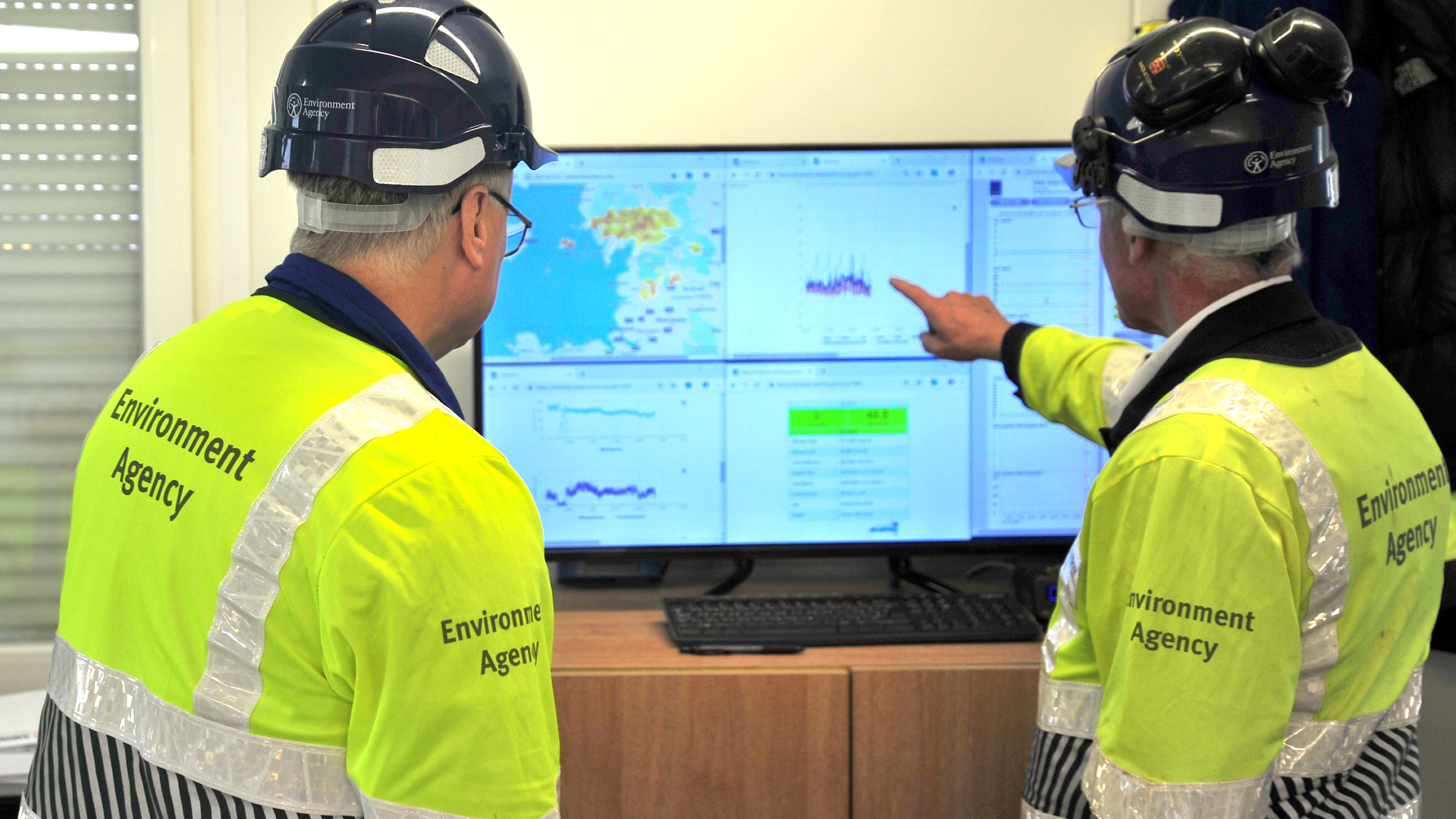
With a dedicated larger workforce, we have carried out an increased number of inspections (more than 4,000 in 2024/25 and we are on track to deliver 10,000 in 2025/26).
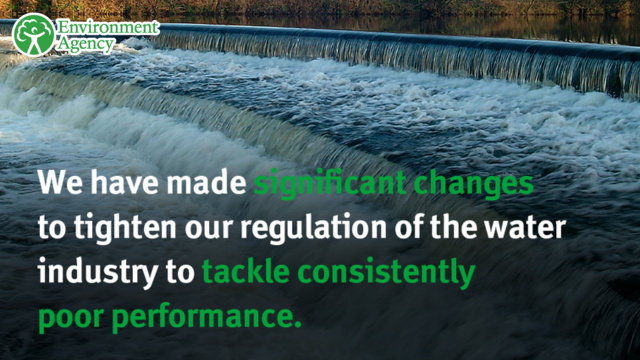
Under the Water (Special Measures) Act 2025, we shared thedata with Ofwat to support their bonus ban decisions and water companies will now produce annual Pollution Incident Reduction Plans. We will be producing statutory guidance for these to ensure they're consistent and effective.
We will continue to work closely with our fellow regulators to hold companies to account to deliver the environmental improvements for people, communities and wildlife.
Are we still putting out the EPA?
Our annual water company environmental performance report on wider aspects of environmental performance in 2024 is now published here. But there is no need for the water industry to wait. We expect rapid action to turn around intolerable pollution incident performance.
Are you changing how pollution incidents are assessed and reported?
The attached "Guidance for reporting and assessing water industry regulation incidents (WIRI)" document explains how the Environment Agency will record and manage incidents involving water company assets and sets out our expectations of incident self-reporting by the water companies from the beginning of 2026. This guidance also extends to incidents involving water company assets that are reported to us by a third party source. These changes will help to drive environmental performance improvements and bring water companies in line with other industries we regulate.
What is the Pollution Incident Report?
We are publishing a one-off report covering water company pollution incidents for the nine water and sewerage companies in England covering the period 2016-2024. This report highlights persistently poor pollution incident performance at a time when there is unprecedented interest in the health of our rivers, lakes and seas. We at the Environment Agency are here to hold them to account.
Where is it published ?
You can find the full report here and a summary in our press release here.
What doesitsay ?
Increased monitoring of water companies and public interest has pushed incidents and their impacts into the spotlight. You would expect this would mean we’d start to see pollution incidents go down. But in fact, the 2024 figure is 47% higher than 2016.This is simply unacceptable.
The high number of serious incidents in 2024 was mainly due to the performance of three water companies with 81% of the 75 incidents being from the assets of Thames Water (33), Southern Water (15) and Yorkshire Water (13).
Whyare we putting this out?
The water company performance report and EPA usually published in July, was delayed until October 2025 this year. This report allows EA to provide an update on the environmentalperformanceof water and sewerage companies in England.
We want to see greater transparency around water company actions to reduce the severity and frequency of pollution incidents and investments into assets for long term resilience.Meaning the public,customers and regulators can better hold companies to account.
What are we doing about it?
With a dedicated larger workforce, we have carried out an increased number of inspections (more than 4,000 in 2024/25 and we are on track to deliver 10,000 in 2025/26).
Under the Water (Special Measures) Act 2025, we shared thedata with Ofwat to support their bonus ban decisions and water companies will now produce annual Pollution Incident Reduction Plans. We will be producing statutory guidance for these to ensure they're consistent and effective.
We will continue to work closely with our fellow regulators to hold companies to account to deliver the environmental improvements for people, communities and wildlife.
Are we still putting out the EPA?
Our annual water company environmental performance report on wider aspects of environmental performance in 2024 is now published here. But there is no need for the water industry to wait. We expect rapid action to turn around intolerable pollution incident performance.
Are you changing how pollution incidents are assessed and reported?
The attached "Guidance for reporting and assessing water industry regulation incidents (WIRI)" document explains how the Environment Agency will record and manage incidents involving water company assets and sets out our expectations of incident self-reporting by the water companies from the beginning of 2026. This guidance also extends to incidents involving water company assets that are reported to us by a third party source. These changes will help to drive environmental performance improvements and bring water companies in line with other industries we regulate.