
More information: The Scheme
Scheme overview
- Compared to annual emissions from beach management in 2019
- As predicted by UK Climate Projections (UKCP): https://www.metoffice.gov.uk/research/approach/collaboration/ukcp/summaries/headline-findings(External link)
- ‘Standard of protection’ is defined by the size of storm event that the defence is designed to withstand. Storm size is expressed as a probability of that event happening. So a winter storm that we’d expect to occur every year would be a 1 in 1 year or 100% occurrence (even though we may have some years without one and others with more than one)
- Flood modelling showing a Do-Nothing scenario and 0.5% Annual Exceedance Probability storms (a 1 in 200 year storm)
- Flood extents shown are based on a hypothetical scenario of defences not being maintained and ceasing to work effectively.
What is the Scheme aiming to achieve?
The Scheme aims to:
1: Manage flood risk for people, homes, businesses and infrastructure
2: Create a better place through environmental enhancements in the local area
3: Embed low carbon technology and approaches in line with the EA’s Emission Strategy
4: Deliver Social Value through working in partnership
5: Support sustainable growth in the areas we are reducing flood risk
Why is the Scheme needed?
Sea levels are predicted to rise by more than a metre over the next 100 years and storms are expected to become more frequent2 increasing the risk from coastal flooding and erosion.
If we do not update our approach to managing the coastline over time, the chance of defence failure (breach) will increase. In addition, the chance of water flowing over the defences will increase. The scheme will model predicted future coastal conditions and deliver a plan to adapt, as the threat increases, to ensure continued resilience to coastal flooding.
What would happen if the defences fail?
A breach (a gap in the defence caused by the beach eroding in a storm) could allow the sea to flow inland at high tide and cause extensive damage with lasting impact on lives and livelihoods. Due to the low elevation of land behind the defences a breach at any location along the 15km coastline may flood a much wider area.
The map below shows the area (flood cell) at risk of flooding following a storm breach if we don’t improve the defences to provide the same standard of protection as sea levels rise. The flood area increases over time based on predicted sea level changes.
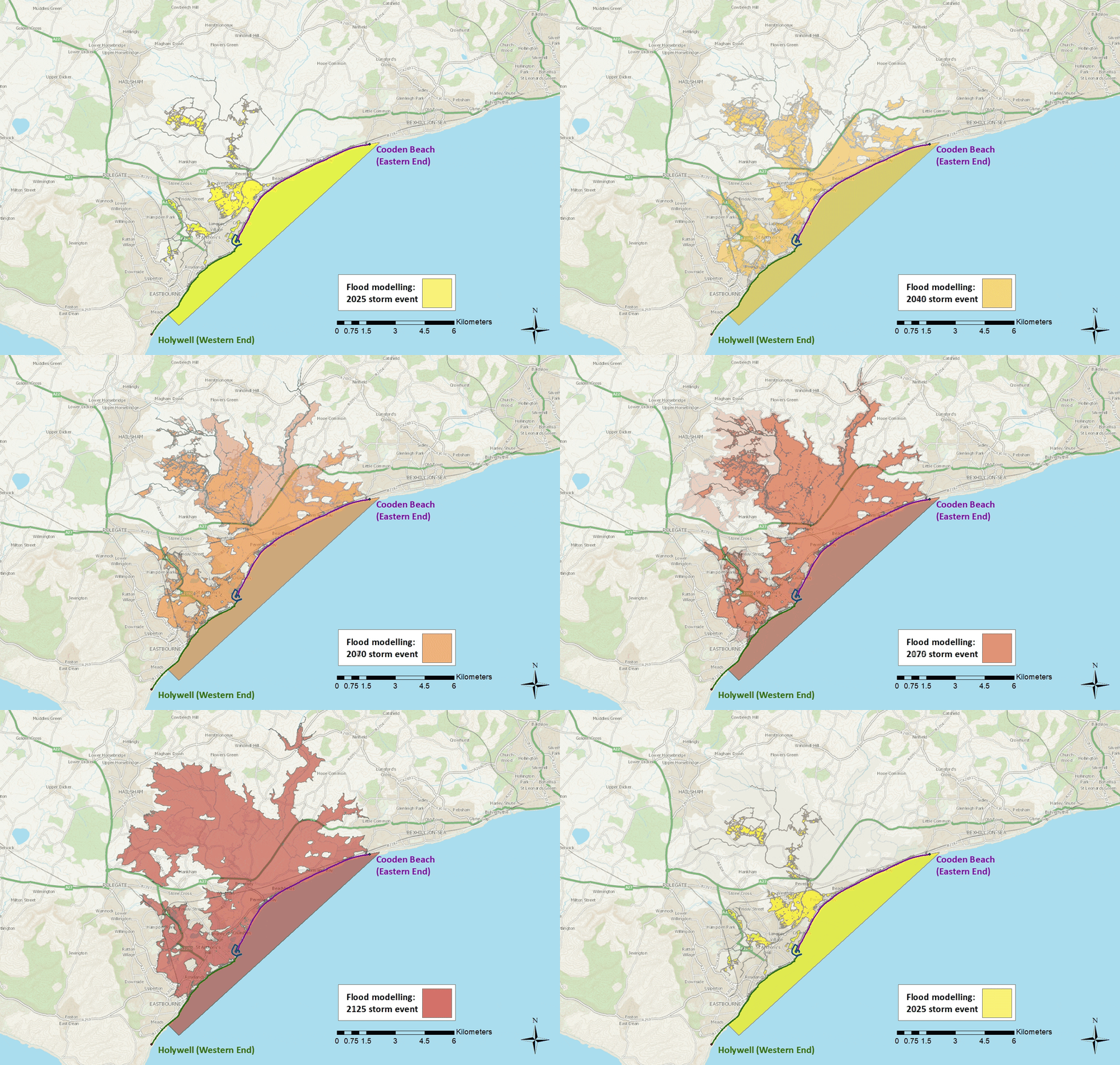
Animation showing modelled storm flood water extents without scheme interventions
How is the management of the coastline changing?
The frontage has been managed as two separate sections since 2000. Eastbourne Borough Council have managed the coastline between Holywell and Langney Point. Pevensey Coastal Defences Limited (PCDL) have managed the section from Sovereign Harbour to Cooden Beach on behalf of the Environment Agency.
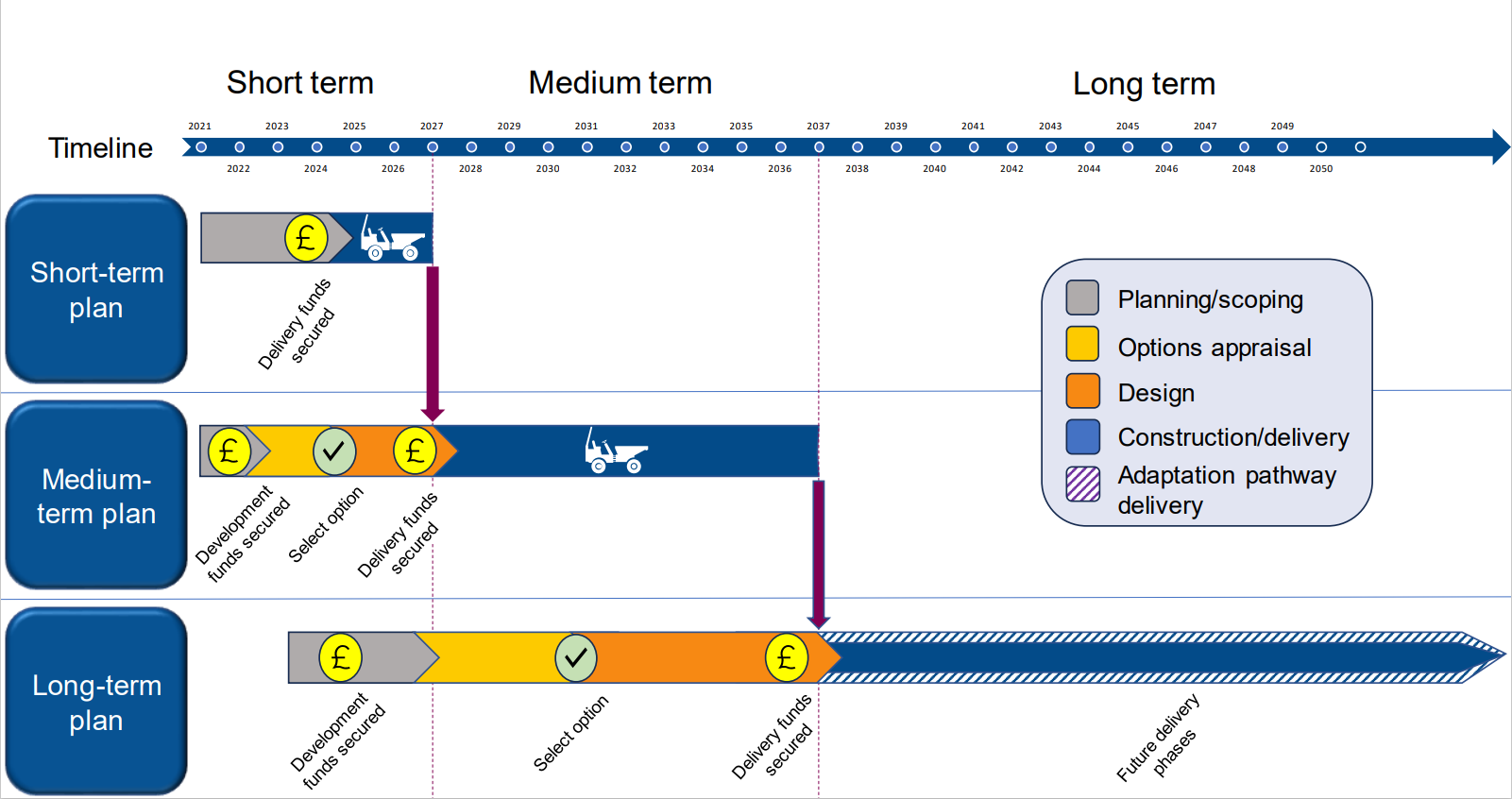
In 2025 the PCDL contract ends, after which the Pevensey Bay to Eastbourne Coastal Management Scheme takes over. There will be no gap in the management of this coastline.
From 2027 the 15km frontage will be managed as one section reflecting the connected nature of the flood cell to allow a more holistic management approach to be taken.
The below chart gives an overview of the indicative scheme timeline. A more detailed version can be viewed in the full project timeline.
Why are we taking a phased approach?
Climate change will have a wide range of impacts in coastal areas and there is no single solution to increasing resilience to flood risk. Forecasts suggest that sea level will rise by up to 1.15m by 2100 but uncertainties remain.
Taking a phased approach (referred to as adaptation pathways) allows interventions to be taken at the right time, avoiding the cost of acting too early or too late. We can put in place defences that reduce the risk of flooding and erosion in the medium-term, whilst planning for the long-term, so that we are ready to deliver protection against a higher sea level when that becomes necessary. It means we stay ahead of, and on top of, the risk whilst not providing over-engineered solutions in the present. This also means we can keep the things we love about life along the coast for as long as possible whilst we work out a new relationship with higher sea levels.
How is the scheme funded?
We have funding in place to develop the scheme in more detail. We aim to secure funding to deliver each phase from government. This funding is known as Flood and Coastal Erosion Risk Management Grant in Aid (FCERM GiA). Eastbourne Borough Council is a contributing partner and other funding sources are being sought.
Footnotes
Short-term project (interim)
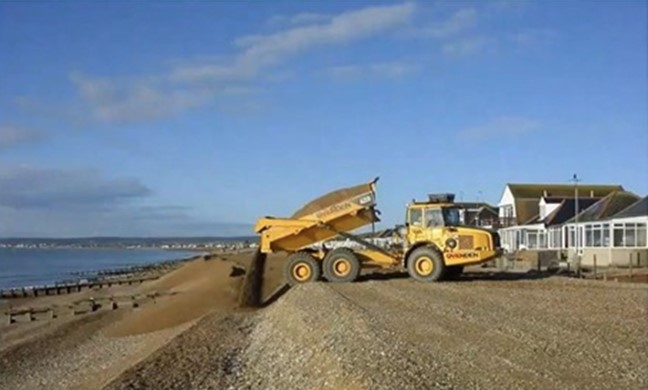
- Shingle reprofiling: Shingle is moved by machinery to reshape the beach after waves have removed it, to ensure the beach crest remains wide enough.
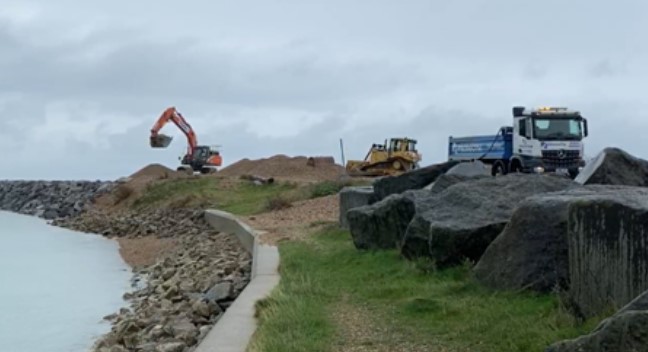
- Recycling: Shingle that moves due to longshore drift temporarily builds up in some places so it is moved back along the beach in large dumper trucks.
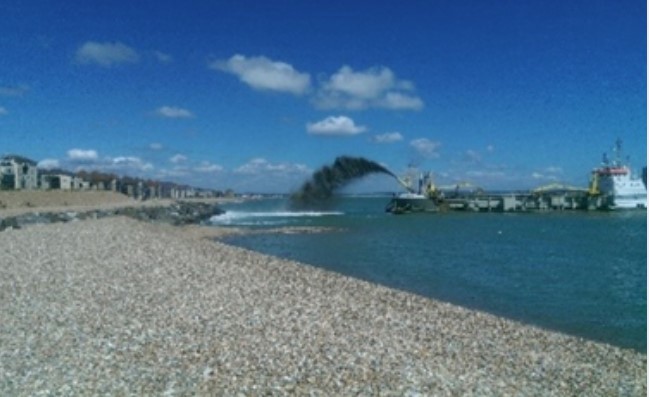
- Bypassing: This means moving shingle by road in dumper trucks around Sovereign Harbour.
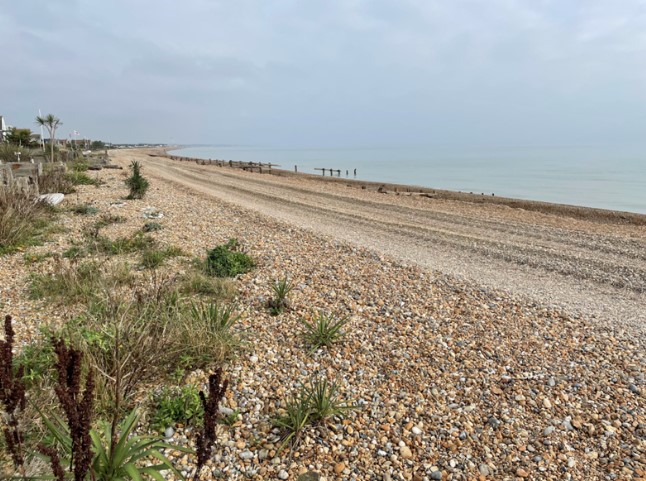
- Recharging: The shingle lost from the beach is replaced using the Sospan Dau dredger to add shingle from offshore to the beach.
- Beach surveys: This involves monitoring the size and shape of the defences to decide when beach management work is required.
- withstand an extreme storm with a 0.25% chance of occurring in any given year (often described as a '1 in 400‑year' event) without breaching; and
- prevent significant overtopping during a storm with a 0.5% annual chance ('1 in 200‑year' events).
- Shingle bypassing (littoral drift obligation) - moving shingle from the western harbour arm to beaches to the northeast to replace the natural movement of sediment that the harbour now blocks
- Sea defence maintenance and operation - ensuring the coastal flood defences around Sovereign Harbour continue to remain effective.
- Coastal flood defences will always need to be constructed, operated and maintained to keep Sovereign Harbour resilient to the risk of flooding from the sea.
- Shingle by‑passing will continue to be necessary for as long as the harbour interrupts the natural longshore drift of shingle along this coastline.
- Check your flood risk and sign up for warnings: Everyone should check the flood risk for their home, business, or local area and sign up for free flood warnings.
- Community flood planning: Communities can reduce the impact of flooding by preparing together. A community flood plan helps residents understand what to do before, during, and after a flood. For information on local emergency plans, please visit Pevensey Parish Council and Wealden District Council webpages.
- Protecting your property: There are many proactive steps you can take to make your property more resilient to flooding. The Blue Pages, part of the National Flood Forum, provide independent information on property‑level protection products and services. Visit: Blue Pages – The UK's Leading Independent Flood Directory You can also contact the National Flood Forum directly for tailored advice.
- Buying a property in the area: If you are considering purchasing a property locally, you can request the flood history for an address or postcode and check long‑term flood risk information
- Flood insurance: For more information about flood insurance, see GOV.UK guidance on home insurance and flood cover
- Ask yourself: Is my garden, wall, deck, or structure on or next to the beach flood defence?
- If yes or unsure: Treat it as within the flood defence zone and move to Step 2.
- Examples: new wall or fence, decking, patio, steps, landscaping, excavation, repairs, or removal of structures.
- If the work is within 16 metres of the flood defence, you may need a permit.
- Look at:
- Exemptions (low‑risk, must be registered)
- Standard rules permits (common activities)
- Bespoke permits (anything more complex)
- Complete the application form online.
- Include plans, drawings, photos, and any supporting information.
- Pay the appropriate fee.
- Standard applications: usually up to 2 months.
- Complex / consulted applications: may take up to 4 months.
- You can appeal if you disagree with the decision or conditions.
- Only start work after your permit is granted.
- Follow all permit conditions.
- Tell the Environment Agency if your plans change or the permit needs to be updated.
What is happening during the short term project (2025–2027)?
Protecting communities from the risk of coastal flooding and erosion is the highest priority during the short‑term phase. The Environment Agency is managing the Pevensey Bay shingle beach as a flood defence to help keep homes and businesses safe.
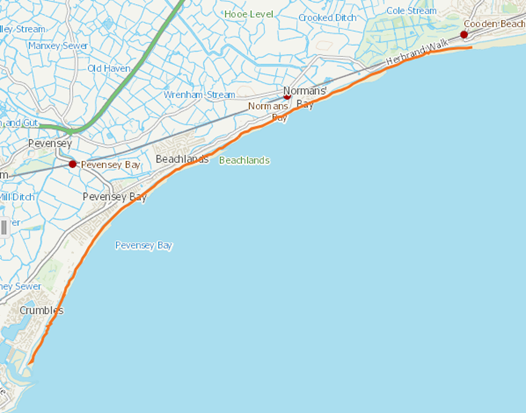
The 8.5km beach - from Sovereign Harbour in the West to Bexhill in the East
Pevensey Coastal Defence Limited (PCDL) managed the beach frontage from 2000 until May 2025. Since June 2025, responsibility for the 8.5 kilometre stretch between Sovereign Harbour and Cooden Beach has transferred to the Environment Agency.
Operational beach works are delivered by our contractor, VolkerStevin, with day‑to‑day activities overseen by our Pevensey Beach Manager, Amber Carr.
How is the Pevensey Bay beach managed?
Pevensey Bay is maintained as an open beach, supported by a small number of groynes that help hold shingle in place. Beach management is carried out using established techniques and is similar to how the beach was previously managed by PCDL.
Activities focus on monitoring and maintaining the beach throughout the year and typically involve the use of heavy machinery between September and April, when storm impacts are most likely. You may notice more workers on the beach but there is little difference in the activities, which include:
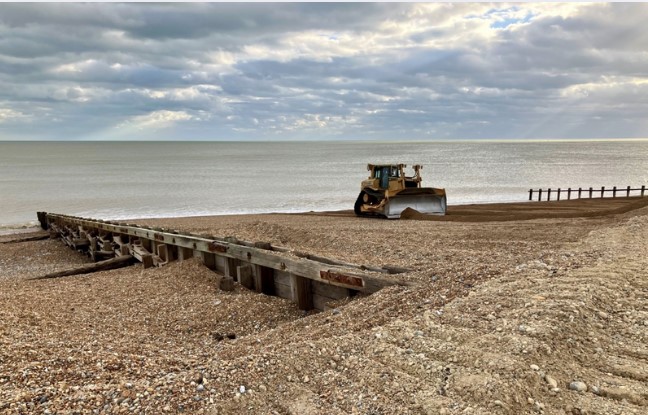
Shingle reprofiling
Shingle recycling
Bypassing process
The Sospan Dau dredger 'rainbowing' shingle onto the beach
How is the short term phase funded and what level of protection is provided?
Current funding allows the Environment Agency to maintain the same standard of flood protection that has been in place along this stretch of coastline since 2000. This funding supports essential beach maintenance until 2027.
The coastal defences are designed to:
Why do Sovereign Harbour residents contribute to sea defence costs?
Many Sovereign Harbour residents contribute to sea defence costs through the annual rent charge, often called the Southern Water Charge. This charge was established when the harbour was first constructed and is payable in perpetuity.
A portion of this charge is transferred to the Environment Agency, and contributes towards funding two essential activities :
Why these activities will always be required:
These activities are essential to maintaining the standard of protection for the community and ensuring the long‑term resilience of the coastline.
How can I prepare for flooding and reduce risk to my property?
The climate is changing, and more frequent and severe flooding is already being experienced across the UK. While flood risk can be reduced, it cannot be completely eliminated. Being prepared is the best way to keep yourself, your family, and your property safe. You may consider the following:
What should I know if my property or garden forms part of the flood defence?
It is a legal requirement for individuals and organisations to obtain a Flood Risk Activity Permit (FRAP) before carrying out certain activities near watercourses and flood defences. Regulated flood risk activities include constructing, altering, maintaining, or removing structures within 16 metres of an Environment Agency flood defence. These activities can affect water flow, flood risk, and environmental safety. Undertaking such works without a permit is a legal offence.
Step 1 - Check if your land is part of the defence
Step 2 - Decide what work you want to do
Step 3 - Check if you need a permit
Go to: www.gov.uk/guidance/flood-risk-activities-environmental-permits
If you’re unsure, contact: psoeastsussex@environment-agency.gov.uk
Step 4 - Apply for the right permit
Step 5 - Wait for a decision
Step 6 - Carry out the work safely
What’s happening now to plan beyond the short term?
Early development work to inform later phases of the scheme has begun because the case for future investment is strong.
We are seeking government funding to progress this work. If funding is secured, this would be followed by a period of appraisal and design to explore how flood and erosion risk may need to be managed beyond the medium term.
Medium-term project (Phase 1)
- Ability to provide flood protection
- Affordability
- Environmental impact (including carbon emissions and biodiversity)
- Public and stakeholder feedback
- Lock in (where choice of an option for the medium-term, restricts or prevents option choices in the longer-term)
- Beach optimisation
- Shingle maintenance
- Groynes
- Beach monitoring
- Property Flood Resilience (PFR)
- Based on UK Climate Projections (UKCP): https://www.metoffice.gov.uk/research/approach/collaboration/ukcp/summaries/marine-climate-change-projections(External link)
- Marine climate change infographic from UKCP: https://www.metoffice.gov.uk/binaries/content/assets/metofficegovuk/pdf/research/ukcp/ukcp18-infographic-headline-findings-marine.pdf(External link)
- Property Flood Resilience - M3floodtec: https://www.m3floodtec.com/domestic-property-flood-resilience
Why respond to a 10cm sea level rise?
By 2040, sea levels are predicted to rise by approximately 10cm1, 2. Over the next 100 years, sea level is expected to rise far more. This means more substantial change is likely to be needed in the longer term.
What options were considered?
We have reviewed existing beach management processes and structures to consider different flood protection options (the longlist). These options have been assessed against multiple criteria including:
Our research, modelling and engineering calculations show that we can deliver the desired standard of protection without any major changes to our approach in the medium-term.
Why was beach improvement works chosen?
We have reviewed existing beach management processes and structures to consider all the possible flood protection options. These options have been considered and assessed against criteria which factored in what is best for the environment, people and place and resulted in a preferred option of Beach Improvement Works being selected. We are continuing to explore the viability and appetite individual for Property Flood Resilience (PFR) measures to act as secondary coastal protection for some properties.
The preferred option for the medium-term project involves a combination of improvements to current beach management practices including:
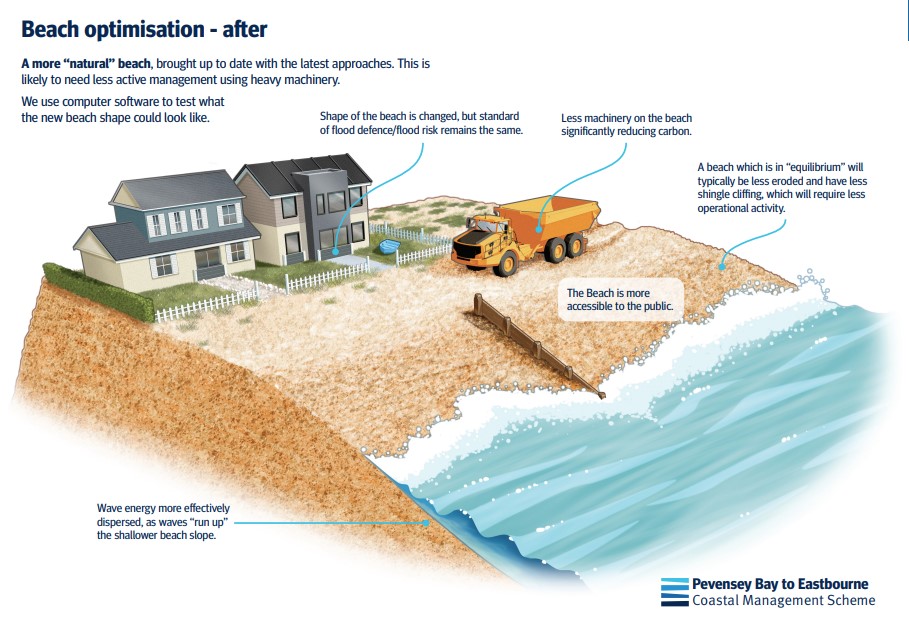
What is beach optimisation?
This part of the approach is about improving and updating the size and shape of the beach, with the aim of reducing shingle flood and erosion risk. In turn this approach also aims to result in fewer machines to move shingle on the beach in turn also significantly reducing carbon emissions.
What does shingle maintenance involve?
Beach material constantly moves along the coastline by the action of the waves, which occurs to a greater extend during storms. The movement of material changes beach size and shape and so needs to be returned to maintain the required design. A large amount of heavy machinery is used to achieve this and reducing the number of machines and alternative fuels such as hydrogen or battery powered are being explored. The preferred option aims to ensure that each section of beach is correct amount of beach material to protect communities.
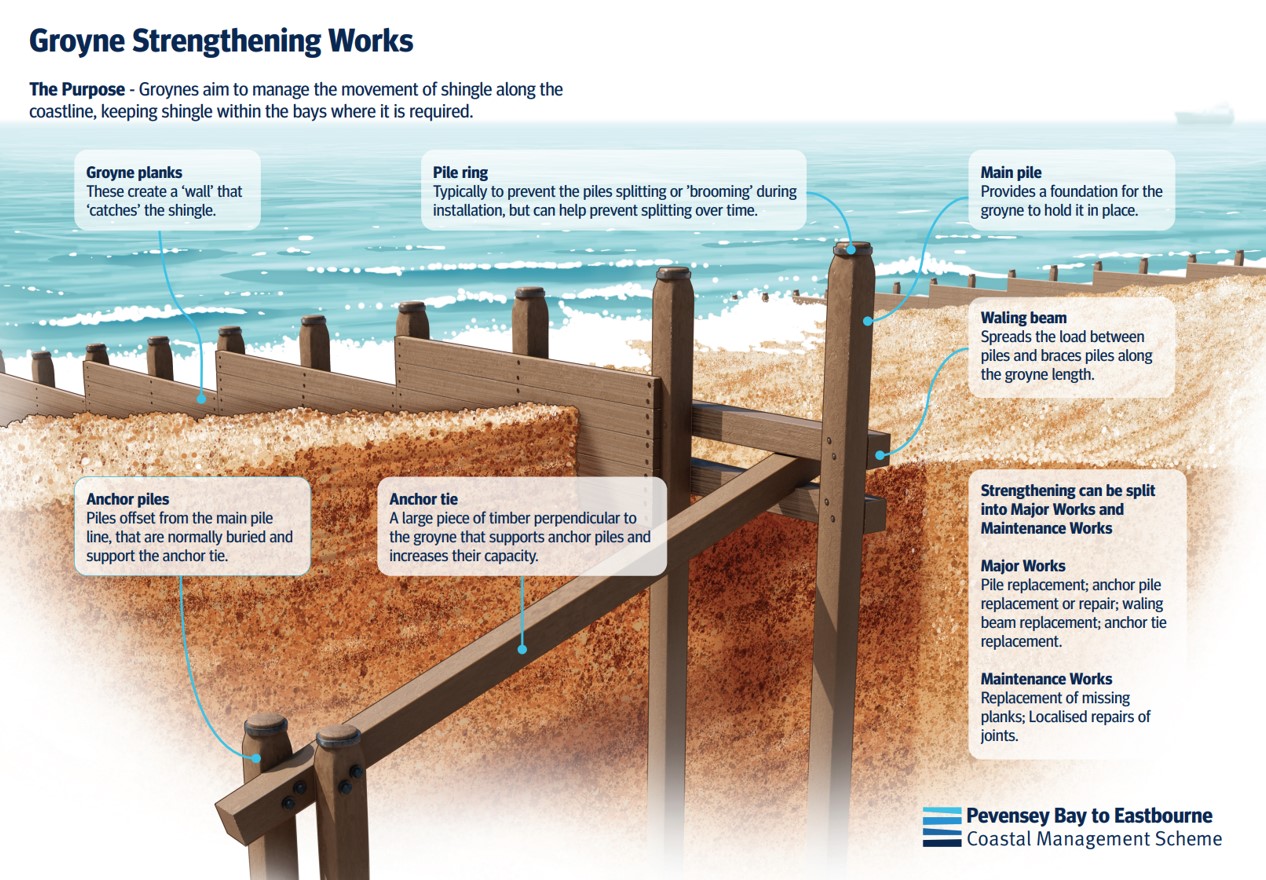
What are groynes and how do they help?
Groynes are wooden structures that capture material as it moves along the coast through the natural process of longshore drift. They help with shingle maintenance by storing it closer to where it is needed.
Pevensey Bay is managed as an open beach, with beach management activities and targeted structures such as timber groynes working together to reduce coastal flood risk.
We are currently assessing the condition and performance of groynes across the beach frontage between Eastbourne and Pevensey Bay. This work will help us identify which structures provide the greatest benefit in reducing flood risk and will therefore be prioritised for future improvement or replacement.
As a result, while some key groynes in Pevensey Bay and Eastbourne are expected to be improved, not all old or existing groynes will be reinstated. This reflects the way the beach is managed and ensures investment is focused on the structures that contribute most to the overall performance of the flood defences.
We are not yet able to confirm when replacement works will begin, but we expect to provide an update on our plans and anticipated works from 2027 later this winter.
In the meantime, we will continue to inspect, repair and maintain priority groynes as necessary as part of the ongoing management of the sea defences.
What is meant by beach monitoring?
Improvements to surveying and monitoring practices are needed to understand how beach shape and size change over time. This data informs what maintenance is needed and how urgently it should be implemented. There is a large amount of data available already, but the project will embrace new technologies to advance our approach and further minimise flood and erosion risk to homes and businesses.
What is Property Flood Resilience (PFR)?
All properties on the coast and beyond are protected to a high standard by the beach. However, some, especially those on or very close to the beach, may benefit from further modifications called PFR3. It is very important to be aware that PFR measures are over and above the required level of protection and act as a secondary line of protection for some homes and businesses. These measures could include the installation of smart air bricks and non-return valves, flood doors and barriers. PFR measures are being considered but further work needs to be carried out through the design stages to better understand the property flood risks before we will have any further specific detail on this.
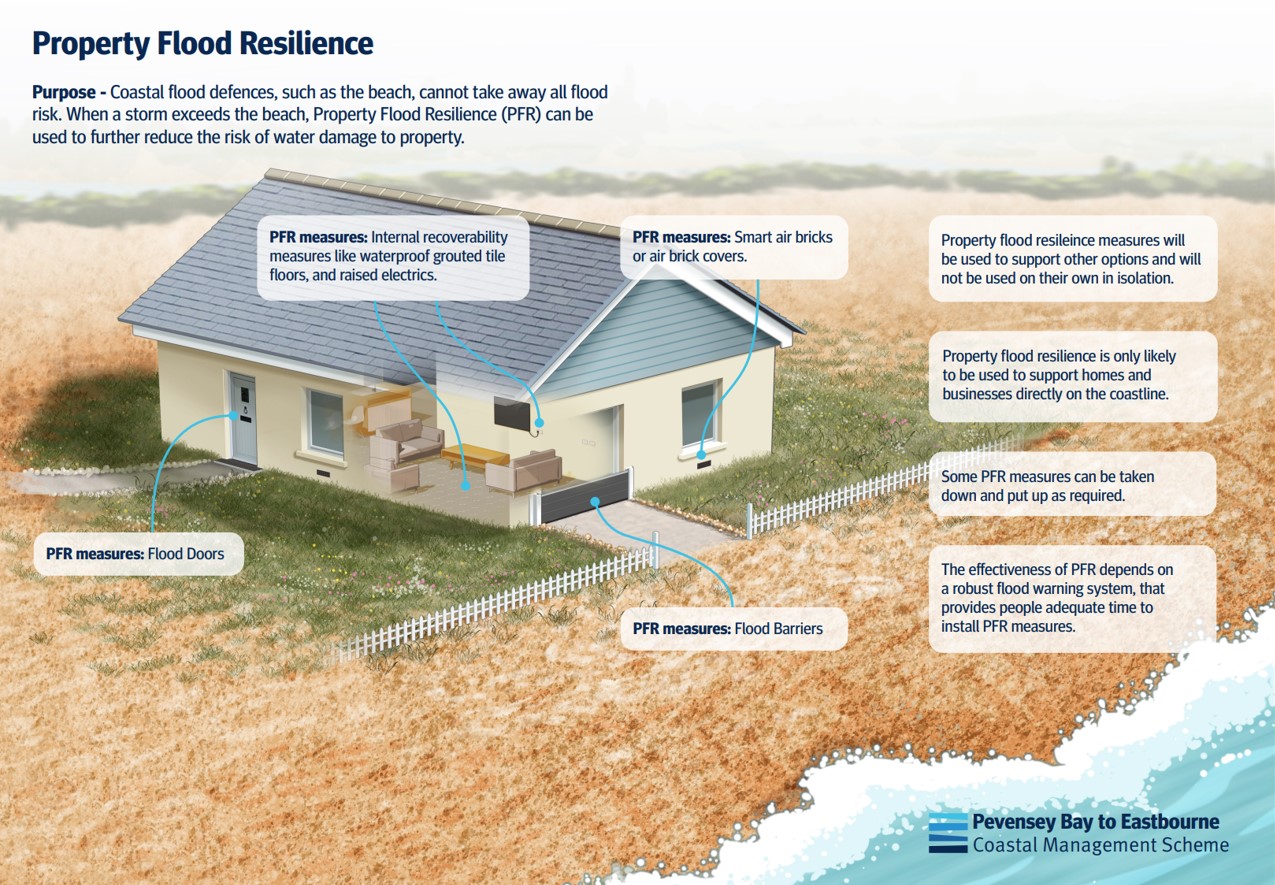
Illustration of PFR measures that can reduce damage to homes during flooding
What are the next steps?
The project team are continuing to work closely with stakeholders and involve communities throughout the development of the scheme. Now that a preferred option has been selected for the medium-term project, we are working to develop the detail. We have shared the outline designs during autumn 2024 and invited you to share your thoughts and feedback with us.
We will also be seeking significant Grant in Aid Funding from HM Treasury to proceed to finalising designs and carrying out the works from 2027.
Footnotes
Longer-term (future phases)
- We are requesting funding from government to commence this work, which could take up to two years to secure, followed by approximately ten years of appraisal and design.
- Phase 2 will be a large and complex project and is scheduled to commence in 2037, following completion of Phase 1.
- We will continue to work closely with local councils and communities to maximise alignment with their future plans and support wider priorities.
What's happening now?
Early development of Phase 2 has started because the case for future investment is so strong.
Where can I find out more?
We are continuing to collect information on community aspirations for the coastline. Our findings from a survey we ran in summer and early autumn 2025, including what people value along the coastline and their hopes for the future, will be available early in 2026.
You can also explore our StoryMap to learn about the history of this coastline and review examples of coastal defence approaches from around the world. These types of interventions will be assessed for their economic, technical, and environmental suitability as part of Phase 2.
What is StoryMap?
Our interactive StoryMap brings the coastline to life through maps, images and storytelling. It explains how the coastline has changed over time, the challenges we face and the actions being taken to manage coastal flooding and erosion. This visual resource is updated as the scheme progresses and offers an engaging way to understand the wider context of the project.
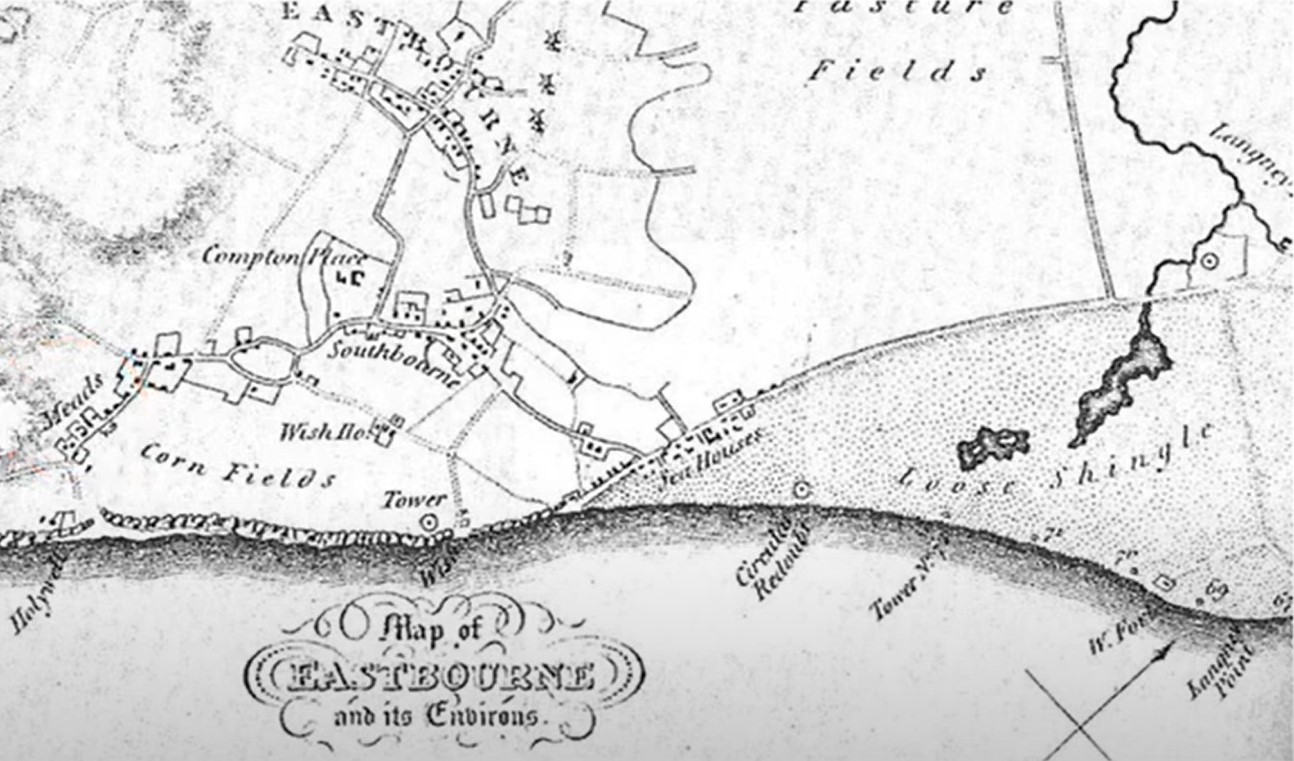
Historic map of Eastbourne and its environs (Credit: John Heatherley)